
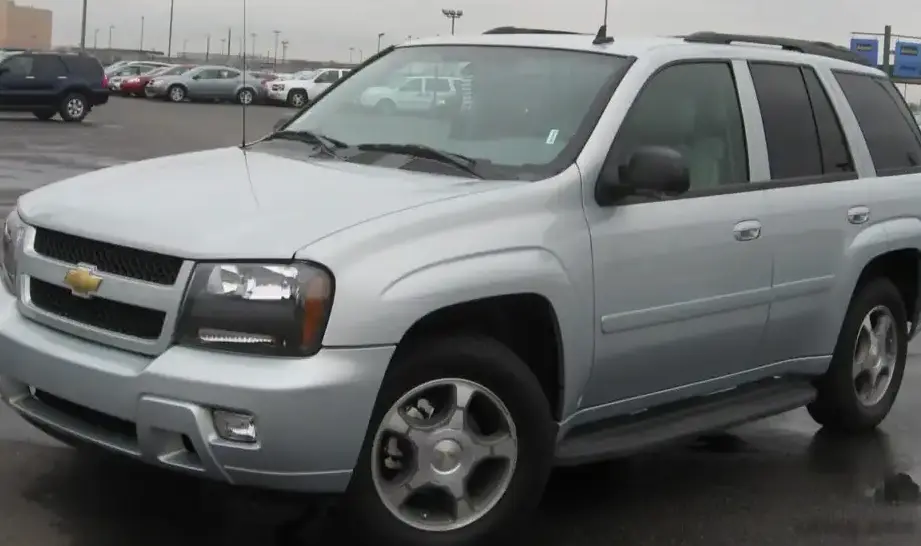
The Chevrolet Trailblazer I 5.3i V8 4WD EXT (304 Hp) was a full-size SUV produced by Chevrolet from 2006 to 2009. Positioned as a premium offering within the first generation Trailblazer lineup (2002-2009), the EXT model signified an extended wheelbase, providing increased cargo capacity and third-row seating. This particular variant, equipped with the 5.3-liter V8 engine and a four-speed automatic transmission, catered to buyers seeking a powerful and capable SUV for towing, hauling, and family transportation. It represented a step up from the base Trailblazer models powered by inline-six or smaller V6 engines, and sat below the top-tier trims featuring more luxurious appointments.
Technical Specifications
| Brand | Chevrolet |
| Model | Trailblazer |
| Generation | Trailblazer I |
| Type (Engine) | 5.3 i V8 4WD EXT (304 Hp) |
| Start of production | 2006 |
| End of production | 2009 |
| Powertrain Architecture | Internal Combustion engine |
| Body type | SUV |
| Seats | 7 |
| Doors | 5 |
| Fuel consumption (urban) | 15.7 l/100 km (15 US mpg, 18 UK mpg, 6.4 km/l) |
| Fuel consumption (extra urban) | 13.1 l/100 km (18 US mpg, 21.6 UK mpg, 7.6 km/l) |
| Fuel Type | Petrol (Gasoline) |
| Maximum speed | 163 km/h (101.28 mph) |
| Weight-to-power ratio | 7.8 kg/Hp, 128.8 Hp/tonne |
| Weight-to-torque ratio | 5.3 kg/Nm, 189.4 Nm/tonne |
| Power | 304 Hp @ 5200 rpm |
| Power per litre | 57.1 Hp/l |
| Torque | 447 Nm @ 4000 rpm (329.69 lb.-ft. @ 4000 rpm) |
| Engine layout | Front, Longitudinal |
| Engine Model/Code | LH6 |
| Engine displacement | 5327 cm3 (325.07 cu. in.) |
| Number of cylinders | 8 |
| Engine configuration | V-engine |
| Cylinder Bore | 96 mm (3.78 in.) |
| Piston Stroke | 92 mm (3.62 in.) |
| Compression ratio | 9.9:1 |
| Number of valves per cylinder | 2 |
| Fuel injection system | Multi-port manifold injection |
| Engine aspiration | Naturally aspirated engine |
| Engine oil capacity | 5.7 l (6.02 US qt | 5.02 UK qt) |
| Coolant capacity | 10.6 l (11.2 US qt | 9.33 UK qt) |
| Kerb Weight | 2360 kg (5202.91 lbs.) |
| Max. weight | 2903 kg (6400.02 lbs.) |
| Max load | 543 kg (1197.11 lbs.) |
| Trunk (boot) space – minimum | 663 l (23.41 cu. ft.) |
| Trunk (boot) space – maximum | 3030 l (107 cu. ft.) |
| Fuel tank capacity | 94 l (24.83 US gal | 20.68 UK gal) |
| Length | 5279 mm (207.83 in.) |
| Width | 1895 mm (74.61 in.) |
| Height | 1957 mm (77.05 in.) |
| Wheelbase | 3277 mm (129.02 in.) |
| Front track | 1603 mm (63.11 in.) |
| Rear (Back) track | 1577 mm (62.09 in.) |
| Drive wheel | All wheel drive (4×4) |
| Number of gears and type of gearbox | 4 gears, automatic transmission |
| Front suspension | Double wishbone |
| Rear suspension | Coil spring |
| Front brakes | Ventilated discs |
| Rear brakes | Ventilated discs |
| Assisting systems | ABS (Anti-lock braking system) |
| Steering type | Steering rack and pinion |
| Power steering | Hydraulic Steering |
| Tires size | 245/65 R17 |
Introduction
The Chevrolet Trailblazer I, launched in 2002, was a mid-size SUV designed to bridge the gap between the smaller Tracker and the larger Suburban. The 5.3i V8 4WD EXT variant, produced from 2006-2009, represented a significant upgrade in terms of power and capability. Built on the GMT360 platform, shared with the GMC Envoy, Buick Rainier, and Oldsmobile Bravada, the Trailblazer aimed to provide a comfortable and versatile vehicle for families and those needing towing capacity. The “EXT” designation indicated the extended wheelbase, adding approximately 15 inches to the overall length, primarily benefiting cargo space and the inclusion of a usable third-row seat. This model was primarily sold in the North American market, competing with vehicles like the Ford Explorer, Jeep Grand Cherokee, and Nissan Pathfinder.
Powertrain & Engine Architecture
At the heart of the Trailblazer I 5.3i 4WD EXT lay the LH6 5.3-liter V8 engine. This engine, a member of Chevrolet’s Small-Block family, was a robust and reliable powerplant. It featured a cast iron block with aluminum cylinder heads, and utilized a multi-port fuel injection system for precise fuel delivery. The engine produced 304 horsepower at 5200 rpm and 329.69 lb-ft of torque at 4000 rpm. The 5.3L V8 employed a two-valve per cylinder configuration and a 9.9:1 compression ratio. Paired with the engine was a four-speed automatic transmission (4L60-E), known for its durability and relatively smooth shifting. This transmission was electronically controlled, adapting shift points based on driving conditions and throttle input. The 4WD system was an electronically controlled, part-time four-wheel drive system, allowing the driver to switch between 2WD, 4HI, and 4LO modes for varying terrain and conditions.
Driving Characteristics
The 5.3L V8 and four-speed automatic combination provided ample power for everyday driving and towing. Acceleration was brisk, though not particularly sporty, with the focus being on usable torque for hauling loads. The four-speed automatic, while reliable, lacked the refinement and efficiency of more modern transmissions with additional gears. Gear ratios were tuned for towing and cruising, resulting in a comfortable ride but potentially higher engine speeds at highway speeds. Compared to the base inline-six or smaller V6 Trailblazers, the 5.3L offered a significantly more confident and capable driving experience, especially when fully loaded or towing a trailer. The 4WD system provided enhanced traction in slippery conditions, making it suitable for inclement weather and light off-road use. However, it wasn’t designed for serious off-roading.
Equipment & Trim Levels
The Trailblazer I 5.3i V8 4WD EXT typically came standard with features such as air conditioning, power windows and locks, cruise control, and an AM/FM stereo with a CD player. The EXT trim level added features like leather upholstery, heated front seats, and a premium sound system. Optional extras included a DVD entertainment system, sunroof, and upgraded alloy wheels. Interior trim levels varied, with higher trims featuring woodgrain accents and more refined materials. The extended wheelbase provided generous passenger space, particularly in the second and third rows, making it a practical choice for larger families.
Chassis & Braking
The Trailblazer I utilized a body-on-frame construction, providing a robust and durable platform. The front suspension consisted of an independent double wishbone setup, while the rear suspension employed a coil-spring solid axle. This configuration prioritized ride comfort and load-carrying capacity over sporty handling. Braking duties were handled by ventilated disc brakes on all four wheels, providing adequate stopping power for the vehicle’s weight. An Anti-lock Braking System (ABS) was standard, enhancing safety during emergency braking situations. Steering was provided by a hydraulic power rack-and-pinion system, offering responsive and predictable handling.
Market Reception & Comparison
The Trailblazer I 5.3i V8 4WD EXT received generally positive reviews for its spacious interior, powerful engine, and towing capability. Critics noted that the fuel economy was relatively poor, especially compared to newer SUVs. Compared to the smaller-engined Trailblazer models, the 5.3L V8 offered a significant performance advantage, but at the cost of increased fuel consumption. The EXT model was praised for its increased cargo space and usable third-row seat, making it a more practical choice for families. Reliability was generally good, although some owners reported issues with the 4L60-E transmission over the long term.
Legacy
The Chevrolet Trailblazer I 5.3i V8 4WD EXT remains a popular choice in the used car market, particularly among those seeking a capable and affordable SUV. The LH6 5.3L V8 engine is known for its durability and relatively low maintenance costs. While fuel economy is a concern, the engine’s reliability and readily available parts make it a practical option for those willing to accept the trade-off. The EXT model’s spacious interior and towing capacity continue to appeal to families and those needing a versatile vehicle. However, potential buyers should be aware of the potential for transmission issues and the vehicle’s relatively dated technology compared to newer SUVs.
