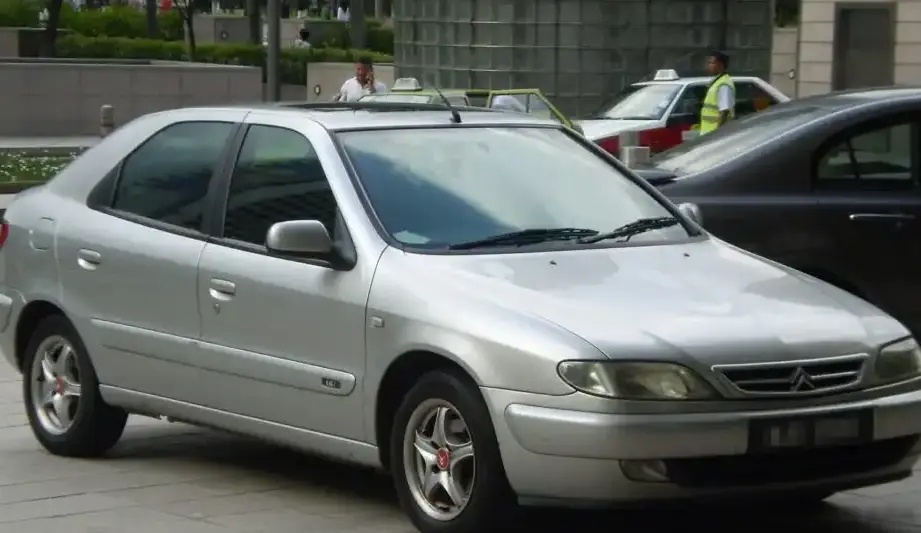
The Citroën Xsara 1.9 Turbo D (90 hp) represents a significant offering within the first generation (N1, Phase I) of the Xsara compact hatchback, produced between 1998 and 2000. Positioned as a fuel-efficient and practical option, this variant catered to buyers prioritizing economy and dependability over outright performance. The Xsara N1, launched in 1997, was Citroën’s replacement for the BX and aimed to compete in the crowded European C-segment, alongside rivals like the Ford Focus, Volkswagen Golf, and Peugeot 306. This particular diesel version played a crucial role in markets where diesel fuel was favored, offering a compelling blend of running costs and usability.
Technical Specifications
| Brand | Citroen |
| Model | Xsara |
| Generation | Xsara (N1, Phase I) |
| Type (Engine) | 1.9 Turbo D (90 Hp) |
| Start of production | 1998 |
| End of production | 2000 |
| Powertrain Architecture | Internal Combustion engine |
| Body type | Hatchback |
| Seats | 5 |
| Doors | 5 |
| Fuel consumption (urban) | 8.8 l/100 km (26.7 US mpg, 32.1 UK mpg, 11.4 km/l) |
| Fuel consumption (extra urban) | 5.2 l/100 km (45.2 US mpg, 54.3 UK mpg, 19.2 km/l) |
| Fuel consumption (combined) | 6.6 l/100 km (35.6 US mpg, 42.8 UK mpg, 15.2 km/l) |
| Fuel Type | Diesel |
| Acceleration 0 – 100 km/h | 12.8 sec |
| Acceleration 0 – 62 mph | 12.8 sec |
| Acceleration 0 – 60 mph | 12.2 sec |
| Maximum speed | 178 km/h (110.6 mph) |
| Emission standard | Euro 2 |
| Weight-to-power ratio | 12.5 kg/Hp, 79.9 Hp/tonne |
| Weight-to-torque ratio | 5.8 kg/Nm, 173.9 Nm/tonne |
| Power | 90 Hp @ 4000 rpm |
| Power per litre | 47.2 Hp/l |
| Torque | 196 Nm @ 2250 rpm (144.56 lb.-ft. @ 2250 rpm) |
| Engine layout | Front, Transverse |
| Engine Model/Code | DHY XUD9TE |
| Engine displacement | 1905 cm3 (116.25 cu. in.) |
| Number of cylinders | 4 |
| Engine configuration | Inline |
| Cylinder Bore | 83 mm (3.27 in.) |
| Piston Stroke | 88 mm (3.46 in.) |
| Compression ratio | 21.8:1 |
| Number of valves per cylinder | 2 |
| Fuel injection system | Precombustion chamber injection |
| Engine aspiration | Turbocharger, Intercooler |
| Valvetrain | OHC |
| Engine oil capacity | 4.25 l (4.49 US qt | 3.74 UK qt) |
| Coolant | 9.6 l (10.14 US qt | 8.45 UK qt) |
| Kerb Weight | 1127 kg (2484.61 lbs.) |
| Max. weight | 1690 kg (3725.81 lbs.) |
| Max load | 563 kg (1241.2 lbs.) |
| Trunk (boot) space – minimum | 408 l (14.41 cu. ft.) |
| Trunk (boot) space – maximum | 1190 l (42.02 cu. ft.) |
| Fuel tank capacity | 54 l (14.27 US gal | 11.88 UK gal) |
| Max. roof load | 75 kg (165.35 lbs.) |
| Permitted trailer load with brakes (12%) | 1100 kg (2425.08 lbs.) |
| Permitted trailer load without brakes | 610 kg (1344.82 lbs.) |
| Length | 4167 mm (164.06 in.) |
| Width | 1700 mm (66.93 in.) |
| Width including mirrors | 1975 mm (77.76 in.) |
| Height | 1405 mm (55.31 in.) |
| Wheelbase | 2540 mm (100 in.) |
| Front track | 1423 mm (56.02 in.) |
| Rear (Back) track | 1430 mm (56.3 in.) |
| Front overhang | 868 mm (34.17 in.) |
| Rear overhang | 759 mm (29.88 in.) |
| Minimum turning circle | 11.5 m (37.73 ft.) |
| Drivetrain Architecture | The Internal combustion engine (ICE) drives the front wheels of the vehicle. |
| Drive wheel | Front wheel drive |
| Number of gears and type of gearbox | 5 gears, manual transmission |
| Front suspension | Independent, type McPherson with coil spring and anti-roll bar |
| Rear suspension | Torsion |
| Front brakes | Ventilated discs |
| Rear brakes | Drum |
| Assisting systems | ABS (Anti-lock braking system) |
| Steering type | Steering rack and pinion |
| Power steering | Hydraulic Steering |
| Tires size | 185/65 R14 |
| Wheel rims size | 14 |
Powertrain & Engine Architecture
The heart of this Xsara variant is the 1.9-liter, four-cylinder diesel engine, specifically the DHY variant of the XUD9TE engine family. This engine, a mainstay of Citroën and Peugeot vehicles for many years, is known for its robustness and fuel efficiency. The XUD9TE utilizes precombustion chamber injection, a system where fuel is injected into a small chamber connected to the main cylinder, promoting more complete combustion. A turbocharger with an intercooler is employed to increase power output, bringing it to 90 horsepower at 4000 rpm and 196 Nm (144.56 lb-ft) of torque at 2250 rpm. The engine features an overhead camshaft (OHC) valvetrain with two valves per cylinder. The transmission is a five-speed manual gearbox, chosen for its simplicity and efficiency. While an automatic transmission was offered on some Xsara models, it wasn’t typically paired with this specific engine due to the torque characteristics of the diesel and the limitations of the available automatic gearboxes at the time.
Driving Characteristics
The 1.9 Turbo D Xsara offers a pragmatic driving experience. Acceleration is modest, taking around 12.8 seconds to reach 62 mph, but the engine’s strong low-end torque makes it feel more responsive in everyday driving situations. The five-speed gearbox is well-matched to the engine, allowing for comfortable cruising on highways. Compared to the more powerful petrol versions of the Xsara, this diesel variant prioritizes fuel economy over outright performance. The manual transmission provides a more engaging driving experience than an automatic would have, allowing the driver to fully utilize the engine’s torque band. It’s a car designed for covering long distances efficiently, rather than spirited driving.
Equipment & Trim Levels
The 1.9 Turbo D typically fell into the mid-range of the Xsara lineup. Standard equipment generally included power steering, central locking, and an adjustable steering column. Interior upholstery was typically cloth, and the dashboard featured a functional, if somewhat basic, design. Optional extras could include air conditioning, electric windows, and a radio/cassette player. Higher trim levels added features like alloy wheels, upgraded interior trim, and more sophisticated audio systems. The focus with this trim was on providing a well-equipped, practical car at a reasonable price point.
Chassis & Braking
The Xsara N1 utilizes an independent McPherson strut suspension setup at the front, providing a comfortable ride and decent handling. The rear suspension employs a torsion beam, a cost-effective and space-saving solution. Braking is handled by ventilated discs at the front and drum brakes at the rear. Anti-lock Braking System (ABS) was standard, enhancing safety. The suspension setup is tuned for comfort, prioritizing ride quality over sporty handling. The chassis is relatively lightweight, contributing to the car’s fuel efficiency.
Market Reception & Comparison
The Citroën Xsara 1.9 Turbo D was well-received in markets where diesel cars were popular, particularly in Europe. Critics praised its fuel economy and reliability. Compared to the petrol-powered Xsara variants, the diesel offered significantly better fuel consumption, making it an attractive option for high-mileage drivers. However, it was criticized for its relatively slow acceleration and somewhat noisy engine. Compared to rivals like the Volkswagen Golf TDI, the Xsara offered a similar level of practicality and fuel efficiency, often at a slightly lower price point.
Legacy
The XUD9TE engine, found in the Xsara 1.9 Turbo D, is renowned for its durability and longevity. Many examples of this engine are still on the road today, having covered significant mileage. While maintenance costs can increase with age, the engine is generally considered to be reliable. In the used car market, the Xsara 1.9 Turbo D remains a popular choice for buyers seeking an affordable, fuel-efficient, and dependable vehicle. Its simplicity and robust construction make it a relatively easy car to maintain, and its fuel economy continues to be a major selling point.