
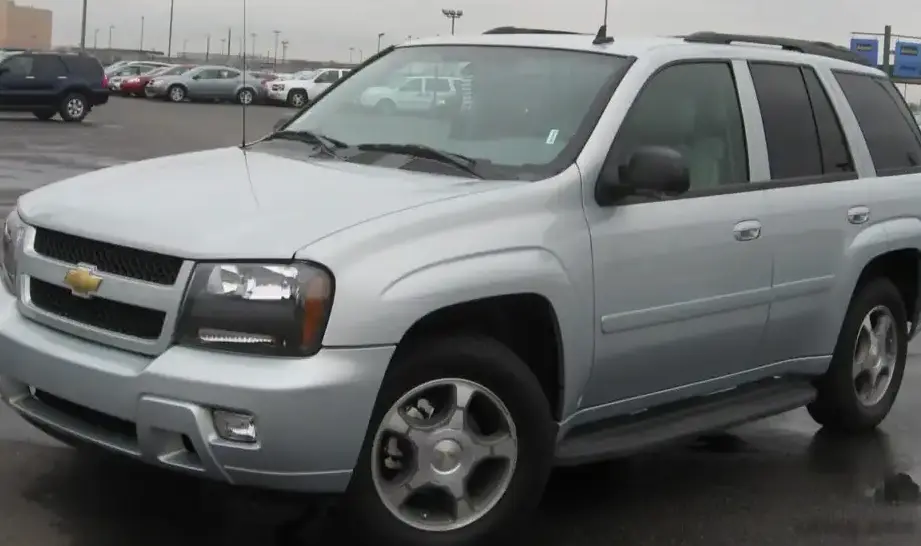
The Chevrolet Trailblazer SS, specifically the 6.0L V8 AWD variant produced between 2006 and 2009, represented the performance pinnacle of the first-generation Trailblazer (2002-2009) SUV. Positioned as the flagship trim, the SS aimed to deliver truck-based utility combined with the power and handling characteristics of a muscle car. It was Chevrolet’s answer to the growing demand for powerful, capable SUVs, competing with offerings from GMC and other American manufacturers. This model was exclusively sold in North America, capitalizing on the region’s preference for large, V8-powered vehicles.
Technical Specifications
| Brand | Chevrolet |
| Model | Trailblazer |
| Generation | Trailblazer I |
| Type (Engine) | 6.0 i V8 16V SS AWD (400 Hp) |
| Start of production | 2006 |
| End of production | 2009 |
| Powertrain Architecture | Internal Combustion engine |
| Body type | SUV |
| Seats | 5 |
| Doors | 5 |
| Fuel consumption (urban) | 16.8 l/100 km (14 US mpg, 16.8 UK mpg) |
| Fuel consumption (extra urban) | 13.9 l/100 km (16.9 US mpg, 20.3 UK mpg) |
| Fuel Type | Petrol (Gasoline) |
| Acceleration 0 – 100 km/h | 5.7 sec |
| Acceleration 0 – 62 mph | 5.7 sec |
| Acceleration 0 – 60 mph | 5.4 sec |
| Maximum speed | 210 km/h (130.49 mph) |
| Weight-to-power ratio | 5.5 kg/Hp, 182.6 Hp/tonne |
| Weight-to-torque ratio | 4 kg/Nm, 247.5 Nm/tonne |
| Power | 400 Hp @ 6000 rpm |
| Power per litre | 67 Hp/l |
| Torque | 542 Nm @ 4000 rpm (399.76 lb.-ft. @ 4000 rpm) |
| Engine layout | Front, Longitudinal |
| Engine Model/Code | LS2 |
| Engine displacement | 5967 cm3 (364.13 cu. in.) |
| Number of cylinders | 8 |
| Engine configuration | V-engine |
| Cylinder Bore | 101.6 mm (4 in.) |
| Piston Stroke | 92 mm (3.62 in.) |
| Compression ratio | 10.9:1 |
| Number of valves per cylinder | 2 |
| Fuel injection system | Multi-port manifold injection |
| Engine aspiration | Naturally aspirated engine |
| Engine oil capacity | 5.7 l (6.02 US qt | 5.02 UK qt) |
| Coolant | 10.6 l (11.2 US qt | 9.33 UK qt) |
| Kerb Weight | 2190 kg (4828.12 lbs.) |
| Max. weight | 2722 kg (6000.98 lbs.) |
| Max load | 532 kg (1172.86 lbs.) |
| Trunk (boot) space – minimum | 1162 l (41.04 cu. ft.) |
| Trunk (boot) space – maximum | 2268 l (80.09 cu. ft.) |
| Fuel tank capacity | 83 l (21.93 US gal | 18.26 UK gal) |
| Length | 4872 mm (191.81 in.) |
| Width | 1895 mm (74.61 in.) |
| Height | 1723 mm (67.83 in.) |
| Wheelbase | 2869 mm (112.95 in.) |
| Front track | 1603 mm (63.11 in.) |
| Rear (Back) track | 1577 mm (62.09 in.) |
| Drive wheel | All wheel drive (4×4) |
| Number of gears and type of gearbox | 4 gears, automatic transmission |
| Front suspension | Independent, type McPherson with coil spring and anti-roll bar |
| Rear suspension | Coil spring |
| Front brakes | Disc |
| Rear brakes | Disc |
| Assisting systems | ABS (Anti-lock braking system) |
| Tires size | 255/50 R20 |
Powertrain & Engine Architecture
The heart of the Trailblazer SS was the 6.0-liter LS2 V8 engine. This engine, a member of General Motors’ renowned Small-Block family, featured an aluminum block and cylinder heads, contributing to a relatively lightweight construction for its displacement. The LS2 utilized a cast iron crankshaft, connecting rods, and pistons. Fuel delivery was managed by a multi-port fuel injection system, and the engine boasted a 10.9:1 compression ratio. The engine produced 400 horsepower at 6000 rpm and 542 Nm (399.76 lb-ft) of torque at 4000 rpm. The engine was longitudinally mounted, powering all four wheels through a four-speed automatic transmission (4L60-E). This transmission was chosen for its durability and ability to handle the engine’s substantial torque output, although it lacked the efficiency of more modern transmissions.
Driving Characteristics
The Trailblazer SS delivered a surprisingly engaging driving experience for a full-size SUV. The 400 hp LS2 provided strong acceleration, with 0-60 mph times consistently in the 5.4-5.7 second range. The automatic transmission, while not particularly sophisticated, offered smooth shifts and adequate responsiveness. The all-wheel-drive system provided enhanced traction in various conditions, making it a capable vehicle for both on-road and light off-road use. Compared to the standard Trailblazer models with smaller engines, the SS offered a significantly more powerful and refined driving experience. However, the four-speed automatic transmission meant higher engine speeds at highway cruising, impacting fuel economy. The SS was noticeably heavier than its lower-trim counterparts, which slightly diminished handling agility.
Equipment & Trim Levels
The Trailblazer SS came standard with a comprehensive list of features. Interior appointments included leather upholstery, power-adjustable front seats, and a premium audio system. Exterior features included unique SS badging, a distinctive front grille, and 20-inch alloy wheels. Standard safety equipment included ABS brakes, and side airbags. Optional extras included a sunroof, rear-seat entertainment system, and upgraded audio options. The interior design was typical of early 2000s GM vehicles, prioritizing functionality and space over outright luxury.
Chassis & Braking
The Trailblazer SS utilized a body-on-frame construction, providing a robust and durable platform. The front suspension featured an independent McPherson strut design with coil springs and an anti-roll bar. The rear suspension employed a solid axle with coil springs. Braking duties were handled by disc brakes on all four wheels, providing adequate stopping power for the vehicle’s weight. The SS benefited from a slightly stiffer suspension tuning compared to other Trailblazer models, improving handling and reducing body roll. However, the inherent limitations of a body-on-frame chassis meant that the ride quality was not as refined as that of unibody SUVs.
Market Reception & Comparison
The Trailblazer SS received generally positive reviews from automotive critics. Praise was directed towards its powerful engine, capable all-wheel-drive system, and spacious interior. However, some critics noted the vehicle’s relatively poor fuel economy and the dated nature of its interior design. Compared to other trims in the Trailblazer lineup, the SS offered a significant performance upgrade but came at a higher price point. It competed directly with the GMC Envoy Denali and other large, V8-powered SUVs. The SS’s fuel economy was notably worse than the V6-powered Trailblazer models, but its performance and features justified the cost for buyers seeking a powerful and capable SUV.
Legacy
The Chevrolet Trailblazer SS, while a relatively short-lived model, has gained a following among enthusiasts. The LS2 V8 engine is known for its reliability and potential for modification. The 4L60-E transmission, while not the most advanced, is also known for its durability. Today, well-maintained Trailblazer SS models are sought after by collectors and enthusiasts looking for a unique and powerful SUV. Common issues include wear and tear on suspension components and potential for oil leaks from the engine. Despite these potential issues, the Trailblazer SS remains a capable and enjoyable vehicle, representing a unique chapter in Chevrolet’s SUV history.
