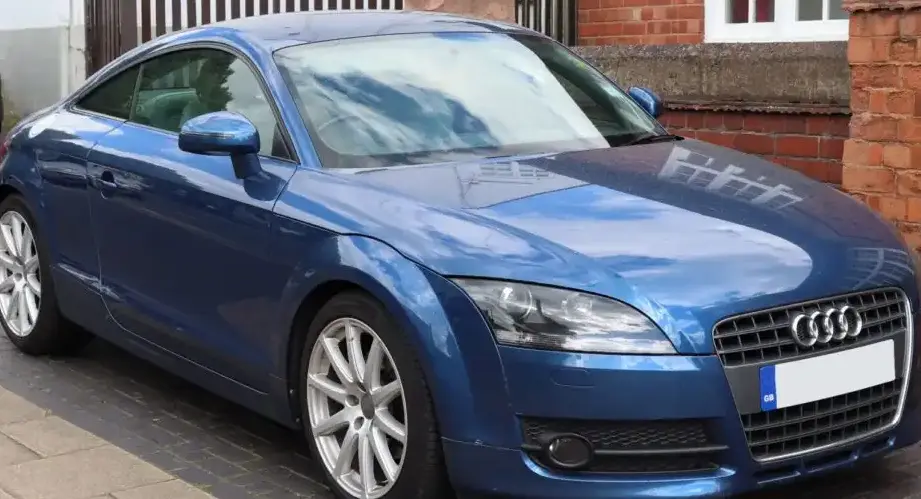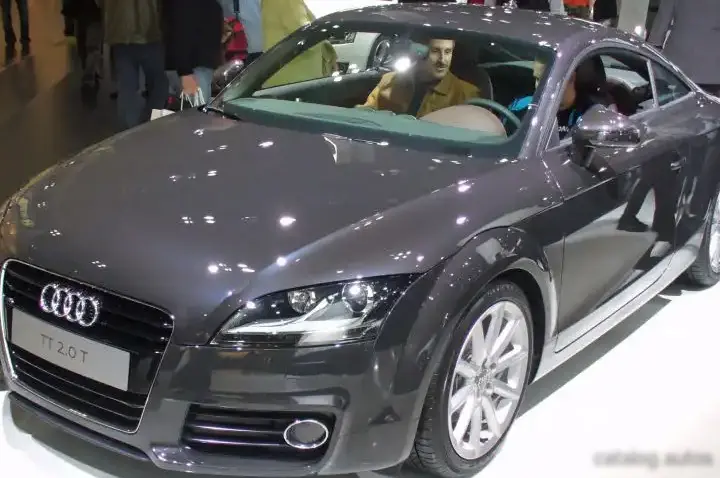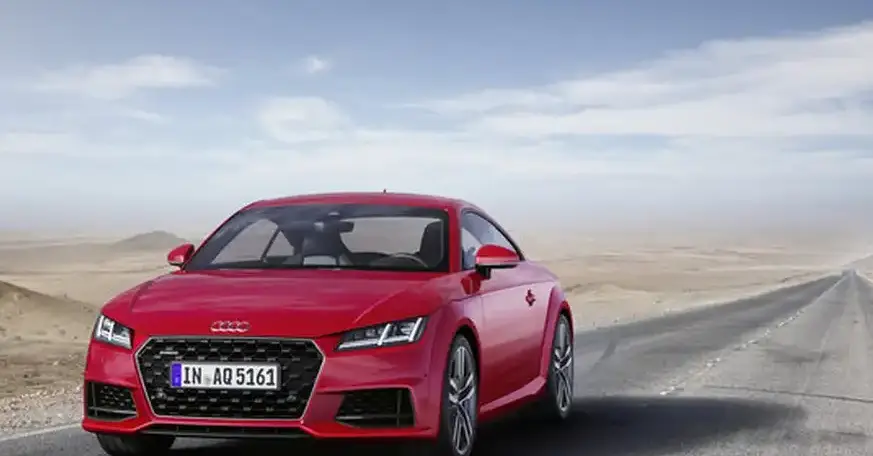
The Audi TT Coupe (8S) facelift, specifically the 40 TFSI variant with the S tronic dual-clutch transmission, represents a mid-cycle refresh of the second-generation TT, produced from 2018 to 2023. This model occupied a key position in the TT lineup, offering a balance between performance and affordability, appealing to buyers seeking a sporty coupe experience without the higher price tag of the TTS or TT RS. The 8S TT, launched in 2014, was a significant departure from its predecessor, utilizing the Volkswagen Group’s MQB platform, and the 2018 facelift brought updated styling, enhanced technology, and refined engine options.
Technical Specifications
| Brand | Audi |
| Model | TT |
| Generation | TT Coupe (8S, facelift 2018) |
| Type (Engine) | 40 TFSI (197 Hp) S tronic |
| Start of production | 2018 |
| End of production | 2023 |
| Powertrain Architecture | Internal Combustion engine |
| Body type | Coupe |
| Seats | 4 |
| Doors | 3 |
| Combined fuel consumption (WLTP) | 6.7-7.0 l/100 km (35.1 – 33.6 US mpg, 42.2 – 40.4 UK mpg, 14.9 – 14.3 km/l) |
| CO2 emissions (WLTP) | 153-159 g/km |
| Fuel consumption (urban) | 8.0-8.1 l/100 km (29.4 – 29 US mpg, 35.3 – 34.9 UK mpg, 12.5 – 12.3 km/l) |
| Fuel consumption (extra urban) | 4.9-5.0 l/100 km (48 – 47 US mpg, 57.6 – 56.5 UK mpg, 20.4 – 20 km/l) |
| Fuel consumption (combined) | 6.0-6.1 l/100 km (39.2 – 38.6 US mpg, 47.1 – 46.3 UK mpg, 16.7 – 16.4 km/l) |
| CO2 emissions | 137-138 g/km |
| Fuel Type | Petrol (Gasoline) |
| Acceleration 0 – 100 km/h | 6.6 sec |
| Acceleration 0 – 62 mph | 6.6 sec |
| Acceleration 0 – 60 mph | 6.3 sec |
| Maximum speed | 250 km/h (155.34 mph) |
| Emission standard | Euro 6d |
| Weight-to-power ratio | 6.8 kg/Hp, 146.5 Hp/tonne |
| Weight-to-torque ratio | 4.2 kg/Nm, 237.9 Nm/tonne |
| Power | 197 Hp @ 4400-6000 rpm |
| Torque | 320 Nm @ 1500-4300 rpm (236.02 lb.-ft. @ 1500-4300 rpm) |
| Engine layout | Front, Transverse |
| Engine Model/Code | DKZB, DNNB |
| Engine displacement | 1984 cm3 (121.07 cu. in.) |
| Number of cylinders | 4 |
| Engine configuration | Inline |
| Number of valves per cylinder | 4 |
| Fuel injection system | Direct injection |
| Engine aspiration | Turbocharger, Intercooler |
| Engine oil capacity | 5.7 l (6.02 US qt | 5.02 UK qt) |
| Kerb Weight | 1345 kg (2965.22 lbs.) |
| Max. weight | 1705 kg (3758.88 lbs.) |
| Max load | 360 kg (793.66 lbs.) |
| Fuel tank capacity | 50 l (13.21 US gal | 11 UK gal) |
| Max. roof load | 75 kg (165.35 lbs.) |
| Length | 4191 mm (165 in.) |
| Width | 1832 mm (72.13 in.) |
| Width including mirrors | 1966 mm (77.4 in.) |
| Height | 1353 mm (53.27 in.) |
| Wheelbase | 2505 mm (98.62 in.) |
| Front track | 1572 mm (61.89 in.) |
| Rear track | 1552 mm (61.1 in.) |
| Front overhang | 893 mm (35.16 in.) |
| Rear overhang | 793 mm (31.22 in.) |
| Drag coefficient (Cd) | 0.31 |
| Drivetrain Architecture | Front wheel drive |
| Number of gears and type of gearbox | 7 gears, automatic transmission S tronic |
| Front suspension | Independent, type McPherson with coil spring and anti-roll bar |
| Rear suspension | Independent multi-link suspension |
| Front brakes | Ventilated discs |
| Rear brakes | Disc |
| Tires size | 225/50 R17 |
| Wheel rims size | 8J x 17 |
Powertrain & Engine Architecture
The 40 TFSI designation indicates the use of a 2.0-liter, turbocharged inline-four cylinder engine. Engine codes DKZB and DNNB were commonly used for this powerplant. This engine is part of the Volkswagen Group’s EA888 family, known for its robust design and tuning potential. The engine utilizes direct fuel injection (FSI) and a single turbocharger with an intercooler to deliver 197 horsepower and 320 Nm (236 lb-ft) of torque. The S tronic transmission is a seven-speed dual-clutch transmission (DCT) offering quick and smooth gear changes. Unlike a traditional automatic, the S tronic uses two separate clutches, one for even and one for odd gears, allowing for pre-selection of the next gear and minimizing interruption in power delivery. This contributes to both faster acceleration and improved fuel efficiency.
Driving Characteristics
The 40 TFSI S tronic combination provides a responsive and engaging driving experience. While not as overtly powerful as the TTS, the 197 hp engine delivers ample performance for everyday driving and spirited weekend excursions. The S tronic transmission enhances this, providing near-instantaneous shifts and contributing to a 0-60 mph time of around 6.3 seconds. The gear ratios are tuned for a balance of acceleration and fuel economy, with the lower gears providing brisk off-the-line performance and higher gears optimized for cruising. Compared to the six-speed manual transmission available on some TT models, the S tronic offers greater convenience and slightly quicker acceleration, though some enthusiasts may prefer the more direct feel of a manual gearbox.
Equipment & Trim Levels
The 40 TFSI S tronic typically came standard with features such as Audi’s Virtual Cockpit – a fully digital instrument cluster – leather upholstery, automatic climate control, and a multi-function steering wheel. Infotainment was handled by Audi’s MMI system with a central display screen. Optional extras included features like a Bang & Olufsen sound system, navigation, adaptive cruise control, and various styling packages. The TT offered a relatively streamlined trim structure, with options primarily focused on adding convenience and luxury features rather than significant performance upgrades.
Chassis & Braking
The 8S TT utilizes a MacPherson strut front suspension and a multi-link rear suspension, providing a comfortable yet sporty ride. The suspension tuning is geared towards providing a balance between handling precision and everyday comfort. Braking duties are handled by ventilated discs at the front and solid discs at the rear. ABS (Anti-lock Braking System) is standard, providing enhanced braking performance and stability. The car’s relatively low weight contributes to its agile handling characteristics.
Market Reception & Comparison
The 40 TFSI S tronic variant was generally well-received by automotive critics. It was praised for its blend of performance, fuel efficiency, and technology. Compared to the base 35 TFSI model, the 40 TFSI offered a noticeable performance boost. Against the higher-performance TTS, it represented a more affordable option for buyers who didn’t require the ultimate in speed and handling. Fuel economy figures of around 35-38 mpg combined were considered respectable for a sporty coupe. Reliability reports generally indicate good long-term dependability, although, like any turbocharged engine, regular maintenance is crucial.
Legacy
The Audi TT 8S, including the 40 TFSI S tronic variant, has established itself as a desirable used car. Its stylish design, engaging driving dynamics, and relatively strong build quality have contributed to its enduring appeal. The EA888 engine, while requiring regular oil changes, is known for its durability. The S tronic transmission, if properly maintained, is also generally reliable. Today, these models offer a compelling value proposition for buyers seeking a sporty and sophisticated coupe at a reasonable price point.