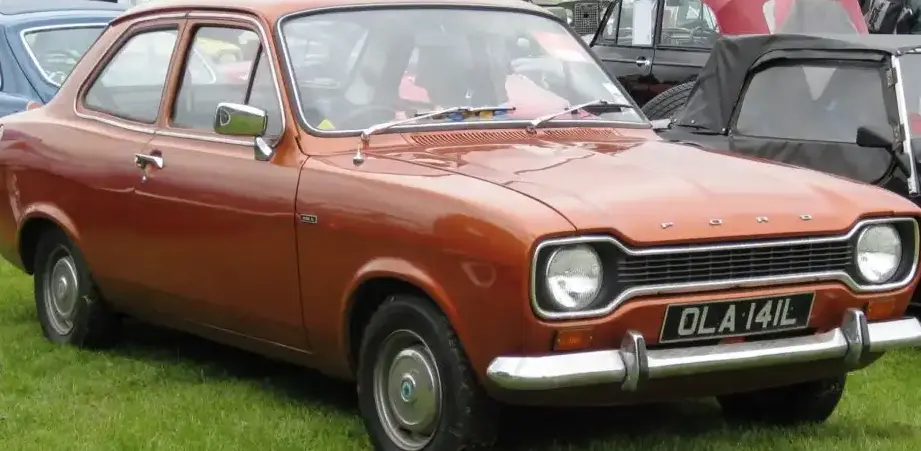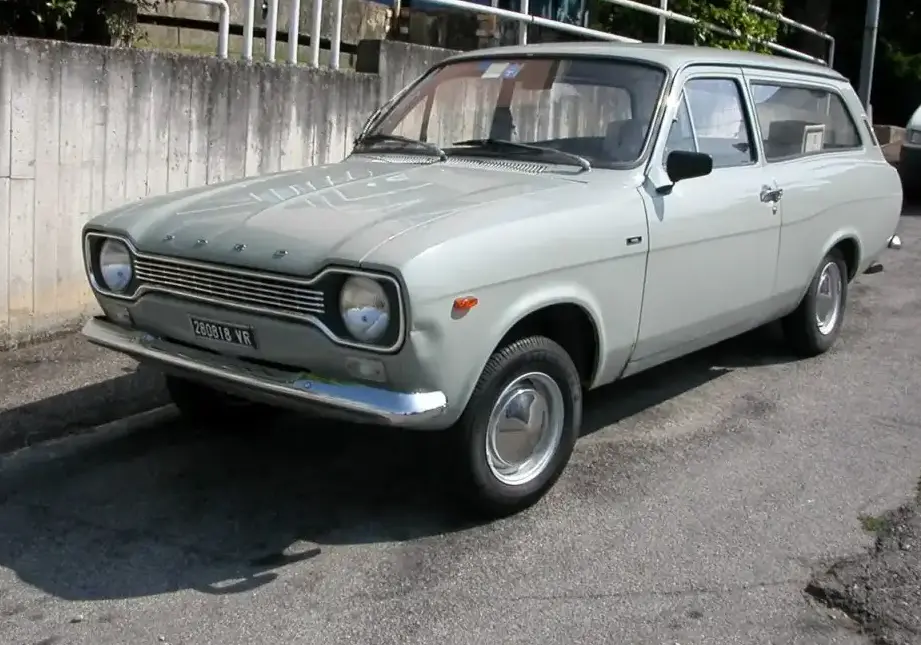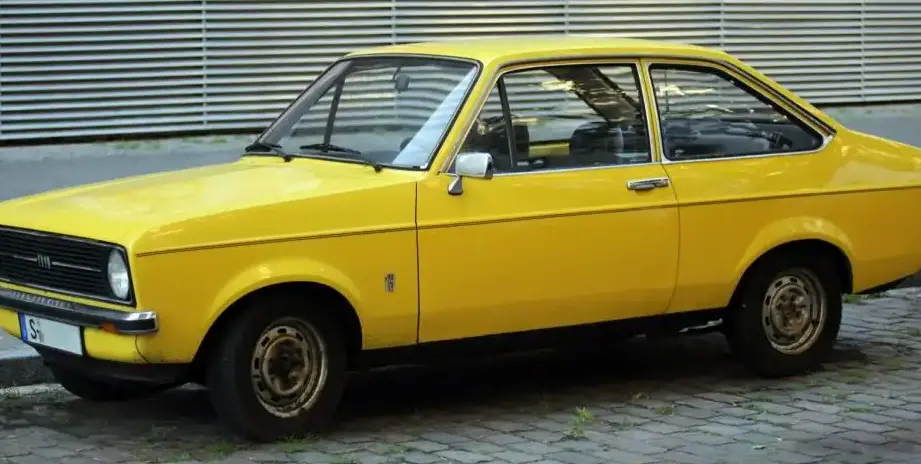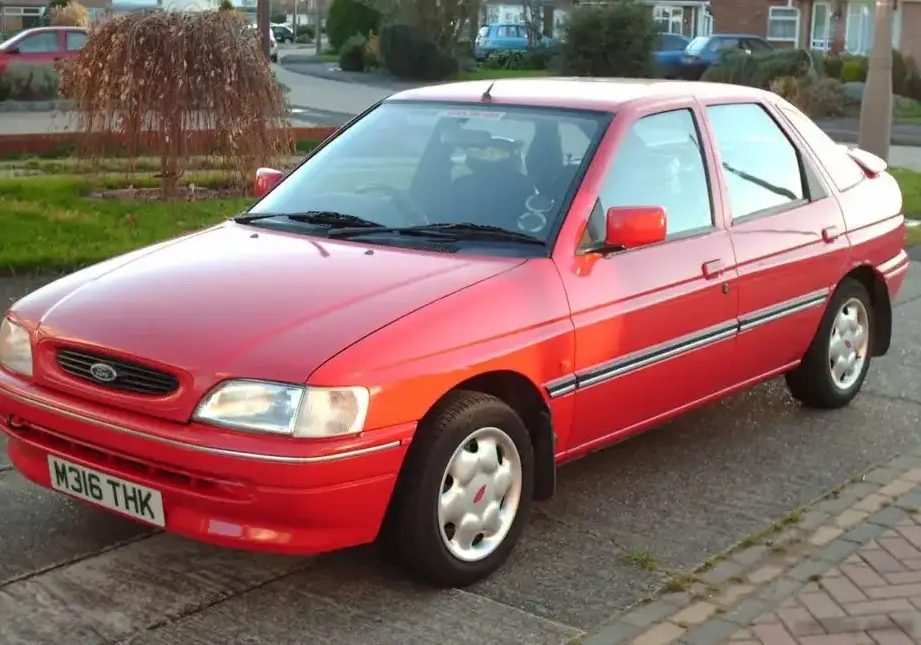
The Ford Escort VI Hatch (GAL) 2.0 i XR3, produced between 1991 and 1995, represented a performance-oriented variant within the sixth generation of the popular Ford Escort. Positioned as a sporty trim level, the XR3 aimed to deliver a more engaging driving experience than the standard Escort models. It was a key offering in the European market, where the Escort was a dominant force in the compact hatchback segment. The GAL generation, built upon the Ford B platform, saw significant updates in styling and technology compared to its predecessor, and the 2.0 i XR3 was among the more desirable versions.
Technical Specifications
| Brand | Ford |
| Model | Escort |
| Generation | Escort VI Hatch (GAL) |
| Type | 2.0 i XR3 (120 Hp) |
| Start of production | 1991 |
| End of production | 1995 |
| Powertrain Architecture | Internal Combustion engine |
| Body type | Hatchback |
| Seats | 5 |
| Doors | 3 |
| Fuel Type | Petrol (Gasoline) |
| Acceleration 0 – 100 km/h | 10 sec |
| Acceleration 0 – 62 mph | 10 sec |
| Acceleration 0 – 60 mph | 9.5 sec |
| Maximum speed | 186 km/h (115.58 mph) |
| Weight-to-power ratio | 9.5 kg/Hp, 104.8 Hp/tonne |
| Weight-to-torque ratio | 6.6 kg/Nm, 152 Nm/tonne |
| Power | 120 Hp @ 5600 rpm |
| Power per litre | 60.5 Hp/l |
| Torque | 174 Nm @ 3200 rpm (128.34 lb.-ft. @ 3200 rpm) |
| Engine layout | Front, Transverse |
| Engine displacement | 1984 cm3 (121.07 cu. in.) |
| Number of cylinders | 4 |
| Engine configuration | Inline |
| Cylinder Bore | 82.5 mm (3.25 in.) |
| Piston Stroke | 92.8 mm (3.65 in.) |
| Compression ratio | 10:1 |
| Number of valves per cylinder | 2 |
| Fuel injection system | Multi-port manifold injection |
| Engine aspiration | Naturally aspirated engine |
| Valvetrain | OHC |
| Kerb Weight | 1145 kg (2524.29 lbs.) |
| Max. weight | 1555 kg (3428.19 lbs.) |
| Max load | 410 kg (903.9 lbs.) |
| Trunk (boot) space – minimum | 366 l (12.93 cu. ft.) |
| Trunk (boot) space – maximum | 751 l (26.52 cu. ft.) |
| Fuel tank capacity | 64 l (16.91 US gal | 14.08 UK gal) |
| Length | 4040 mm (159.06 in.) |
| Width | 1692 mm (66.61 in.) |
| Height | 1364 mm (53.7 in.) |
| Wheelbase | 2520 mm (99.21 in.) |
| Front track | 1440 mm (56.69 in.) |
| Rear (Back) track | 1439 mm (56.65 in.) |
| Drivetrain Architecture | The Internal combustion engine (ICE) drives the front wheels of the vehicle. |
| Drive wheel | Front wheel drive |
| Number of gears and type of gearbox | 5 gears, manual transmission |
| Front suspension | Wishbone |
| Rear suspension | Coil spring |
| Front brakes | Ventilated discs |
| Rear brakes | Disc |
| Assisting systems | ABS (Anti-lock braking system) |
| Steering type | Steering rack and pinion |
| Power steering | Hydraulic Steering |
| Tires size | 185/60 R14 H |
Powertrain & Engine Architecture
The heart of the Escort VI 2.0 i XR3 was the Ford Zetec 1.998-liter inline-four cylinder engine. This engine, internally designated as the P70B, was a significant upgrade over the older OHC engines used in previous Escort generations. It featured a cast iron block with an aluminum cylinder head, incorporating multi-port fuel injection and a relatively high 10:1 compression ratio. The dual overhead camshafts (DOHC) and four valves per cylinder contributed to its improved breathing and power output. The engine produced 120 horsepower at 5600 rpm and 174 Nm (128 lb-ft) of torque at 3200 rpm. This power was delivered to the front wheels through a five-speed manual transmission, which was the standard offering for the XR3. The engine’s design prioritized a balance between performance and fuel efficiency, making it suitable for both spirited driving and everyday use.
Driving Characteristics
The 2.0 i XR3 offered a noticeably more engaging driving experience compared to lower-spec Escort models. The 120 hp engine provided brisk acceleration, with a 0-60 mph time of around 9.5 seconds and a top speed of 115.58 mph. The five-speed manual transmission allowed drivers to keep the engine in its optimal power band, while the relatively short gear ratios contributed to responsive acceleration. While not a true sports car, the XR3 offered a good level of handling thanks to its well-tuned suspension and responsive steering. The front-wheel-drive layout provided predictable handling characteristics, although it could exhibit some understeer when pushed hard. Compared to the 1.6-liter versions, the 2.0 i XR3 offered a substantial performance boost, while remaining more affordable and practical than the later, more focused RS2000 model.
Equipment & Trim Levels
The XR3 trim level came reasonably well-equipped for its time. Standard features typically included power steering, alloy wheels, a more sporty interior with bolstered seats, and an upgraded audio system. The interior often featured a dark color scheme with a sporty fabric upholstery. Optional extras included a sunroof, central locking, electric windows, and upgraded sound systems. The XR3 also benefited from subtle exterior styling enhancements, such as a rear spoiler and body-colored bumpers, which distinguished it from the more basic Escort models.
Chassis & Braking
The Escort VI XR3 utilized a MacPherson strut front suspension and a coil spring rear suspension. This setup provided a good balance between ride comfort and handling. The front brakes were ventilated discs, offering good stopping power, while the rear brakes were solid discs. Anti-lock Braking System (ABS) was included as standard, enhancing safety and control during emergency braking situations. The chassis was reinforced compared to standard Escort models to handle the increased power and stresses of spirited driving. The steering was a rack and pinion system with hydraulic assistance, providing precise and responsive steering feel.
Market Reception & Comparison
The Escort VI 2.0 i XR3 was generally well-received by automotive critics. It was praised for its lively performance, responsive handling, and relatively affordable price. Compared to other cars in its class, such as the Volkswagen Golf GTI and the Opel Astra GSi, the XR3 offered a compelling combination of performance and practicality. Fuel economy was respectable for a performance-oriented hatchback, and reliability was generally good, although some owners reported issues with the Zetec engine’s timing belt. The XR3 appealed to drivers who wanted a sporty and engaging driving experience without sacrificing everyday usability.
Legacy
The Ford Escort VI 2.0 i XR3 remains a popular choice among classic car enthusiasts today. Its relatively simple mechanical design and readily available parts make it a relatively easy car to maintain and repair. The Zetec engine is known for its durability and tunability, and many owners have modified their XR3s to increase power and performance. While not as highly sought after as the RS2000, the 2.0 i XR3 offers a good value proposition for those looking for a classic Ford hatchback with a sporty character. The car represents a significant step forward in Ford’s compact car development, and its legacy continues to be appreciated by enthusiasts around the world.