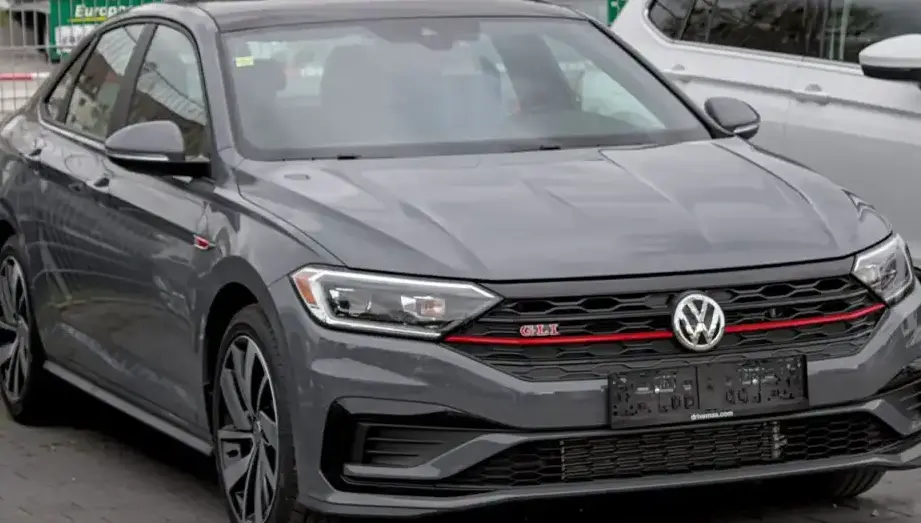
The Volkswagen Jetta VII GLI 2.0 TSI with the 228 horsepower (Hp) engine and dual-clutch gearbox (DSG) was a performance-oriented variant of the seventh-generation Jetta, produced from March 2019 to November 2021. Positioned as the sportiest trim level within the Jetta VII range, it aimed to deliver a more engaging driving experience than the standard Jetta models. This model represented Volkswagen’s continued effort to offer a compelling compact sedan with a focus on performance and technology in the North American market, where the Jetta has traditionally been a strong seller.
Technical Specifications
| Brand | Volkswagen |
| Model | Jetta |
| Generation | Jetta VII |
| Type (Engine) | GLI 2.0 TSI (228 Hp) DSG |
| Start of production | March, 2019 |
| End of production | November, 2021 |
| Powertrain Architecture | Internal Combustion engine |
| Body type | Sedan |
| Seats | 5 |
| Doors | 4 |
| Fuel consumption (economy) – urban | 9.4 l/100 km (25 US mpg, 30.1 UK mpg, 10.6 km/l) |
| Fuel consumption (economy) – extra urban | 7.3 l/100 km (32.2 US mpg, 38.7 UK mpg, 13.7 km/l) |
| Fuel consumption (economy) – combined | 8.4 l/100 km (28 US mpg, 33.6 UK mpg, 11.9 km/l) |
| Fuel Type | Petrol (Gasoline) |
| Weight-to-power ratio | 6.5 kg/Hp, 153.5 Hp/tonne |
| Weight-to-torque ratio | 4.2 kg/Nm, 235.7 Nm/tonne |
| Power | 228 Hp @ 5000 rpm |
| Power per litre | 115 Hp/l |
| Torque | 350 Nm @ 1700 rpm (258.15 lb.-ft. @ 1700 rpm) |
| Engine layout | Front, Transverse |
| Engine Model/Code | EA888 / DKFA |
| Engine displacement | 1983 cm3 (121.01 cu. in.) |
| Number of cylinders | 4 |
| Engine configuration | Inline |
| Cylinder Bore | 82.5 mm (3.25 in.) |
| Piston Stroke | 92.7 mm (3.65 in.) |
| Compression ratio | 9.6:1 |
| Number of valves per cylinder | 4 |
| Fuel injection system | Direct injection |
| Engine aspiration | Turbocharger, Intercooler |
| Valvetrain | DOHC-VVT |
| Engine oil capacity | 5.7 l (6.02 US qt | 5.02 UK qt) |
| Coolant | 10 l (10.57 US qt | 8.8 UK qt) |
| Kerb Weight | 1485 kg (3273.86 lbs.) |
| Max. weight | 1980 kg (4365.15 lbs.) |
| Max load | 495 kg (1091.29 lbs.) |
| Trunk (boot) space – minimum | 399 l (14.09 cu. ft.) |
| Fuel tank capacity | 50 l (13.21 US gal | 11 UK gal) |
| Length | 4704 mm (185.2 in.) |
| Width | 1798 mm (70.79 in.) |
| Height | 1443 mm (56.81 in.) |
| Wheelbase | 2682 mm (105.59 in.) |
| Front track | 1542 mm (60.71 in.) |
| Rear (Back) track | 1534 mm (60.39 in.) |
| Ride height (ground clearance) | 127 mm (5 in.) |
| Drag coefficient (Cd) | 0.27 |
| Minimum turning circle (turning diameter) | 11.1 m (36.42 ft.) |
| Drivetrain Architecture | The Internal combustion engine (ICE) drives the front wheels of the vehicle. |
| Drive wheel | Front wheel drive |
| Number of gears and type of gearbox | 7 gears, automatic transmission DSG |
| Front suspension | Independent coil spring |
| Rear suspension | Independent multi-link suspension |
| Front brakes | Ventilated discs, 340 mm |
| Rear brakes | Disc, 300 mm |
| Assisting systems | ABS (Anti-lock braking system) |
| Steering type | Steering rack and pinion |
| Power steering | Electric Steering |
| Tires size | 225/45 R18 |
| Wheel rims size | 7.5J x 18 |
INTRODUCTION
The Jetta VII GLI 2.0 TSI, launched in 2019, represented the performance pinnacle of the seventh-generation Jetta lineup. Built on the Volkswagen Group’s MQB platform (specifically the A3 variant), it aimed to bridge the gap between mainstream compact sedans and more expensive, dedicated performance cars. The GLI designation, historically used by Volkswagen to denote sporty versions of its mainstream models, signified a focus on enhanced handling, braking, and acceleration. This generation of the Jetta GLI was specifically tailored for the North American market, where demand for a practical yet engaging sedan remained strong.
Powertrain & Engine Architecture
At the heart of the Jetta GLI was the EA888 2.0-liter turbocharged four-cylinder engine, specifically the DKFA code variant. This engine featured direct fuel injection, a sophisticated variable valve timing system (DOHC-VVT), and an integrated intercooler to manage intake air temperatures. The turbocharger provided significant boost, allowing the engine to produce 228 horsepower at 5000 rpm and 350 Nm (258 lb-ft) of torque from as low as 1700 rpm. The engine’s architecture was designed for both performance and efficiency, utilizing a relatively high 9.6:1 compression ratio. Paired with the engine was a seven-speed dual-clutch transmission (DSG), which offered quick and precise shifts, contributing to the car’s sporty character. The DSG transmission allowed for both automatic operation and manual control via paddle shifters.
Driving Characteristics
The Jetta GLI 2.0 TSI DSG delivered a noticeably more spirited driving experience compared to the base Jetta models. The readily available torque from the turbocharged engine provided strong acceleration in everyday driving situations, while the DSG transmission ensured minimal power interruption during shifts. While not as raw or visceral as a traditional manual transmission, the DSG offered a compelling blend of convenience and performance. The GLI’s suspension was tuned for a firmer ride than the standard Jetta, providing better body control and reduced roll during cornering. However, this did come at the expense of some ride comfort. Compared to other Jetta VII variants, such as the 1.4 TSI, the GLI offered a substantial performance advantage, but with a slight trade-off in fuel economy.
Equipment & Trim Levels
The Jetta GLI came standard with a comprehensive list of features, including sport seats upholstered in cloth with red stitching, a leather-wrapped steering wheel, and aluminum pedal caps. Infotainment was typically handled by a touchscreen display with Apple CarPlay and Android Auto compatibility. Standard safety features included automatic emergency braking, blind-spot monitoring, and rear cross-traffic alert. Optional extras included a panoramic sunroof, premium audio system, and adaptive cruise control. The interior design was generally clean and modern, with a focus on functionality and driver engagement.
Chassis & Braking
The Jetta GLI featured an independent suspension setup at all four corners, with coil springs in the front and a multi-link configuration in the rear. This setup provided a good balance between ride comfort and handling precision. Braking duties were handled by ventilated discs at the front and solid discs at the rear. The GLI also benefited from an upgraded braking system compared to the base Jetta, offering improved stopping power and fade resistance. The steering was an electric power-assisted rack and pinion system, providing precise and responsive steering feel.
Market Reception & Comparison
The Jetta GLI 2.0 TSI DSG was generally well-received by automotive critics, who praised its performance, handling, and value proposition. It was often compared to other sporty compact sedans, such as the Honda Civic Si and the Hyundai Elantra N Line. While the Civic Si was often lauded for its more engaging manual transmission and sharper handling, the Jetta GLI offered a more refined interior and a more comfortable ride. Fuel economy was competitive within its class, although slightly lower than the base Jetta models due to the more powerful engine. Reliability reports were generally positive, with the EA888 engine proving to be a durable and dependable unit.
Legacy
The Jetta VII GLI 2.0 TSI DSG has established itself as a desirable used car option for enthusiasts seeking a practical and engaging compact sedan. The EA888 engine is known for its tunability and potential for increased power, making it a popular choice for aftermarket modifications. While some maintenance items, such as the DSG transmission service, can be relatively expensive, the overall reliability of the powertrain has been good. The Jetta GLI continues to represent a compelling blend of performance, practicality, and value in the used car market, appealing to drivers who want a sporty driving experience without sacrificing everyday usability.