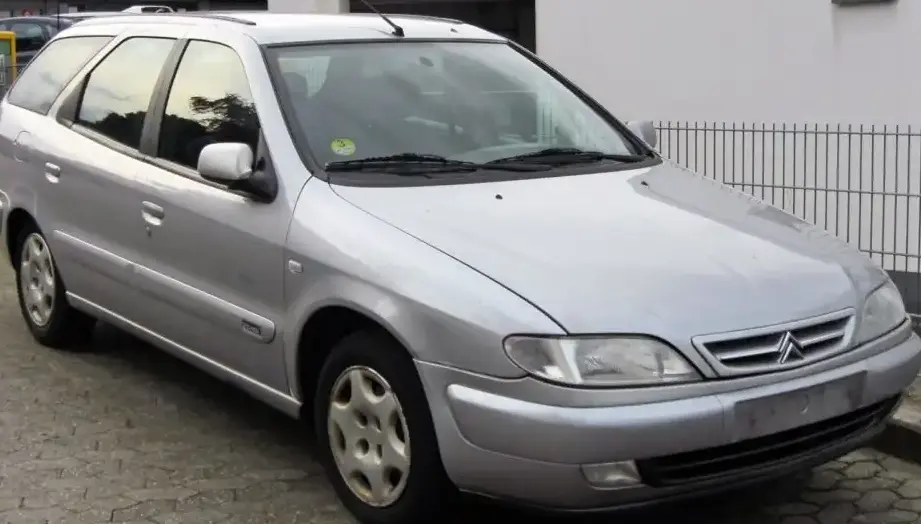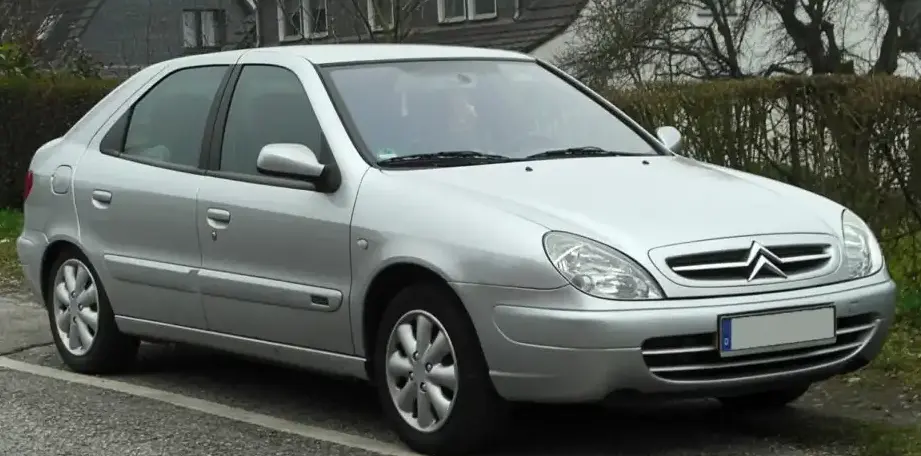
The Citroën Xsara 1.6 i 16V Automatic, produced between 2000 and 2003, represents a mid-range offering within the second-generation (N1, Phase II) Xsara lineup. Positioned as a comfortable and practical family hatchback, it aimed to provide a balance between affordability, fuel efficiency, and ease of driving. This variant utilized a 1.6-liter, 16-valve petrol engine paired with a four-speed automatic transmission, catering to drivers who prioritized convenience over outright performance. The Phase II update brought subtle styling revisions and improvements to interior trim compared to the earlier N1 models.
Technical Specifications
| Brand | Citroen |
| Model | Xsara |
| Generation | Xsara (N1, Phase II) |
| Type (Engine) | 1.6 i 16V (109 Hp) Automatic |
| Start of production | 2000 year |
| End of production | 2003 year |
| Powertrain Architecture | Internal Combustion engine |
| Body type | Hatchback |
| Seats | 5 |
| Doors | 5 |
| Fuel consumption (urban) | 10.9 l/100 km (21.6 US mpg, 25.9 UK mpg, 9.2 km/l) |
| Fuel consumption (extra urban) | 5.6 l/100 km (42 US mpg, 50.4 UK mpg, 17.9 km/l) |
| Fuel consumption (combined) | 7.6 l/100 km (30.9 US mpg, 37.2 UK mpg, 13.2 km/l) |
| CO2 emissions | 180 g/km |
| Fuel Type | Petrol (Gasoline) |
| Acceleration 0 – 100 km/h | 14.2 sec |
| Acceleration 0 – 62 mph | 14.2 sec |
| Acceleration 0 – 60 mph | 13.5 sec |
| Maximum speed | 192 km/h (119.3 mph) |
| Emission standard | Euro 3 |
| Weight-to-power ratio | 10.8 kg/Hp, 93 Hp/tonne |
| Weight-to-torque ratio | 8 kg/Nm, 125.4 Nm/tonne |
| Power | 109 Hp @ 5800 rpm |
| Power per litre | 68.7 Hp/l |
| Torque | 147 Nm @ 4000 rpm (108.42 lb.-ft. @ 4000 rpm) |
| Engine layout | Front, Transverse |
| Engine Model/Code | TU5JP4 |
| Engine displacement | 1587 cm3 (96.84 cu. in.) |
| Number of cylinders | 4 |
| Engine configuration | Inline |
| Cylinder Bore | 78.5 mm (3.09 in.) |
| Piston Stroke | 82 mm (3.23 in.) |
| Number of valves per cylinder | 4 |
| Fuel injection system | Multi-port manifold injection |
| Engine aspiration | Naturally aspirated engine |
| Valvetrain | DOHC |
| Engine oil capacity | 3.25 l (3.43 US qt | 2.86 UK qt) |
| Coolant | 7 l (7.4 US qt | 6.16 UK qt) |
| Kerb Weight | 1172 kg (2583.82 lbs.) |
| Max. weight | 1698 kg (3743.45 lbs.) |
| Max load | 526 kg (1159.63 lbs.) |
| Trunk (boot) space – minimum | 408 l (14.41 cu. ft.) |
| Trunk (boot) space – maximum | 1190 l (42.02 cu. ft.) |
| Fuel tank capacity | 54 l (14.27 US gal | 11.88 UK gal) |
| Max. roof load | 75 kg (165.35 lbs.) |
| Permitted trailer load with brakes (12%) | 1100 kg (2425.08 lbs.) |
| Permitted trailer load without brakes | 595 kg (1311.75 lbs.) |
| Permitted towbar download | 70 kg (154.32 lbs.) |
| Length | 4188 mm (164.88 in.) |
| Width | 1705 mm (67.13 in.) |
| Width including mirrors | 1975 mm (77.76 in.) |
| Height | 1405 mm (55.31 in.) |
| Wheelbase | 2540 mm (100 in.) |
| Front track | 1433 mm (56.42 in.) |
| Rear (Back) track | 1442 mm (56.77 in.) |
| Front overhang | 880 mm (34.65 in.) |
| Rear overhang | 768 mm (30.24 in.) |
| Minimum turning circle | 11.5 m (37.73 ft.) |
| Drivetrain Architecture | The Internal combustion engine (ICE) drives the front wheels of the vehicle. |
| Drive wheel | Front wheel drive |
| Number of gears and type of gearbox | 4 gears, automatic transmission |
| Front suspension | Independent, type McPherson with coil spring and anti-roll bar |
| Rear suspension | Torsion |
| Front brakes | Ventilated discs |
| Rear brakes | Disc |
| Assisting systems | ABS (Anti-lock braking system) |
| Steering type | Steering rack and pinion |
| Power steering | Hydraulic Steering |
| Tires size | 195/55 R15 |
| Wheel rims size | 6J x 15 |
Powertrain & Engine Architecture
The heart of the Xsara 1.6 i 16V Automatic is the TU5JP4 engine, a 1.6-liter inline-four cylinder petrol engine. This engine is a common sight in many PSA Group vehicles of the era (Peugeot, Citroën). The ‘16V’ designation indicates the engine features four valves per cylinder, enhancing breathing and contributing to improved power output. It utilizes a multi-point fuel injection system, delivering fuel directly to the intake ports. The engine’s double overhead camshaft (DOHC) valvetrain further optimizes valve timing for increased efficiency and performance. The four-speed automatic transmission, while providing convenience, was a relatively conventional unit for its time. It lacks the sophistication of modern automatic transmissions with more gears and electronic control.
Driving Characteristics
The 109 horsepower and 147 Nm (108 lb-ft) of torque produced by the 1.6-liter engine, when coupled with the four-speed automatic, resulted in a comfortable but not particularly sporty driving experience. Acceleration from 0-60 mph took around 13.5-14.2 seconds, and top speed was approximately 119 mph. The automatic transmission’s gear ratios were geared towards fuel economy and smooth cruising rather than rapid acceleration. Compared to the manual transmission version of the same engine, the automatic suffered a slight performance penalty due to the transmission’s inherent efficiency losses. Higher-output versions of the Xsara, such as those equipped with the 2.0-liter 16V engine, offered significantly more spirited performance, but at the cost of increased fuel consumption.
Equipment & Trim Levels
The 1.6 i 16V Automatic typically came with a reasonable level of standard equipment. This included central locking, power steering, electric front windows, and an AM/FM radio. Interior upholstery was generally cloth, with a relatively simple dashboard layout. Optional extras available for this trim level included air conditioning, alloy wheels, and a CD player. The trim level often dictated the quality of the cloth upholstery and the presence of additional features like a trip computer.
Chassis & Braking
The Xsara’s chassis featured an independent McPherson strut suspension at the front, providing a comfortable ride and decent handling. The rear suspension utilized a torsion beam setup, which was a cost-effective solution for maintaining ride quality. Braking was handled by ventilated discs at the front and solid discs at the rear. Anti-lock Braking System (ABS) was standard, enhancing safety by preventing wheel lockup during hard braking. The suspension setup was tuned for comfort, prioritizing a smooth ride over sharp handling.
Market Reception & Comparison
The Citroën Xsara 1.6 i 16V Automatic was generally well-received as a practical and affordable family car. Critics praised its comfortable ride and spacious interior. However, the automatic transmission was sometimes criticized for being somewhat sluggish and lacking the responsiveness of the manual gearbox. Fuel economy was considered reasonable for its class, although not exceptional. Compared to rivals like the Ford Focus and Volkswagen Golf, the Xsara offered a distinctive French flair and a focus on comfort, but often lacked the brand prestige of its German competitors.
Legacy
The TU5JP4 engine, in its various iterations, proved to be a relatively reliable powerplant. The four-speed automatic transmission, while not known for its longevity in some applications, generally held up well with regular maintenance. Today, the Xsara 1.6 i 16V Automatic can be found as an affordable used car. Maintenance costs are generally reasonable, and parts availability is still fairly good. However, potential buyers should be aware of the possibility of age-related issues, such as corrosion and wear on suspension components. The car represents a solid, if unspectacular, example of early 2000s family motoring.