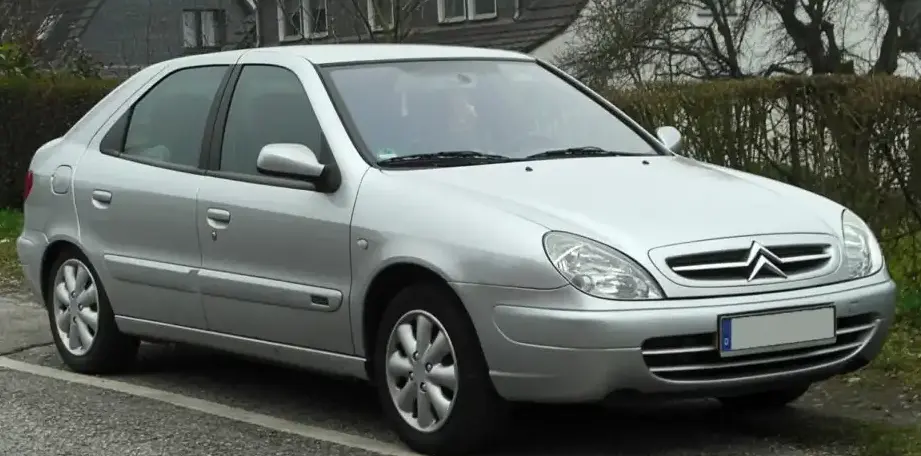
The Citroën Xsara 1.9D, specifically the variant produced between 2000 and 2001 as part of the Phase II update of the N1 generation, represented an economical and practical offering within the compact hatchback segment. Positioned as an entry-level diesel option, it catered to buyers prioritizing fuel efficiency and low running costs over outright performance. This model played a significant role in Citroën’s European sales, offering a functional and affordable vehicle for everyday use. It was a common sight on French and wider European roads, serving as a workhorse for families and individuals alike.
Technical Specifications
| Brand | Citroën |
| Model | Xsara |
| Generation | Xsara (N1, Phase II) |
| Type (Engine) | 1.9 D (69 Hp) |
| Start of production | 2000 |
| End of production | 2001 |
| Powertrain Architecture | Internal Combustion engine |
| Body type | Hatchback |
| Seats | 5 |
| Doors | 5 |
| Fuel consumption (urban) | 8.3 l/100 km (28.3 US mpg, 34 UK mpg, 12 km/l) |
| Fuel consumption (extra urban) | 5 l/100 km (47 US mpg, 56.5 UK mpg, 20 km/l) |
| Fuel consumption (combined) | 6.2 l/100 km (37.9 US mpg, 45.6 UK mpg, 16.1 km/l) |
| CO2 emissions | 164 g/km |
| Fuel Type | Diesel |
| Acceleration 0 – 100 km/h | 18 sec |
| Acceleration 0 – 62 mph | 18 sec |
| Acceleration 0 – 60 mph | 17.1 sec |
| Maximum speed | 162 km/h (100.66 mph) |
| Emission standard | Euro 3 |
| Weight-to-power ratio | 16.8 kg/Hp, 59.5 Hp/tonne |
| Weight-to-torque ratio | 9.3 kg/Nm, 107.9 Nm/tonne |
| Power | 69 Hp @ 4600 rpm |
| Power per litre | 36.9 Hp/l |
| Torque | 125 Nm @ 2500 rpm (92.2 lb.-ft. @ 2500 rpm) |
| Engine layout | Front, Transverse |
| Engine Model/Code | WJY DW8B |
| Engine displacement | 1868 cm3 (113.99 cu. in.) |
| Number of cylinders | 4 |
| Engine configuration | Inline |
| Cylinder Bore | 82.2 mm (3.24 in.) |
| Piston Stroke | 88 mm (3.46 in.) |
| Compression ratio | 23:1 |
| Number of valves per cylinder | 2 |
| Fuel injection system | Precombustion chamber injection |
| Engine aspiration | Naturally aspirated engine |
| Valvetrain | SOHC |
| Engine oil capacity | 4.5 l (4.76 US qt | 3.96 UK qt) |
| Coolant | 8.5 l (8.98 US qt | 7.48 UK qt) |
| Kerb Weight | 1159 kg (2555.16 lbs.) |
| Max. weight | 1697 kg (3741.24 lbs.) |
| Max load | 538 kg (1186.09 lbs.) |
| Trunk (boot) space – minimum | 408 l (14.41 cu. ft.) |
| Trunk (boot) space – maximum | 1190 l (42.02 cu. ft.) |
| Fuel tank capacity | 54 l (14.27 US gal | 11.88 UK gal) |
| Max. roof load | 75 kg (165.35 lbs.) |
| Permitted trailer load with brakes (12%) | 1100 kg (2425.08 lbs.) |
| Permitted trailer load without brakes | 590 kg (1300.73 lbs.) |
| Permitted towbar download | 70 kg (154.32 lbs.) |
| Length | 4188 mm (164.88 in.) |
| Width | 1705 mm (67.13 in.) |
| Width including mirrors | 1975 mm (77.76 in.) |
| Height | 1405 mm (55.31 in.) |
| Wheelbase | 2540 mm (100 in.) |
| Front track | 1423 mm (56.02 in.) |
| Rear (Back) track | 1430 mm (56.3 in.) |
| Front overhang | 880 mm (34.65 in.) |
| Rear overhang | 768 mm (30.24 in.) |
| Minimum turning circle | 11.5 m (37.73 ft.) |
| Drivetrain Architecture | The Internal combustion engine (ICE) drives the front wheels of the vehicle. |
| Drive wheel | Front wheel drive |
| Number of gears and type of gearbox | 5 gears, manual transmission |
| Front suspension | Independent, type McPherson with coil spring and anti-roll bar |
| Rear suspension | Torsion |
| Front brakes | Ventilated discs |
| Rear brakes | Drum |
| Assisting systems | ABS (Anti-lock braking system) |
| Steering type | Steering rack and pinion |
| Power steering | Hydraulic Steering |
| Tires size | 185/65 R14 |
INTRODUCTION
The Citroën Xsara N1, launched in 1997, was a significant model for the French manufacturer, representing a move towards more modern and competitive vehicles in the compact family car segment. The Phase II update, introduced around 2000, brought subtle styling revisions and mechanical improvements. The 1.9D variant, powered by the DW8 engine, was a key part of the lineup, offering a diesel alternative focused on economy. This particular engine and trim level was aimed at buyers who prioritized fuel efficiency and practicality over performance, making it a popular choice for those covering high mileages or seeking a low-cost-to-operate vehicle.
Powertrain & Engine Architecture
The heart of the Xsara 1.9D is the DW8B diesel engine, identified by the code WJY. This 1868cc inline-four cylinder engine utilizes precombustion chamber injection, a system common in diesel engines of that era. This system involves injecting fuel into a precombustion chamber connected to the main cylinder, promoting more complete combustion. The engine features a single overhead camshaft (SOHC) operating two valves per cylinder. The DW8 engine family is known for its robustness and relative simplicity. The 1.9D produced 69 horsepower at 4600 rpm and 125 Nm (92.2 lb-ft) of torque at 2500 rpm. The engine was typically paired with a five-speed manual transmission, although an automatic option was available, albeit less common. The automatic transmission was a four-speed unit, designed for smooth operation but at the expense of some fuel economy and responsiveness.
Driving Characteristics
The Xsara 1.9D with the manual transmission offered adequate, if uninspiring, performance. Acceleration from 0-60 mph took around 17.1 seconds, and top speed was approximately 100.66 mph. The 69 hp output meant that overtaking required careful planning, and the engine felt strained when pushed hard. The automatic transmission further dulled performance, with noticeable delays in gear changes. However, the engine’s torque delivery made it reasonably drivable in everyday conditions, providing sufficient pulling power for urban and highway driving. The gear ratios in the manual transmission were geared towards economy, with a relatively long fifth gear for comfortable cruising. The automatic, while convenient, resulted in a more sluggish driving experience.
Equipment & Trim Levels
The 1.9D variant of the Xsara typically came with a modest level of standard equipment. Basic models featured central locking, power steering, and an adjustable steering column. Interior upholstery was typically cloth, and the dashboard featured a functional, if somewhat utilitarian, design. Optional extras included air conditioning, electric windows, and an upgraded audio system. Higher trim levels, such as the LX or Exclusive, added features like alloy wheels, fog lights, and more luxurious interior trim. The 1.9D was often seen as a base model, with buyers opting for additional features through optional packages.
Chassis & Braking
The Xsara N1 utilized a McPherson strut front suspension with a coil spring and anti-roll bar, providing a comfortable ride and reasonable handling. The rear suspension employed a torsion beam setup, which was cost-effective and space-efficient. Braking was handled by ventilated discs at the front and drum brakes at the rear. ABS (Anti-lock Braking System) was standard equipment, enhancing safety. The suspension setup was tuned for comfort rather than outright sportiness, prioritizing a smooth ride over sharp handling. The drum brakes on the rear were a cost-saving measure, and while adequate for normal use, they lacked the stopping power of disc brakes.
Market Reception & Comparison
The Citroën Xsara 1.9D was generally well-received by critics as a practical and economical choice. It was praised for its fuel efficiency and low running costs, but criticized for its lack of performance. Compared to other engines in the Xsara lineup, such as the 1.8 16V petrol engine or the more powerful 2.0HDi diesel, the 1.9D offered significantly less power but superior fuel economy. The 1.9D was often compared to similar diesel hatchbacks from competitors like Peugeot, Renault, and Volkswagen. In terms of reliability, the DW8 engine was generally considered robust, but the precombustion chamber injection system could require occasional maintenance.
Legacy
The Citroën Xsara 1.9D, while not a performance icon, has proven to be a durable and reliable vehicle. Many examples are still on the road today, testament to the robustness of the DW8 engine. In the used car market, these models are highly sought after by those seeking an affordable and economical vehicle. Maintenance costs are relatively low, and parts availability is generally good. However, potential buyers should be aware of the age-related issues common to older vehicles, such as corrosion and wear and tear on suspension components. The 1.9D represents a practical and dependable choice for those prioritizing economy and reliability over outright performance.