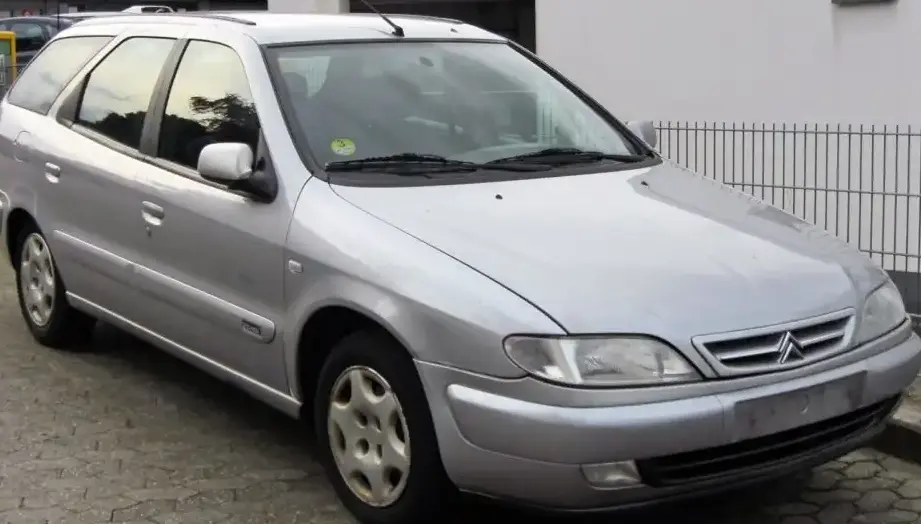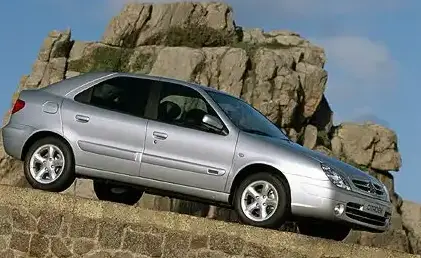
The Citroën Xsara 2.0 16V, produced between February 2003 and 2004, represents a performance-oriented variant within the second generation (N1, Phase III) of the Xsara compact hatchback. Positioned as a mid-range to upper-mid-range offering, it aimed to provide a more engaging driving experience compared to the base models, while remaining a practical and comfortable family vehicle. This variant was primarily sold in European markets, where the Xsara competed with vehicles like the Ford Focus, Volkswagen Golf, and Opel/Vauxhall Astra. The Phase III update brought styling revisions and refinements to the already well-regarded N1 platform, solidifying the Xsara’s position as a strong contender in the competitive C-segment.
Technical Specifications
| Brand | Citroen |
| Model | Xsara |
| Generation | Xsara (N1, Phase III) |
| Type (Engine) | 2.0 16V (136 Hp) |
| Start of production | February, 2003 |
| End of production | 2004 |
| Powertrain Architecture | Internal Combustion engine |
| Body type | Hatchback |
| Seats | 5 |
| Doors | 5 |
| Fuel consumption (urban) | 11.4 l/100 km (20.6 US mpg, 24.8 UK mpg, 8.8 km/l) |
| Fuel consumption (extra urban) | 5.6 l/100 km (42 US mpg, 50.4 UK mpg, 17.9 km/l) |
| Fuel consumption (combined) | 7.7 l/100 km (30.5 US mpg, 36.7 UK mpg, 13 km/l) |
| CO2 emissions | 184 g/km |
| Fuel Type | Petrol (Gasoline) |
| Acceleration 0 – 100 km/h | 9.6 sec |
| Acceleration 0 – 62 mph | 9.6 sec |
| Acceleration 0 – 60 mph | 9.1 sec |
| Maximum speed | 210 km/h (130.49 mph) |
| Emission standard | Euro 3 D4 |
| Weight-to-power ratio | 8.6 kg/Hp, 115.9 Hp/tonne |
| Weight-to-torque ratio | 6.2 kg/Nm, 162 Nm/tonne |
| Power | 136 Hp @ 6000 rpm |
| Power per litre | 68.1 Hp/l |
| Torque | 190 Nm @ 4100 rpm (140.14 lb.-ft. @ 4100 rpm) |
| Engine layout | Front, Transverse |
| Engine Model/Code | RFN EW10J4 |
| Engine displacement | 1997 cm3 (121.86 cu. in.) |
| Number of cylinders | 4 |
| Engine configuration | Inline |
| Cylinder Bore | 85 mm (3.35 in.) |
| Piston Stroke | 88 mm (3.46 in.) |
| Compression ratio | 10.8:1 |
| Number of valves per cylinder | 4 |
| Fuel injection system | Multi-port manifold injection |
| Engine aspiration | Naturally aspirated engine |
| Valvetrain | DOHC |
| Engine oil capacity | 4.25 l (4.49 US qt | 3.74 UK qt) |
| Coolant | 7 l (7.4 US qt | 6.16 UK qt) |
| Kerb Weight | 1173 kg (2586.02 lbs.) |
| Max. weight | 1688 kg (3721.4 lbs.) |
| Max load | 515 kg (1135.38 lbs.) |
| Trunk (boot) space – minimum | 408 l (14.41 cu. ft.) |
| Trunk (boot) space – maximum | 1190 l (42.02 cu. ft.) |
| Fuel tank capacity | 54 l (14.27 US gal | 11.88 UK gal) |
| Max. roof load | 75 kg (165.35 lbs.) |
| Permitted trailer load with brakes (12%) | 1100 kg (2425.08 lbs.) |
| Permitted trailer load without brakes | 615 kg (1355.84 lbs.) |
| Permitted towbar download | 70 kg (154.32 lbs.) |
| Length | 4188 mm (164.88 in.) |
| Width | 1705 mm (67.13 in.) |
| Width including mirrors | 2014 mm (79.29 in.) |
| Height | 1405 mm (55.31 in.) |
| Wheelbase | 2540 mm (100 in.) |
| Front track | 1433 mm (56.42 in.) |
| Rear (Back) track | 1442 mm (56.77 in.) |
| Front overhang | 880 mm (34.65 in.) |
| Rear overhang | 768 mm (30.24 in.) |
| Minimum turning circle (turning diameter) | 11.5 m (37.73 ft.) |
| Drivetrain Architecture | The Internal combustion engine (ICE) drives the front wheels of the vehicle. |
| Drive wheel | Front wheel drive |
| Number of gears and type of gearbox | 5 gears, manual transmission |
| Front suspension | Independent, type McPherson with coil spring and anti-roll bar |
| Rear suspension | Torsion |
| Front brakes | Ventilated discs |
| Rear brakes | Disc |
| Assisting systems | ABS (Anti-lock braking system) |
| Steering type | Steering rack and pinion |
| Power steering | Hydraulic Steering |
| Tires size | 195/55 R15 |
| Wheel rims size | 6J x 15 |
INTRODUCTION
The Citroën Xsara 2.0 16V (N1, Phase III) was introduced in February 2003 as a higher-performance variant of the popular Xsara hatchback. Built on the PSA Group’s 1HX0/A3 platform, shared with the Peugeot 307, the Xsara aimed to offer a blend of practicality, comfort, and driving enjoyment. This 2.0-liter engine option was positioned above the 1.6 and 1.8-liter variants, offering a noticeable increase in power and torque. The Phase III update brought minor cosmetic changes, improved interior trim, and refinements to the suspension, enhancing the overall driving experience. It was a key model in Citroën’s lineup, appealing to buyers seeking a more spirited alternative to mainstream compact hatchbacks.
Powertrain & Engine Architecture
The heart of the Xsara 2.0 16V is the RFN (or sometimes EW10J4) engine, a 1997cc inline-four cylinder petrol engine. This engine is part of Citroën/Peugeot’s EW series, known for its robust construction and relatively simple design. It features a double overhead camshaft (DOHC) valvetrain with four valves per cylinder, contributing to its good breathing and power output. Fuel delivery is managed by a multi-port fuel injection system, providing precise fuel metering for optimal combustion. The engine produces 136 horsepower at 6000 rpm and 190 Nm (140 lb-ft) of torque at 4100 rpm. The engine’s design prioritizes drivability and responsiveness over outright peak power. The engine is transversely mounted in the front of the vehicle. The 2.0 16V was typically paired with a five-speed manual transmission, although a four-speed automatic transmission was also available, albeit less common. The automatic transmission, while offering convenience, slightly impacted acceleration and fuel economy compared to the manual version.
Driving Characteristics
The Xsara 2.0 16V offers a noticeably more engaging driving experience than its lower-powered siblings. The increased power and torque provide brisk acceleration, with a 0-60 mph time of around 9.1 seconds and a top speed of 130.49 mph. The engine feels responsive throughout the rev range, making it well-suited for both city driving and highway cruising. The five-speed manual transmission allows for precise gear selection, maximizing the engine’s performance. The automatic transmission, while smooth, can feel somewhat sluggish, particularly during quick overtaking maneuvers. The suspension, tuned for comfort, provides a compliant ride, absorbing bumps and imperfections in the road surface effectively. However, it’s not as sporty or precise as some of its rivals, such as the Ford Focus. The steering is light and accurate, making it easy to maneuver in tight spaces.
Equipment & Trim Levels
The 2.0 16V variant of the Xsara typically came with a generous level of standard equipment. This included power steering, central locking, electric front windows, an RDS radio, and ABS brakes. Higher trim levels, such as the Exclusive, added features like air conditioning, alloy wheels, a trip computer, and upgraded interior trim. Interior upholstery was typically cloth, with options for leather available on higher-spec models. The dashboard layout was functional and ergonomically designed, with easy-to-read gauges and intuitive controls. Optional extras included a sunroof, rear parking sensors, and a CD changer.
Chassis & Braking
The Xsara 2.0 16V utilizes a McPherson strut front suspension with a torsion beam rear suspension. This setup provides a good balance between ride comfort and handling. The front suspension incorporates an anti-roll bar to reduce body roll during cornering. Braking duties are handled by ventilated discs at the front and solid discs at the rear. ABS (Anti-lock Braking System) is standard, providing enhanced braking performance and stability. The chassis is relatively lightweight, contributing to the car’s agility and responsiveness. The steering is rack and pinion, providing precise and predictable steering feel.
Market Reception & Comparison
The Citroën Xsara 2.0 16V was generally well-received by automotive critics. It was praised for its comfortable ride, spacious interior, and strong engine performance. However, some critics noted that its handling wasn’t as sharp as some of its rivals, and the interior design was somewhat dated. Compared to the 1.6 and 1.8-liter versions, the 2.0 16V offered a significant performance boost, making it a more appealing option for drivers who prioritized driving enjoyment. Fuel economy was slightly lower than the smaller-engined models, but the increased performance was often considered a worthwhile trade-off. The 2.0 16V also offered a more refined driving experience than the diesel variants, which were often noisier and less responsive.
Legacy
The Citroën Xsara 2.0 16V has proven to be a relatively reliable vehicle, with the RFN engine being known for its durability. However, like all cars of this age, it’s susceptible to age-related issues, such as corrosion and wear and tear on suspension components. The automatic transmission, in particular, can be prone to issues if not properly maintained. Today, the Xsara 2.0 16V is a relatively affordable used car, offering a good value proposition for buyers seeking a practical and comfortable hatchback with a bit of extra performance. It remains a popular choice among enthusiasts who appreciate its classic French charm and robust engineering.