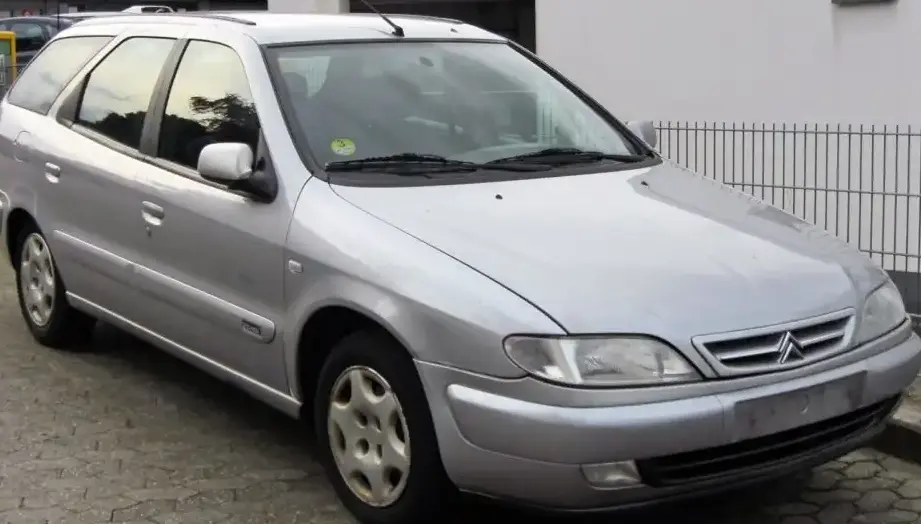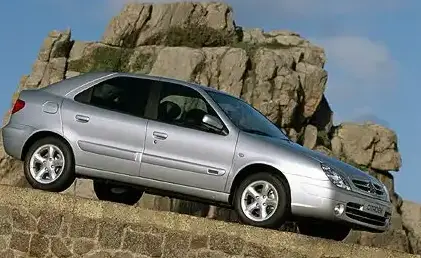
The Citroen Xsara 2.0 HDi (90 hp) represents a specific variant within the second generation (N1) Xsara lineup, produced primarily between February 2003 and 2004. This model, positioned as a fuel-efficient and practical option, utilized a diesel engine paired with a manual transmission. It was part of Citroen’s broader strategy to offer a range of Xsara models catering to diverse customer needs, from economy-focused buyers to those seeking more performance. The N1 series, a facelift of the original Xsara, aimed to refine the vehicle’s aesthetics and improve its overall appeal in the competitive European small family car segment.
Technical Specifications
| Brand | Citroen |
| Model | Xsara |
| Generation | Xsara (N1, Phase III) |
| Type (Engine) | 2.0 HDi (90 Hp) |
| Start of production | February, 2003 |
| End of production | 2004 |
| Powertrain Architecture | Internal Combustion engine |
| Body type | Hatchback |
| Seats | 5 |
| Doors | 5 |
| Fuel consumption (urban) | 7.3 l/100 km (32.2 US mpg) |
| Fuel consumption (extra urban) | 4.2 l/100 km (56 US mpg) |
| Fuel consumption (combined) | 5.4 l/100 km (43.6 US mpg) |
| CO2 emissions | 141 g/km |
| Fuel Type | Diesel |
| Acceleration 0 – 100 km/h | 13.2 sec |
| Acceleration 0 – 62 mph | 13.2 sec |
| Acceleration 0 – 60 mph | 12.5 sec |
| Maximum speed | 180 km/h (111.85 mph) |
| Emission standard | Euro 3 |
| Weight-to-power ratio | 13.3 kg/Hp |
| Weight-to-torque ratio | 5.9 kg/Nm |
| Power | 90 Hp @ 4000 rpm |
| Torque | 205 Nm @ 1900 rpm (151.2 lb.-ft. @ 1900 rpm) |
| Engine layout | Front, Transverse |
| Engine Model/Code | RHY DW10TD |
| Engine displacement | 1997 cm3 (121.86 cu. in.) |
| Number of cylinders | 4 |
| Engine configuration | Inline |
| Cylinder Bore | 85 mm (3.35 in.) |
| Piston Stroke | 88 mm (3.46 in.) |
| Compression ratio | 18:1 |
| Number of valves per cylinder | 2 |
| Fuel injection system | Diesel Commonrail |
| Engine aspiration | Turbocharger |
| Valvetrain | OHC |
| Engine oil capacity | 4.2 l (4.44 US qt | 3.7 UK qt) |
| Coolant | 5.8 l (6.13 US qt | 5.1 UK qt) |
| Kerb Weight | 1200 kg (2645.55 lbs.) |
| Max. weight | 1725 kg (3802.97 lbs.) |
| Max load | 525 kg (1157.43 lbs.) |
| Trunk (boot) space – minimum | 408 l (14.41 cu. ft.) |
| Trunk (boot) space – maximum | 1190 l (42.02 cu. ft.) |
| Fuel tank capacity | 54 l (14.27 US gal | 11.88 UK gal) |
| Max. roof load | 75 kg (165.35 lbs.) |
| Permitted trailer load with brakes (12%) | 1100 kg (2425.08 lbs.) |
| Permitted trailer load without brakes | 620 kg (1366.87 lbs.) |
| Permitted towbar download | 70 kg (154.32 lbs.) |
| Length | 4188 mm (164.88 in.) |
| Width | 1705 mm (67.13 in.) |
| Width including mirrors | 2014 mm (79.29 in.) |
| Height | 1405 mm (55.31 in.) |
| Wheelbase | 2540 mm (100 in.) |
| Front track | 1433 mm (56.42 in.) |
| Rear (Back) track | 1442 mm (56.77 in.) |
| Front overhang | 880 mm (34.65 in.) |
| Rear overhang | 768 mm (30.24 in.) |
| Minimum turning circle | 11.5 m (37.73 ft.) |
| Drivetrain Architecture | Front wheel drive |
| Number of gears and type of gearbox | 5 gears, manual transmission |
| Front suspension | Independent, type McPherson with coil spring and anti-roll bar |
| Rear suspension | Torsion |
| Front brakes | Ventilated discs |
| Rear brakes | Disc |
| Assisting systems | ABS (Anti-lock braking system) |
| Steering type | Steering rack and pinion |
| Power steering | Hydraulic Steering |
| Tires size | 195/55 R15 |
| Wheel rims size | 6J x 15 |
Powertrain & Engine Architecture
The heart of the Xsara 2.0 HDi (90 hp) is the DW10TD engine, specifically coded RHY. This 1.997-liter, four-cylinder diesel engine utilizes a common rail direct injection system, a technology that significantly improved fuel efficiency and reduced noise compared to earlier diesel designs. The engine features an overhead camshaft (OHC) valvetrain with two valves per cylinder. A turbocharger is employed to boost power output, delivering 90 horsepower at 4000 rpm and 205 Nm (151.2 lb-ft) of torque at 1900 rpm. The engine’s robust construction and relatively simple design contributed to its longevity. The manual transmission, a five-speed unit, was the standard offering for this variant, providing a balance between fuel economy and driver control.
Driving Characteristics
The 2.0 HDi (90 hp) Xsara offered a practical and economical driving experience. While not particularly sporty, the engine provided adequate power for everyday driving, with the 205 Nm of torque available from low revs making it reasonably responsive in most situations. Acceleration from 0 to 60 mph took around 12.5 seconds, and the top speed was approximately 112 mph. Compared to higher-powered versions of the Xsara, such as those equipped with the 2.0 HDi 110 hp engine, this variant felt noticeably slower. However, the 90 hp version prioritized fuel economy, achieving combined fuel consumption figures of around 43.6 US mpg. The manual transmission allowed for greater driver engagement compared to the automatic options available on other Xsara models.
Equipment & Trim Levels
The 2.0 HDi (90 hp) Xsara typically came with a moderate level of standard equipment. This included central locking, power steering, electric front windows, and an ABS anti-lock braking system. Interior upholstery was generally cloth, and the dashboard featured a functional, if somewhat basic, design. Optional extras included air conditioning, alloy wheels, and a CD player. The trim level often dictated the availability of these options, with higher trims offering more features as standard. This variant was generally positioned as a mid-range offering, appealing to buyers seeking a balance between affordability and practicality.
Chassis & Braking
The Xsara’s chassis featured an independent McPherson strut suspension at the front and a torsion beam suspension at the rear. This setup provided a comfortable ride quality, although it wasn’t particularly sporty in handling. The front brakes were ventilated discs, while the rear brakes were solid discs. The hydraulic power steering offered light and precise steering feel. The suspension was tuned to prioritize comfort and stability, making it well-suited for everyday driving conditions. The relatively lightweight construction of the Xsara helped to contribute to its fuel efficiency and handling characteristics.
Market Reception & Comparison
The Citroen Xsara 2.0 HDi (90 hp) was generally well-received by critics for its fuel efficiency and practicality. It was seen as a sensible choice for buyers seeking a reliable and economical family car. Compared to other trims in the Xsara lineup, the 90 hp version offered the best fuel economy but lacked the performance of the higher-powered models. It competed with other small family cars such as the Ford Focus, Volkswagen Golf, and Renault Megane. The Xsara’s distinctive styling and comfortable ride quality helped it to stand out in a crowded market.
Legacy
The DW10TD engine, found in the Xsara 2.0 HDi (90 hp), proved to be a durable and reliable unit. Many examples of this engine are still on the road today, testament to its robust construction. While maintenance costs can increase with age, the engine is generally considered to be relatively easy to maintain. In the used car market, the 2.0 HDi (90 hp) Xsara represents a good value proposition for buyers seeking an affordable and economical vehicle. Its fuel efficiency and practicality continue to make it a popular choice for those looking for a reliable everyday car.