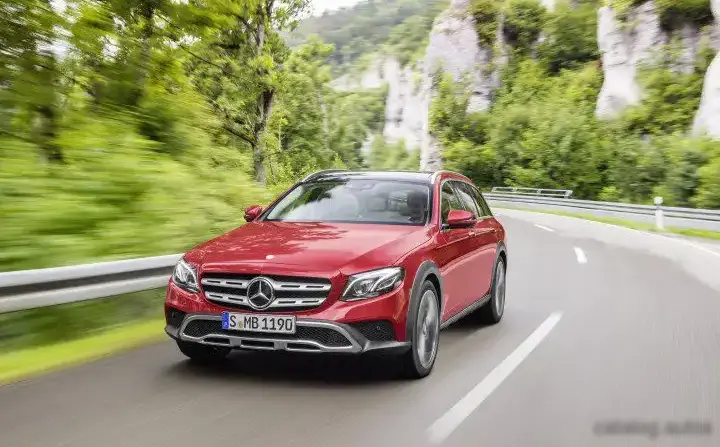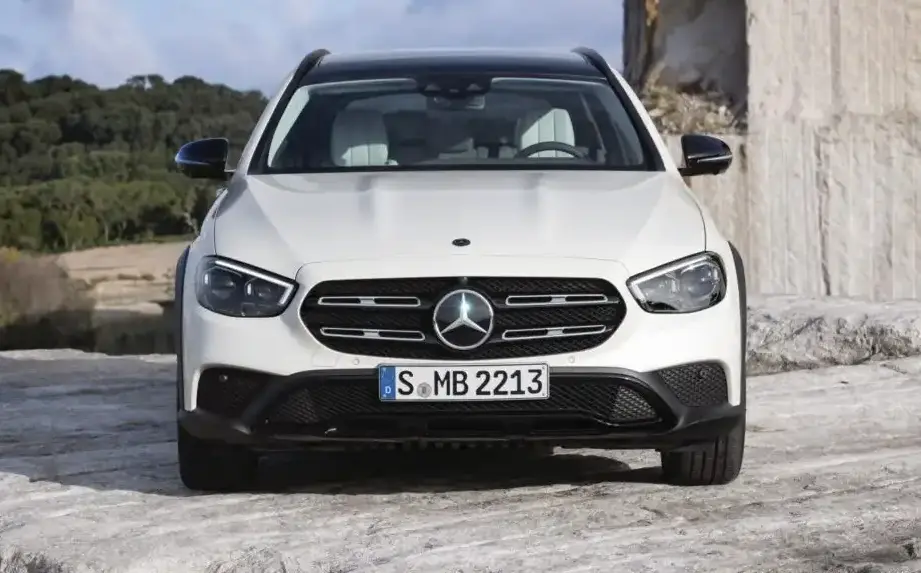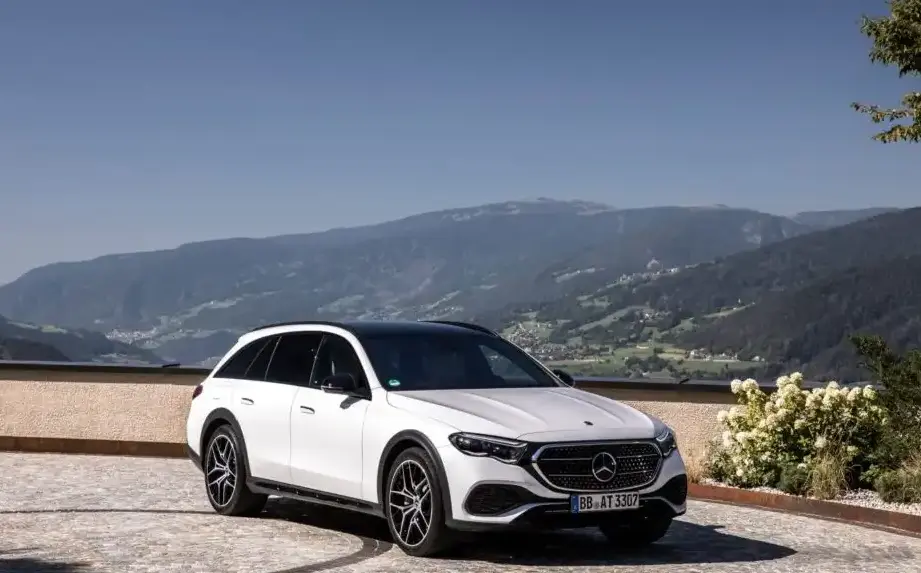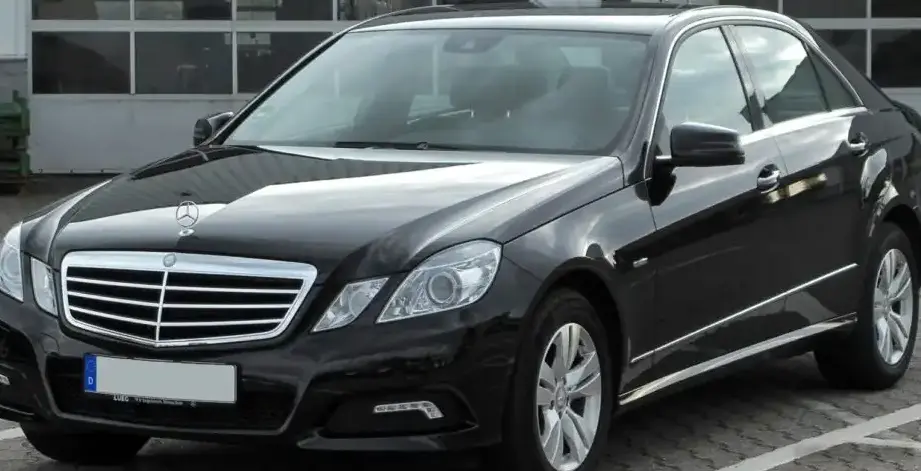
The Mercedes-Benz E 200 NGT BlueEFFICIENCY, produced between 2011 and January 2013, was a variant of the W212 E-Class specifically tailored for European markets seeking a balance between fuel efficiency and moderate performance. This model distinguished itself through its bi-fuel capability, running on either gasoline or Compressed Natural Gas (CNG), and its pairing with the 5G-TRONIC automatic transmission. Positioned as a mid-range offering within the W212 lineup, it aimed to provide a more economical alternative to the higher-powered E 250 and E 350 models, while offering a more refined experience than the base E 200 CDI diesel. The “NGT” designation signifies its Natural Gas Technology.
Technical Specifications
| Brand | Mercedes-Benz |
| Model | E-class |
| Generation | E-class (W212) |
| Type | E 200 NGT BlueEFFICIENCY (163 Hp) 5G-TRONIC |
| Start of production | 2011 |
| End of production | January, 2013 |
| Powertrain Architecture | Internal Combustion engine |
| Body type | Sedan |
| Seats | 5 |
| Doors | 4 |
| Fuel consumption (economy) – urban (NEDC) | 11.5-11.8 l/100 km (20.5 – 19.9 US mpg, 24.6 – 23.9 UK mpg, 8.7 – 8.5 km/l) |
| Fuel consumption (economy) – urban (CNG) (NEDC) | 7.8-7.9 kg/100 km |
| Fuel consumption (economy) – extra urban (NEDC) | 6.1-6.6 l/100 km (38.6 – 35.6 US mpg, 46.3 – 42.8 UK mpg, 16.4 – 15.2 km/l) |
| Fuel consumption (economy) – extra urban (CNG) (NEDC) | 4.2-4.5 kg/100 km |
| Fuel consumption (economy) – combined (NEDC) | 8.1-8.5 l/100 km (29 – 27.7 US mpg, 34.9 – 33.2 UK mpg, 12.3 – 11.8 km/l) |
| Fuel consumption (economy) – combined (CNG) (NEDC) | 5.5-5.7 kg/100 km |
| CO2 emissions (NEDC) | 190-198 g/km |
| CO2 emissions (CNG) (NEDC) | 149-155 g/km |
| Fuel Type | Petrol / CNG |
| Acceleration 0 – 100 km/h | 10.4 sec |
| Acceleration 0 – 62 mph | 10.4 sec |
| Acceleration 0 – 60 mph | 9.9 sec |
| Maximum speed | 224 km/h (139.19 mph) |
| Emission standard | Euro 5 |
| Weight-to-power ratio | 10.2 kg/Hp, 98.2 Hp/tonne |
| Weight-to-torque ratio | 6.9 kg/Nm, 144.6 Nm/tonne |
| Power | 163 Hp @ 5500 rpm |
| Power per litre | 90.8 Hp/l |
| Torque | 240 Nm @ 3000-4000 rpm (177.01 lb.-ft. @ 3000-4000 rpm) |
| Engine layout | Front, Longitudinal |
| Engine Model/Code | M 271.958 |
| Engine displacement | 1796 cm3 (109.6 cu. in.) |
| Number of cylinders | 4 |
| Engine configuration | Inline |
| Cylinder Bore | 82 mm (3.23 in.) |
| Piston Stroke | 85 mm (3.35 in.) |
| Compression ratio | 9.3:1 |
| Number of valves per cylinder | 4 |
| Fuel injection system | Multi-port manifold injection |
| Engine aspiration | Supercharger, Intercooler |
| Valvetrain | DOHC |
| Engine oil capacity | 5.5 l (5.81 US qt | 4.84 UK qt) |
| Kerb Weight | 1660 kg (3659.67 lbs.) |
| Max. weight | 2240 kg (4938.35 lbs.) |
| Max load | 580 kg (1278.68 lbs.) |
| Trunk (boot) space – minimum | 400 l (14.13 cu. ft.) |
| Fuel tank capacity | 59 l (15.59 US gal | 12.98 UK gal) |
| CNG cylinder capacity | 19.5 kg |
| Max. roof load | 100 kg (220.46 lbs.) |
| Permitted trailer load with brakes (12%) | 1900 kg (4188.78 lbs.) |
| Permitted trailer load without brakes | 750 kg (1653.47 lbs.) |
| Length | 4868 mm (191.65 in.) |
| Width | 1854 mm (72.99 in.) |
| Width including mirrors | 2071 mm (81.54 in.) |
| Height | 1471 mm (57.91 in.) |
| Wheelbase | 2874 mm (113.15 in.) |
| Front track | 1598 mm (62.91 in.) |
| Rear (Back) track | 1614 mm (63.54 in.) |
| Front overhang | 841 mm (33.11 in.) |
| Rear overhang | 1153 mm (45.39 in.) |
| Drag coefficient (Cd) | 0.26 |
| Minimum turning circle (turning diameter) | 11.25 m (36.91 ft.) |
| Drivetrain Architecture | The Internal combustion engine (ICE) drives the rear wheels of the vehicle. |
| Drive wheel | Rear wheel drive |
| Number of gears and type of gearbox | 5 gears, automatic transmission G-TRONIC |
| Front suspension | Independent multi-link suspension |
| Rear suspension | Independent multi-link suspension |
| Front brakes | Ventilated discs |
| Rear brakes | Disc |
| Assisting systems | ABS (Anti-lock braking system) |
| Steering type | Steering rack and pinion |
| Power steering | Hydraulic Steering |
| Tires size | 225/55 R16 |
| Wheel rims size | 7.5J x 16 |
Powertrain & Engine Architecture
The E 200 NGT BlueEFFICIENCY utilized the M 271.958 engine, a 1.8-liter inline-four cylinder powerplant. This engine was notable for its Kompressor (supercharger) which provided increased torque at lower engine speeds. The engine featured multi-port fuel injection and a double overhead camshaft (DOHC) valvetrain with four valves per cylinder. The key innovation was its ability to run on either gasoline or CNG. When operating on CNG, the engine management system automatically adjusted to optimize combustion for the alternative fuel. The 5G-TRONIC automatic transmission, a five-speed unit, was specifically calibrated to work with the engine’s torque characteristics, prioritizing smooth shifts and fuel efficiency. This transmission lacked the manual shift mode found in some higher-end Mercedes models.
Driving Characteristics
The 163 horsepower and 177 lb-ft of torque delivered by the E 200 NGT BlueEFFICIENCY provided adequate, but not exhilarating, performance. Acceleration from 0-60 mph took approximately 9.9 seconds, and top speed was limited to 139 mph. Compared to the E 250, which offered significantly more power, the E 200 NGT felt noticeably slower, particularly during overtaking maneuvers. The 5G-TRONIC transmission, while smooth, could sometimes feel hesitant when downshifting. However, the supercharger helped to mitigate turbo lag, providing a relatively responsive driving experience. When running on CNG, a slight reduction in power was noticeable, but the fuel cost savings were substantial in regions with favorable CNG pricing.
Equipment & Trim Levels
The E 200 NGT BlueEFFICIENCY typically came equipped with standard E-Class features, including automatic climate control, power windows and mirrors, and a basic audio system. Interior upholstery was generally cloth, with leather options available as an upgrade. Standard safety features included ABS, traction control, and multiple airbags. Optional extras included a sunroof, navigation system, premium audio, and parking sensors. The trim level was generally considered to be mid-range, offering a good balance of comfort and features without the luxury appointments of the higher-end models.
Chassis & Braking
The W212 E-Class featured an independent multi-link suspension at both the front and rear, providing a comfortable ride quality. The E 200 NGT utilized ventilated disc brakes at the front and solid discs at the rear. ABS (Anti-lock Braking System) was standard. The suspension was tuned for comfort rather than sporty handling, prioritizing a smooth and refined driving experience. Stabilizer bars were fitted to both axles to reduce body roll during cornering.
Market Reception & Comparison
The E 200 NGT BlueEFFICIENCY was primarily marketed in countries with well-developed CNG infrastructure, such as Germany and Italy. Critics praised its fuel efficiency and environmental benefits, particularly when running on CNG. However, some reviewers noted the lack of performance compared to other E-Class models. Compared to the E 200 CDI diesel, the E 200 NGT offered a cleaner-burning alternative, but at a higher purchase price. Fuel economy was competitive with other gasoline-powered vehicles in its class, and significantly better when running on CNG.
Legacy
The E 200 NGT BlueEFFICIENCY represents a period of experimentation with alternative fuels by Mercedes-Benz. While CNG never achieved widespread adoption in many markets, the E 200 NGT demonstrated the feasibility of bi-fuel technology. Today, these vehicles are relatively rare on the used car market. The M 271 engine is generally considered reliable, but regular maintenance is crucial, particularly regarding the supercharger and fuel system. The 5G-TRONIC transmission is also known to be durable with proper servicing. The E 200 NGT BlueEFFICIENCY remains a unique and interesting variant within the W212 E-Class range, appealing to those seeking a fuel-efficient and environmentally conscious luxury sedan.