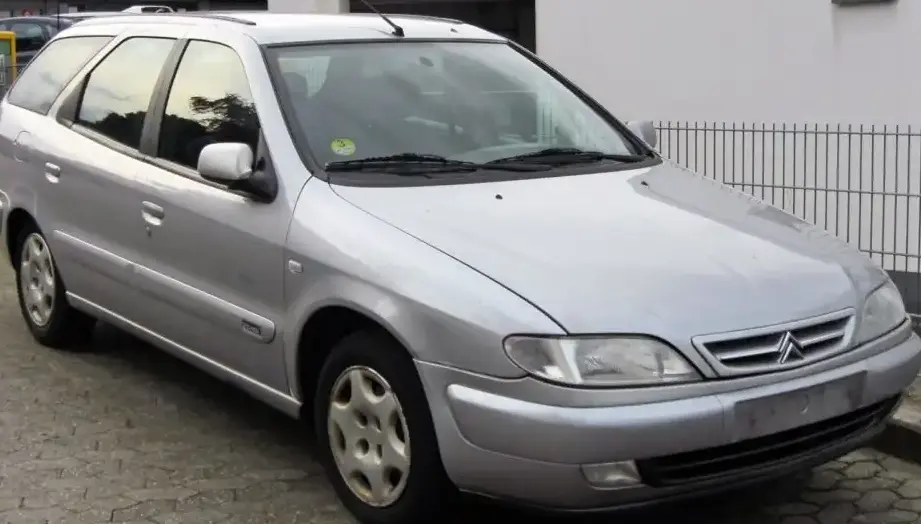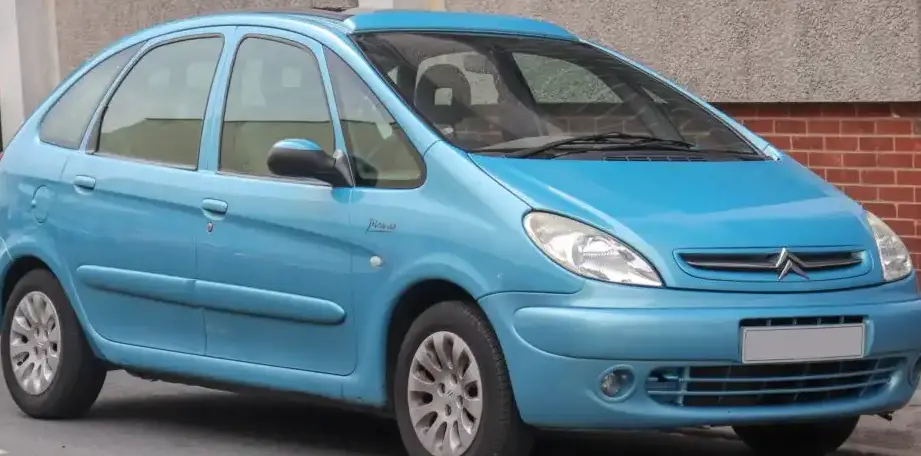
The Citroen Xsara Picasso 1.8 16V, produced between 2000 and 2004, represents a significant iteration within the first generation (N68) of Citroen’s popular compact minivan. Positioned as a mid-range offering within the Xsara Picasso lineup, this variant aimed to balance performance with practicality and affordability. It was a key model in Citroen’s strategy to capture a larger share of the European family vehicle market, offering a distinctive design and a focus on interior space and modularity. The 1.8 16V engine, coupled with a 5-speed manual transmission, provided a step up in power compared to the base 1.6L models, while remaining more accessible than the later diesel options.
Technical Specifications
| Brand | Citroen |
| Model | Xsara |
| Generation | Xsara Picasso (N68, Phase I) |
| Type (Engine) | 1.8 16V (116 Hp) |
| Start of production | 2000 |
| End of production | 2004 |
| Powertrain Architecture | Internal Combustion engine |
| Body type | Minivan |
| Seats | 5 |
| Doors | 5 |
| Fuel consumption (urban) | 10.8 l/100 km (21.8 US mpg, 26.2 UK mpg, 9.3 km/l) |
| Fuel consumption (extra urban) | 5.9 l/100 km (39.9 US mpg, 47.9 UK mpg, 16.9 km/l) |
| Fuel consumption (combined) | 7.7 l/100 km (30.5 US mpg, 36.7 UK mpg, 13 km/l) |
| CO2 emissions | 187 g/km |
| Fuel Type | Petrol (Gasoline) |
| Acceleration 0 – 100 km/h | 12.2 sec |
| Acceleration 0 – 62 mph | 12.2 sec |
| Acceleration 0 – 60 mph | 11.6 sec |
| Maximum speed | 190 km/h (118.06 mph) |
| Emission standard | Euro 3 |
| Weight-to-power ratio | 10.7 kg/Hp, 93.2 Hp/tonne |
| Weight-to-torque ratio | 7.8 kg/Nm, 128.5 Nm/tonne |
| Power | 116 Hp @ 5500 rpm |
| Power per litre | 66.3 Hp/l |
| Torque | 160 Nm @ 4000 rpm (118.01 lb.-ft. @ 4000 rpm) |
| Engine layout | Front, Transverse |
| Engine Model/Code | 6FZ EW7J4 |
| Engine displacement | 1749 cm3 (106.73 cu. in.) |
| Number of cylinders | 4 |
| Engine configuration | Inline |
| Cylinder Bore | 83 mm (3.27 in.) |
| Piston Stroke | 81 mm (3.19 in.) |
| Compression ratio | 10.4:1 |
| Number of valves per cylinder | 4 |
| Fuel injection system | Multi-port manifold injection |
| Engine aspiration | Naturally aspirated engine |
| Engine oil capacity | 4.25 l (4.49 US qt | 3.74 UK qt) |
| Coolant capacity | 6.5 l (6.87 US qt | 5.72 UK qt) |
| Kerb Weight | 1245 kg (2744.76 lbs.) |
| Max. weight | 1795 kg (3957.3 lbs.) |
| Max load | 550 kg (1212.54 lbs.) |
| Trunk (boot) space – minimum | 550 l (19.42 cu. ft.) |
| Trunk (boot) space – maximum | 2128 l (75.15 cu. ft.) |
| Fuel tank capacity | 55 l (14.53 US gal | 12.1 UK gal) |
| Max. roof load | 80 kg (176.37 lbs.) |
| Permitted trailer load with brakes (12%) | 1300 kg (2866.01 lbs.) |
| Permitted trailer load without brakes | 655 kg (1444.03 lbs.) |
| Permitted towbar download | 80 kg (176.37 lbs.) |
| Length | 4276 mm (168.35 in.) |
| Width | 1751 mm (68.94 in.) |
| Height | 1637 mm (64.45 in.) |
| Wheelbase | 2760 mm (108.66 in.) |
| Front track | 1434 mm (56.46 in.) |
| Rear track | 1452 mm (57.17 in.) |
| Front overhang | 838 mm (32.99 in.) |
| Rear overhang | 678 mm (26.69 in.) |
| Drivetrain Architecture | Front wheel drive |
| Number of gears and type of gearbox | 5 gears, manual transmission |
| Front suspension | Independent, type McPherson with coil spring and anti-roll bar |
| Rear suspension | Semi-independent suspension, longitudinal arms with transverse torsion shafts |
| Front brakes | Ventilated discs |
| Rear brakes | Disc |
| Assisting systems | ABS (Anti-lock braking system) |
| Steering type | Steering rack and pinion |
| Power steering | Hydraulic Steering |
| Tires size | 185/65 R15 |
| Wheel rims size | 5.5J x 15 |
Powertrain & Engine Architecture
The heart of this Xsara Picasso variant is the 6FZ (EW7J4) 1.8-liter inline-four cylinder engine. This engine, part of the EW series developed jointly by PSA (Peugeot Citroen) and Renault, is a naturally aspirated unit known for its relative simplicity and durability. It features a 16-valve (four valves per cylinder) configuration, enhancing breathing and contributing to its power output. Fuel delivery is managed by a multi-port fuel injection system, providing precise fuel metering for optimal combustion. The engine’s 10.4:1 compression ratio strikes a balance between efficiency and performance. The 5-speed manual transmission, a common unit in PSA vehicles of the era, provides a direct and engaging driving experience. Gear ratios were tuned for a blend of acceleration and fuel economy, prioritizing usability over outright sportiness.
Driving Characteristics
The 1.8 16V Xsara Picasso offered a noticeable improvement in performance over the base 1.6L models. While not a particularly fast vehicle, the 116 horsepower and 160 Nm of torque provided adequate power for everyday driving and highway cruising. Acceleration from 0-60 mph took around 11.6 seconds, and top speed was approximately 118 mph. The manual transmission allowed for greater driver control and a more engaging experience compared to the optional automatic. The gear ratios were spaced to provide reasonable acceleration in each gear, but the engine did require some revving to access its full potential. Compared to the later HDi diesel variants, the 1.8 16V lacked the low-end torque of the diesels, requiring higher engine speeds for similar levels of responsiveness.
Equipment & Trim Levels
The 1.8 16V trim typically included features such as power steering, central locking, electric front windows, and an RDS radio. Interior upholstery was generally cloth, with options for upgraded materials available. Air conditioning was often a standard feature or a popular option. The Picasso’s interior was renowned for its modularity, with sliding rear seats and folding tables, enhancing practicality for families. Optional extras included alloy wheels, a sunroof, and upgraded audio systems. Safety features included ABS brakes and driver/passenger airbags.
Chassis & Braking
The Xsara Picasso utilized a McPherson strut front suspension and a semi-independent torsion beam rear suspension. This setup provided a comfortable ride quality, well-suited for everyday use. The front brakes were ventilated discs, offering good stopping power, while the rear brakes were solid discs. The steering was a hydraulic rack and pinion system, providing precise and responsive handling. The suspension was tuned for comfort rather than outright sportiness, prioritizing ride quality over sharp handling.
Market Reception & Comparison
The Citroen Xsara Picasso 1.8 16V was generally well-received by automotive critics. It was praised for its spacious interior, practical features, and comfortable ride. The 1.8L engine was considered a good compromise between performance and fuel economy. However, some critics noted that the engine could feel strained when fully loaded or driving uphill. Compared to the 1.6L models, the 1.8 16V offered a noticeable performance boost, making it a more appealing option for drivers who frequently carried passengers or luggage. The diesel variants offered superior fuel economy and torque, but at a higher initial cost.
Legacy
The 6FZ (EW7J4) 1.8L engine, when properly maintained, proved to be a relatively reliable unit. Common issues included occasional oil leaks and sensor failures, but these were generally not major concerns. The Xsara Picasso 1.8 16V remains a popular choice in the used car market, particularly for those seeking an affordable and practical family vehicle. Its spacious interior, comfortable ride, and relatively simple mechanicals make it a sensible option for budget-conscious buyers. Parts availability is generally good, and maintenance costs are reasonable. The model helped solidify the Xsara Picasso’s reputation as a versatile and practical family vehicle, paving the way for subsequent generations of the popular minivan.