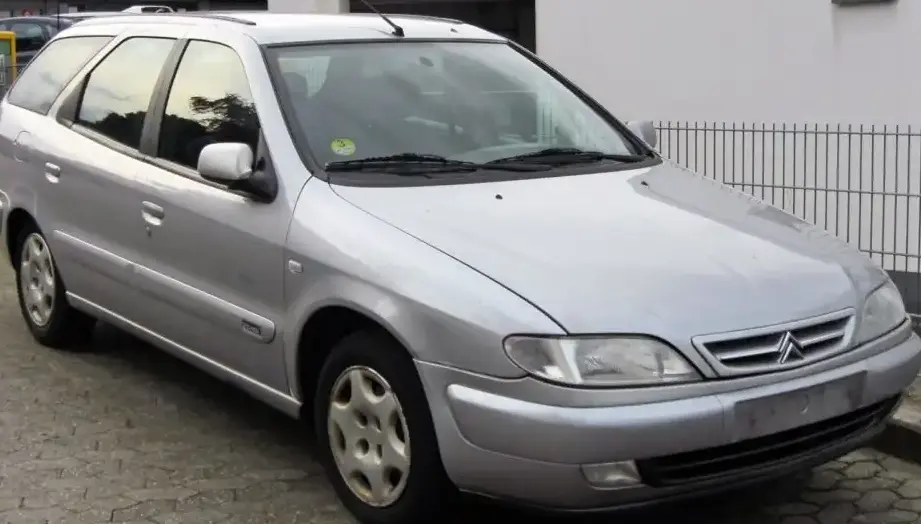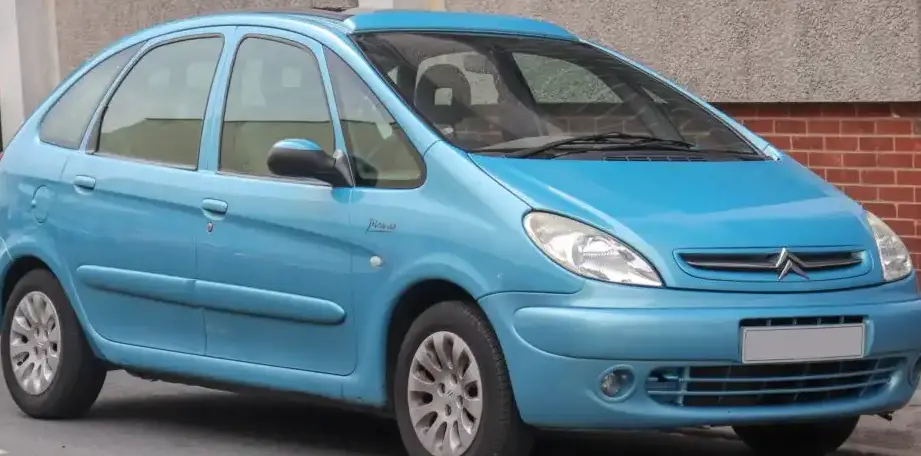
Technical Specifications
| Brand | Citroen |
| Model | Xsara |
| Generation | Xsara Picasso (N68, Phase I) |
| Type (Engine) | 2.0 HDi (90 Hp) |
| Start of production | 1999 |
| End of production | 2004 |
| Powertrain Architecture | Internal Combustion engine |
| Body type | Minivan |
| Seats | 5 |
| Doors | 5 |
| Fuel consumption (urban) | 7 l/100 km (33.6 US mpg, 40.4 UK mpg, 14.3 km/l) |
| Fuel consumption (extra urban) | 4.6 l/100 km (51.1 US mpg, 61.4 UK mpg, 21.7 km/l) |
| Fuel consumption (combined) | 5.5 l/100 km (42.8 US mpg, 51.4 UK mpg, 18.2 km/l) |
| CO2 emissions | 147 g/km |
| Fuel Type | Diesel |
| Acceleration 0 – 100 km/h | 14.5 sec |
| Acceleration 0 – 62 mph | 14.5 sec |
| Acceleration 0 – 60 mph | 13.8 sec |
| Maximum speed | 175 km/h (108.74 mph) |
| Emission standard | Euro 3 |
| Weight-to-power ratio | 14.4 kg/Hp, 69.2 Hp/tonne |
| Weight-to-torque ratio | 6.3 kg/Nm, 157.7 Nm/tonne |
| Power | 90 Hp @ 4000 rpm |
| Power per litre | 45.1 Hp/l |
| Torque | 205 Nm @ 1900 rpm (151.2 lb.-ft. @ 1900 rpm) |
| Engine layout | Front, Transverse |
| Engine Model/Code | RHY DW10TD |
| Engine displacement | 1997 cm3 (121.86 cu. in.) |
| Number of cylinders | 4 |
| Engine configuration | Inline |
| Cylinder Bore | 85 mm (3.35 in.) |
| Piston Stroke | 88 mm (3.46 in.) |
| Compression ratio | 18:1 |
| Number of valves per cylinder | 2 |
| Fuel injection system | Diesel Commonrail |
| Engine aspiration | Turbocharger |
| Valvetrain | OHC |
| Engine oil capacity | 4.2 l (4.44 US qt | 3.7 UK qt) |
| Coolant | 5.8 l (6.13 US qt | 5.1 UK qt) |
| Kerb Weight | 1300 kg (2866.01 lbs.) |
| Max. weight | 1850 kg (4078.55 lbs.) |
| Max load | 550 kg (1212.54 lbs.) |
| Trunk (boot) space – minimum | 550 l (19.42 cu. ft.) |
| Trunk (boot) space – maximum | 2128 l (75.15 cu. ft.) |
| Fuel tank capacity | 55 l (14.53 US gal | 12.1 UK gal) |
| Max. roof load | 80 kg (176.37 lbs.) |
| Permitted trailer load with brakes (12%) | 1300 kg (2866.01 lbs.) |
| Permitted trailer load without brakes | 685 kg (1510.17 lbs.) |
| Permitted towbar download | 80 kg (176.37 lbs.) |
| Length | 4276 mm (168.35 in.) |
| Width | 1751 mm (68.94 in.) |
| Height | 1637 mm (64.45 in.) |
| Wheelbase | 2760 mm (108.66 in.) |
| Front track | 1434 mm (56.46 in.) |
| Rear (Back) track | 1452 mm (57.17 in.) |
| Front overhang | 838 mm (32.99 in.) |
| Rear overhang | 678 mm (26.69 in.) |
| Minimum turning circle | 10.6 m (34.78 ft.) |
| Drivetrain Architecture | The Internal combustion engine (ICE) drives the front wheels of the vehicle. |
| Drive wheel | Front wheel drive |
| Number of gears and type of gearbox | 5 gears, manual transmission |
| Front suspension | Independent, type McPherson with coil spring and anti-roll bar |
| Rear suspension | Semi-independent suspension, longitudinal arms with transverse torsion shafts |
| Front brakes | Ventilated discs |
| Rear brakes | Drum |
| Assisting systems | ABS (Anti-lock braking system) |
| Steering type | Steering rack and pinion |
| Power steering | Hydraulic Steering |
| Tires size | 185/65 R15 |
| Wheel rims size | 6J x 15 |
The Citroen Xsara Picasso, launched in 1999, was a groundbreaking vehicle that redefined the compact minivan segment. Its distinctive, asymmetrical dashboard and spacious interior quickly gained popularity. The 2.0 HDi 90 hp variant, powered by the RHY DW10TD engine, was a key component of the lineup, offering a balance between fuel economy and usable performance. This engine, a staple of PSA Group vehicles at the time, was known for its durability and efficiency. The N68 designation refers to the first phase of the Picasso, produced until 2004, before a significant facelift was introduced.
Powertrain & Engine Architecture
The heart of the Xsara Picasso 2.0 HDi 90 is the DW10TD engine, a 1997cc four-cylinder diesel. This engine utilizes a common rail direct injection system, delivering fuel at extremely high pressure for improved combustion and reduced emissions. The RHY engine code specifically denotes a version tuned to 90 horsepower at 4000 rpm and 205 Nm of torque at 1900 rpm. The engine features an overhead camshaft (OHC) valvetrain with two valves per cylinder. A turbocharger is employed to boost power and improve responsiveness. The engine is transversely mounted in the front of the vehicle. The transmission paired with this engine was typically a 5-speed manual gearbox, although an automatic option was available in some markets. The automatic transmission, while offering convenience, generally resulted in slightly reduced fuel economy and acceleration compared to the manual.
Driving Characteristics
The 2.0 HDi 90 hp version of the Xsara Picasso offered a comfortable, if not particularly sporty, driving experience. Acceleration was adequate for everyday driving, with a 0-60 mph time of around 13.8 seconds. The engine’s torque peak at 1900 rpm provided decent pulling power for overtaking and climbing hills. However, it lacked the outright punch of the higher-powered petrol variants. The 5-speed manual gearbox was well-matched to the engine, allowing drivers to keep the engine in its optimal power band. The automatic transmission, while smooth, could feel sluggish at times, particularly when attempting quick acceleration. The suspension provided a comfortable ride, absorbing bumps and imperfections in the road well, but the handling was not particularly sharp.
Equipment & Trim Levels
The 2.0 HDi 90 typically came with a reasonable level of standard equipment. This included power steering, central locking, electric front windows, and an ABS anti-lock braking system. Higher trim levels offered additional features such as air conditioning, alloy wheels, a CD player, and rear electric windows. Interior upholstery was typically cloth, with a choice of colors available. The distinctive asymmetrical dashboard design, a hallmark of the Xsara Picasso, featured a centrally mounted instrument cluster. Optional extras included a sunroof, parking sensors, and upgraded audio systems.
Chassis & Braking
The Xsara Picasso 2.0 HDi 90 utilized an independent McPherson strut suspension at the front, providing good ride comfort and handling. The rear suspension employed a semi-independent torsion beam setup, which was cost-effective and space-efficient. The front brakes were ventilated discs, offering good stopping power, while the rear brakes were drums. This combination was adequate for the vehicle’s weight and performance. The steering was a hydraulic power-assisted rack and pinion system, providing light and precise steering feel.
Market Reception & Comparison
The Citroen Xsara Picasso 2.0 HDi 90 was generally well-received by critics and buyers alike. It was praised for its spacious interior, comfortable ride, and fuel efficiency. Compared to the 1.8 petrol variants, the 2.0 HDi offered significantly better fuel economy and more torque, making it a more practical choice for long-distance driving. However, the petrol engines provided quicker acceleration and a more refined driving experience. Compared to other compact minivans on the market, such as the Renault Scenic and the Opel Zafira, the Xsara Picasso stood out with its unique styling and innovative interior design. Reliability was generally good, although some owners reported issues with the diesel particulate filter (DPF) and the common rail injection system.
Legacy
The Citroen Xsara Picasso 2.0 HDi 90 remains a popular choice in the used car market, particularly for those seeking a practical and fuel-efficient family vehicle. The DW10TD engine is known for its durability, and many examples have covered high mileages without major issues. However, potential buyers should be aware of the possibility of DPF problems and the need for regular maintenance. The Xsara Picasso’s innovative design and spacious interior continue to appeal to buyers today, cementing its place as a significant vehicle in the history of the compact minivan segment.