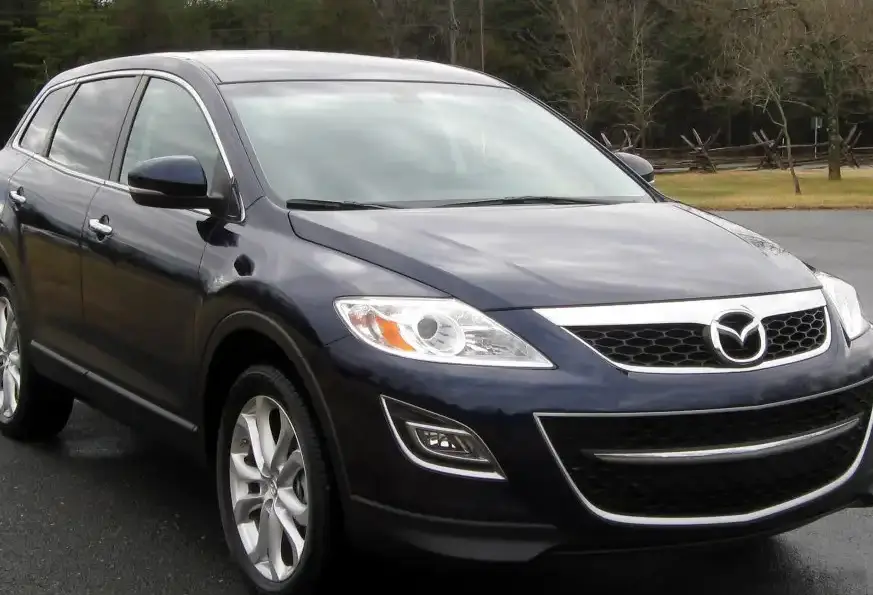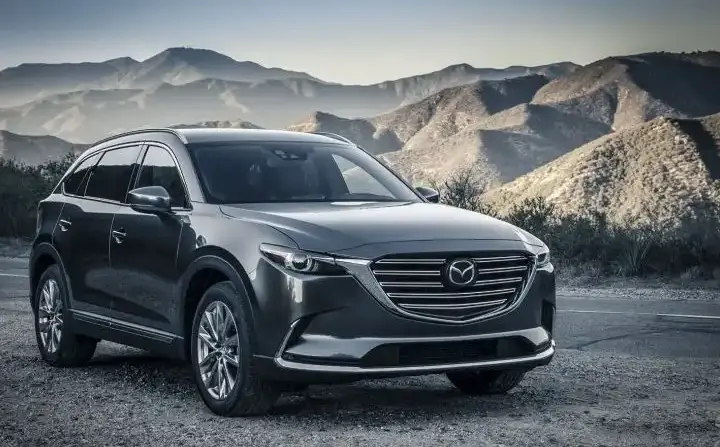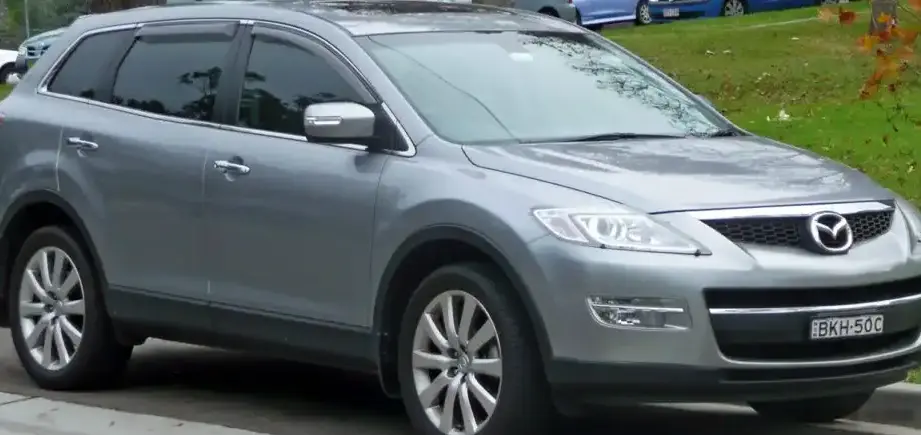
The Mazda CX-9, launched in 2007, represented Mazda’s entry into the burgeoning mid-size crossover SUV segment. Specifically, the 3.5-liter DOHC V6 variant, produced from 2007 through 2009, was positioned as the flagship model within the first generation (CX-9 I) lineup. This vehicle aimed to provide a more premium and engaging driving experience compared to many of its competitors, while offering three-row seating for up to seven passengers. The CX-9 was primarily marketed in North America, where larger SUVs and crossovers were particularly popular, and it quickly became a significant model for the brand.
Technical Specifications
| Brand | Mazda |
| Model | CX-9 |
| Generation | CX-9 I |
| Type (Engine) | 3.5 DOHC V6 (263 Hp) |
| Start of production | 2007 |
| End of production | 2009 |
| Powertrain Architecture | Internal Combustion engine |
| Body type | SUV |
| Seats | 7 |
| Doors | 5 |
| Fuel consumption (urban) | 14.7 l/100 km (16 US mpg, 19.2 UK mpg, 6.8 km/l) |
| Fuel consumption (extra urban) | 10.7 l/100 km (22 US mpg, 26.4 UK mpg, 9.3 km/l) |
| Fuel Type | Petrol (Gasoline) |
| Maximum speed | 192 km/h (119.3 mph) |
| Weight-to-power ratio | 7.8 kg/Hp, 127.4 Hp/tonne |
| Weight-to-torque ratio | 6.1 kg/Nm, 164.2 Nm/tonne |
| Power | 263 Hp @ 6250 rpm |
| Power per litre | 75.2 Hp/l |
| Torque | 339 Nm (250.03 lb.-ft.) |
| Engine layout | Front, Transverse |
| Engine displacement | 3496 cm3 (213.34 cu. in.) |
| Number of cylinders | 6 |
| Engine configuration | V-engine |
| Cylinder Bore | 92.5 mm (3.64 in.) |
| Piston Stroke | 86.7 mm (3.41 in.) |
| Compression ratio | 10.3:1 |
| Number of valves per cylinder | 4 |
| Fuel injection system | Multi-port manifold injection |
| Engine aspiration | Naturally aspirated engine |
| Valvetrain | DOHC |
| Engine oil capacity | 5.2 l (5.49 US qt | 4.58 UK qt) |
| Coolant | 11.6 l (12.26 US qt | 10.21 UK qt) |
| Kerb Weight | 2064 kg (4550.34 lbs.) |
| Max. weight | 2735 kg (6029.64 lbs.) |
| Max load | 671 kg (1479.3 lbs.) |
| Trunk (boot) space – minimum | 487 l (17.2 cu. ft.) |
| Trunk (boot) space – maximum | 2852 l (100.72 cu. ft.) |
| Fuel tank capacity | 76 l (20.08 US gal | 16.72 UK gal) |
| Length | 5074 mm (199.76 in.) |
| Width | 1936 mm (76.22 in.) |
| Height | 1728 mm (68.03 in.) |
| Wheelbase | 2875 mm (113.19 in.) |
| Front track | 1654 mm (65.12 in.) |
| Rear (Back) track | 1644 mm (64.72 in.) |
| Drive wheel | All wheel drive (4×4) |
| Number of gears and type of gearbox | 6 gears, automatic transmission |
| Front suspension | Independent, type McPherson with coil spring and anti-roll bar |
| Rear suspension | Air suspension |
| Front brakes | Ventilated discs |
| Rear brakes | Ventilated discs |
| Tires size | 245/60R18; 245/50 R20 |
| Wheel rims size | 7.5J x 18; 7.5J x 20 |
Introduction
The Mazda CX-9 I 3.5 DOHC V6 represented a significant step for Mazda, moving the brand further upmarket and into a segment dominated by American and Japanese manufacturers. Introduced in 2007, it was built on the Mazda GG platform, shared with other Mazda models like the MPV minivan. The CX-9 aimed to offer a more refined and sporty driving experience than many of its competitors, while still providing the practicality and space expected of a three-row SUV. The 3.5-liter V6 engine paired with a six-speed automatic transmission was the top-tier powertrain option, offering a balance of power and relatively smooth operation.
Powertrain & Engine Architecture
The heart of the CX-9 I 3.5 was Mazda’s 3.5-liter (3496 cc) DOHC V6 engine, internally designated as the LY engine family. This engine featured a 60-degree V-angle, contributing to its relatively compact size. It utilized a cast aluminum block and cylinder heads, helping to reduce weight. The engine employed multi-port fuel injection and a dual overhead camshaft (DOHC) valvetrain with four valves per cylinder. This configuration allowed for efficient cylinder filling and improved breathing, contributing to the engine’s 263 horsepower output at 6250 rpm and 250 lb-ft of torque at 3500 rpm. The six-speed automatic transmission, sourced from Aisin, was specifically tuned to complement the V6’s power delivery. It featured a torque converter lock-up clutch to improve fuel efficiency at cruising speeds. The transmission offered a relatively smooth and responsive shifting experience, although it wasn’t as sporty as some of the manual transmissions offered in other Mazda models.
Driving Characteristics
The CX-9 I 3.5 with the automatic transmission offered a comfortable and capable driving experience. While not a sports car, the V6 engine provided ample power for everyday driving and highway passing maneuvers. The six-speed automatic transmission was well-matched to the engine, providing smooth shifts and adequate responsiveness. However, compared to the manual transmission option (available in some markets), the automatic felt slightly less engaging. The all-wheel-drive system, standard on all CX-9 models, provided enhanced traction in various weather conditions. The gear ratios were tuned for a balance of acceleration and fuel economy, with a focus on providing usable power in the mid-range. The vehicle’s weight (around 4,550 lbs) did impact its overall agility, but the suspension did a good job of managing body roll and providing a relatively comfortable ride.
Equipment & Trim Levels
The 3.5-liter V6 CX-9 typically came in higher trim levels, such as the Grand Touring and Touring models. Standard features included tri-zone automatic climate control, a premium audio system (often Bose), leather upholstery, power-adjustable front seats, and alloy wheels. Optional extras included a navigation system, rear-seat entertainment system, and power liftgate. Interior materials were generally of good quality for the price point, and the cabin offered a relatively spacious and comfortable environment for passengers. The third-row seats were best suited for children or smaller adults, as legroom was limited. The dashboard layout was functional and user-friendly, with well-placed controls.
Chassis & Braking
The CX-9 I utilized a McPherson strut front suspension with coil springs and an anti-roll bar. The rear suspension featured an independent multi-link setup with air suspension on higher trim levels. The air suspension provided adjustable ride height and improved ride comfort, particularly when fully loaded. Braking duties were handled by ventilated discs on all four wheels, providing adequate stopping power. The anti-lock braking system (ABS) was standard, along with electronic brake-force distribution (EBD). Steering was power-assisted and provided a reasonably direct feel, although it lacked the sharpness found in some smaller Mazda models. The vehicle’s relatively long wheelbase contributed to its stability and ride comfort.
Market Reception & Comparison
The Mazda CX-9 I 3.5 V6 was generally well-received by automotive critics. It was praised for its stylish design, spacious interior, and engaging driving dynamics. However, some critics noted that its fuel economy was not class-leading, and its third-row seats were somewhat cramped. Compared to other trims in the CX-9 lineup, the 3.5-liter V6 offered significantly more power and a more refined driving experience. It was positioned as a premium option, appealing to buyers who prioritized performance and comfort over fuel efficiency. Compared to competitors like the Honda Pilot and Toyota Highlander, the CX-9 offered a more sporty driving experience, but it often came with a slightly higher price tag.
Legacy
The Mazda CX-9 I 3.5 V6 powertrain has proven to be relatively reliable over the long term, although some common issues have been reported, including oil consumption and occasional transmission problems. The engine’s timing chain is generally durable, but regular maintenance is crucial to prevent issues. In the used car market, these CX-9s remain popular due to their combination of space, comfort, and Mazda’s reputation for reliability. While fuel economy isn’t exceptional by modern standards, the CX-9 I 3.5 V6 continues to offer a compelling value proposition for buyers seeking a well-rounded mid-size crossover SUV.