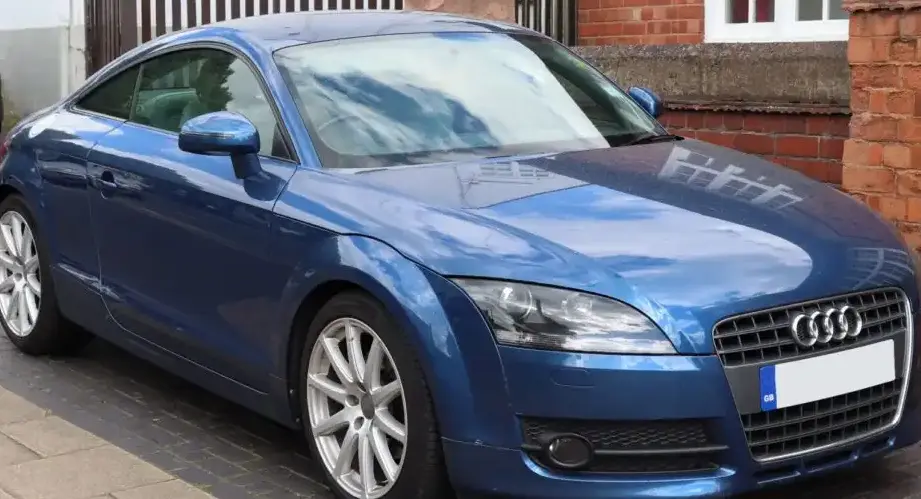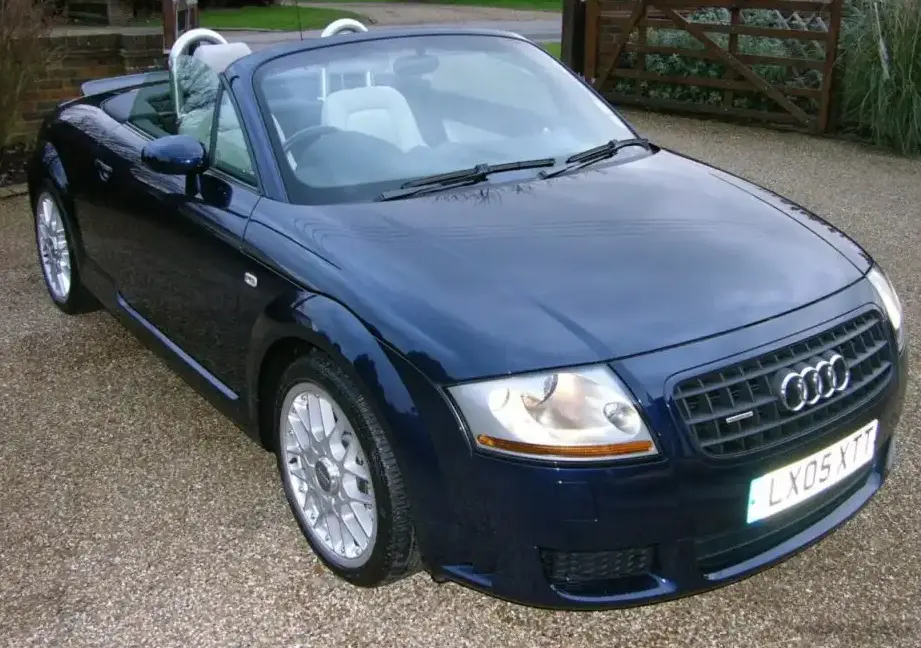
The Audi TT Roadster (8N, facelift) 1.8T Tiptronic, produced from 2005 to 2006, represents a compelling blend of sporty styling and accessible performance within the first-generation TT lineup. Positioned as a mid-range offering, it slotted between the base 1.8T manual and the more potent 3.2-liter V6 models. This variant aimed to provide a comfortable and refined open-top driving experience, appealing to buyers who prioritized ease of use and a smooth ride over outright track performance. It was a key part of Audi’s strategy to broaden the TT’s appeal beyond the enthusiast market, capitalizing on the growing popularity of roadsters in the early 2000s.
Technical Specifications
| Brand | Audi |
| Model | TT |
| Generation | TT Roadster (8N, facelift) |
| Type (Engine) | 1.8 T (190 Hp) Tiptronic |
| Start of production | September, 2005 |
| End of production | June, 2006 |
| Powertrain Architecture | Internal Combustion engine |
| Body type | Roadster |
| Seats | 2 |
| Doors | 2 |
| Fuel consumption (urban) | 11.2 l/100 km (21 US mpg, 25.2 UK mpg, 8.9 km/l) |
| Fuel consumption (extra urban) | 6.4 l/100 km (36.8 US mpg, 44.1 UK mpg, 15.6 km/l) |
| Fuel consumption (combined) | 8.2 l/100 km (28.7 US mpg, 34.4 UK mpg, 12.2 km/l) |
| CO2 emissions | 197 g/km |
| Fuel Type | Petrol (Gasoline) |
| Acceleration 0 – 100 km/h | 7.6 sec |
| Acceleration 0 – 62 mph | 7.6 sec |
| Acceleration 0 – 60 mph | 7.2 sec |
| Maximum speed | 226 km/h (140.43 mph) |
| Emission standard | Euro 4 |
| Weight-to-power ratio | 7.1 kg/Hp, 141.8 Hp/tonne |
| Weight-to-torque ratio | 5.6 kg/Nm, 179.1 Nm/tonne |
| Power | 190 Hp @ 5700 rpm |
| Power per litre | 106.7 Hp/l |
| Torque | 240 Nm @ 1980-5400 rpm (177.01 lb.-ft. @ 1980-5400 rpm) |
| Engine layout | Front, Transverse |
| Engine Model/Code | BVR |
| Engine displacement | 1781 cm3 (108.68 cu. in.) |
| Number of cylinders | 4 |
| Engine configuration | Inline |
| Cylinder Bore | 81 mm (3.19 in.) |
| Piston Stroke | 86.4 mm (3.4 in.) |
| Compression ratio | 9.5:1 |
| Number of valves per cylinder | 5 |
| Fuel injection system | Multi-port manifold injection |
| Engine aspiration | Turbocharger, Intercooler |
| Valvetrain | DOHC |
| Engine oil capacity | 4.6 l (4.86 US qt | 4.05 UK qt) |
| Coolant | 7 l (7.4 US qt | 6.16 UK qt) |
| Kerb Weight | 1340 kg (2954.19 lbs.) |
| Max. weight | 1640 kg (3615.58 lbs.) |
| Max load | 300 kg (661.39 lbs.) |
| Trunk (boot) space – maximum | 220 l (7.77 cu. ft.) |
| Fuel tank capacity | 55 l (14.53 US gal | 12.1 UK gal) |
| Length | 4041 mm (159.09 in.) |
| Width | 1764 mm (69.45 in.) |
| Height | 1349 mm (53.11 in.) |
| Wheelbase | 2422 mm (95.35 in.) |
| Front track | 1528 mm (60.16 in.) |
| Rear (Back) track | 1513 mm (59.57 in.) |
| Drag coefficient (Cd) | 0.34 |
| Minimum turning circle | 10.6 m (34.78 ft.) |
| Drivetrain Architecture | The Internal combustion engine (ICE) drives the front wheels of the vehicle. |
| Drive wheel | Front wheel drive |
| Number of gears and type of gearbox | 6 gears, automatic transmission Tiptronic |
| Front suspension | Independent, type McPherson with coil spring and anti-roll bar |
| Rear suspension | independent torsion suspension |
| Front brakes | Ventilated discs |
| Rear brakes | Disc |
| Assisting systems | ABS (Anti-lock braking system) |
| Steering type | Steering rack and pinion |
| Tires size | 205/55 R16 |
| Wheel rims size | 7J x 16 |
Powertrain & Engine Architecture
At the heart of the 1.8T Tiptronic Roadster lies the Audi-developed 1.8-liter turbocharged inline-four cylinder engine, specifically the BVR engine code. This engine was a mainstay of the Volkswagen Group’s offerings for many years, known for its flexibility and tunability. The BVR featured a cast iron block with an aluminum cylinder head, incorporating five valves per cylinder (three intake, two exhaust) and a double overhead camshaft (DOHC) valvetrain. Fuel delivery was managed by a multi-port fuel injection system, while a K03 turbocharger, along with an intercooler, provided forced induction. This setup allowed for a respectable 190 horsepower and 240 Nm (177 lb-ft) of torque. The Tiptronic transmission was a five-speed automatic with a manual shift mode, offering drivers some control over gear selection. It was designed to provide smooth and effortless gear changes, enhancing the car’s usability in everyday driving situations.
Driving Characteristics
The 1.8T Tiptronic Roadster offered a comfortable and refined driving experience. While not as overtly sporty as the manual transmission or V6 versions, it provided adequate performance for most drivers. Acceleration from 0 to 60 mph took around 7.2-7.6 seconds, and the top speed was electronically limited to 140 mph. The Tiptronic transmission, while smooth, did introduce some power loss compared to the manual, resulting in slightly slower acceleration times. The gear ratios were tuned for comfort and fuel efficiency, prioritizing smooth cruising over aggressive acceleration. The turbocharger provided a noticeable boost in power, but turbo lag was present, particularly at lower engine speeds. Overall, the driving experience was characterized by a relaxed and enjoyable feel, making it well-suited for long road trips and leisurely drives.
Equipment & Trim Levels
The 1.8T Tiptronic Roadster came standard with a respectable level of equipment. This included leather upholstery, automatic climate control, a premium sound system, and power windows and locks. Alloy wheels were also standard, typically 16-inch in diameter. Optional extras included heated seats, a wind deflector (to reduce wind buffeting in the cabin), and upgraded audio systems. The interior design was minimalist and modern, reflecting Audi’s design philosophy at the time. The dashboard featured aluminum trim accents, and the seats were supportive and comfortable. The overall ambiance was one of understated luxury.
Chassis & Braking
The TT Roadster’s chassis was based on the Volkswagen Group’s A4 platform. The front suspension utilized a McPherson strut design with coil springs and an anti-roll bar, while the rear suspension employed a torsion beam setup. This configuration provided a good balance between ride comfort and handling. The braking system consisted of ventilated discs at the front and solid discs at the rear, with ABS (Anti-lock Braking System) as standard. The steering was a rack-and-pinion system, providing precise and responsive steering feel. The car’s relatively low weight (around 2954 lbs) contributed to its agile handling characteristics.
Market Reception & Comparison
The Audi TT Roadster 1.8T Tiptronic was generally well-received by critics. It was praised for its stylish design, comfortable ride, and refined interior. However, some reviewers noted that the Tiptronic transmission dulled the driving experience compared to the manual version. Fuel economy was considered reasonable for a sports car, averaging around 28.7 US mpg in combined driving. Compared to the 3.2-liter V6 model, the 1.8T Tiptronic offered a more affordable entry point into the TT Roadster range, albeit with less power and performance. It also offered better fuel economy than the V6. Compared to other roadsters in its class, such as the BMW Z3 and Porsche Boxster, the TT Roadster stood out for its distinctive styling and modern interior.
Legacy
The Audi TT Roadster 1.8T Tiptronic has proven to be a relatively reliable vehicle over the long term. The 1.8T engine is known for its durability, and the Tiptronic transmission, while not as robust as some other automatic transmissions, has generally held up well with proper maintenance. Common issues include oil leaks, turbocharger failure (particularly if not properly maintained), and occasional problems with the electronic systems. Today, these cars are becoming increasingly sought after by enthusiasts and collectors, particularly well-maintained examples with low mileage. They represent a unique blend of style, performance, and affordability, making them a compelling option in the used car market.