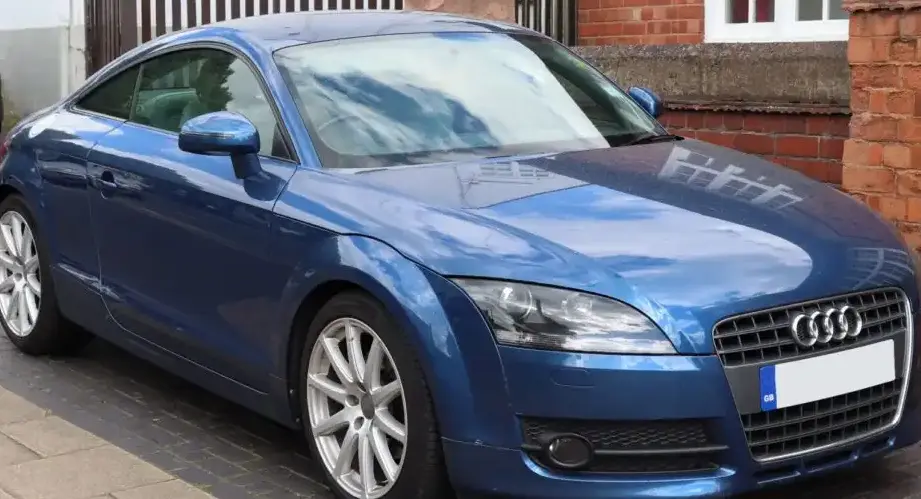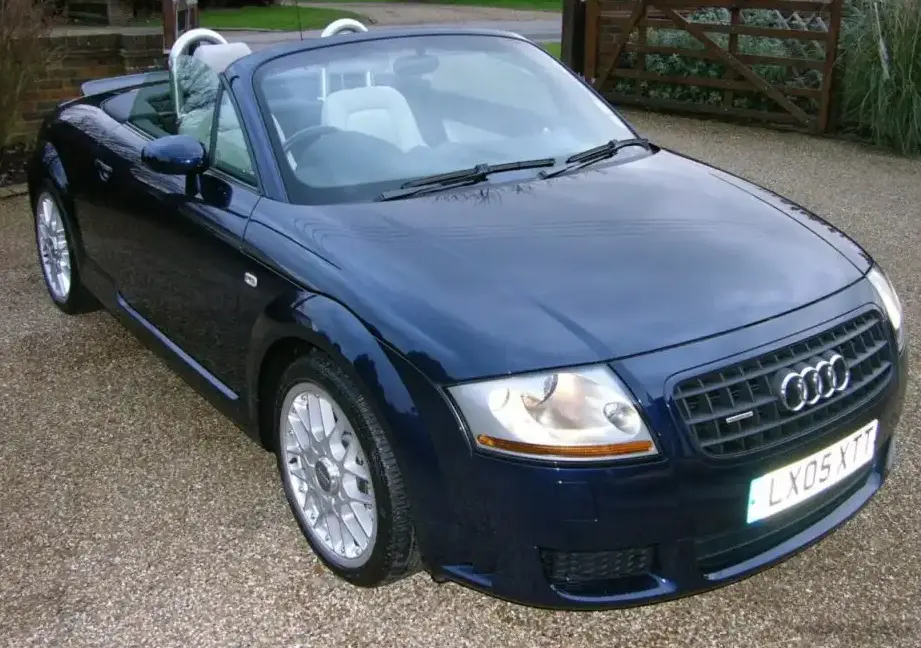
The Audi TT Roadster (8N, facelifted in 2000) 3.2i V6 24V quattro, produced from July 2003 to June 2006, represented the performance pinnacle of the first-generation TT Roadster lineup. Positioned as the flagship variant, it combined a potent naturally aspirated V6 engine with Audi’s renowned quattro all-wheel-drive system, offering a compelling blend of open-top motoring and dynamic handling. This model was a key part of Audi’s strategy to broaden the TT’s appeal beyond its initially Bauhaus-inspired, design-focused image, attracting buyers seeking a more engaging driving experience. It built upon the success of the original 8N TT, addressing some early criticisms regarding engine power and offering a more mature and refined package.
Technical Specifications
| Brand | Audi |
| Model | TT |
| Generation | TT Roadster (8N, facelift 2000) |
| Type (Engine) | 3.2i V6 24V (250 Hp) quattro |
| Start of production | July, 2003 |
| End of production | June, 2006 |
| Powertrain Architecture | Internal Combustion engine |
| Body type | Roadster |
| Seats | 2 |
| Doors | 2 |
| Fuel consumption (urban) | 15 l/100 km (15.7 US mpg, 18.8 UK mpg, 6.7 km/l) |
| Fuel consumption (extra urban) | 8.2 l/100 km (28.7 US mpg, 34.4 UK mpg, 12.2 km/l) |
| Fuel consumption (combined) | 10.7 l/100 km (22 US mpg, 26.4 UK mpg, 9.3 km/l) |
| CO2 emissions | 257 g/km |
| Fuel Type | Petrol (Gasoline) |
| Acceleration 0 – 100 km/h | 6.7 sec |
| Acceleration 0 – 62 mph | 6.7 sec |
| Acceleration 0 – 60 mph | 6.4 sec |
| Maximum speed | 250 km/h (155.34 mph) |
| Emission standard | Euro 4 |
| Weight-to-power ratio | 6.2 kg/Hp, 160.3 Hp/tonne |
| Weight-to-torque ratio | 4.9 kg/Nm, 205.1 Nm/tonne |
| Power | 250 Hp @ 6300 rpm |
| Power per litre | 78.4 Hp/l |
| Torque | 320 Nm @ 2800-3200 rpm (236.02 lb.-ft. @ 2800-3200 rpm) |
| Engine layout | Front, Transverse |
| Engine Model/Code | BHE, BPF |
| Engine displacement | 3189 cm3 (194.6 cu. in.) |
| Number of cylinders | 6 |
| Engine configuration | V-engine |
| Cylinder Bore | 84 mm (3.31 in.) |
| Piston Stroke | 95.9 mm (3.78 in.) |
| Compression ratio | 11.3:1 |
| Number of valves per cylinder | 4 |
| Fuel injection system | Multi-port manifold injection |
| Engine aspiration | Naturally aspirated engine |
| Valvetrain | DOHC |
| Engine oil capacity | 5.5 l (5.81 US qt | 4.84 UK qt) |
| Coolant | 7 l (7.4 US qt | 6.16 UK qt) |
| Kerb Weight | 1560 kg (3439.21 lbs.) |
| Max. weight | 1860 kg (4100.6 lbs.) |
| Max load | 300 kg (661.39 lbs.) |
| Trunk (boot) space – minimum | 180 l (6.36 cu. ft.) |
| Fuel tank capacity | 62 l (16.38 US gal | 13.64 UK gal) |
| Length | 4041 mm (159.09 in.) |
| Width | 1764 mm (69.45 in.) |
| Height | 1348 mm (53.07 in.) |
| Wheelbase | 2429 mm (95.63 in.) |
| Front track | 1528 mm (60.16 in.) |
| Rear (Back) track | 1505 mm (59.25 in.) |
| Drag coefficient (Cd) | 0.35 |
| Minimum turning circle | 10.6 m (34.78 ft.) |
| Drive wheel | All wheel drive (4×4) |
| Number of gears | 6 gears, manual transmission |
| Front suspension | Independent, type McPherson with coil spring and anti-roll bar |
| Rear suspension | Independent multi-link spring suspension with stabilizer |
| Front brakes | Ventilated discs |
| Rear brakes | Ventilated discs |
| Assisting systems | ABS (Anti-lock braking system) |
| Steering type | Steering rack and pinion |
| Power steering | Hydraulic Steering |
| Tires size | 225/45 R17 |
| Wheel rims size | 7.5 x 17 |
INTRODUCTION
The Audi TT Roadster (8N, facelifted in 2000) 3.2i V6 24V quattro, produced from 2003 to 2006, was the range-topping variant of the first-generation TT Roadster. It sat above the 1.8T models in terms of performance and price, offering a more sophisticated and powerful driving experience. The facelift brought subtle styling revisions, including redesigned headlights and taillights, along with interior enhancements. This model was built on the Volkswagen Group’s 8N platform, shared with the Volkswagen Golf Mk4, Bora, and New Beetle, but distinguished itself through its unique styling and focus on sporty handling. The 3.2-liter V6 engine and quattro all-wheel-drive system were key differentiators, targeting enthusiasts who desired a more engaging and capable roadster.
Powertrain & Engine Architecture
The heart of the 3.2i quattro Roadster is the BHE or BPF engine code, a 3.2-liter naturally aspirated V6 engine. This engine, part of Audi’s V6 family, features an aluminum alloy block and cylinder heads, contributing to a relatively lightweight construction. It utilizes a multi-port fuel injection system and a double overhead camshaft (DOHC) valvetrain with four valves per cylinder. The engine produces 250 horsepower at 6300 rpm and 320 Nm (236 lb-ft) of torque between 2800 and 3200 rpm. The engine’s design prioritizes smooth power delivery and a characteristic V6 sound. The standard transmission was a six-speed manual, although a six-speed automatic transmission (Tiptronic) was also available as an option. The Tiptronic transmission offered both fully automatic operation and the ability for the driver to manually select gears.
Driving Characteristics
The 3.2i quattro Roadster delivers a noticeably more spirited driving experience compared to the 1.8T models. The V6 engine provides strong acceleration, with a 0-60 mph time of around 6.4 seconds and a top speed electronically limited to 155 mph. The quattro all-wheel-drive system provides excellent traction, particularly in adverse weather conditions, and contributes to confident handling. The six-speed manual transmission offers precise shifts, while the optional Tiptronic automatic provides smooth and responsive gear changes. The suspension is tuned for a balance between comfort and handling, offering a firm but not overly harsh ride. The steering is direct and well-weighted, providing good feedback to the driver. Compared to the 1.8T models, the 3.2i feels more planted and stable, especially at higher speeds.
Equipment & Trim Levels
The 3.2i quattro Roadster came generously equipped as standard. Interior features included leather upholstery, sports seats, automatic climate control, and a premium audio system. Exterior features included 17-inch alloy wheels, xenon headlights, and a rear spoiler. Optional extras included navigation system, heated seats, and a wind deflector for improved open-top comfort. The interior trim was typically finished in aluminum or wood accents, reflecting the car’s premium positioning. The overall ambiance was one of sporty luxury, with a focus on driver-focused ergonomics.
Chassis & Braking
The chassis of the 3.2i quattro Roadster features an independent McPherson strut suspension at the front and an independent multi-link suspension at the rear. This setup provides a good balance of ride comfort and handling precision. Stabilizer bars are fitted to both axles to reduce body roll during cornering. The braking system consists of ventilated disc brakes on all four wheels, providing ample stopping power. Anti-lock braking system (ABS) is standard. The wider tires (225/45 R17) contribute to increased grip and improved handling.
Market Reception & Comparison
The 3.2i quattro Roadster was generally well-received by automotive critics, who praised its powerful engine, engaging handling, and refined interior. It was often compared favorably to other premium roadsters, such as the Porsche Boxster and BMW Z3. While the 1.8T models offered a more affordable entry point into the TT Roadster range, the 3.2i appealed to buyers who prioritized performance and exclusivity. Fuel economy was a common criticism, with the V6 engine consuming significantly more fuel than the turbocharged four-cylinder. However, the increased performance and driving enjoyment were often considered worth the trade-off.
Legacy
The Audi TT Roadster (8N) 3.2i V6 24V quattro remains a desirable used car today, appreciated for its distinctive styling, strong performance, and all-weather capability. The 3.2-liter V6 engine is generally considered reliable, although regular maintenance is essential. The quattro all-wheel-drive system is known for its durability. Values have remained relatively stable, reflecting the car’s enduring appeal and the growing interest in well-maintained examples of the first-generation TT. It represents a significant milestone in Audi’s history, demonstrating the brand’s ability to create a stylish and engaging sports car.