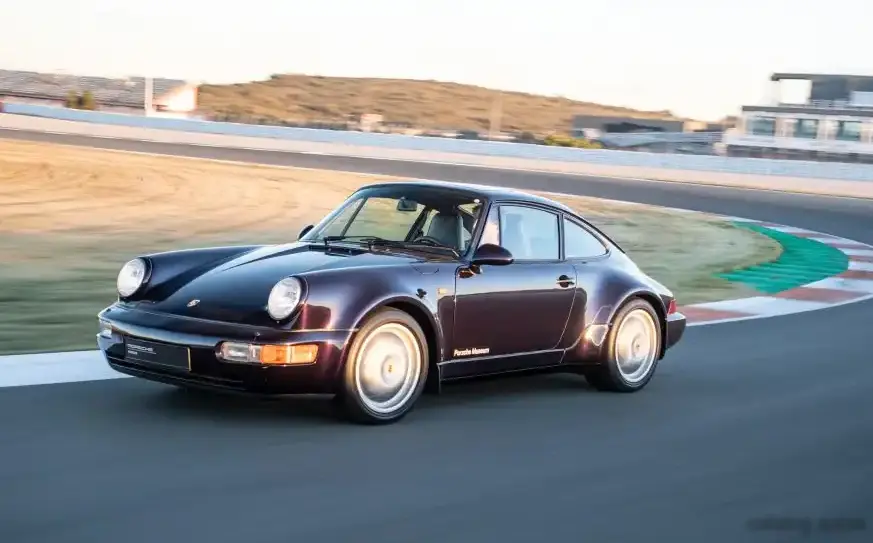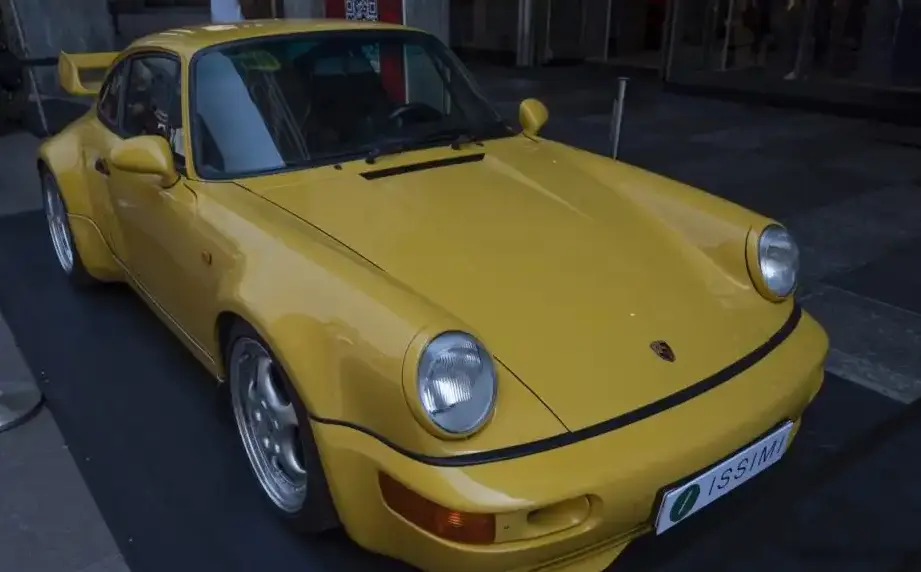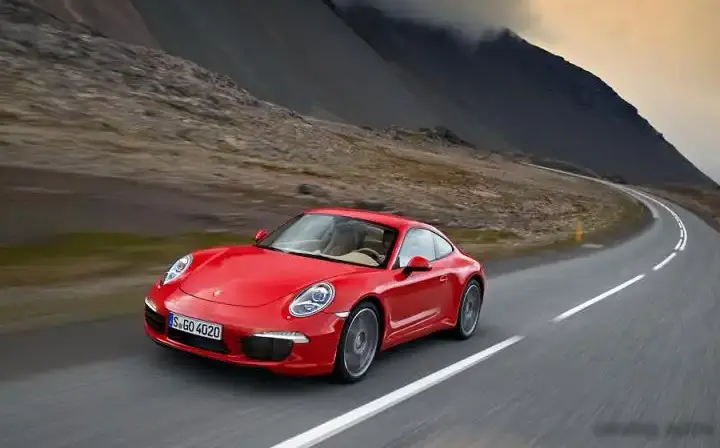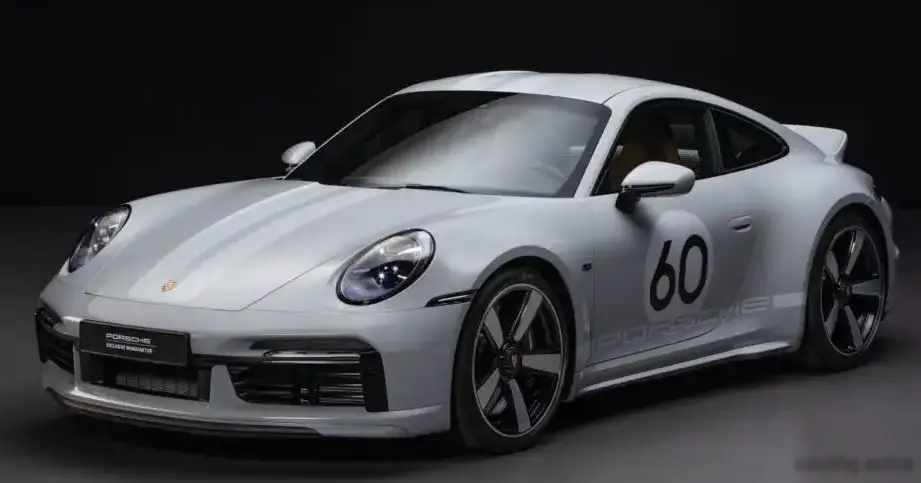
The Porsche 911 Sport Classic, specifically the 3.7 variant producing 550 horsepower, represents a limited-production, enthusiast-focused iteration of the 992 generation 911. Introduced in July 2022 and concluding production in August 2023, this model blends classic design cues with modern Porsche performance technology. It occupies a unique position within the 992 lineup, appealing to collectors and drivers seeking a more analog driving experience combined with substantial power. The Sport Classic is notable for being one of the last 911s to be offered with a manual transmission, further enhancing its appeal to purists.
Technical Specifications
| Brand | Porsche |
| Model | 911 |
| Generation | 911 (992) |
| Type (Engine) | Sport Classic 3.7 (550 Hp) |
| Start of production | July, 2022 |
| End of production | August, 2023 |
| Powertrain Architecture | Internal Combustion engine |
| Body type | Coupe |
| Seats | 4 |
| Doors | 2 |
| Fuel consumption at Low speed (WLTP) | 21.2 l/100 km (11.1 US mpg, 13.3 UK mpg, 4.7 km/l) |
| Fuel consumption at Medium speed (WLTP) | 12.9 l/100 km (18.2 US mpg, 21.9 UK mpg, 7.8 km/l) |
| Fuel consumption at high speed (WLTP) | 10.6 l/100 km (22.2 US mpg, 26.6 UK mpg, 9.4 km/l) |
| Fuel consumption at very high speed (WLTP) | 10.9 l/100 km (21.6 US mpg, 25.9 UK mpg, 9.2 km/l) |
| Combined fuel consumption (WLTP) | 12.6 l/100 km (18.7 US mpg, 22.4 UK mpg, 7.9 km/l) |
| CO2 emissions (WLTP) | 285 g/km |
| Fuel consumption (economy) – urban (NEDC) | 18.7 l/100 km (12.6 US mpg, 15.1 UK mpg, 5.3 km/l) |
| Fuel consumption (economy) – extra urban (NEDC) | 9.3 l/100 km (25.3 US mpg, 30.4 UK mpg, 10.8 km/l) |
| Fuel consumption (economy) – combined (NEDC) | 12.8 l/100 km (18.4 US mpg, 22.1 UK mpg, 7.8 km/l) |
| CO2 emissions (NEDC) | 292 g/km |
| Fuel Type | Petrol (Gasoline) |
| Acceleration 0 – 100 km/h | 4.1 sec |
| Acceleration 0 – 62 mph | 4.1 sec |
| Acceleration 0 – 60 mph | 3.9 sec |
| Acceleration 0 – 200 km/h | 12 sec |
| Maximum speed | 315 km/h (195.73 mph) |
| Emission standard | Euro 6d-ISC-FCM |
| Weight-to-power ratio | 2.9 kg/Hp, 350.3 Hp/tonne |
| Weight-to-torque ratio | 2.6 kg/Nm, 382.2 Nm/tonne |
| Power | 550 Hp @ 6750 rpm |
| Power per litre | 146.9 Hp/l |
| Torque | 600 Nm @ 2000-6000 rpm (442.54 lb.-ft. @ 2000-6000 rpm) |
| Maximum engine speed | 7200 rpm |
| Engine layout | Rear, Longitudinal |
| Engine displacement | 3745 cm3 (228.53 cu. in.) |
| Number of cylinders | 6 |
| Engine configuration | Boxer |
| Cylinder Bore | 102 mm (4.02 in.) |
| Piston Stroke | 76.4 mm (3.01 in.) |
| Compression ratio | 8.7:1 |
| Number of valves per cylinder | 4 |
| Fuel injection system | Direct injection |
| Engine aspiration | Twin-Turbo, Intercooler |
| Valvetrain | DOHC |
| Kerb Weight | 1570 kg (3461.26 lbs.) |
| Max. weight | 1995 kg (4398.22 lbs.) |
| Max load | 425 kg (936.96 lbs.) |
| Trunk (boot) space – minimum | 132 l (4.66 cu. ft.) |
| Fuel tank capacity | 67 l (17.7 US gal | 14.74 UK gal) |
| Length | 4535 mm (178.54 in.) |
| Width | 1900 mm (74.8 in.) |
| Width including mirrors | 2024 mm (79.69 in.) |
| Height | 1299 mm (51.14 in.) |
| Wheelbase | 2450 mm (96.46 in.) |
| Front track | 1577 mm (62.09 in.) |
| Rear (Back) track | 1594 mm (62.76 in.) |
| Ride height (ground clearance) | 115 mm (4.53 in.) |
| Drag coefficient (Cd) | 0.35 |
| Minimum turning circle (turning diameter) | 10.9 m (35.76 ft.) |
| Approach angle | 10.4° |
| Departure angle | 13.6° |
| Ramp-over (brakeover) angle | 12° |
| Drivetrain Architecture | The Internal combustion engine (ICE) drives the rear wheels of the vehicle. |
| Drive wheel | Rear wheel drive |
| Number of gears and type of gearbox | 7 gears, manual transmission |
| Front suspension | Independent, type McPherson with coil spring and anti-roll bar |
| Rear suspension | Independent multi-link spring suspension with stabilizer |
| Front brakes | Ventilated discs, 420×40 mm |
| Rear brakes | Ventilated discs, 390×32 mm |
| Assisting systems | ABS (Anti-lock braking system) |
| Steering type | Steering rack and pinion |
| Power steering | Electric Steering |
| Tires size | Front wheel tires: 255/35 ZR 20Rear wheel tires: 315/30 ZR 21 |
| Wheel rims size | Front wheel rims: 9.5J x 20Rear wheel rims: 12J x 21 |
Powertrain & Engine Architecture
At the heart of the 911 Sport Classic is a 3.7-liter twin-turbocharged flat-six engine, internally designated as the 9A2.60. This engine builds upon the foundation of the 992 Turbo’s powerplant but is uniquely tuned to deliver 550 horsepower at 6750 rpm and 600 Nm (442.54 lb-ft) of torque between 2000 and 6000 rpm. The engine utilizes direct fuel injection and variable turbine geometry (VTG) turbochargers to optimize performance across the rev range. A key feature is the availability of a seven-speed manual transmission, a deliberate choice by Porsche to offer a more engaging driving experience. The engine’s boxer configuration contributes to a low center of gravity, enhancing handling characteristics. The exhaust system is specifically tuned for the Sport Classic, providing a distinctive sound signature.
Driving Characteristics
The 911 Sport Classic 3.7 delivers a driving experience that prioritizes connection and control. The manual transmission demands driver involvement, rewarding precise shifts and offering a tactile feel. While the 550 horsepower provides ample power for spirited driving, the car’s weight (1570 kg / 3461.26 lbs) and rear-wheel-drive configuration require respect. Acceleration from 0 to 60 mph is achieved in 3.9 seconds, and the car reaches a top speed of 195.73 mph. Compared to the 992 Turbo, the Sport Classic offers a slightly less aggressive power delivery, making it more approachable for everyday driving. The manual gearbox, while slower in outright acceleration than the PDK dual-clutch transmission, provides a more rewarding experience for enthusiasts.
Equipment & Trim Levels
The Sport Classic is exceptionally well-equipped, reflecting its premium positioning within the 911 range. Standard features include a leather interior with classic Pepita houndstooth fabric accents, a Porsche Communication Management (PCM) system with navigation, and a high-fidelity sound system. The interior trim features open-pore walnut accents, further emphasizing the car’s classic aesthetic. Optional extras included a lift system for increased ground clearance, carbon fiber interior trim, and a bespoke luggage set designed to fit the car’s limited trunk space (132 l / 4.66 cu. ft.).
Chassis & Braking
The chassis of the 911 Sport Classic is based on the 992 Carrera 4S, but with modifications to enhance handling and stability. It features Porsche Active Suspension Management (PASM), which electronically adjusts the damping characteristics based on road conditions and driving style. The braking system consists of ventilated discs all around – 420mm at the front and 390mm at the rear – providing ample stopping power. ABS (Anti-lock Braking System) is standard. The car’s rear-wheel-drive configuration and precise steering contribute to a balanced and engaging driving experience.
Market Reception & Comparison
The Porsche 911 Sport Classic was met with significant acclaim from automotive journalists and enthusiasts. Critics praised its blend of classic design, modern performance, and engaging driving experience. The availability of a manual transmission was a particularly well-received feature. Compared to other 992 variants, such as the Carrera S or Turbo, the Sport Classic offered a more focused and exclusive experience. Its fuel economy, while not a primary concern for buyers in this segment, is rated at 12.6 l/100 km (18.7 US mpg) combined. Reliability is expected to be consistent with other 992-generation 911s, benefiting from Porsche’s reputation for engineering excellence.
Legacy
The 911 Sport Classic 3.7 is poised to become a highly sought-after collectible. Its limited production run, unique styling, and focus on the analog driving experience make it a standout model within the 992 generation. The powertrain, while powerful, is based on proven Porsche technology, suggesting long-term reliability. As one of the last new 911s to offer a manual transmission, it represents a significant moment in the evolution of the iconic sports car, and its value in the used car market is expected to appreciate over time.