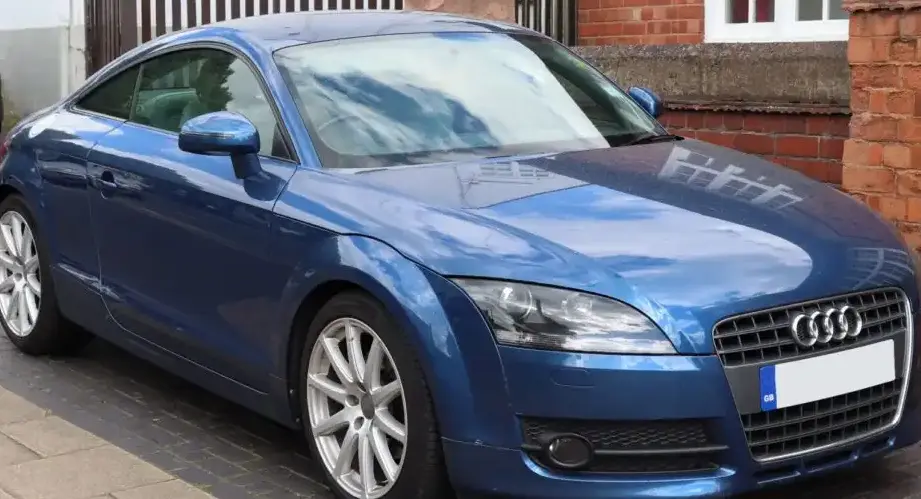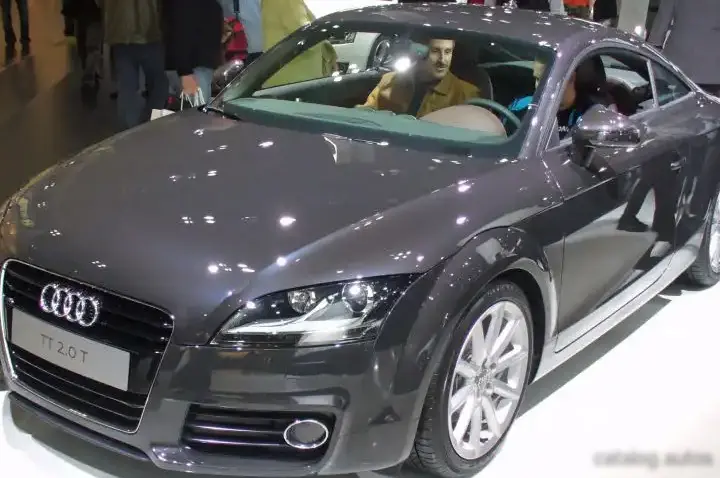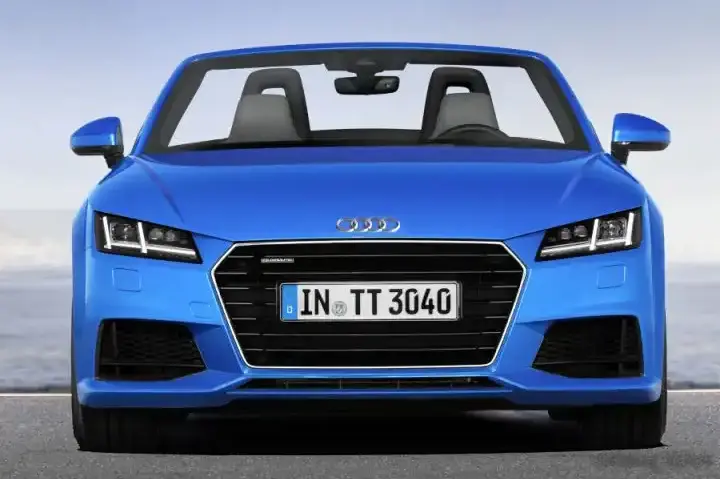
The Audi TT Roadster (8S) 2.0 TDI ultra, produced from November 2014 to 2018, represented a fuel-efficient and relatively affordable entry point into the third-generation TT Roadster lineup. Positioned as a grand tourer with a focus on style and driving enjoyment, this variant aimed to broaden the TT’s appeal by offering diesel economy without entirely sacrificing performance. It was part of the 8S generation, built on the Volkswagen Group’s PQ25 platform, also known as the A3 platform, shared with models like the Volkswagen Golf and Audi A3. The “ultra” designation signified Audi’s efforts to reduce weight and improve efficiency across the range.
Technical Specifications
| Brand | Audi |
| Model | TT |
| Generation | TT Roadster (8S) |
| Type (Engine) | 2.0 TDI ultra (184 Hp) |
| Start of production | November, 2014 |
| End of production | 2018 |
| Powertrain Architecture | Internal Combustion engine |
| Body type | Roadster |
| Seats | 2 |
| Doors | 2 |
| Fuel consumption (urban) | 5.1 l/100 km (46.1 US mpg, 55.4 UK mpg, 19.6 km/l) |
| Fuel consumption (extra urban) | 3.9 l/100 km (60.3 US mpg, 72.4 UK mpg, 25.6 km/l) |
| Fuel consumption (combined) | 4.3 l/100 km (54.7 US mpg, 65.7 UK mpg, 23.3 km/l) |
| CO2 emissions | 114 g/km |
| Fuel Type | Diesel |
| Acceleration 0 – 100 km/h | 7.3 sec |
| Acceleration 0 – 62 mph | 7.3 sec |
| Acceleration 0 – 60 mph | 6.9 sec |
| Maximum speed | 237 km/h (147.26 mph) |
| Emission standard | Euro 6 |
| Weight-to-power ratio | 7.4 kg/Hp, 135.3 Hp/tonne |
| Weight-to-torque ratio | 3.6 kg/Nm, 279.4 Nm/tonne |
| Power | 184 Hp @ 3500-4000 rpm |
| Power per litre | 93.5 Hp/l |
| Torque | 380 Nm @ 1750-3250 rpm (280.27 lb.-ft. @ 1750-3250 rpm) |
| Engine layout | Front, Transverse |
| Engine Model/Code | CUNA |
| Engine displacement | 1968 cm3 (120.09 cu. in.) |
| Number of cylinders | 4 |
| Engine configuration | Inline |
| Cylinder Bore | 81 mm (3.19 in.) |
| Piston Stroke | 95.5 mm (3.76 in.) |
| Compression ratio | 15.8:1 |
| Number of valves per cylinder | 4 |
| Fuel injection system | Diesel Commonrail |
| Engine aspiration | Turbocharger, Intercooler |
| Engine oil capacity | 4.6 l (4.86 US qt | 4.05 UK qt) |
| Kerb Weight | 1360 kg (2998.29 lbs.) |
| Max. weight | 1680 kg (3703.77 lbs.) |
| Max load | 320 kg (705.48 lbs.) |
| Trunk (boot) space – minimum | 280 l (9.89 cu. ft.) |
| Fuel tank capacity | 50 l (13.21 US gal | 11 UK gal) |
| Length | 4177 mm (164.45 in.) |
| Width | 1832 mm (72.13 in.) |
| Width including mirrors | 1966 mm (77.4 in.) |
| Height | 1355 mm (53.35 in.) |
| Wheelbase | 2505 mm (98.62 in.) |
| Front track | 1572 mm (61.89 in.) |
| Rear (Back) track | 1552 mm (61.1 in.) |
| Front overhang | 884 mm (34.8 in.) |
| Rear overhang | 788 mm (31.02 in.) |
| Drag coefficient (Cd) | 0.32 |
| Minimum turning circle | 10.96 m (35.96 ft.) |
| Drivetrain Architecture | Front wheel drive |
| Number of gears and type of gearbox | 6 gears, manual transmission |
| Front suspension | Independent, type McPherson with coil spring and anti-roll bar |
| Rear suspension | Independent coil spring |
| Front brakes | Ventilated discs |
| Rear brakes | Disc |
| Assisting systems | ABS (Anti-lock braking system) |
| Steering type | Steering rack and pinion |
| Power steering | Electric Steering |
| Tires size | 225/50 R17 |
| Wheel rims size | 8.0J x 17 |
Powertrain & Engine Architecture
The heart of the TT Roadster 2.0 TDI ultra is the CUNA engine, a 2.0-liter inline-four cylinder diesel engine. This engine is part of the Volkswagen Group’s modular engine family, known for its compact design and efficiency. It utilizes a common rail direct injection system, delivering fuel at extremely high pressure for optimized combustion. A turbocharger with an intercooler further enhances performance by forcing more air into the cylinders. The engine boasts 184 horsepower at 3500-4000 rpm and a substantial 380 Nm (280 lb-ft) of torque available from a low 1750 rpm, providing good responsiveness for everyday driving. The engine features four valves per cylinder and a compression ratio of 15.8:1. The 6-speed manual transmission was standard, chosen for its efficiency and driver engagement. While an S tronic dual-clutch transmission was available on other TT models, it wasn’t offered with this specific diesel engine and manual transmission combination.
Driving Characteristics
The 2.0 TDI ultra offered a different driving experience compared to the more powerful petrol-powered TT variants. While it didn’t deliver the same exhilarating acceleration, it provided a smooth and refined driving experience, particularly well-suited for long-distance cruising. The readily available torque meant that overtaking maneuvers were easily achievable, and the engine felt relaxed at highway speeds. The manual transmission, while engaging, had relatively long gearing, prioritizing fuel economy over outright performance. Compared to the 2.0 TFSI models, the TDI ultra felt less eager to rev, but offered significantly better fuel economy. The weight distribution, typical of front-wheel-drive cars, could lead to mild understeer when pushed hard, but the chassis remained well-balanced and predictable.
Equipment & Trim Levels
The 2.0 TDI ultra typically came with a generous level of standard equipment. This included Audi’s Multi Media Interface (MMI) infotainment system with a 6.5-inch display, air conditioning, alloy wheels, and a leather-wrapped steering wheel. Sport seats were standard, providing good support during spirited driving. Optional extras included upgrades to the MMI system with navigation, leather upholstery, a premium sound system, and various driver assistance features like parking sensors and adaptive cruise control. The interior design was minimalist and driver-focused, characteristic of the TT’s sporty ethos. The “ultra” trim often included specific lightweight materials to further enhance efficiency.
Chassis & Braking
The TT Roadster 2.0 TDI ultra utilized a McPherson strut front suspension and an independent coil spring rear suspension. This setup provided a good balance between comfort and handling. The suspension was tuned to be slightly softer than the more performance-oriented TT models, prioritizing ride quality. Front ventilated disc brakes and rear solid discs provided adequate stopping power for the car’s weight and performance. Anti-lock Braking System (ABS) was standard, enhancing safety during emergency braking situations. The steering was a rack-and-pinion system with electric power assistance, offering precise and responsive control.
Market Reception & Comparison
The Audi TT Roadster 2.0 TDI ultra was generally well-received by automotive critics. It was praised for its fuel efficiency, comfortable ride, and stylish design. However, some reviewers noted that the performance wasn’t as exciting as the petrol-powered variants. Compared to the 2.0 TFSI models, the TDI ultra offered significantly better fuel economy – around 30% improvement in combined cycle – but with a noticeable reduction in horsepower and acceleration. Against competitors like the BMW Z4 and Porsche Boxster, the TT Roadster 2.0 TDI ultra offered a more affordable and practical option, particularly for drivers prioritizing fuel efficiency and everyday usability.
Legacy
The CUNA engine, found in the TT Roadster 2.0 TDI ultra, has proven to be a relatively reliable powertrain. While diesel engines can be susceptible to issues with the diesel particulate filter (DPF) if not driven on longer journeys regularly, the CUNA engine is generally considered robust. On the used car market, the 2.0 TDI ultra represents a good value proposition for buyers seeking a stylish and fuel-efficient roadster. Its combination of performance, economy, and Audi’s build quality makes it a desirable option for those looking for a sporty yet practical open-top car. Regular maintenance, including oil changes and DPF servicing, is crucial to ensure the long-term reliability of this powertrain.