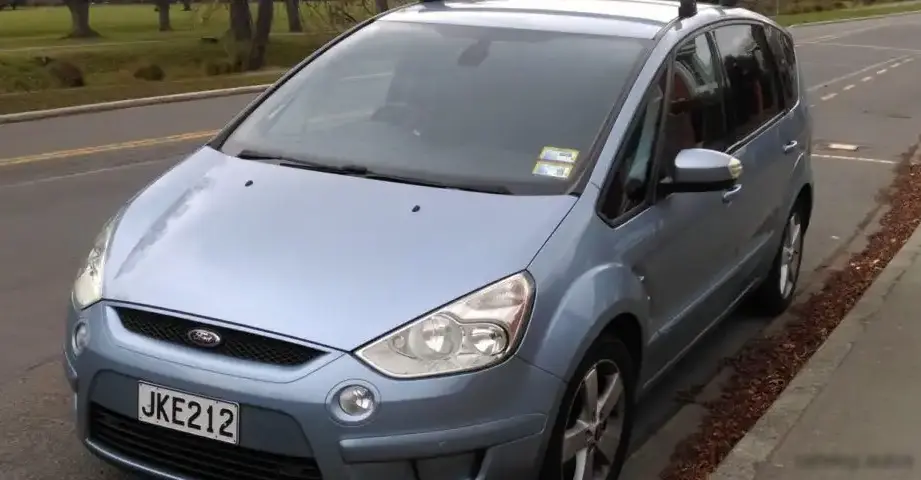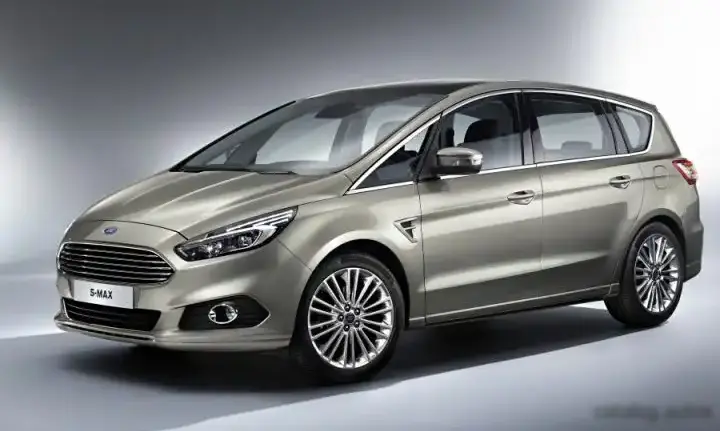
The Ford S-MAX II 2.0 EcoBlue (120 hp) S&S was a mid-range variant of Ford’s second-generation S-MAX multi-purpose vehicle (MPV), produced from 2018 to 2019. Positioned within the broader S-MAX II lineup – which also included higher-output petrol and diesel engines – this model aimed to provide a balance of fuel efficiency, practicality, and affordability for families. It represented Ford’s continued commitment to the MPV segment in Europe, offering a spacious and versatile vehicle designed for both daily commuting and longer journeys. The “S&S” designation indicates the inclusion of Ford’s Auto Start/Stop technology, further enhancing fuel economy.
Technical Specifications
| Brand | Ford |
| Model | S-MAX |
| Generation | S-MAX II |
| Type (Engine) | 2.0 EcoBlue (120 Hp) S&S |
| Start of production | 2018 |
| End of production | 2019 |
| Powertrain Architecture | Internal Combustion engine |
| Body type | MPV |
| Seats | 5 |
| Doors | 5 |
| Fuel consumption (urban) | 6.1-6.2 l/100 km (38.6 – 37.9 US mpg, 46.3 – 45.6 UK mpg, 16.4 – 16.1 km/l) |
| Fuel consumption (extra urban) | 4.6-4.7 l/100 km (51.1 – 50 US mpg, 61.4 – 60.1 UK mpg, 21.7 – 21.3 km/l) |
| Fuel consumption (combined) | 5.1-5.6 l/100 km (46.1 – 42 US mpg, 55.4 – 50.4 UK mpg, 19.6 – 17.9 km/l) |
| CO2 emissions | 134-145 g/km |
| Fuel Type | Diesel |
| Acceleration 0 – 100 km/h | 12.5 sec |
| Acceleration 0 – 62 mph | 12.5 sec |
| Acceleration 0 – 60 mph | 11.9 sec |
| Maximum speed | 180 km/h (111.85 mph) |
| Emission standard | Euro 6 d-TEMP |
| Weight-to-power ratio | 14.4 kg/Hp, 69.6 Hp/tonne |
| Weight-to-torque ratio | 5.1 kg/Nm, 197.1 Nm/tonne |
| Power | 120 Hp @ 3500 rpm |
| Power per litre | 60.1 Hp/l |
| Torque | 340 Nm @ 1750-2250 rpm (250.77 lb.-ft. @ 1750-2250 rpm) |
| Engine layout | Front, Transverse |
| Engine Model/Code | YNCA |
| Engine displacement | 1997 cm3 (121.86 cu. in.) |
| Number of cylinders | 4 |
| Engine configuration | Inline |
| Cylinder Bore | 85 mm (3.35 in.) |
| Piston Stroke | 88 mm (3.46 in.) |
| Compression ratio | 17:1 |
| Number of valves per cylinder | 4 |
| Fuel injection system | Diesel Commonrail |
| Engine aspiration | Turbocharger, Intercooler |
| Valvetrain | DOHC |
| Engine oil capacity | 6.4 l (6.76 US qt | 5.63 UK qt) |
| Coolant | 10.7 l (11.31 US qt | 9.41 UK qt) |
| Kerb Weight | 1725 kg (3802.97 lbs.) |
| Max. weight | 2505 kg (5522.58 lbs.) |
| Max load | 780 kg (1719.61 lbs.) |
| Trunk (boot) space – minimum | 700 l (24.72 cu. ft.) |
| Trunk (boot) space – maximum | 2200 l (77.69 cu. ft.) |
| Fuel tank capacity | 70 l (18.49 US gal | 15.4 UK gal) |
| Length | 4796 mm (188.82 in.) |
| Width | 1916 mm (75.43 in.) |
| Width including mirrors | 2137 mm (84.13 in.) |
| Height | 1655 mm (65.16 in.) |
| Wheelbase | 2849 mm (112.17 in.) |
| Front track | 1606 mm (63.23 in.) |
| Rear (Back) track | 1606 mm (63.23 in.) |
| Ride height (ground clearance) | 128-150 mm (5.04 – 5.91 in.) |
| Minimum turning circle | 12 m (39.37 ft.) |
| Drivetrain Architecture | The Internal combustion engine (ICE) drives the front wheels of the vehicle. |
| Drive wheel | Front wheel drive |
| Number of gears and type of gearbox | 6 gears, manual transmission |
| Front suspension | Independent, type McPherson with coil spring and anti-roll bar |
| Rear suspension | Independent coil spring |
| Front brakes | Ventilated discs |
| Rear brakes | Disc |
| Assisting systems | ABS (Anti-lock braking system) |
| Steering type | Steering rack and pinion |
| Tires size | 235/55 R17; 235/50 R18; 245/45 R19 |
| Wheel rims size | 7.5J x 17; 7.5J x 18; 8J x 19 |
Powertrain & Engine Architecture
The S-MAX II 2.0 EcoBlue (120 hp) S&S was powered by Ford’s YNCA engine, a 1.997-liter inline-four cylinder diesel engine. This engine belonged to the EcoBlue family, representing Ford’s advanced diesel technology focused on improving efficiency and reducing emissions. The YNCA featured a common-rail direct fuel injection system, delivering fuel at extremely high pressure for optimized combustion. A turbocharger with intercooling was employed to boost power output, while a Dual Overhead Camshaft (DOHC) valvetrain ensured efficient valve control. The engine boasted a high compression ratio of 17:1, contributing to its thermal efficiency. The Auto Start/Stop system, indicated by the “S&S” designation, automatically shut off the engine when the vehicle came to a halt, such as at traffic lights, to conserve fuel and reduce emissions. This engine was paired with a six-speed manual transmission, delivering power to the front wheels.
Driving Characteristics
The 120 hp output and 340 Nm of torque provided by the 2.0 EcoBlue engine resulted in a practical, rather than sporty, driving experience. Acceleration from 0 to 62 mph took approximately 12.5 seconds. While not particularly quick, the engine delivered adequate power for everyday driving situations, including highway cruising and overtaking. The torque curve was relatively flat, providing good responsiveness at lower engine speeds. Compared to the higher-powered versions of the S-MAX II, such as those equipped with the 240 hp petrol engine, this variant offered a more relaxed and fuel-efficient driving experience. The six-speed manual transmission allowed for precise gear selection, but the gear ratios were tuned for economy rather than performance.
Equipment & Trim Levels
The 2.0 EcoBlue (120 hp) S&S typically came equipped with a reasonable level of standard features. These included air conditioning, a basic audio system with Bluetooth connectivity, alloy wheels, and a suite of safety features such as ABS, electronic stability control, and multiple airbags. Interior upholstery was typically cloth, and the dashboard featured a functional, if not luxurious, design. Optional extras available for this trim level included a touchscreen infotainment system with navigation, parking sensors, heated seats, and a panoramic sunroof. The trim level often sat in the middle of the S-MAX II range, offering a good balance of features and affordability.
Chassis & Braking
The S-MAX II featured an independent suspension system on both the front and rear axles. The front suspension utilized a McPherson strut design with coil springs and an anti-roll bar, while the rear suspension employed an independent coil spring setup. This configuration provided a comfortable ride quality and decent handling characteristics. The braking system consisted of ventilated discs on the front wheels and solid discs on the rear wheels. ABS (Anti-lock Braking System) was standard, enhancing braking performance and stability. The S-MAX II’s chassis was designed to accommodate the weight of passengers and cargo, providing a stable and predictable driving experience.
Market Reception & Comparison
The Ford S-MAX II 2.0 EcoBlue (120 hp) S&S was generally well-received by critics as a practical and fuel-efficient MPV. It was praised for its spacious interior, comfortable ride, and reasonable running costs. However, some reviewers noted that the 120 hp engine could feel underpowered when the vehicle was fully loaded. Compared to the higher-output trims, this variant offered better fuel economy – achieving between 42 and 50 US mpg on combined cycles – but at the expense of performance. Its reliability was generally considered good, with the EcoBlue engine proving to be a durable and dependable unit.
Legacy
The Ford S-MAX II 2.0 EcoBlue (120 hp) S&S remains a popular choice in the used car market, particularly for families seeking a spacious and affordable MPV. The EcoBlue engine has proven to be relatively reliable, although regular maintenance is essential to ensure its longevity. Common issues reported with this engine include diesel particulate filter (DPF) clogging and injector problems, particularly if the vehicle has been primarily used for short journeys. Overall, the S-MAX II 2.0 EcoBlue (120 hp) S&S represents a well-rounded and practical MPV that continues to offer good value for money.