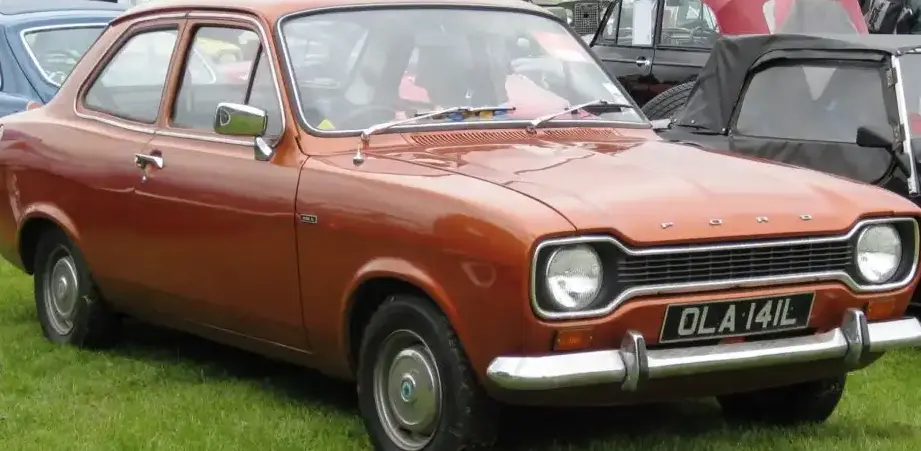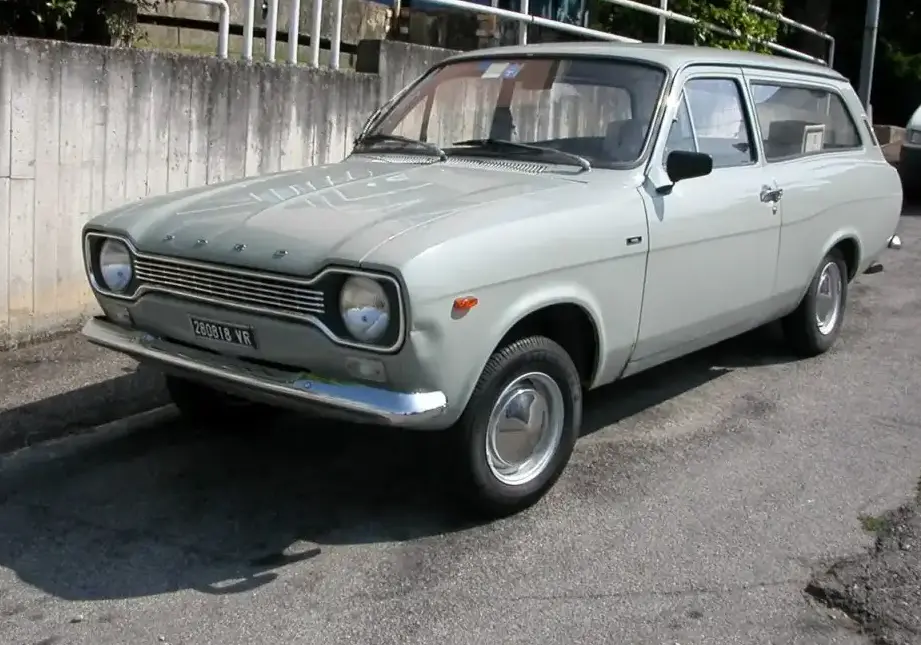
The Ford Escort Wagon II, produced for the US market between 1991 and 1996, represented a significant update to Ford’s compact offering. Positioned as a practical and affordable family vehicle, the Escort Wagon II aimed to provide a spacious and versatile alternative to burgeoning sedan and hatchback markets. Within the Escort Wagon II lineup, the 1.9i variant, producing 88 horsepower, served as a mid-range option, balancing fuel economy with adequate performance for everyday driving. It was built on the shared ‘AL’ platform, also used for the Mercury Tracer.
Technical Specifications
| Brand | Ford |
| Model | Escort |
| Generation | Escort Wagon II (USA) |
| Type (Engine) | 1.9i (88 Hp) |
| Start of production | 1991 |
| End of production | 1996 |
| Powertrain Architecture | Internal Combustion engine |
| Body type | Station wagon (estate) |
| Seats | 5 |
| Doors | 5 |
| Fuel Type | Petrol (Gasoline) |
| Maximum speed | 165 km/h (102.53 mph) |
| Weight-to-power ratio | 12.5 kg/Hp, 80.2 Hp/tonne |
| Weight-to-torque ratio | 7.5 kg/Nm, 133.1 Nm/tonne |
| Power | 88 Hp @ 4400 rpm |
| Power per litre | 47.3 Hp/l |
| Torque | 146 Nm @ 3800 rpm (107.68 lb.-ft. @ 3800 rpm) |
| Engine layout | Front, Transverse |
| Engine displacement | 1859 cm3 (113.44 cu. in.) |
| Number of cylinders | 4 |
| Engine configuration | Inline |
| Cylinder Bore | 82 mm (3.23 in.) |
| Piston Stroke | 88 mm (3.46 in.) |
| Compression ratio | 9:1 |
| Number of valves per cylinder | 2 |
| Fuel injection system | Multi-port manifold injection |
| Engine aspiration | Naturally aspirated engine |
| Valvetrain | OHC |
| Engine oil capacity | 3.8 l (4.02 US qt | 3.34 UK qt) |
| Coolant | 5 l (5.28 US qt | 4.4 UK qt) |
| Kerb Weight | 1097 kg (2418.47 lbs.) |
| Fuel tank capacity | 50 l (13.21 US gal | 11 UK gal) |
| Length | 4351 mm (171.3 in.) |
| Width | 1694 mm (66.69 in.) |
| Height | 1361 mm (53.58 in.) |
| Wheelbase | 2500 mm (98.43 in.) |
| Front track | 1435 mm (56.5 in.) |
| Rear (Back) track | 1435 mm (56.5 in.) |
| Drivetrain Architecture | The Internal combustion engine (ICE) drives the front wheels of the vehicle. |
| Drive wheel | Front wheel drive |
| Number of gears and type of gearbox | 5 gears, manual transmission |
| Front suspension | Spring Strut |
| Rear suspension | Spring Strut |
| Front brakes | Ventilated discs |
| Rear brakes | Drum |
| Assisting systems | ABS (Anti-lock braking system) |
| Steering type | Steering rack and pinion |
| Power steering | Hydraulic Steering |
| Tires size | 175/65 R14 |
Powertrain & Engine Architecture
The heart of the 1.9i Escort Wagon II was the Ford CVH (Compound Valve Hemispherical) engine, specifically the 1.9-liter variant. This engine, designated with various codes depending on the year and specific calibration, was a four-cylinder, inline configuration. The 1.9-liter displacement (1859 cc) provided a reasonable balance between power and fuel efficiency. The engine utilized a multi-port fuel injection system, a significant upgrade from earlier carburetor-equipped Escorts, contributing to improved throttle response and emissions control. The CVH engine featured an overhead camshaft (OHC) valvetrain with two valves per cylinder. While not a particularly high-revving engine, it delivered a usable torque curve suitable for everyday driving. The 88 horsepower peak was achieved at 4400 rpm, and the 146 Nm (107.68 lb-ft) of torque peaked at 3800 rpm. The engine was transversely mounted in the front of the vehicle, driving the front wheels.
Driving Characteristics
The 1.9i Escort Wagon II, with its 88 horsepower and five-speed manual transmission, offered adequate, though not exhilarating, performance. Acceleration was modest, with a 0-60 mph time estimated around 11-12 seconds. The engine felt relatively strained when pushed hard, particularly when fully loaded with passengers and cargo. The five-speed manual transmission was well-matched to the engine’s characteristics, providing reasonable gear spacing. The gear ratios were geared towards fuel economy rather than outright acceleration. Compared to the later, more powerful 2.0-liter versions of the Escort, the 1.9i felt noticeably slower. However, it offered a more economical driving experience. The suspension provided a comfortable ride, absorbing bumps and imperfections in the road reasonably well, though it wasn’t particularly sporty in handling.
Equipment & Trim Levels
The 1.9i trim level of the Escort Wagon II typically included features such as power steering, a basic AM/FM radio, and cloth upholstery. Air conditioning was often an optional extra. Interior plastics were durable but utilitarian, reflecting the vehicle’s affordable price point. The dashboard layout was functional and straightforward. Higher trim levels, such as the LX, offered additional features like upgraded upholstery, alloy wheels, and a more comprehensive sound system. The 1.9i model was generally considered a step up from the base model, offering a better balance of features and value.
Chassis & Braking
The Escort Wagon II utilized a relatively simple chassis design. Front suspension consisted of MacPherson strut springs, while the rear employed a twist-beam axle with coil springs. This setup provided a comfortable ride but didn’t offer the same level of handling precision as more sophisticated suspension systems. Braking duties were handled by ventilated discs at the front and drum brakes at the rear. Anti-lock braking system (ABS) was available as an option, enhancing safety in emergency braking situations. Steering was rack-and-pinion, providing reasonably precise control. The tires were typically 175/65 R14, offering a good compromise between ride comfort and handling.
Market Reception & Comparison
The 1.9i Escort Wagon II received generally positive reviews for its practicality, fuel economy, and affordability. Critics noted that it wasn’t the most exciting vehicle to drive, but it fulfilled its role as a reliable and economical family wagon. Compared to other compact wagons of the time, such as the Chevrolet Cavalier Wagon or the Dodge Caravan, the Escort Wagon II offered a competitive price and a decent level of features. The 1.9i engine provided better fuel economy than the larger 2.0-liter engine, making it a popular choice for drivers who prioritized efficiency. However, the 2.0-liter offered noticeably more power and a more engaging driving experience.
Legacy
The Ford Escort Wagon II, particularly the 1.9i variant, has developed a reputation for reliability and affordability in the used car market. The CVH engine, while not known for being particularly high-tech, is generally durable and relatively easy to maintain. Common issues include oil leaks and occasional sensor failures. Parts availability remains good, making repairs relatively straightforward. Today, these Escort Wagons are often sought after by enthusiasts looking for a practical and affordable classic car. They represent a simpler era of automotive design, offering a refreshing alternative to the increasingly complex vehicles of today. While not a performance icon, the 1.9i Escort Wagon II remains a testament to Ford’s commitment to providing practical and reliable transportation for the masses.