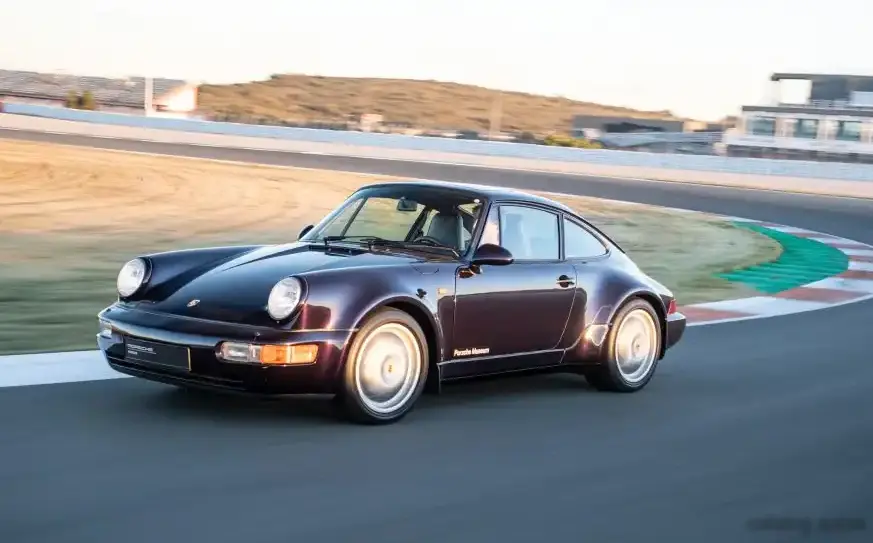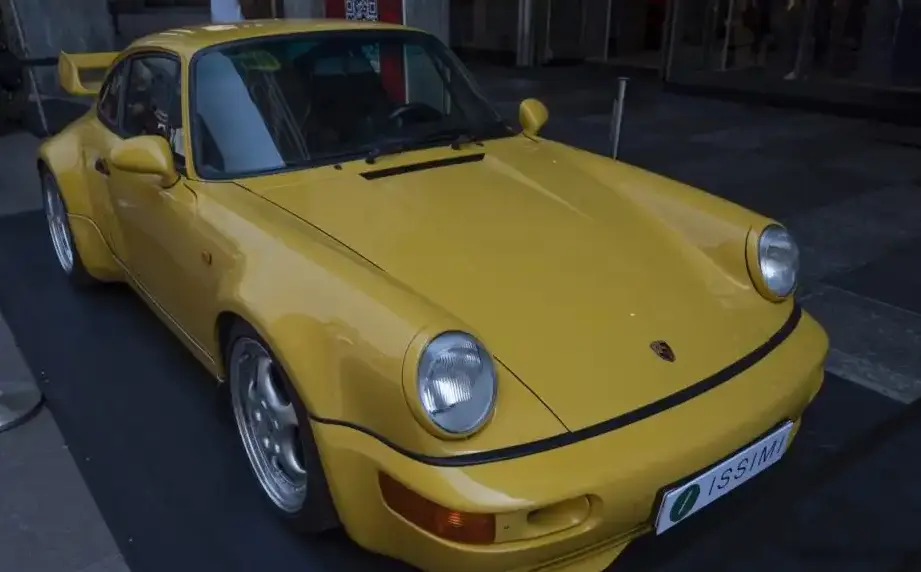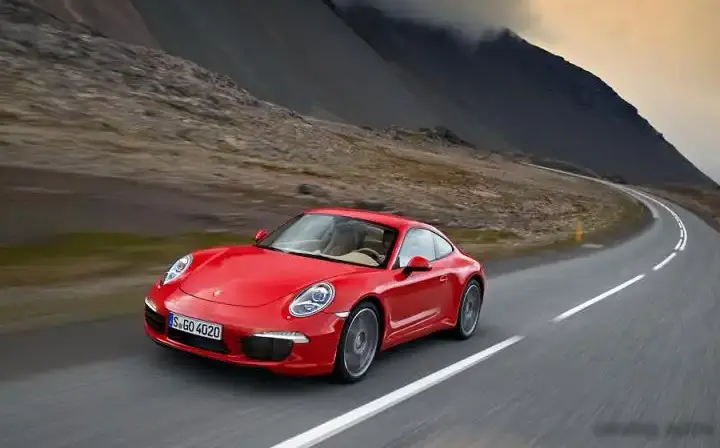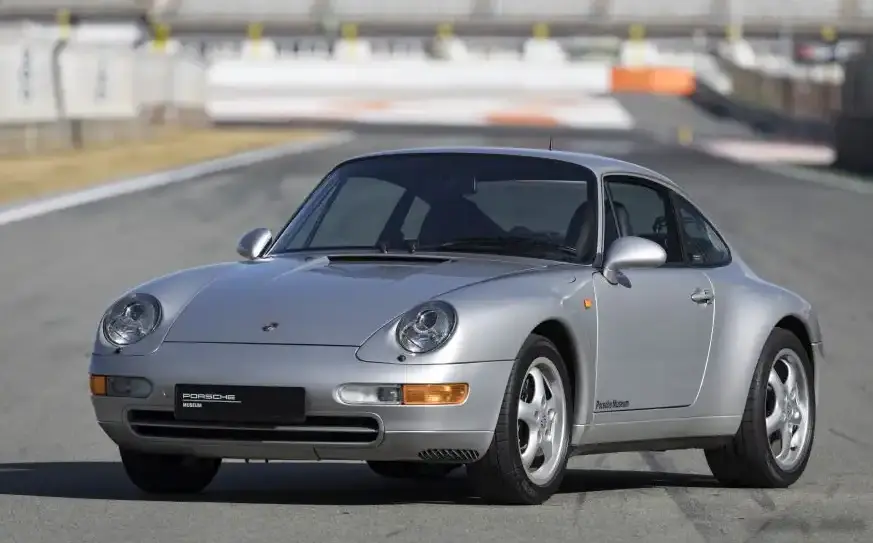
The Porsche 911 (993) Carrera 4 3.6, produced from 1995 to 1997, represents the final iteration of the air-cooled 911 before Porsche transitioned to water-cooled engines. This model held a significant position as the flagship of the 993 generation, offering all-wheel drive and a larger 3.6-liter engine. It was positioned as a premium offering within the 993 lineup, above the base Carrera and Carrera 2 models, and served as a precursor to the more technologically advanced 996 generation. The Carrera 4 3.6 was aimed at enthusiasts seeking a blend of performance, all-weather capability, and the classic 911 driving experience.
Technical Specifications
| Brand | Porsche |
| Model | 911 |
| Generation | 911 (993) |
| Type (Engine) | Carrera 4 3.6 (285 Hp) |
| Start of production | 1995 |
| End of production | 1997 |
| Powertrain Architecture | Internal Combustion engine |
| Body type | Coupe |
| Seats | 4 |
| Doors | 2 |
| Fuel consumption (economy) – urban | 18.4 l/100 km (12.8 US mpg, 15.4 UK mpg, 5.4 km/l) |
| Fuel consumption (economy) – extra urban | 9.2 l/100 km (25.6 US mpg, 30.7 UK mpg, 10.9 km/l) |
| Fuel consumption (economy) – combined | 12.6 l/100 km (18.7 US mpg, 22.4 UK mpg, 7.9 km/l) |
| Fuel Type | Petrol (Gasoline) |
| Acceleration 0 – 100 km/h | 5.3 sec |
| Acceleration 0 – 62 mph | 5.3 sec |
| Acceleration 0 – 60 mph | 5 sec |
| Maximum speed | 275 km/h (170.88 mph) |
| Weight-to-power ratio | 5 kg/Hp, 200.7 Hp/tonne |
| Weight-to-torque ratio | 4.2 kg/Nm, 239.4 Nm/tonne |
| Power | 285 Hp @ 6100 rpm |
| Power per litre | 79.2 Hp/l |
| Torque | 340 Nm @ 5250 rpm (250.77 lb.-ft. @ 5250 rpm) |
| Engine layout | Rear, Longitudinal |
| Engine Model/Code | M64.21 |
| Engine displacement | 3600 cm3 (219.69 cu. in.) |
| Number of cylinders | 6 |
| Engine configuration | Boxer |
| Cylinder Bore | 100 mm (3.94 in.) |
| Piston Stroke | 76.4 mm (3.01 in.) |
| Compression ratio | 11.3:1 |
| Number of valves per cylinder | 2 |
| Fuel injection system | Multi-port manifold injection |
| Engine aspiration | Naturally aspirated engine |
| Valvetrain | SOHC |
| Engine oil capacity | 9 l (9.51 US qt | 7.92 UK qt) |
| Kerb Weight | 1420 kg (3130.56 lbs.) |
| Max. weight | 1760 kg (3880.14 lbs.) |
| Max load | 340 kg (749.57 lbs.) |
| Trunk (boot) space – maximum | 123 l (4.34 cu. ft.) |
| Length | 4245 mm (167.13 in.) |
| Width | 1735 mm (68.31 in.) |
| Height | 1300 mm (51.18 in.) |
| Wheelbase | 2275 mm (89.57 in.) |
| Front track | 1405 mm (55.31 in.) |
| Rear (Back) track | 1444 mm (56.85 in.) |
| Drive wheel | All wheel drive (4×4) |
| Number of gears and type of gearbox | 6 gears, manual transmission |
| Front suspension | Independent type McPherson |
| Rear suspension | Independent multi-link suspension |
| Front brakes | Ventilated discs |
| Rear brakes | Ventilated discs |
| Assisting systems | ABS (Anti-lock braking system), Hydraulic Steering |
| Tires size | 205/55 R16; 245/45 R16 |
| Wheel rims size | 7J x 16; 9J x 16 |
Powertrain & Engine Architecture
The heart of the 993 Carrera 4 3.6 is the M64.21 engine, a 3.6-liter naturally aspirated flat-six. This engine represented a significant evolution of the air-cooled 911 powerplant. It featured increased bore size (100mm) and a slightly longer stroke (76.4mm) compared to earlier 911 engines, resulting in a displacement of 3600cc. The engine utilized a multi-port fuel injection system, delivering fuel directly into each intake port. The valvetrain employed a single overhead camshaft (SOHC) design, operating two valves per cylinder. The engine’s design prioritized smooth power delivery and reliability over outright peak horsepower. The Carrera 4 3.6 exclusively came with a six-speed manual transmission, providing precise gear changes and enhancing the driving experience. The all-wheel-drive system employed a viscous coupling to distribute power between the front and rear axles, offering improved traction and stability, particularly in adverse weather conditions.
Driving Characteristics
The 993 Carrera 4 3.6 offered a refined and engaging driving experience. The 285 horsepower engine, while not the most powerful in the 911 range, provided ample performance for both spirited driving and comfortable cruising. The all-wheel-drive system instilled confidence, especially on slippery surfaces, and reduced understeer compared to rear-wheel-drive 911s. The six-speed manual transmission allowed drivers to fully exploit the engine’s powerband. The gear ratios were well-matched, providing strong acceleration in each gear. Compared to the base Carrera or Carrera 2, the Carrera 4 3.6 felt more planted and stable, but some purists argued that the all-wheel-drive system slightly diminished the classic 911’s playful rear-wheel-drive characteristics. The steering was precise and communicative, providing excellent feedback to the driver.
Equipment & Trim Levels
The Carrera 4 3.6 was well-equipped as standard, reflecting its position as a premium model. Standard features included power windows, power steering, air conditioning, and a high-quality audio system. The interior was typically trimmed with leather upholstery, and featured a three-spoke steering wheel. Optional extras included a sunroof, limited-slip differential, sport seats, and a CD changer. Customers could also specify various exterior colors and interior trim options to personalize their vehicle. The dashboard layout was typical of the 993 generation, with a clear and functional design.
Chassis & Braking
The 993 Carrera 4 3.6 featured an independent suspension system at all four wheels. The front suspension utilized McPherson struts, while the rear suspension employed a multi-link design. This setup provided a comfortable ride and excellent handling characteristics. The braking system consisted of ventilated discs at all four wheels, providing ample stopping power. An Anti-lock Braking System (ABS) was standard, enhancing safety and stability during braking. The Carrera 4 3.6 also featured a hydraulic power steering system, providing precise and responsive steering feel.
Market Reception & Comparison
The 993 Carrera 4 3.6 was generally well-received by automotive critics. It was praised for its performance, handling, and refinement. The all-wheel-drive system was seen as a significant advantage, particularly in regions with inclement weather. Compared to the base Carrera and Carrera 2, the Carrera 4 3.6 offered a more secure and stable driving experience, but at a higher price point. Fuel economy was reasonable for a sports car of its era, averaging around 18.7 US mpg in combined driving. Reliability was generally good, although maintenance costs could be high due to the complexity of the engine and the specialized nature of Porsche parts.
Legacy
The 993 Carrera 4 3.6 is now considered a highly collectible Porsche model. Its status as the last of the air-cooled 911s, combined with its all-wheel-drive system and powerful engine, has made it a favorite among enthusiasts. The M64.21 engine is known for its durability and relatively straightforward maintenance, although regular servicing is essential to maintain its performance. In the used car market, well-maintained examples of the Carrera 4 3.6 command premium prices, reflecting their rarity and desirability. The 993 generation, and particularly the Carrera 4 3.6, represents a high point in Porsche’s engineering and design history, bridging the gap between the classic air-cooled 911s and the more modern water-cooled models.