
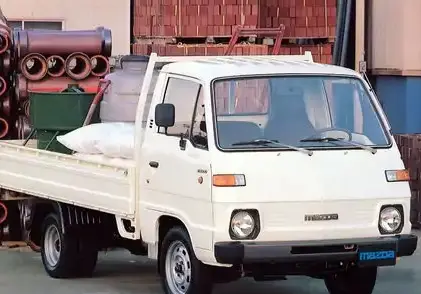
The Mazda E1600, produced from 1977 to 1984, represents a significant entry for Mazda into the compact pickup truck market, particularly in regions outside of North America where smaller, more fuel-efficient trucks were in higher demand. This model, often simply referred to as the Mazda E series, was a rebadged and slightly modified version of the Daihatsu Hijet, a result of a manufacturing partnership between the two Japanese automakers. The 1.6-liter (69 hp) variant was a mainstay of the lineup, offering a balance of affordability, practicality, and reasonable fuel economy for its time. It served as a workhorse for small businesses, farmers, and individuals needing a versatile vehicle for light-duty tasks. The E1600 filled a niche below the larger, more conventional pickups offered by American manufacturers.
Technical Specifications
| Brand | Mazda |
| Model | E 1600 |
| Generation | E 1600 |
| Type (Engine) | 1.6 (69 Hp) |
| Start of Production | 1977 |
| End of Production | 1984 |
| Powertrain Architecture | Internal Combustion Engine |
| Body Type | Pick-up |
| Fuel Type | Petrol (Gasoline) |
| Power | 69 Hp |
| Engine Aspiration | Naturally Aspirated |
Powertrain & Engine Architecture
The heart of the Mazda E1600 1.6 was a 1.6-liter, naturally aspirated four-cylinder gasoline engine. While specific engine codes varied depending on the market, it was generally based on Daihatsu’s designs. This engine, though modest in output at 69 horsepower, was known for its relative simplicity and durability. The engine utilized a single overhead camshaft (SOHC) valvetrain, operating two valves per cylinder. Fuel delivery was managed by a carburetor, a common feature for vehicles of this era, rather than fuel injection. This carburetor setup, while less precise than modern fuel injection systems, contributed to the engine’s ease of maintenance and repair. The engine’s block was cast iron, providing robust strength, while the cylinder head was typically aluminum alloy to reduce weight. The transmission options included a four-speed manual and a three-speed automatic. The automatic transmission, while offering convenience, was geared towards fuel economy and smooth operation rather than performance. It was a relatively simple three-speed unit, lacking the overdrive gears found in later automatic transmissions.
Driving Characteristics
The driving experience of the E1600 1.6 Automatic was characterized by its utilitarian nature. Acceleration was modest, with the 69 horsepower engine providing adequate power for city driving and light hauling, but struggling on steep inclines or when fully loaded. The three-speed automatic transmission contributed to this, with relatively wide gear ratios prioritizing fuel efficiency over quick acceleration. The gear changes were generally smooth, but not particularly quick or responsive. The truck’s suspension, consisting of leaf springs in the rear and independent coil springs in the front, provided a comfortable ride for a pickup truck, absorbing bumps and irregularities in the road reasonably well. However, the suspension was not designed for heavy loads or aggressive driving. Handling was predictable but not sporty, with a noticeable amount of body roll in corners. The steering was manual in most configurations, requiring a bit of effort at low speeds but providing a direct feel for the road.
Equipment & Trim Levels
The Mazda E1600 1.6 was typically offered in a single, fairly basic trim level. It was designed as a no-frills work vehicle. Standard equipment generally included a simple vinyl interior, basic instrumentation (speedometer, fuel gauge, and temperature gauge), and a two-spoke steering wheel. Options were limited, but could include a radio, upgraded seat upholstery, and a rear window defogger. The dashboard layout was functional and straightforward, with all controls within easy reach of the driver. The exterior featured minimal chrome trim and durable paint finishes. The bed of the pickup was typically equipped with a basic drop gate and tie-down points for securing cargo. The focus was on practicality and durability rather than luxury or aesthetics.
Chassis & Braking
The E1600 utilized a body-on-frame construction, a common practice for pickup trucks of the era. This provided a robust and durable chassis capable of withstanding the stresses of hauling and off-road use. The rear suspension employed leaf springs, offering a high load-carrying capacity. The front suspension featured independent coil springs, improving ride comfort. Braking was typically accomplished with drum brakes on all four wheels, which were adequate for the truck’s weight and performance. Power steering and power brakes were not typically offered, contributing to the truck’s affordability. The tires were typically light-duty tires suitable for on-road and light off-road use. The overall chassis design prioritized durability and simplicity over sophisticated handling or braking performance.
Market Reception & Comparison
The Mazda E1600 1.6 Automatic received generally positive reviews for its affordability, fuel efficiency, and practicality. Critics praised its ease of maintenance and its suitability for light-duty tasks. However, it was also criticized for its lack of power and its basic interior. Compared to other pickups available at the time, such as the larger Ford Courier or the Chevrolet S-10, the E1600 was smaller and less powerful, but also more fuel-efficient and more affordable. Within the Mazda lineup, the E1600 occupied the entry-level position, offering a more economical alternative to the larger and more capable Mazda B-series pickups. The automatic transmission variant was particularly popular with drivers who preferred the convenience of an automatic over the added control of a manual transmission, even though it came at the expense of some performance.
Legacy
The Mazda E1600, particularly the 1.6-liter automatic version, has developed a modest following among enthusiasts and collectors. Its simplicity and durability make it a relatively reliable vehicle, and parts are generally readily available. While not a high-performance machine, it offers a unique driving experience and a glimpse into the automotive landscape of the late 1970s and early 1980s. In the used car market today, well-maintained examples of the E1600 can fetch reasonable prices, particularly those with low mileage and original features. The powertrain, while not particularly powerful, is known for its longevity, and many examples are still on the road today. The E1600 represents a significant chapter in Mazda’s history, demonstrating the company’s ability to adapt to changing market demands and offer practical, affordable vehicles to a wide range of customers. It remains a testament to the enduring appeal of simple, reliable transportation.
