
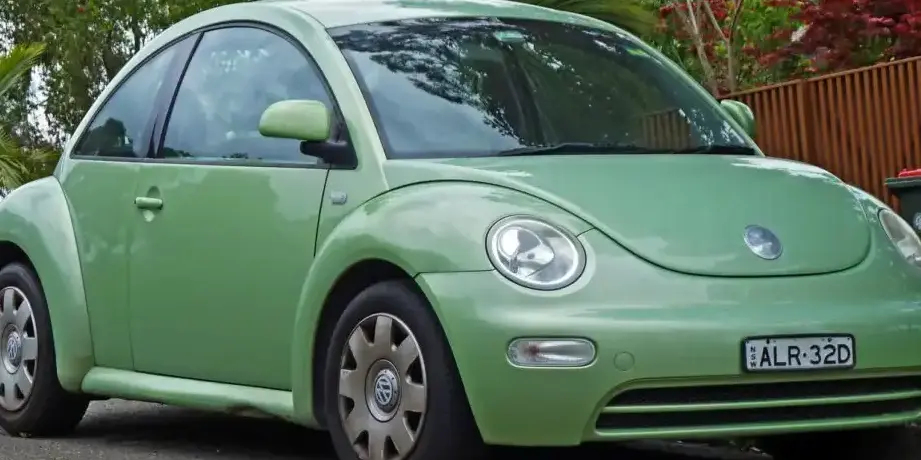
The Volkswagen New Beetle (9C) 1.9 TDI, producing 90 horsepower, was a significant variant within the New Beetle lineup produced between 1998 and 2004. Positioned as an economy-focused option, it offered a diesel alternative to the gasoline engines available, primarily aimed at European markets where diesel fuel was more prevalent and cost-effective. This model represented Volkswagen’s attempt to blend the nostalgic styling of the original Beetle with modern diesel technology, offering improved fuel efficiency and torque compared to its petrol counterparts. It was built on the Volkswagen Group A4 (PQ34) platform, shared with the Golf Mk4, Bora, and Audi A3.
Technical Specifications
| Brand | Volkswagen |
| Model | Beetle |
| Generation | NEW Beetle (9C) |
| Type (Engine) | 1.9 TDI (90 Hp) |
| Start of production | January, 1998 |
| End of production | June, 2004 |
| Powertrain Architecture | Internal Combustion engine |
| Body type | Hatchback |
| Seats | 4 |
| Doors | 3 |
| Fuel consumption (urban) | 6.8 l/100 km (34.6 US mpg, 41.5 UK mpg, 14.7 km/l) |
| Fuel consumption (extra urban) | 4.3 l/100 km (54.7 US mpg, 65.7 UK mpg, 23.3 km/l) |
| Fuel Type | Diesel |
| Acceleration 0 – 100 km/h | 13.1 sec |
| Acceleration 0 – 62 mph | 13.1 sec |
| Acceleration 0 – 60 mph | 12.4 sec |
| Maximum speed | 171 km/h (106.25 mph) |
| Weight-to-power ratio | 13.9 kg/Hp, 72 Hp/tonne |
| Weight-to-torque ratio | 6 kg/Nm, 168 Nm/tonne |
| Power | 90 Hp @ 4000 rpm |
| Power per litre | 47.5 Hp/l |
| Torque | 210 Nm @ 1900 rpm (154.89 lb.-ft. @ 1900 rpm) |
| Engine layout | Front, Longitudinal |
| Engine Model/Code | ALH |
| Engine displacement | 1896 cm3 (115.7 cu. in.) |
| Number of cylinders | 4 |
| Engine configuration | Inline |
| Cylinder Bore | 79.5 mm (3.13 in.) |
| Piston Stroke | 95.5 mm (3.76 in.) |
| Compression ratio | 19.5:1 |
| Number of valves per cylinder | 2 |
| Fuel injection system | Direct injection |
| Engine aspiration | Turbocharger, Intercooler |
| Valvetrain | OHC |
| Engine oil capacity | 4.5 l (4.76 US qt | 3.96 UK qt) |
| Coolant | 6 l (6.34 US qt | 5.28 UK qt) |
| Kerb Weight | 1250 kg (2755.78 lbs.) |
| Max. weight | 1675 kg (3692.74 lbs.) |
| Max load | 425 kg (936.96 lbs.) |
| Trunk (boot) space – minimum | 209 l (7.38 cu. ft.) |
| Trunk (boot) space – maximum | 525 l (18.54 cu. ft.) |
| Fuel tank capacity | 55 l (14.53 US gal | 12.1 UK gal) |
| Length | 4081 mm (160.67 in.) |
| Width | 1725 mm (67.91 in.) |
| Height | 1500 mm (59.06 in.) |
| Wheelbase | 2508 mm (98.74 in.) |
| Front track | 1508 mm (59.37 in.) |
| Rear (Back) track | 1494 mm (58.82 in.) |
| Minimum turning circle | 10.9 m (35.76 ft.) |
| Drivetrain Architecture | Front wheel drive |
| Drive wheel | Front wheel drive |
| Number of gears | 5 gears, manual transmission |
| Front suspension | Coil spring |
| Rear suspension | Coil spring |
| Front brakes | Disc |
| Rear brakes | Disc |
| Assisting systems | ABS (Anti-lock braking system) |
| Steering type | Steering rack and pinion |
| Power steering | Hydraulic Steering |
| Tires size | 205/55 R16 |
| Wheel rims size | 6.5J x 16 |
INTRODUCTION
The Volkswagen New Beetle 1.9 TDI (90 hp) was produced from 1998 to 2004 as part of the 9C series. It aimed to recapture the spirit of the original Beetle, but with a modern platform and a range of contemporary engines. The 1.9 TDI variant, powered by the ALH engine code, was particularly popular in Europe due to its fuel efficiency and respectable torque output. It occupied the lower-mid range of the New Beetle lineup, offering a more affordable and economical alternative to the higher-powered petrol versions. This trim level was designed for drivers prioritizing practicality and running costs over outright performance.
Powertrain & Engine Architecture
The heart of the New Beetle 1.9 TDI is the ALH engine, a 1.9-liter inline-four cylinder diesel engine. This engine utilizes direct injection technology, injecting fuel directly into the combustion chamber for improved efficiency and reduced emissions. The ALH engine is known for its robust build quality and relative simplicity. It features an overhead camshaft (OHC) valvetrain with two valves per cylinder. A turbocharger with an intercooler is employed to boost power and torque. The fuel injection system is a Bosch unit, providing precise fuel delivery. The engine is longitudinally mounted in the front of the vehicle. The 90 hp version was typically paired with a five-speed manual transmission, although a four-speed automatic transmission was also available, albeit less common. The automatic transmission, while offering convenience, did impact acceleration and fuel economy.
Driving Characteristics
The 1.9 TDI 90 hp New Beetle offered a distinctly different driving experience compared to its gasoline-powered siblings. While not particularly quick, it provided ample torque from low engine speeds, making it suitable for everyday driving and overtaking maneuvers. Acceleration from 0-60 mph took around 12.4 seconds, and the top speed was approximately 106 mph. The five-speed manual transmission allowed drivers to maximize engine efficiency and control, while the optional automatic transmission provided a smoother, more relaxed driving experience. The gear ratios were optimized for fuel economy rather than outright performance. Compared to the 1.8L petrol versions, the TDI offered significantly better fuel economy, but lacked the responsiveness and higher revving nature of the gasoline engines. The turbocharger did provide a noticeable boost in power once spooled up, but there was some turbo lag present.
Equipment & Trim Levels
The 1.9 TDI 90 hp New Beetle typically came with a reasonable level of standard equipment. This included power windows, central locking, and an AM/FM radio. Interior upholstery was usually cloth, with a simple and functional dashboard layout. Optional extras included air conditioning, alloy wheels, a sunroof, and upgraded audio systems. Trim levels varied slightly depending on the market, but generally, the TDI model was positioned as a mid-range offering. Higher trim levels added features like leather upholstery, automatic climate control, and more sophisticated audio systems. The interior design retained the retro theme of the original Beetle, with a large speedometer and a relatively minimalist dashboard.
Chassis & Braking
The New Beetle 1.9 TDI utilized a MacPherson strut front suspension and a twist-beam rear suspension. This setup provided a comfortable ride, although it wasn’t particularly sporty. The braking system consisted of disc brakes on all four wheels, with ABS (Anti-lock Braking System) as standard. The chassis was designed to provide a balance between comfort and handling. The weight distribution was relatively even, contributing to stable handling characteristics. Stabilizer bars were fitted to both the front and rear axles to reduce body roll during cornering.
Market Reception & Comparison
The New Beetle 1.9 TDI was generally well-received by critics, particularly for its fuel efficiency and low running costs. It was seen as a practical and economical choice for drivers who appreciated the Beetle’s styling but didn’t require high performance. Compared to the 1.8L petrol versions, the TDI offered significantly better fuel economy, but lacked the responsiveness and higher revving nature of the gasoline engines. The 1.9 TDI was also more reliable than some of the earlier petrol engines, thanks to the robust design of the ALH engine. However, the TDI was slightly more expensive to purchase initially. Compared to other diesel hatchbacks of the time, the New Beetle TDI offered a unique and stylish alternative.
Legacy
The Volkswagen New Beetle 1.9 TDI, particularly with the ALH engine, has proven to be a remarkably reliable powertrain. Many examples are still on the road today, testament to the engine’s durability. The ALH engine is known for its ability to withstand high mileage with proper maintenance. In the used car market, the 1.9 TDI New Beetle remains a popular choice for those seeking an economical and stylish vehicle. However, potential buyers should be aware of the age-related issues common to older vehicles, such as rust and wear and tear on suspension components. The 1.9 TDI engine, while relatively simple, may require occasional maintenance to address issues such as injector problems or turbocharger wear. Overall, the New Beetle 1.9 TDI represents a solid and dependable choice in the used car market.
