
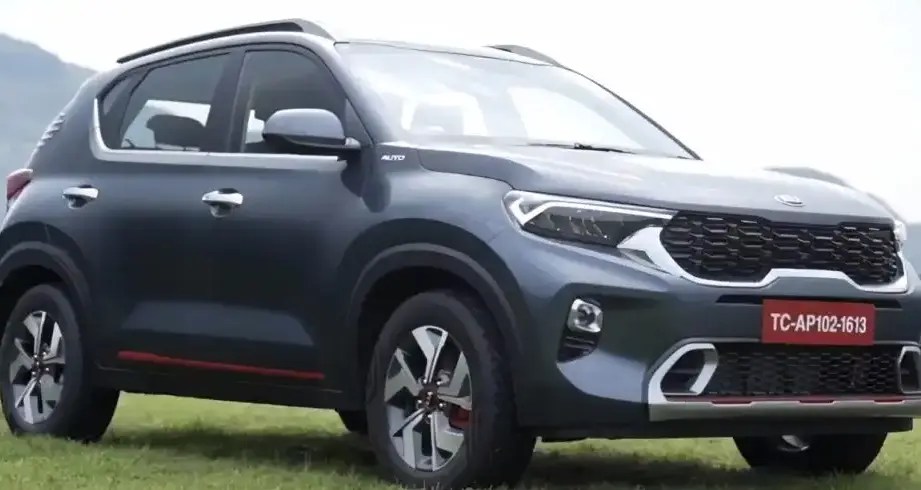
The Kia Sonet 1.0 T-GDi DCT, produced from September 2020 to December 2023, represents a significant entry in the subcompact SUV segment, particularly within the Indian and select international markets. Positioned as a mid-range offering within the Sonet lineup, this variant combined a turbocharged three-cylinder engine with a dual-clutch transmission (DCT) to deliver a balance of fuel efficiency, performance, and modern convenience. The Sonet, Kia’s smallest SUV globally, was designed to appeal to younger buyers seeking a stylish and feature-rich vehicle at a competitive price point. It shares its platform with the Hyundai Venue, but distinguishes itself through unique styling and a more comprehensive feature set.
Technical Specifications
| Brand | Kia |
| Model | Sonet |
| Generation | Sonet |
| Type (Engine) | G1.0 T-GDi (120 Hp) DCT |
| Start of production | September, 2020 |
| End of production | December, 2023 |
| Powertrain Architecture | Internal Combustion engine |
| Body type | SUV, Crossover |
| Seats | 5 |
| Doors | 5 |
| Fuel Type | Petrol (Gasoline) |
| Emission standard | BS VI |
| Power | 120 Hp @ 6000 rpm |
| Power per litre | 120.2 Hp/l |
| Torque | 172 Nm @ 1500-4000 rpm |
| Torque (lb-ft) | 126.86 lb.-ft. @ 1500-4000 rpm |
| Engine layout | Front, Transverse |
| Engine displacement | 998 cm3 |
| Engine displacement (cu. in.) | 60.9 cu. in. |
| Number of cylinders | 3 |
| Engine configuration | Inline |
| Fuel injection system | Direct injection |
| Engine aspiration | Turbocharger, Intercooler |
| Engine systems | Start & Stop System |
| Trunk (boot) space – minimum | 392 l |
| Trunk (boot) space (cu. ft.) | 13.84 cu. ft. |
| Fuel tank capacity | 45 l |
| Fuel tank capacity (US gal) | 11.89 US gal |
| Fuel tank capacity (UK gal) | 9.9 UK gal |
| Length | 3995 mm |
| Length (in.) | 157.28 in. |
| Width | 1790 mm |
| Width (in.) | 70.47 in. |
| Height | 1642 mm |
| Height (in.) | 64.65 in. |
| Wheelbase | 2500 mm |
| Wheelbase (in.) | 98.43 in. |
| Drivetrain Architecture | The Internal combustion engine (ICE) drives the front wheels of the vehicle. |
| Drive wheel | Front wheel drive |
| Number of gears and type of gearbox | 7 gears, automatic transmission DCT |
| Front suspension | Independent type McPherson |
| Rear suspension | Torsion |
| Front brakes | Disc |
| Rear brakes | Drum |
| Assisting systems | ABS (Anti-lock braking system) |
| Steering type | Steering rack and pinion |
| Tires size | 215/60 R16 |
| Wheel rims size | 16 |
Powertrain & Engine Architecture
The heart of the Sonet 1.0 T-GDi is the Kappa three-cylinder, 1.0-liter turbocharged gasoline engine, internally designated as the G1.0 T-GDi. This engine utilizes direct fuel injection and a single-scroll turbocharger with an intercooler to maximize efficiency and power output. The engine code is crucial for identifying specific components and service intervals. The engine produces 120 horsepower at 6000 rpm and 172 Nm (126.86 lb-ft) of torque between 1500 and 4000 rpm. This broad torque band is a key characteristic of the engine, providing good responsiveness in everyday driving situations. The engine also features Kia’s Continuously Variable Valve Timing (CVVT) technology to optimize engine performance across the rev range. Paired with the engine is a 7-speed Dual Clutch Transmission (DCT). This DCT provides quick and smooth gear changes, contributing to a more engaging driving experience compared to a traditional automatic transmission. The DCT’s programming is tuned for fuel efficiency and comfort, prioritizing smooth transitions over aggressive shifts.
Driving Characteristics
The Sonet 1.0 T-GDi DCT offers a noticeable step up in performance compared to the naturally aspirated 1.2-liter engine option available in some markets. While not a sports car, the turbocharger provides ample power for overtaking and merging onto highways. The DCT contributes to a responsive feel, although some drivers may notice slight hesitation at low speeds. The gear ratios are optimized for both city driving and highway cruising. Compared to the manual transmission versions of the 1.0 T-GDi, the DCT offers greater convenience, especially in congested traffic. However, the manual transmission provides a more direct connection to the engine and slightly better fuel economy. The suspension is tuned for comfort, absorbing bumps and imperfections in the road reasonably well. The steering is light and easy to use, making it well-suited for urban environments.
Equipment & Trim Levels
The 1.0 T-GDi DCT trim typically sat in the mid-range of the Sonet lineup. Standard features often included automatic climate control, a touchscreen infotainment system with Apple CarPlay and Android Auto compatibility, rear parking sensors, and keyless entry. Higher trim levels added features such as a larger touchscreen, a sunroof, ventilated front seats, and advanced driver-assistance systems (ADAS) like lane keeping assist and automatic emergency braking. Interior upholstery was typically cloth or leatherette, depending on the specific trim level. Optional extras included a Bose premium sound system and a wireless phone charger.
Chassis & Braking
The Sonet utilizes a front-wheel-drive layout. The front suspension consists of an independent McPherson strut setup, while the rear suspension employs a torsion beam. This configuration provides a good balance of ride comfort and handling. The front brakes are disc brakes, while the rear brakes are drum brakes – a cost-saving measure common in this segment. Anti-lock Braking System (ABS) is standard, enhancing safety during emergency braking situations. The steering system is a rack and pinion type, providing precise and responsive steering feel.
Market Reception & Comparison
The Kia Sonet 1.0 T-GDi DCT was generally well-received by automotive critics. Reviewers praised its stylish design, feature-rich interior, and responsive engine. The DCT was noted for its smooth operation, although some criticized its occasional hesitation. Compared to competitors like the Hyundai Venue, Tata Nexon, and Maruti Suzuki Vitara Brezza, the Sonet offered a more premium feel and a more powerful engine option. Fuel economy was competitive, averaging around 18-20 kilometers per liter (approximately 42-47 mpg) in real-world driving conditions. Reliability reports have been generally positive, with few major issues reported with the powertrain.
Legacy
The Kia Sonet 1.0 T-GDi DCT has established itself as a popular choice in the subcompact SUV segment. The Kappa engine and DCT combination has proven to be relatively reliable, with proper maintenance. On the used car market, these models hold their value reasonably well, particularly those with lower mileage and a full service history. The Sonet’s success has helped Kia establish a stronger presence in the global SUV market, and it continues to be a significant model for the brand.

