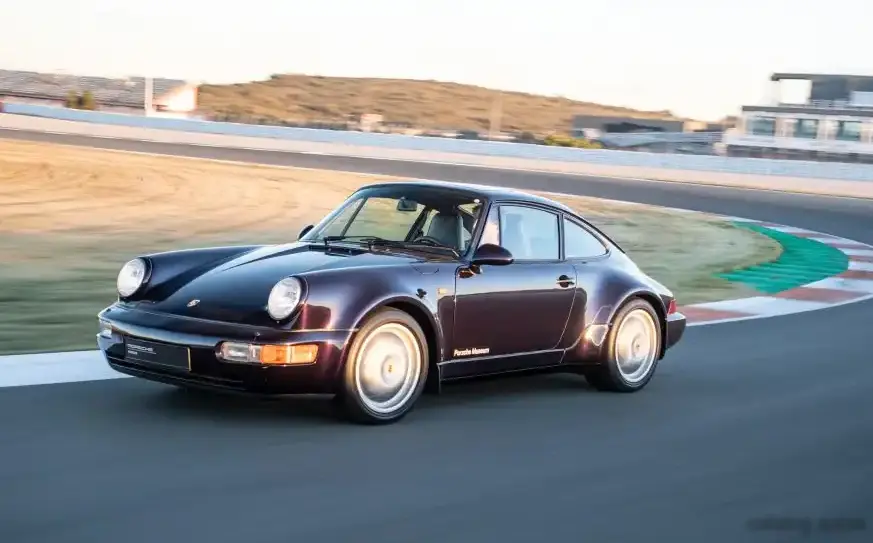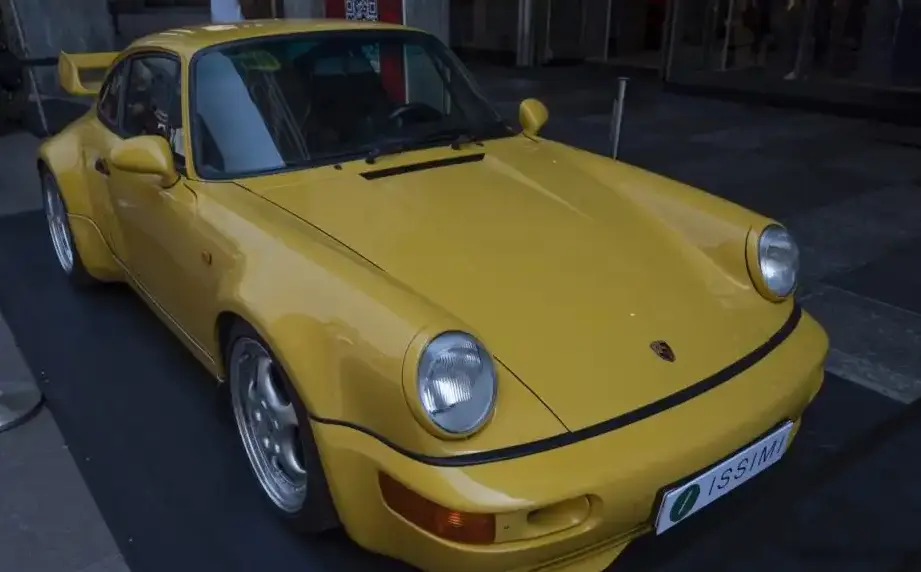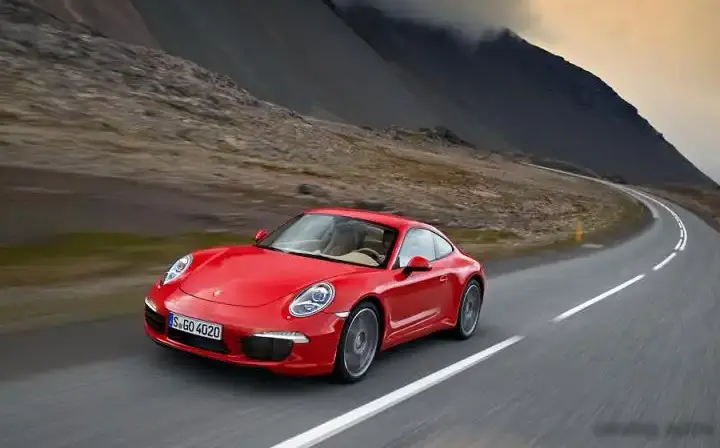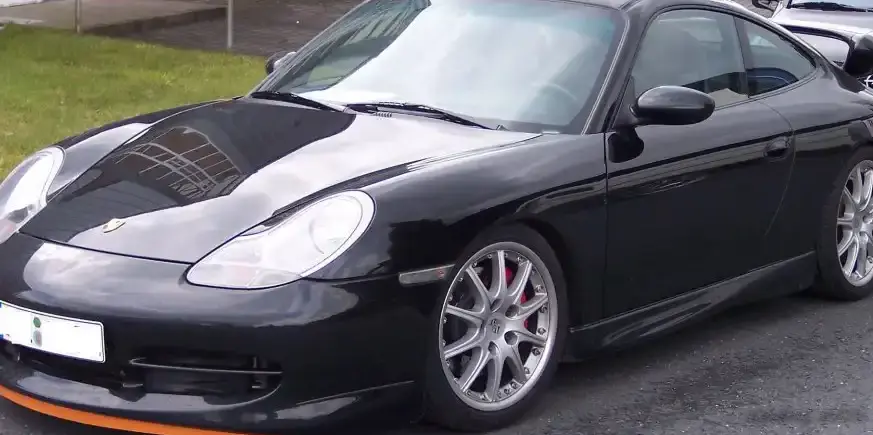
The Porsche 911 (996) Carrera 3.4, produced from 1997 to 2001, represents a significant departure and evolution in the iconic 911 lineage. This generation marked the first complete redesign of the 911 since its original introduction in 1963, incorporating water cooling for the flat-six engine and a more modern, aerodynamic body. The 3.4-liter Carrera variant served as the entry point into the 996 range, offering a balance of performance and relative affordability within the Porsche lineup. It was positioned as the standard model, below the more powerful Carrera S and the track-focused GT3, appealing to enthusiasts seeking the classic 911 experience with improved usability and modern technology.
Technical Specifications
| Brand | Porsche |
| Model | 911 |
| Generation | 911 (996) |
| Type (Engine) | Carrera 3.4 (300 Hp) |
| Start of production | 1997 |
| End of production | 2001 |
| Powertrain Architecture | Internal Combustion engine |
| Body type | Coupe |
| Seats | 4 |
| Doors | 2 |
| Fuel Type | Petrol (Gasoline) |
| Maximum speed | 280 km/h (173.98 mph) |
| Weight-to-power ratio | 4.4 kg/Hp, 227.3 Hp/tonne |
| Weight-to-torque ratio | 3.8 kg/Nm, 265.2 Nm/tonne |
| Power | 300 Hp @ 6800 rpm |
| Power per litre | 88.6 Hp/l |
| Torque | 350 Nm @ 4600 rpm (258.15 lb.-ft. @ 4600 rpm) |
| Engine layout | Rear, Longitudinal |
| Engine Model/Code | M96.01, M96.04 |
| Engine displacement | 3387 cm3 (206.69 cu. in.) |
| Number of cylinders | 6 |
| Engine configuration | Boxer |
| Cylinder Bore | 96 mm (3.78 in.) |
| Piston Stroke | 78 mm (3.07 in.) |
| Compression ratio | 11.3:1 |
| Number of valves per cylinder | 4 |
| Fuel injection system | Multi-port manifold injection |
| Engine aspiration | Naturally aspirated engine |
| Engine oil capacity | 8.3 l (8.77 US qt | 7.3 UK qt) |
| Coolant | 22.5 l (23.78 US qt | 19.8 UK qt) |
| Kerb Weight | 1320 kg (2910.1 lbs) |
| Max. weight | 1720 kg (3791.95 lbs) |
| Max load | 400 kg (881.85 lbs) |
| Trunk (boot) space – maximum | 130 l (4.59 cu. ft.) |
| Fuel tank capacity | 64 l (16.91 US gal | 14.08 UK gal) |
| Length | 4430 mm (174.41 in.) |
| Width | 1765 mm (69.49 in.) |
| Height | 1305 mm (51.38 in.) |
| Wheelbase | 2350 mm (92.52 in.) |
| Front track | 1455 mm (57.28 in.) |
| Rear (Back) track | 1500 mm (59.06 in.) |
| Ride height (ground clearance) | 100 mm (3.94 in.) |
| Minimum turning circle (turning diameter) | 10.6 m (34.78 ft.) |
| Drivetrain Architecture | The Internal combustion engine (ICE) drives the rear wheels of the vehicle. |
| Drive wheel | Rear wheel drive |
| Number of gears and type of gearbox | 6 gears, manual transmission |
| Front suspension | Independent, type McPherson with coil spring and anti-roll bar |
| Rear suspension | Independent multi-link suspension |
| Front brakes | Ventilated discs, 318 mm |
| Rear brakes | Ventilated discs, 299 mm |
| Assisting systems | ABS (Anti-lock braking system) |
| Steering type | Steering rack and pinion |
| Power steering | Hydraulic Steering |
| Tires size | 205/50 R17; 255/40 R17 |
| Wheel rims size | 7J x 17; 9J x 17 |
Powertrain & Engine Architecture
The heart of the 996 Carrera 3.4 is the M96.01 or M96.04 engine, a 3.4-liter naturally aspirated flat-six. This engine represented a significant shift for Porsche, moving away from the air-cooled heritage of previous 911s. The water cooling system allowed for tighter tolerances and increased power output. The engine utilizes a multi-port fuel injection system, delivering fuel directly into the intake ports. The valvetrain features four valves per cylinder, contributing to improved breathing and overall efficiency. The engine’s boxer configuration, with opposing cylinders, provides a low center of gravity, enhancing handling characteristics. The standard transmission for this model was a six-speed manual, though a five-speed Tiptronic S automatic transmission was also available. The automatic, while offering convenience, was often criticized for slightly slower acceleration and a less engaging driving experience compared to the manual.
Driving Characteristics
The 996 Carrera 3.4 delivers a classic Porsche driving experience, albeit one that is more refined and accessible than earlier 911s. With 300 horsepower and 258 lb-ft of torque, the car accelerates briskly, reaching 60 mph in around 5.2 seconds with the manual transmission. The rear-wheel-drive layout and the engine’s rearward placement contribute to a distinct handling balance. While not as razor-sharp as the Carrera S or GT3, the 3.4-liter Carrera offers ample grip and predictable handling. The manual transmission provides precise shifts and allows the driver to fully engage with the engine’s power delivery. The automatic transmission, while smooth, feels somewhat detached and can result in slightly slower acceleration times. The suspension, while firm, provides a comfortable ride for everyday driving.
Equipment & Trim Levels
The 996 Carrera 3.4 came standard with a relatively well-equipped interior. Standard features included leather upholstery, power windows and locks, air conditioning, and a basic audio system. Optional extras were plentiful, allowing buyers to customize their vehicles to their preferences. Popular options included a sunroof, upgraded audio systems, sport seats, and various interior trim packages. The dashboard layout was a significant departure from previous 911s, featuring a more modern and ergonomic design. The instrument cluster, with its five circular gauges, remained a signature Porsche element.
Chassis & Braking
The 996 Carrera 3.4 features an independent suspension system at all four wheels. The front suspension utilizes McPherson struts with coil springs and an anti-roll bar, while the rear suspension employs a multi-link design. This setup provides a good balance of ride comfort and handling performance. The braking system consists of ventilated disc brakes at all four wheels, providing ample stopping power. ABS (Anti-lock Braking System) was standard equipment. The car’s relatively lightweight construction, at around 2910 lbs, contributes to its agile handling.
Market Reception & Comparison
The 996 Carrera 3.4 was generally well-received by automotive critics. It was praised for its improved performance, modern features, and more accessible driving experience compared to previous 911s. However, some critics noted the departure from the traditional air-cooled engine and the somewhat bland styling compared to earlier generations. Compared to the Carrera S, the 3.4-liter model offered a more affordable entry point into the 996 range, but with a noticeable reduction in performance. The 3.4-liter engine also proved to be more reliable than the later 3.6-liter engines found in the Carrera S, making it a popular choice for those seeking a dependable and enjoyable 911.
Legacy
The 996 Carrera 3.4 has established itself as a desirable entry point into Porsche ownership. Its relative affordability, combined with its classic 911 driving experience, makes it a popular choice among enthusiasts. The M96.01 and M96.04 engines, while initially subject to some concerns regarding intermediate shaft (IMS) bearing failure, have proven to be relatively reliable when properly maintained. Today, well-maintained examples of the 996 Carrera 3.4 are appreciating in value, reflecting their growing popularity and status as a modern classic.