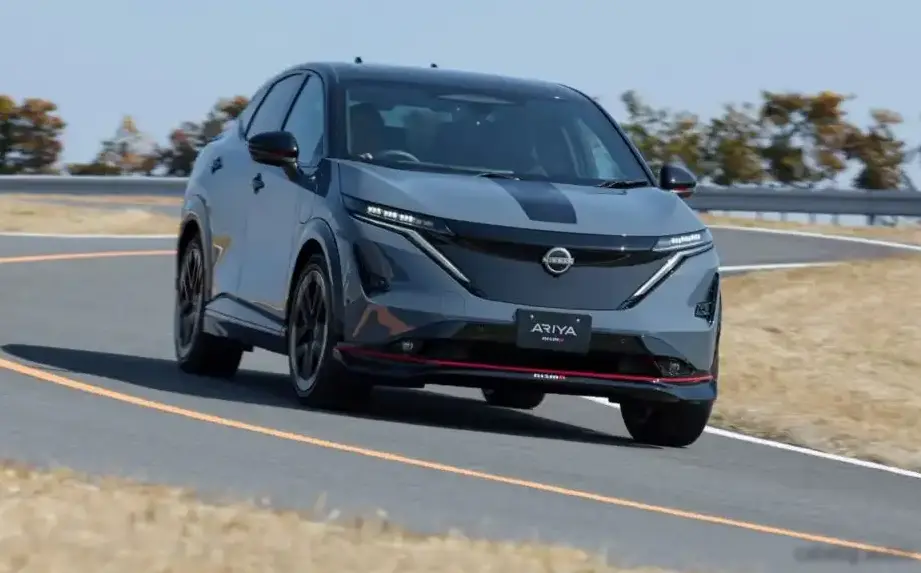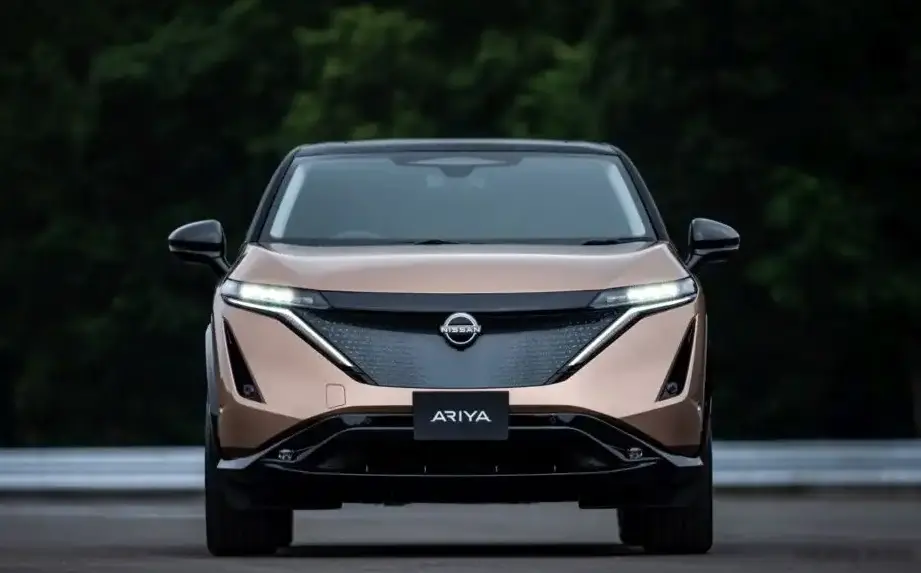
The Nissan Ariya 66 kWh e-4ORCE represents Nissan’s entry into the competitive all-electric crossover market, launched for the 2022 model year. Positioned as a mid-range offering within the Ariya lineup, it balances performance, range, and price, aiming to appeal to buyers seeking a practical and technologically advanced electric vehicle. The Ariya utilizes Nissan’s new EV platform and showcases a modern design language, representing a significant departure from previous Nissan crossover offerings. It competes directly with vehicles like the Tesla Model Y, Hyundai IONIQ 5, and Kia EV6.
Technical Specifications
| Brand | Nissan |
| Model | Ariya |
| Generation | Ariya |
| Type (Engine) | 66 kWh (340 Hp) e-4ORCE |
| Start of production | 2022 |
| Powertrain Architecture | BEV (Electric Vehicle) |
| Body type | Coupe, SUV |
| Seats | 5 |
| Doors | 5 |
| Fuel Type | Electricity |
| Emission standard | Tier3 Bin0/CFV ZEV |
| Weight-to-power ratio | 6.1 kg/Hp, 162.7 Hp/tonne |
| Weight-to-torque ratio | 3.7 kg/Nm, 267.9 Nm/tonne |
| Gross battery capacity | 66 kWh |
| Net (usable) battery capacity | 63 kWh |
| Battery technology | Lithium-ion (Li-Ion) |
| Battery location | Below the floor |
| All-electric range | 329.9 km / 204.99 mi |
| Average Energy consumption | 22 kWh/100 km / 35.41 kWh/100 mi / 95 MPGe / 4.5 km/kWh / 2.8 mi/kWh |
| Electric motor 1 location | Front axle, Transverse |
| Electric motor 1 type | Synchronous |
| Electric motor 2 location | Rear axle, Transverse |
| Electric motor 2 type | Synchronous |
| System power | 340 Hp |
| System torque | 560 Nm / 413.03 lb.-ft. |
| Kerb Weight | 2090 kg / 4607.66 lbs. |
| Max. weight | 2535 kg / 5588.72 lbs. |
| Max load | 445 kg / 981.06 lbs. |
| Trunk (boot) space – minimum | 646 l / 22.81 cu. ft. |
| Trunk (boot) space – maximum | 1691 l / 59.72 cu. ft. |
| Permitted trailer load with brakes (12%) | 680 kg / 1499.14 lbs. |
| Length | 4646 mm / 182.91 in. |
| Width | 1900 mm / 74.8 in. |
| Height | 1661 mm / 65.39 in. |
| Wheelbase | 2776 mm / 109.29 in. |
| Front track | 1636 mm / 64.41 in. |
| Rear (Back) track | 1641 mm / 64.61 in. |
| Ride height (ground clearance) | 170 mm / 6.69 in. |
| Drag coefficient (Cd) | 0.31 |
| Minimum turning circle (turning diameter) | 10.8 m / 35.43 ft. |
| Approach angle | 17.7° |
| Departure angle | 22.2° |
| Ramp-over (brakeover) angle | 16.7° |
| Drivetrain Architecture | One electric motor drives the front wheels, one electric motor drives the rear wheels. |
| Drive wheel | All wheel drive (4×4) |
| Number of gears and type of gearbox | 1 gears, automatic transmission |
| Front suspension | Independent coil spring, Transverse stabilizer |
| Rear suspension | Independent multi-link spring suspension with stabilizer |
| Front brakes | Ventilated discs, 350.52×29.97 mm |
| Rear brakes | Ventilated discs, 330.2×16 mm |
| Assisting systems | ABS (Anti-lock braking system) |
| Steering type | Steering rack and pinion |
| Power steering | Electric Steering |
| Tires size | 235/55 R19 |
| Wheel rims size | 7.5J x 19 |
Powertrain & Engine Architecture
The Ariya 66 kWh e-4ORCE utilizes a dual-motor, all-wheel-drive (AWD) powertrain. Each axle is driven by a synchronous electric motor. The front motor produces approximately 178 horsepower, while the rear motor contributes around 217 horsepower, combining for a total system output of 340 horsepower and 560 Nm (413 lb-ft) of torque. The 66 kWh battery pack, located under the floor, provides a usable capacity of 63 kWh. Nissan employs a liquid cooling system for both the battery and motors to maintain optimal operating temperatures. The Ariya doesn’t have a traditional multi-speed transmission; instead, it uses a single-speed reduction gear for each axle. The e-4ORCE system allows for variable torque distribution between the front and rear axles, enhancing stability and traction in various driving conditions. The vehicle supports DC fast charging, allowing for a significant charge in a relatively short period.
Driving Characteristics
The Ariya 66 kWh e-4ORCE delivers brisk acceleration, with Nissan estimating a 0-60 mph time of around 5.1 seconds. The instant torque characteristic of electric motors provides responsive acceleration from a standstill. The e-4ORCE system’s ability to distribute torque intelligently results in confident handling and stability, particularly in inclement weather. Compared to the single-motor, front-wheel-drive Ariya, the e-4ORCE variant offers significantly improved traction and a more engaging driving experience. While not as overtly sporty as some competitors, the Ariya prioritizes a comfortable and refined ride. The single-speed transmission provides seamless acceleration, although it lacks the distinct gear changes found in traditional automatic transmissions. The regenerative braking system allows for one-pedal driving, enhancing efficiency and convenience.
Equipment & Trim Levels
The Ariya 66 kWh e-4ORCE was offered in several trim levels, including Venture+, Evolve+, and Empower+. Standard features typically included Nissan’s ProPILOT Assist 2.0 advanced driver-assistance system, a 12.3-inch touchscreen infotainment system, Apple CarPlay and Android Auto compatibility, and a comprehensive suite of safety features. Higher trim levels added features such as a panoramic sunroof, premium leather upholstery, a Bose audio system, and a head-up display. Interior materials and finishes varied depending on the trim level, with higher trims offering more luxurious appointments. Optional extras included a power liftgate, heated and ventilated front seats, and a surround-view monitor.
Chassis & Braking
The Ariya utilizes an independent suspension system at all four wheels, featuring coil springs and stabilizer bars. The front suspension employs a MacPherson strut design, while the rear utilizes a multi-link setup. This configuration provides a comfortable ride and responsive handling. The Ariya is equipped with ventilated disc brakes on all four wheels, providing ample stopping power. The electronic braking system incorporates ABS (Anti-lock Braking System), Electronic Brake-force Distribution (EBD), and Brake Assist. The steering system is an electric power-assisted rack-and-pinion setup, offering precise and responsive steering feel. The Ariya’s relatively low center of gravity, due to the battery pack’s placement, contributes to its stability and handling characteristics.
Market Reception & Comparison
The Nissan Ariya 66 kWh e-4ORCE received generally positive reviews from automotive critics. Praised for its stylish design, spacious interior, advanced technology, and comfortable ride, it was seen as a strong contender in the electric crossover segment. However, some critics noted its relatively limited range compared to some competitors and the complexity of its infotainment system. Compared to the base Ariya with the smaller battery pack, the 66 kWh e-4ORCE offered a significant improvement in range and performance. Compared to the long-range, single-motor Ariya, the e-4ORCE prioritized performance and all-weather capability over maximum range. Fuel economy, measured in MPGe, was competitive with other electric crossovers in its class.
Legacy
The Nissan Ariya represents a pivotal moment for Nissan, signaling its commitment to electrification and its ambition to compete in the rapidly growing EV market. The 66 kWh e-4ORCE variant, as a mid-range offering, played a crucial role in attracting a wider range of buyers to the Ariya lineup. While long-term reliability data is still emerging, early reports suggest that the Ariya’s powertrain is proving to be reliable. As the used EV market matures, the Ariya 66 kWh e-4ORCE is expected to hold its value well, particularly among buyers seeking a well-equipped and technologically advanced electric crossover.