
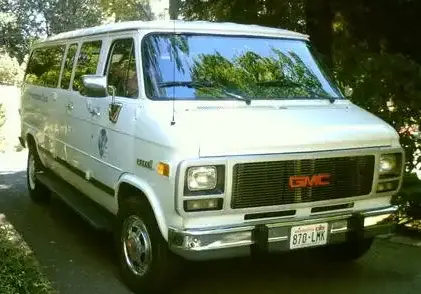
The Chevrolet Van II, specifically equipped with the 4.1-liter inline-six engine producing 105 horsepower, represents a significant iteration in Chevrolet’s long-running van lineage. Produced from 1980 through 1983, this variant occupied a crucial position in the full-size van market, catering to buyers seeking a balance between affordability, practicality, and a reasonably capable powertrain for both commercial and personal use. It was part of the second generation of Chevrolet vans, known for their increased interior space and improved ride quality compared to earlier models. This particular engine and power output configuration was positioned as a standard offering, providing a more economical alternative to the available V6 and V8 options.
Technical Specifications
| Brand | Chevrolet |
| Model | Van |
| Generation | Van II |
| Type (Engine) | 4.1 I6 (105 Hp) |
| Start of Production | 1980 |
| End of Production | 1983 |
| Powertrain Architecture | Internal Combustion Engine |
| Body Type | Minivan |
| Fuel Type | Petrol (Gasoline) |
| Power | 105 Hp |
| Engine Aspiration | Naturally Aspirated |
Powertrain & Engine Architecture
The heart of this Chevrolet Van II variant is the 4.1-liter (250 cubic inch) inline-six engine. This engine, designated as the 250ci, was a mainstay of Chevrolet’s lineup for many years, known for its durability and relatively simple design. It featured a cast-iron block and cylinder head, with two valves per cylinder operated by a pushrod valvetrain. Fuel delivery was managed by a Rochester two-barrel carburetor, a common setup for the era. While not a high-performance engine, the 4.1L I6 was designed for low-end torque, making it suitable for hauling and towing. The engine’s relatively low compression ratio (typically around 8.5:1) allowed it to run reliably on regular unleaded gasoline. The 105 horsepower output was achieved at approximately 4,000 rpm, with peak torque of around 195 lb-ft available at 2,400 rpm. The transmission paired with this engine was typically a three-speed Turbo-Hydramatic automatic, a widely used and generally reliable transmission. This automatic transmission was chosen for its ease of use and suitability for both city and highway driving, although it did contribute to slightly lower fuel economy compared to a manual transmission.
Driving Characteristics
The driving experience in a Chevrolet Van II with the 4.1L I6 and automatic transmission was characterized by its practicality rather than its performance. Acceleration was modest, particularly when fully loaded. The automatic transmission’s gear ratios were optimized for towing and hauling, resulting in a relatively slow 0-60 mph time, likely in the 16-18 second range. However, the engine’s torque delivery made it capable of maintaining highway speeds, albeit with some effort on inclines. The automatic transmission shifted smoothly under normal driving conditions, but could feel somewhat sluggish during quick acceleration. Compared to the available V6 and V8 options, the 4.1L I6 offered a more relaxed driving experience, prioritizing fuel economy and ease of use over outright power. The van’s suspension, consisting of coil springs in the front and leaf springs in the rear, provided a comfortable ride, even when carrying a substantial load. Steering was power-assisted, making maneuvering the large van relatively easy.
Equipment & Trim Levels
The 4.1L I6-equipped Chevrolet Van II typically represented the base trim level. Standard features included a basic vinyl interior, a simple dashboard layout with analog gauges, and a two-spoke steering wheel. The van usually came with a standard AM radio, and air conditioning was often an optional extra. Upholstery was typically a durable vinyl, designed to withstand heavy use. The dashboard was functional and straightforward, with minimal ornamentation. Optional extras included upgraded radios, cruise control, and various interior trim packages. The van was often purchased as a bare-bones work vehicle, with buyers adding their own customizations as needed. Different configurations were available, including passenger vans with multiple rows of seating and cargo vans with a large, open cargo area.
Chassis & Braking
The Chevrolet Van II utilized a body-on-frame construction, providing a robust and durable chassis. The front suspension featured independent coil springs, while the rear suspension employed leaf springs. This setup offered a good balance between ride comfort and load-carrying capacity. Braking duties were handled by power-assisted drum brakes on all four wheels. While adequate for the van’s weight and intended use, the drum brakes lacked the stopping power and fade resistance of disc brakes. The van’s steering system was a recirculating ball setup, providing a relatively simple and reliable steering experience. Stabilizer bars were not typically included as standard equipment on the base 4.1L I6 model, contributing to a slightly more pronounced body roll during cornering.
Market Reception & Comparison
The Chevrolet Van II with the 4.1L I6 engine was generally well-received by buyers seeking a practical and affordable full-size van. Critics praised its durability and ease of maintenance, but noted its lack of performance compared to the V6 and V8 options. Fuel economy was considered reasonable for a vehicle of its size and weight, averaging around 14-16 mpg in combined driving. Compared to the V6, the 4.1L I6 offered slightly better low-end torque, making it more suitable for towing and hauling. However, the V6 provided more horsepower and slightly better fuel economy. The V8 models offered significantly more power but came at a higher price and with lower fuel economy. The 4.1L I6 variant found favor with businesses and individuals who prioritized reliability and affordability over outright performance.
Legacy
The 4.1-liter inline-six engine, and the Chevrolet Van II in general, has developed a reputation for longevity and durability. Many examples are still on the road today, a testament to their robust construction. The engine is relatively simple to repair and maintain, and parts are still readily available. In the used car market, these vans are often sought after by those looking for a reliable and affordable work vehicle or a classic van for restoration projects. While not a collector’s item in the same vein as some other classic vans, the 4.1L I6-equipped Chevrolet Van II represents a significant piece of American automotive history, embodying the practicality and durability that characterized Chevrolet vans for decades. The simplicity of the powertrain makes it a favorite among those who prefer to work on their own vehicles, and its relatively low cost of ownership continues to make it an attractive option for budget-conscious buyers.
