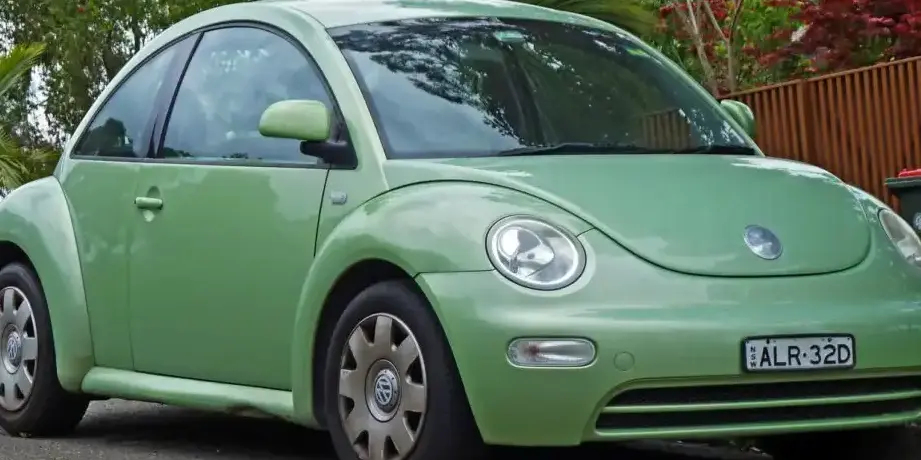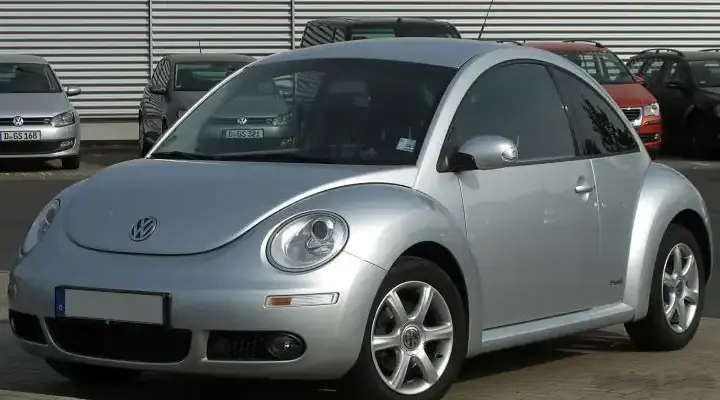
The Volkswagen New Beetle (9C, facelifted in 2005) 2.0, producing 115 horsepower, represents a significant iteration of the revived classic. Introduced as part of the 9C series’ mid-cycle refresh, this variant was produced from 2005 to 2010. It aimed to broaden the New Beetle’s appeal by offering a balance between performance and affordability within the model range, which also included lower-powered engines and the more sporting 2.0 Turbo. Positioned as a mid-range offering, the 2.0-liter model provided a step up from the base 1.4-liter engine while remaining more accessible than the turbocharged options.
Technical Specifications
| Brand | Volkswagen |
| Model | Beetle |
| Generation | NEW Beetle (9C, facelift 2005) |
| Type (Engine) | 2.0 (115 Hp) |
| Start of production | 2005 |
| End of production | 2010 |
| Powertrain Architecture | Internal Combustion engine |
| Body type | Hatchback |
| Seats | 4 |
| Doors | 3 |
| Fuel consumption (urban) | 11.9 l/100 km (19.8 US mpg, 23.7 UK mpg, 8.4 km/l) |
| Fuel consumption (extra urban) | 6.8 l/100 km (34.6 US mpg, 41.5 UK mpg, 14.7 km/l) |
| Fuel consumption (combined) | 8.7 l/100 km (27 US mpg, 32.5 UK mpg, 11.5 km/l) |
| CO2 emissions | 210 g/km |
| Fuel Type | Petrol (Gasoline) |
| Acceleration 0 – 100 km/h | 10.9 sec |
| Acceleration 0 – 62 mph | 10.9 sec |
| Acceleration 0 – 60 mph | 10.4 sec |
| Maximum speed | 185 km/h (114.95 mph) |
| Emission standard | Euro 4 |
| Weight-to-power ratio | 10.8 kg/Hp, 92.3 Hp/tonne |
| Weight-to-torque ratio | 7.2 kg/Nm, 138 Nm/tonne |
| Power | 115 Hp @ 5400 rpm |
| Power per litre | 58 Hp/l |
| Torque | 172 Nm @ 3200 rpm (126.86 lb.-ft. @ 3200 rpm) |
| Engine layout | Front, Transverse |
| Engine Model/Code | AZJ, BER, BEV, BHP |
| Engine displacement | 1984 cm3 (121.07 cu. in.) |
| Number of cylinders | 4 |
| Engine configuration | Inline |
| Cylinder Bore | 82.5 mm (3.25 in.) |
| Piston Stroke | 92.8 mm (3.65 in.) |
| Compression ratio | 10.3:1 |
| Number of valves per cylinder | 4 |
| Fuel injection system | Multi-port manifold injection |
| Engine aspiration | Naturally aspirated |
| Engine oil capacity | 4 l (4.23 US qt | 3.52 UK qt) |
| Coolant | 5 l (5.28 US qt | 4.4 UK qt) |
| Kerb Weight | 1246 kg (2746.96 lbs.) |
| Max. weight | 1710 kg (3769.9 lbs.) |
| Max load | 464 kg (1022.94 lbs.) |
| Trunk (boot) space – minimum | 209 l (7.38 cu. ft.) |
| Trunk (boot) space – maximum | 769 l (27.16 cu. ft.) |
| Fuel tank capacity | 55 l (14.53 US gal | 12.1 UK gal) |
| Max. roof load | 50 kg (110.23 lbs.) |
| Permitted trailer load with brakes (12%) | 1000 kg (2204.62 lbs.) |
| Permitted trailer load without brakes | 600 kg (1322.77 lbs.) |
| Permitted towbar download | 75 kg (165.35 lbs.) |
| Length | 4129 mm (162.56 in.) |
| Width | 1721 mm (67.76 in.) |
| Height | 1498 mm (58.98 in.) |
| Wheelbase | 2515 mm (99.02 in.) |
| Front track | 1507 mm (59.33 in.) |
| Rear track | 1487 mm (58.54 in.) |
| Ride height (ground clearance) | 130 mm (5.12 in.) |
| Drag coefficient (Cd) | 0.38 |
| Drivetrain Architecture | The Internal combustion engine (ICE) drives the front wheels of the vehicle. |
| Drive wheel | Front wheel drive |
| Number of gears and type of gearbox | 5 gears, manual transmission |
| Front suspension | Independent type McPherson |
| Rear suspension | Semi-independent, coil spring |
| Front brakes | Ventilated discs |
| Rear brakes | Disc |
| Assisting systems | ABS (Anti-lock braking system) |
| Tires size | 195/65 R15 |
| Wheel rims size | 15 |
Powertrain & Engine Architecture
The 2.0-liter engine, identified by engine codes such as AZJ, BER, BEV, and BHP, is a naturally aspirated, inline-four cylinder gasoline engine. It utilizes a multi-port fuel injection system, delivering fuel directly into the intake manifold. The engine features a single overhead camshaft (SOHC) design with four valves per cylinder, contributing to reasonable breathing for its displacement. The 1984cc displacement is achieved with a bore of 82.5mm and a stroke of 92.8mm. Compression ratio is set at 10.3:1. This engine was known for its relative simplicity and durability, though it lacked the performance potential of the turbocharged 1.8T and 2.0T engines offered in the New Beetle lineup. The 5-speed manual transmission was the standard offering, providing a fairly conventional gear ratio spread.
Driving Characteristics
The 115 hp and 172 Nm (126.86 lb-ft) of torque delivered by the 2.0-liter engine resulted in a driving experience focused on practicality rather than outright speed. Acceleration from 0-60 mph took around 10.4 seconds, and top speed was approximately 115 mph. The engine felt reasonably responsive in everyday driving situations, but lacked the punch needed for quick overtaking maneuvers. The 5-speed manual transmission allowed for decent control over the engine’s power band, but the gear ratios were spaced to prioritize fuel economy over performance. Compared to the more powerful turbocharged variants, the 2.0-liter felt noticeably slower, but it offered a smoother and more predictable power delivery.
Equipment & Trim Levels
The 2.0-liter New Beetle typically came equipped with a reasonable level of standard features. These included power windows, power locks, air conditioning, and an AM/FM radio with CD player. Interior upholstery was typically cloth, with options for upgraded materials available. Trim levels varied by market, but generally included options for alloy wheels, upgraded audio systems, and a sunroof. The 2.0 model often served as a base for adding optional packages, allowing buyers to customize their vehicle to their preferences.
Chassis & Braking
The New Beetle’s chassis featured an independent McPherson strut suspension in the front and a semi-independent torsion beam suspension in the rear. This setup provided a comfortable ride quality, but didn’t offer the same level of handling precision as more sophisticated suspension designs. Brakes consisted of ventilated discs in the front and solid discs in the rear. Anti-lock Braking System (ABS) was standard, enhancing safety. The relatively modest power output of the 2.0-liter engine meant that the braking system was generally adequate for everyday driving, although it wasn’t designed for high-performance stopping distances.
Market Reception & Comparison
The 2.0-liter New Beetle was generally well-received as a practical and affordable option within the lineup. Critics praised its comfortable ride and user-friendly driving experience. However, it was often criticized for its lack of performance compared to the turbocharged models. Fuel economy was considered average for its class, with combined figures around 27 US mpg. Compared to the 1.4-liter base engine, the 2.0-liter offered a noticeable improvement in performance, making it a more appealing choice for drivers who frequently drove on highways or with passengers. The 1.8T offered a significant performance boost, but at a higher price point.
Legacy
The 2.0-liter engine in the New Beetle is known for its reliability and relatively low maintenance costs. While not a particularly exciting engine, it proved to be durable and capable of providing years of service. On the used car market, the 2.0-liter New Beetle represents a good value proposition for buyers seeking a stylish and reliable vehicle. Parts availability is generally good, and maintenance is relatively straightforward. The simplicity of the engine and drivetrain contributes to its long-term durability, making it a popular choice for those seeking a classic Volkswagen experience without the complexities of more modern technology.