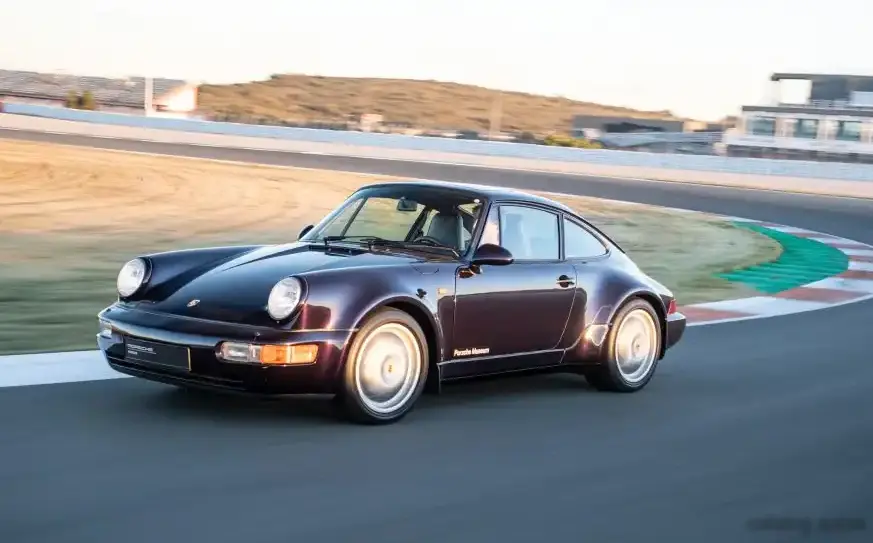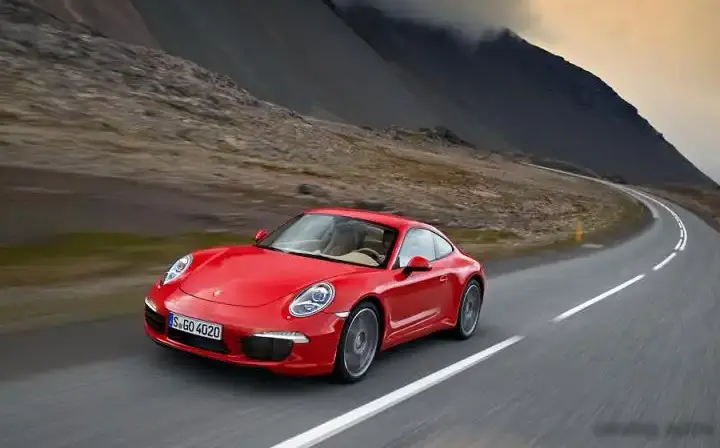
The Porsche 911 Carrera 4 3.6, produced from 2001 to 2004, represents a significant evolution within the 996 generation of Porsche’s iconic sports car. This facelifted model, often referred to as the 996.2, addressed many of the criticisms leveled at the earlier 996 models, offering improved reliability and a more refined driving experience. The Carrera 4 3.6 occupied a premium position in the 911 lineup, offering all-wheel drive capability and a more powerful engine than the base Carrera models, but positioned below the more focused and track-oriented Carrera 4S. It was Porsche’s answer to those wanting a high-performance 911 capable of all-weather usability.
Technical Specifications
| Brand | Porsche |
| Model | 911 |
| Generation | 911 (996, facelift 2001) |
| Type (Engine) | Carrera 4 3.6 (320 Hp) |
| Start of production | 2001 |
| End of production | 2004 |
| Powertrain Architecture | Internal Combustion engine |
| Body type | Coupe |
| Seats | 4 |
| Doors | 2 |
| Fuel consumption (urban) | 16.3 l/100 km (14.4 US mpg, 17.3 UK mpg, 6.1 km/l) |
| Fuel consumption (extra urban) | 8.3 l/100 km (28.3 US mpg, 34 UK mpg, 12 km/l) |
| Fuel consumption (combined) | 11.3 l/100 km (20.8 US mpg, 25 UK mpg, 8.8 km/l) |
| Fuel Type | Petrol (Gasoline) |
| Acceleration 0 – 100 km/h | 5 sec |
| Acceleration 0 – 62 mph | 5 sec |
| Acceleration 0 – 60 mph | 4.8 sec |
| Maximum speed | 285 km/h (177.09 mph) |
| Weight-to-power ratio | 4.5 kg/Hp, 223.8 Hp/tonne |
| Weight-to-torque ratio | 3.9 kg/Nm, 258.7 Nm/tonne |
| Power | 320 Hp @ 6800 rpm |
| Power per litre | 89 Hp/l |
| Torque | 370 Nm @ 4250 rpm (272.9 lb.-ft. @ 4250 rpm) |
| Engine layout | Rear, Longitudinal |
| Engine Model/Code | M96.05 |
| Engine displacement | 3596 cm3 (219.44 cu. in.) |
| Number of cylinders | 6 |
| Engine configuration | Boxer |
| Cylinder Bore | 96 mm (3.78 in.) |
| Piston Stroke | 82.8 mm (3.26 in.) |
| Compression ratio | 11.3:1 |
| Number of valves per cylinder | 4 |
| Fuel injection system | Multi-port manifold injection |
| Engine aspiration | Naturally aspirated engine |
| Valvetrain | DOHC |
| Engine oil capacity | 8.8 l (9.3 US qt | 7.74 UK qt) |
| Coolant | 31 l (32.76 US qt | 27.28 UK qt) |
| Kerb Weight | 1430 kg (3152.61 lbs.) |
| Max. weight | 1850 kg (4078.55 lbs.) |
| Max load | 420 kg (925.94 lbs.) |
| Trunk (boot) space – maximum | 100 l (3.53 cu. ft.) |
| Fuel tank capacity | 64 l (16.91 US gal | 14.08 UK gal) |
| Length | 4430 mm (174.41 in.) |
| Width | 1770 mm (69.69 in.) |
| Height | 1305 mm (51.38 in.) |
| Wheelbase | 2350 mm (92.52 in.) |
| Front track | 1465 mm (57.68 in.) |
| Rear (Back) track | 1500 mm (59.06 in.) |
| Drive wheel | All wheel drive (4×4) |
| Number of gears and type of gearbox | 6 gears, manual transmission |
| Front suspension | Independent type McPherson |
| Rear suspension | Independent multi-link suspension |
| Front brakes | Ventilated discs |
| Rear brakes | Ventilated discs |
| Assisting systems | ABS (Anti-lock braking system) |
| Steering type | Steering rack and pinion |
| Power steering | Hydraulic Steering |
| Tires size | 205/50 R17; 255/40 R17 |
| Wheel rims size | 7J x 17; 9J x 17 |
Powertrain & Engine Architecture
At the heart of the 996.2 Carrera 4 3.6 lies the M96.05 engine, a 3.6-liter naturally aspirated flat-six. This engine represented a significant upgrade over the earlier M96.01 and M96.02 engines found in the initial 996 models. Key improvements included revised cylinder heads, strengthened connecting rods, and an updated oil cooling system designed to address the IMS (Intermediate Shaft) bearing failures that plagued earlier versions. The engine utilizes a multi-port fuel injection system, delivering fuel directly into the intake ports, and features a dual overhead camshaft (DOHC) valvetrain. The engine produces 320 horsepower at 6800 rpm and 370 Nm (272.9 lb-ft) of torque at 4250 rpm. The standard transmission for this model was a six-speed manual, providing precise control and engaging driving experience. While a Tiptronic S automatic transmission was available as an option, the manual was favored by enthusiasts for its responsiveness.
Driving Characteristics
The Carrera 4 3.6, with its all-wheel-drive system, offered exceptional traction and stability, particularly in adverse weather conditions. The all-wheel-drive system utilizes a viscous coupling to distribute power between the front and rear axles, providing a rear-biased feel while still offering enhanced grip. The six-speed manual transmission featured well-spaced gear ratios, allowing the engine to remain in its optimal power band. Acceleration from 0 to 60 mph took approximately 4.8 seconds, and the car could reach a top speed of 177 mph. Compared to the base Carrera, the Carrera 4 offered noticeably improved grip and stability, making it a more confidence-inspiring car to drive at the limit. However, it did carry a slight weight penalty due to the added all-wheel-drive components. Compared to the more powerful Carrera 4S, the 3.6-liter engine provided a more accessible and linear power delivery, making it a more forgiving car for everyday driving.
Equipment & Trim Levels
The Carrera 4 3.6 came standard with a comprehensive list of features, including leather upholstery, automatic climate control, a CD stereo system, and power-adjustable seats. Optional extras included sport seats, a navigation system, a Bose sound system, and various interior trim options. The exterior featured a distinctive Carrera 4 body kit, with wider rear fenders and a rear spoiler. The interior was typically finished in black or gray leather, with various wood or carbon fiber trim options available. The Carrera 4 sat in the middle of the 996 lineup, offering a balance of performance, luxury, and practicality.
Chassis & Braking
The 996.2 Carrera 4 utilized an independent suspension system, with McPherson struts at the front and a multi-link setup at the rear. The suspension was tuned to provide a comfortable ride while still offering precise handling. Ventilated disc brakes were fitted to all four wheels, providing ample stopping power. The anti-lock braking system (ABS) was standard, enhancing safety and control. The chassis was relatively lightweight, contributing to the car’s agile handling characteristics.
Market Reception & Comparison
The 996.2 Carrera 4 3.6 was well-received by automotive critics, who praised its improved reliability, refined driving experience, and all-weather capability. It was considered a significant improvement over the earlier 996 models. Fuel economy was reasonable for a sports car of its caliber, averaging around 20.8 mpg in combined driving. Compared to the base Carrera, the Carrera 4 offered better traction and stability, but at a slightly higher price. Compared to the Carrera 4S, it provided a more accessible power delivery and a slightly lower price point.
Legacy
The 996.2 Carrera 4 3.6 has become a popular choice among Porsche enthusiasts, particularly those seeking a reliable and capable all-wheel-drive 911. The improvements made to the engine and cooling system in the 996.2 models have addressed many of the reliability concerns associated with the earlier 996s. Today, well-maintained examples of the Carrera 4 3.6 can be found on the used car market, offering a compelling combination of performance, style, and value. While not as collectible as some of the earlier 911 generations, the 996.2 Carrera 4 3.6 represents a significant milestone in the evolution of Porsche’s iconic sports car.