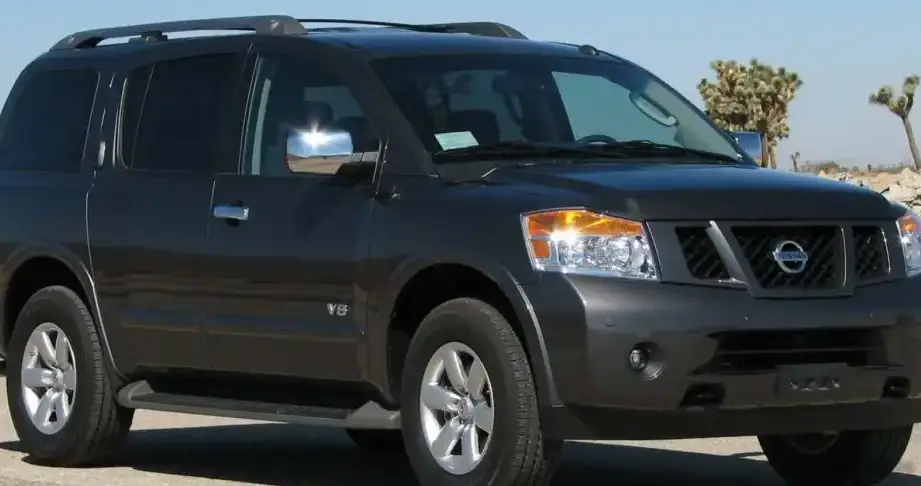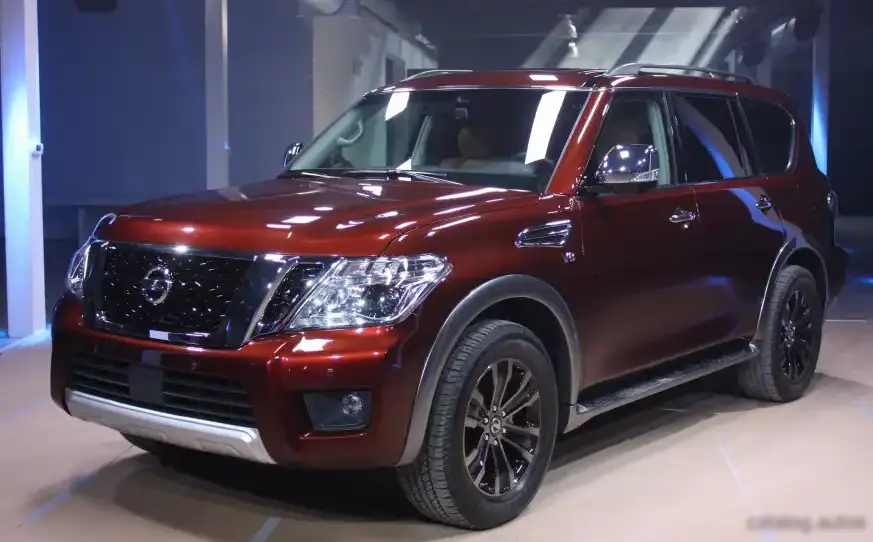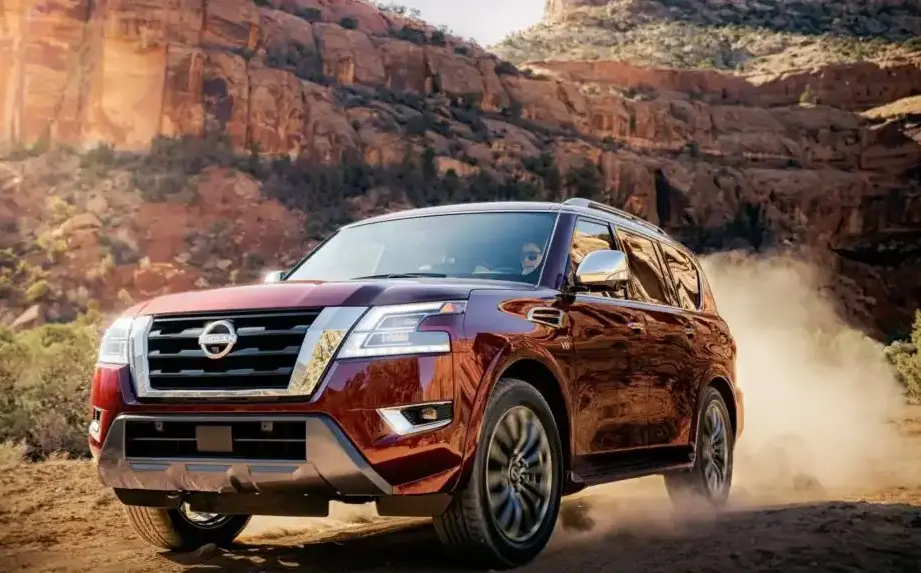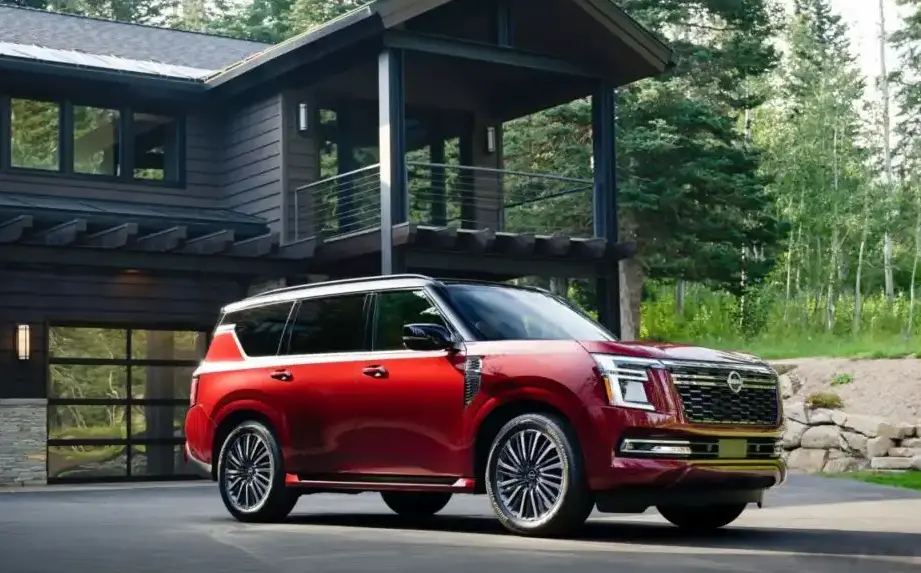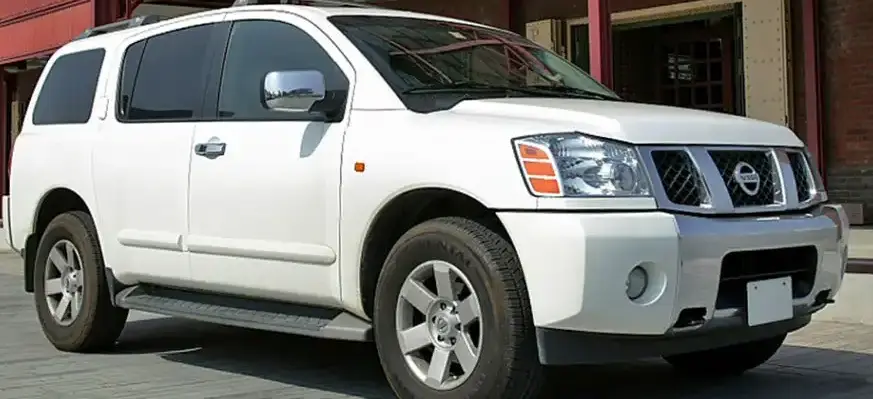
The Nissan Armada, introduced for the 2004 model year, represented Nissan’s entry into the full-size SUV segment in North America. Built on the Nissan F-Alpha platform, the first generation Armada (WA60) was essentially a rebadged version of the Nissan Patrol, a globally sold SUV known for its ruggedness and off-road capability. Produced from 2003 to 2007, the Armada aimed to compete with established American SUVs like the Chevrolet Tahoe and Ford Expedition, offering a blend of space, power, and features. The 5.6 i V8 32V 4WD variant, producing 309 horsepower, was a key offering within the Armada lineup, positioned as a well-equipped, capable option for families and those needing substantial towing capacity.
Technical Specifications
| Brand | Nissan |
| Model | Armada |
| Generation | Armada I (WA60) |
| Type (Engine) | 5.6 i V8 32V 4WD (309 Hp) |
| Start of production | 2003 |
| End of production | 2007 |
| Powertrain Architecture | Internal Combustion engine |
| Body type | SUV |
| Seats | 8 |
| Doors | 5 |
| Fuel consumption (urban) | 18.1 l/100 km (13 US mpg, 15.6 UK mpg, 5.5 km/l) |
| Fuel consumption (extra urban) | 13.1 l/100 km (18 US mpg, 21.6 UK mpg, 7.6 km/l) |
| Fuel consumption (combined) | 15.5 l/100 km (15.2 US mpg, 18.2 UK mpg, 6.5 km/l) |
| Fuel Type | Petrol (Gasoline) |
| Acceleration 0 – 100 km/h | 7.1 sec |
| Acceleration 0 – 62 mph | 7.1 sec |
| Acceleration 0 – 60 mph | 6.7 sec |
| Maximum speed | 185 km/h (114.95 mph) |
| Weight-to-power ratio | 8 kg/Hp, 124.6 Hp/tonne |
| Weight-to-torque ratio | 4.8 kg/Nm, 210.5 Nm/tonne |
| Power | 309 Hp @ 4900 rpm |
| Power per litre | 55.7 Hp/l |
| Torque | 522 Nm (385.01 lb.-ft.) |
| Engine layout | Front, Longitudinal |
| Engine Model/Code | VK56DE |
| Engine displacement | 5552 cm3 (338.8 cu. in.) |
| Number of cylinders | 8 |
| Engine configuration | V-engine |
| Cylinder Bore | 98 mm (3.86 in.) |
| Piston Stroke | 92 mm (3.62 in.) |
| Compression ratio | 9.8:1 |
| Number of valves per cylinder | 4 |
| Fuel injection system | Multi-port manifold injection |
| Engine aspiration | Naturally aspirated engine |
| Engine oil capacity | 6.2 l (6.55 US qt | 5.46 UK qt) |
| Coolant capacity | 14.4 l (15.22 US qt | 12.67 UK qt) |
| Kerb Weight | 2480 kg (5467.46 lbs.) |
| Max. weight | 3175 kg (6999.68 lbs.) |
| Max load | 695 kg (1532.21 lbs.) |
| Trunk (boot) space – minimum | 566 l (19.99 cu. ft.) |
| Trunk (boot) space – maximum | 2750 l (97.12 cu. ft.) |
| Fuel tank capacity | 106 l (28 US gal | 23.32 UK gal) |
| Length | 5255 mm (206.89 in.) |
| Width | 2002 mm (78.82 in.) |
| Height | 1913 mm (75.31 in.) |
| Wheelbase | 3130 mm (123.23 in.) |
| Front track | 1715 mm (67.52 in.) |
| Rear (Back) track | 1715 mm (67.52 in.) |
| Ride height (ground clearance) | 250 mm (9.84 in.) |
| Drive wheel | All wheel drive (4×4) |
| Number of gears and type of gearbox | 5 gears, automatic transmission |
| Front suspension | Independent coil spring |
| Rear suspension | Independent coil spring |
| Front brakes | Disc |
| Rear brakes | Drum |
| Assisting systems | ABS (Anti-lock braking system) |
| Tires size | 265/70 R18 |
| Wheel rims size | 18 |
Powertrain & Engine Architecture
The heart of the Armada 5.6 i 4WD was the VK56DE engine, a 5.6-liter V8. This engine featured a 90-degree V-angle, four valves per cylinder, and a dual overhead camshaft (DOHC) design. The VK56DE utilized a multi-port fuel injection system, delivering fuel directly into the intake ports. The engine’s robust construction and relatively simple design contributed to its reliability. Paired with the engine was a five-speed automatic transmission, designed to handle the engine’s substantial torque output. This transmission featured electronically controlled shift points and overdrive for improved fuel efficiency at highway speeds. The 4WD system was a part-time system, allowing the driver to switch between 2WD and 4WD modes as needed, enhancing both on-road and off-road capability.
Driving Characteristics
The 5.6-liter V8 and five-speed automatic combination provided the Armada with respectable acceleration for its size. The 0-60 mph time of around 6.7 seconds was competitive with other full-size SUVs of the era. However, the automatic transmission, while smooth, wasn’t as responsive as some of the newer transmissions available in competing models. Gear ratios were tuned for towing and everyday driving, prioritizing usability over outright performance. Compared to the later, more powerful Armada trims, the 309 hp version felt less strained during acceleration and offered a more relaxed driving experience. The Armada’s substantial weight (around 5,467 lbs) was noticeable, particularly during cornering, but the independent suspension helped to mitigate body roll.
Equipment & Trim Levels
The Armada 5.6 i 4WD typically came standard with features like leather upholstery, power-adjustable front seats, a Bose audio system, and automatic climate control. Optional extras included a navigation system, rear-seat entertainment system, and power-folding third-row seats. The interior design was generally considered functional and comfortable, though not particularly luxurious compared to some European competitors. Trim levels varied slightly depending on the year, but generally offered increasing levels of convenience and technology features.
Chassis & Braking
The Armada’s chassis featured independent coil spring suspension at all four corners, providing a relatively comfortable ride. The front suspension utilized an upper and lower control arm design, while the rear suspension employed a multi-link setup. Braking duties were handled by disc brakes at the front and drum brakes at the rear. Anti-lock brakes (ABS) were standard. The Armada’s substantial weight necessitated a robust braking system, and while adequate, it didn’t offer the same stopping power as some lighter SUVs. The 4WD system provided enhanced traction in slippery conditions, making the Armada a capable vehicle for navigating snow, mud, and other challenging terrain.
Market Reception & Comparison
The Nissan Armada was generally well-received by critics, who praised its spacious interior, powerful engine, and comfortable ride. However, some reviewers noted its relatively poor fuel economy (15.2 US mpg combined) compared to some competitors. Compared to the Chevrolet Tahoe and Ford Expedition, the Armada offered a more refined driving experience and a more luxurious interior, but it often came with a higher price tag. The 5.6-liter V8 automatic combination was considered a good balance of power and usability, appealing to families and those who needed a capable towing vehicle. Reliability was generally good, though some owners reported issues with the automatic transmission over the long term.
Legacy
The first-generation Nissan Armada established Nissan as a serious contender in the full-size SUV market. The VK56DE engine proved to be a durable and reliable powerplant, and many examples are still on the road today. While fuel economy is a concern by modern standards, the Armada remains a popular choice for those seeking a spacious, capable, and relatively affordable SUV. The 5.6 i 4WD variant, with its blend of power and practicality, continues to hold its value in the used car market, particularly among those looking for a vehicle with strong towing capabilities.