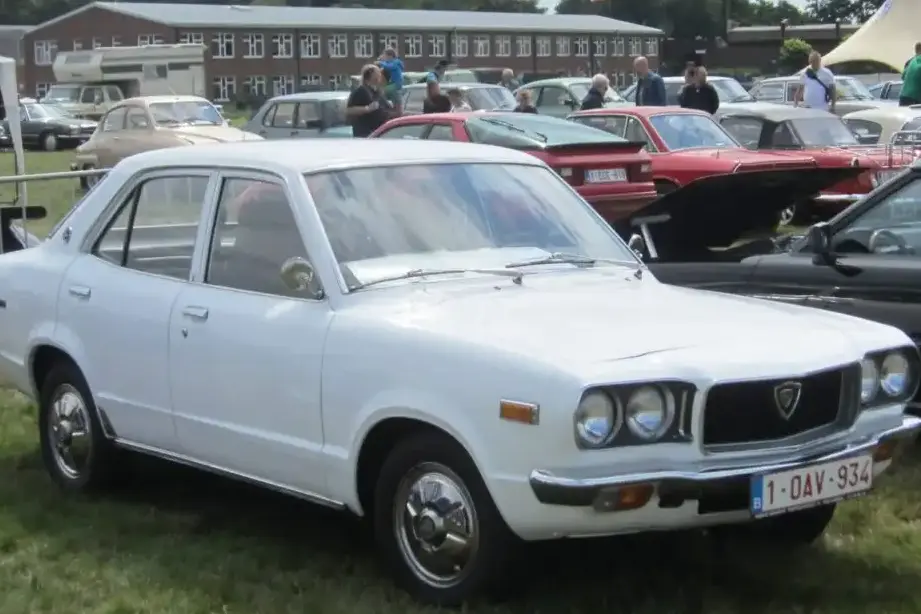
The Mazda RX-3 Sedan (S102A), produced between 1971 and 1973, represented a significant step in Mazda’s commitment to the Wankel rotary engine. Positioned as a compact, sporty sedan, the RX-3 aimed to bring the unique performance characteristics of the rotary engine to a wider audience. It was part of the broader Mazda Grand Familia series, and the S102A designation specifically refers to the sedan body style. The RX-3 occupied a middle ground within the lineup, offering a more accessible entry point to rotary power compared to the more expensive and performance-focused RX-2. This model was primarily sold in the Japanese domestic market (JDM), with limited exports to select regions.
Technical Specifications
| Brand | Mazda |
| Model | RX-3 |
| Generation | RX-3 Sedan (S102A) |
| Type (Engine) | 1.0 (110 Hp) Wankel |
| Start of production | 1971 |
| End of production | 1973 |
| Powertrain Architecture | Internal Combustion engine |
| Body type | Sedan |
| Seats | 5 |
| Doors | 4 |
| Fuel Type | Petrol (Gasoline) |
| Weight-to-power ratio | 8 kg/Hp, 124.3 Hp/tonne |
| Weight-to-torque ratio | 6.5 kg/Nm, 153.7 Nm/tonne |
| Power | 110 Hp @ 7000 rpm |
| Power per litre | 224 Hp/l |
| Torque | 136 Nm @ 4000 rpm (100.31 lb.-ft. @ 4000 rpm) |
| Engine layout | Front, Longitudinal |
| Engine Model/Code | 10A-0866 |
| Engine displacement | 491 cm3 (29.96 cu. in.) |
| Number of cylinders | 2 |
| Engine configuration | Rotary (Wankel) |
| Compression ratio | 9.4:1 |
| Fuel injection system | Carburettor |
| Engine aspiration | Naturally aspirated engine |
| Engine oil capacity | 5.5 l (5.81 US qt | 4.84 UK qt) |
| Coolant capacity | 7 l (7.4 US qt | 6.16 UK qt) |
| Kerb Weight | 885 kg (1951.09 lbs) |
| Fuel tank capacity | 60 l (15.85 US gal | 13.2 UK gal) |
| Length | 4065 mm (160.04 in) |
| Width | 1595 mm (62.8 in) |
| Height | 1375 mm (54.13 in) |
| Wheelbase | 2310 mm (90.94 in) |
| Front track | 1300 mm (51.18 in) |
| Rear track | 1290 mm (50.79 in) |
| Ride height (ground clearance) | 165 mm (6.5 in) |
| Minimum turning circle | 8.6 m (28.22 ft) |
| Drivetrain Architecture | Rear wheel drive |
| Drive wheel | Rear wheel drive |
| Number of gears and type of gearbox | 4 gears, manual transmission |
| Front suspension | Spring Strut |
| Rear suspension | Leaf spring |
| Front brakes | Disc |
| Rear brakes | Drum |
| Steering type | Cone worm with recirculation balls |
| Power steering | Hydraulic Steering |
Powertrain & Engine Architecture
The heart of the RX-3 Sedan was the 10A rotary engine, a 491cc two-rotor Wankel engine. This particular version, designated 10A-0866, produced 110 horsepower at 7000 rpm and 136 Nm (100.31 lb-ft) of torque at 4000 rpm. The engine utilized a single carburetor for fuel delivery, a common setup for the time, and featured a compression ratio of 9.4:1. The rotary engine’s unique design, lacking traditional pistons, offered a smooth power delivery and a high power-to-weight ratio. The engine was mounted longitudinally in the front of the vehicle. The four-speed manual transmission was the standard offering, designed to handle the rotary engine’s powerband. The transmission’s gear ratios were tuned for acceleration, reflecting the engine’s characteristic of needing to be revved to produce peak power.
Driving Characteristics
The RX-3 Sedan with the 1.0-liter Wankel engine and manual transmission offered a distinctive driving experience. While not a high-performance machine by modern standards, it provided a lively and engaging feel. The engine’s smooth power delivery meant that it didn’t exhibit the traditional torque curve of a piston engine. Instead, power built steadily as the revs climbed, requiring the driver to keep the engine in its upper ranges to achieve optimal performance. Compared to the later RX-4, the RX-3 felt more nimble and responsive due to its lighter weight. The four-speed manual transmission allowed for precise control, but the relatively short gear ratios meant frequent shifting was necessary to maintain momentum. The rear-wheel-drive configuration contributed to a balanced handling characteristic, although the leaf spring rear suspension wasn’t as sophisticated as the independent setups found in some contemporary vehicles.
Equipment & Trim Levels
The RX-3 Sedan was relatively sparsely equipped by today’s standards, reflecting its position as an affordable sports sedan. Standard features typically included basic instrumentation, vinyl upholstery, and a simple two-spoke steering wheel. Optional extras could include a radio, upgraded interior trim, and occasionally, air conditioning. The interior design was functional and straightforward, prioritizing practicality over luxury. The dashboard layout was clean and uncluttered, with easy-to-read gauges. Trim levels were limited, with most RX-3 Sedans being fairly similar in terms of standard equipment. The focus was on providing a basic, reliable, and enjoyable driving experience.
Chassis & Braking
The RX-3 Sedan utilized a relatively conventional chassis design for the early 1970s. The front suspension consisted of a MacPherson strut setup, while the rear suspension employed leaf springs. This combination provided a reasonable balance between ride comfort and handling. The braking system featured disc brakes on the front wheels and drum brakes on the rear. While adequate for the vehicle’s weight and performance, the drum brakes on the rear limited overall stopping power. The steering system was a cone worm and recirculating ball setup, offering a direct but somewhat heavy feel. The RX-3’s relatively lightweight construction (885 kg or 1951 lbs) helped to offset the limitations of the chassis and braking system.
Market Reception & Comparison
The Mazda RX-3 Sedan was generally well-received in the Japanese market as an affordable and exciting alternative to more conventional sedans. Critics praised the unique driving experience offered by the Wankel engine, but also noted its relatively high fuel consumption and potential for oil consumption. Compared to the RX-2, the RX-3 offered a more accessible price point, but lacked the RX-2’s higher performance. Against competitors like the Toyota Corolla and Nissan Sunny, the RX-3 stood out due to its rotary engine and sporty character. However, its higher maintenance requirements and potential reliability issues were often cited as drawbacks.
Legacy
The Mazda RX-3 Sedan, particularly the 1.0-liter Wankel version, holds a special place in the hearts of rotary engine enthusiasts. While not as iconic as the RX-7, the RX-3 represented an important step in Mazda’s rotary engine development. Today, well-maintained examples are becoming increasingly rare and sought after by collectors. The 10A engine, while relatively simple, can be prone to wear and tear if not properly maintained. Common issues include apex seal failure and carburetor problems. Despite these potential issues, the RX-3 remains a charming and unique classic car, offering a glimpse into Mazda’s innovative spirit and its commitment to the Wankel rotary engine. The used car market values these vehicles based on originality, condition, and the completeness of their documentation.