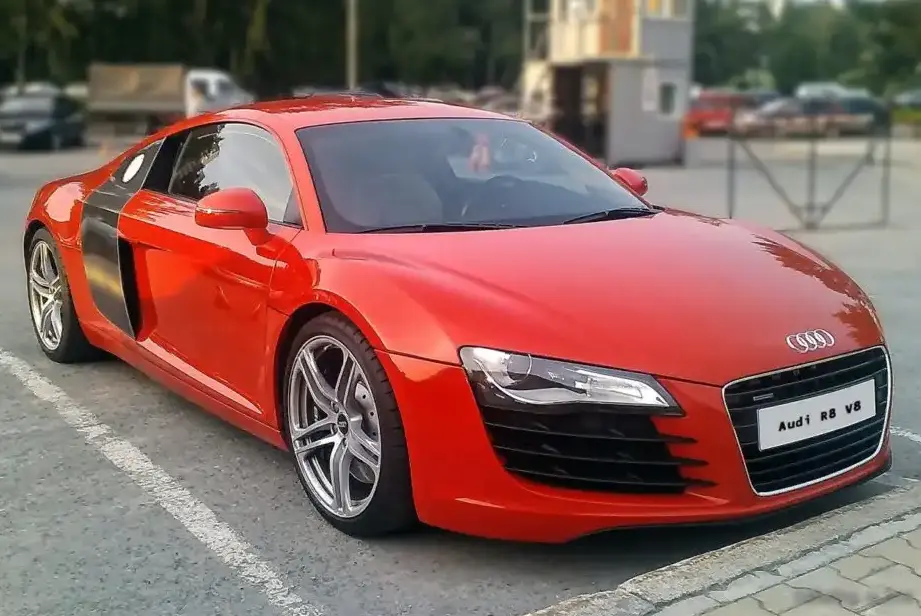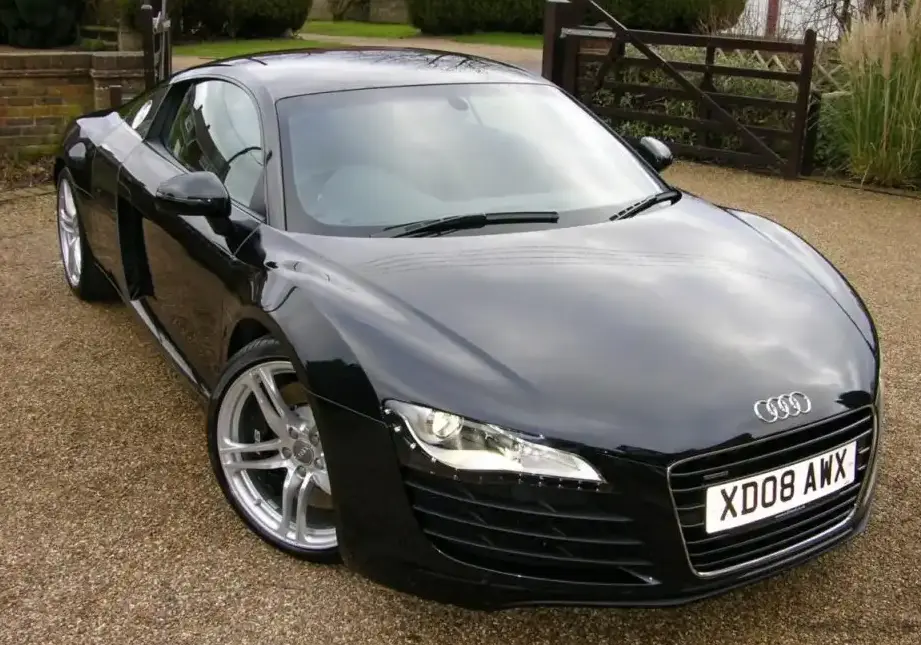
The Audi R8 Coupe (42) 4.2 FSI V8 quattro, launched in November 2006 and produced through 2012, represents Audi’s initial foray into the mid-engine, high-performance sports car segment. Positioned as a direct competitor to the Porsche 911 and other exotic sports cars, the R8 aimed to blend supercar performance with Audi’s renowned build quality and all-weather capability thanks to its quattro all-wheel drive system. This specific variant, powered by the 4.2-liter naturally aspirated V8 engine, served as the core model within the R8 lineup, offering a balance between exhilarating performance and relative usability. It was the entry point into the R8 world, with the 5.2-liter V10 models representing the higher-performance, more exclusive options.
Technical Specifications
| Brand | Audi |
| Model | R8 |
| Generation | R8 Coupe (42) |
| Type (Engine) | 4.2 FSI V8 (430 Hp) quattro |
| Start of production | November, 2006 |
| End of production | 2012 |
| Powertrain Architecture | Internal Combustion engine |
| Body type | Coupe |
| Seats | 2 |
| Doors | 2 |
| Fuel consumption (economy) – urban | 21.3 l/100 km (11 US mpg, 13.3 UK mpg, 4.7 km/l) |
| Fuel consumption (economy) – extra urban | 10 l/100 km (23.5 US mpg, 28.2 UK mpg, 10 km/l) |
| Fuel consumption (economy) – combined | 14.2 l/100 km (16.6 US mpg, 19.9 UK mpg, 7 km/l) |
| CO2 emissions | 332 g/km |
| Fuel Type | Petrol (Gasoline) |
| Acceleration 0 – 100 km/h | 4.6 sec |
| Acceleration 0 – 62 mph | 4.6 sec |
| Acceleration 0 – 60 mph | 4.4 sec |
| Maximum speed | 302 km/h (187.65 mph) |
| Emission standard | Euro 5 |
| Weight-to-power ratio | 3.6 kg/Hp, 275.6 Hp/tonne |
| Weight-to-torque ratio | 3.6 kg/Nm, 275.6 Nm/tonne |
| Power | 430 Hp @ 7900 rpm |
| Power per litre | 103.3 Hp/l |
| Torque | 430 Nm @ 4500-6000 rpm (317.15 lb.-ft. @ 4500-6000 rpm) |
| Engine layout | Rear, Longitudinal |
| Engine Model/Code | CNDA |
| Engine displacement | 4163 cm3 (254.04 cu. in.) |
| Number of cylinders | 8 |
| Engine configuration | V-engine |
| Cylinder Bore | 84.5 mm (3.33 in.) |
| Piston Stroke | 92.8 mm (3.65 in.) |
| Compression ratio | 12.5:1 |
| Number of valves per cylinder | 4 |
| Fuel injection system | Direct injection |
| Engine aspiration | Naturally aspirated engine |
| Valvetrain | DOHC |
| Engine oil capacity | 10 l (10.57 US qt | 8.8 UK qt) |
| Kerb Weight | 1560 kg (3439.21 lbs.) |
| Max. weight | 1860 kg (4100.6 lbs.) |
| Max load | 300 kg (661.39 lbs.) |
| Trunk (boot) space – minimum | 100 l (3.53 cu. ft.) |
| Trunk (boot) space – maximum | 190 l (6.71 cu. ft.) |
| Fuel tank capacity | 75 l (19.81 US gal | 16.5 UK gal) |
| Length | 4431 mm (174.45 in.) |
| Width | 1904 mm (74.96 in.) |
| Width including mirrors | 2029 mm (79.88 in.) |
| Height | 1252 mm (49.29 in.) |
| Wheelbase | 2650 mm (104.33 in.) |
| Front track | 1638 mm (64.49 in.) |
| Rear (Back) track | 1595 mm (62.8 in.) |
| Front overhang | 999 mm (39.33 in.) |
| Rear overhang | 782 mm (30.79 in.) |
| Drag coefficient (Cd) | 0.34 |
| Minimum turning circle (turning diameter) | 11.8 m (38.71 ft.) |
| Drive wheel | All wheel drive (4×4) |
| Number of gears and type of gearbox | 6 gears, manual transmission |
| Front suspension | Independent, type McPherson with coil spring and anti-roll bar |
| Rear suspension | Independent multi-link spring suspension with stabilizer |
| Front brakes | Ventilated discs |
| Rear brakes | Ventilated discs |
| Assisting systems | ABS (Anti-lock braking system) |
| Tires size | 235/40 R18; 285/35 R18 |
| Wheel rims size | 8.5J x 18; 10.5J x 18 |
INTRODUCTION
The Audi R8 Coupe (42) 4.2 FSI V8 quattro, produced from 2006 to 2012, marked a pivotal moment for Audi. Built on the 42 platform (shared with the Lamborghini Gallardo), it was Audi’s first true mid-engine sports car. The “42” designation refers to the internal project code during development. This V8-powered variant was the initial offering, establishing the R8’s reputation for performance, handling, and sophisticated design. It aimed to deliver a more accessible entry point into the supercar realm compared to its Italian cousin, the Gallardo, while still providing a thrilling driving experience and the security of Audi’s quattro all-wheel drive system.
Powertrain & Engine Architecture
At the heart of the R8 4.2 quattro lies the CNDA engine code, a 4.2-liter naturally aspirated V8 engine. This engine is a member of Audi’s V8 family, but specifically tailored for the R8’s mid-engine layout. It features direct fuel injection (FSI – Fuel Stratified Injection), a technology that improves efficiency and power output by injecting fuel directly into the combustion chamber. The engine utilizes a double overhead camshaft (DOHC) valvetrain with four valves per cylinder, optimizing airflow for increased performance. The 90-degree V8 configuration provides inherent smoothness and balance. The engine produces 430 horsepower at 7900 rpm and 430 Nm (317.15 lb-ft) of torque between 4500 and 6000 rpm. The standard transmission was a 6-speed manual, although an optional R tronic sequential manual transmission (a single-clutch automated manual) was also available. The R tronic offered faster shift times but was sometimes criticized for its jerky low-speed behavior.
Driving Characteristics
The R8 4.2 quattro delivers a distinctly engaging driving experience. Acceleration from 0 to 60 mph takes approximately 4.4 seconds, and it reaches a top speed of 187.65 mph. The naturally aspirated V8 provides a linear power delivery, building smoothly to its peak horsepower. The quattro all-wheel drive system provides exceptional traction, particularly in adverse weather conditions, and contributes to the car’s stability. Compared to the later V10 models, the 4.2-liter R8 feels slightly less aggressive and more approachable. The manual transmission offers a satisfyingly mechanical feel, while the R tronic, when equipped, provides quicker shifts but lacks the same level of driver engagement. The gear ratios are tuned for a balance between acceleration and highway cruising, making it surprisingly comfortable for long distances.
Equipment & Trim Levels
The R8 4.2 quattro came reasonably well-equipped as standard. Interior features included leather upholstery, power-adjustable seats, a premium audio system, and automatic climate control. The dashboard featured a clean, minimalist design with aluminum trim accents. Optional extras included navigation, a Bang & Olufsen sound system, carbon fiber interior trim, and various exterior customization options. Audi offered a range of exterior colors and wheel designs to personalize the R8. The R8’s interior, while luxurious, prioritized a driver-focused experience, with controls logically arranged and easily accessible.
Chassis & Braking
The R8’s chassis is constructed from a combination of aluminum and carbon fiber, resulting in a lightweight yet incredibly rigid structure. The suspension utilizes independent McPherson struts at the front and an independent multi-link setup at the rear, both with coil springs and anti-roll bars. This configuration provides excellent handling and ride comfort. Braking duties are handled by ventilated disc brakes on all four wheels, providing ample stopping power. ABS (Anti-lock Braking System) is standard. The R8’s chassis design and suspension tuning were meticulously engineered to deliver a balanced and responsive driving experience, allowing for precise cornering and confident braking.
Market Reception & Comparison
The Audi R8 4.2 quattro was generally well-received by automotive critics. It was praised for its stunning design, impressive performance, and refined interior. Critics noted that the R8 offered a more usable and comfortable experience than many of its rivals, such as the Porsche 911 and Ferrari. Fuel economy, however, was a common criticism, with combined fuel consumption averaging around 16.6 US mpg. Compared to the later R8 V10, the 4.2-liter model offered a more accessible price point and a slightly more forgiving driving experience. The V10 models, with their higher horsepower and more aggressive tuning, were aimed at enthusiasts seeking the ultimate performance. Reliability was generally good, although maintenance costs could be significant due to the car’s exotic nature.
Legacy
The Audi R8 4.2 quattro established Audi as a serious contender in the supercar market. It demonstrated Audi’s engineering prowess and design capabilities, and paved the way for the development of the R8 V10 and subsequent generations. Today, the R8 4.2 quattro remains a desirable and collectible sports car. Well-maintained examples command respectable prices on the used car market. The powertrain, while not the most fuel-efficient, has proven to be relatively reliable with proper maintenance. The R8 4.2 quattro is remembered as a groundbreaking vehicle that successfully blended supercar performance with Audi’s signature blend of luxury, technology, and all-weather capability.