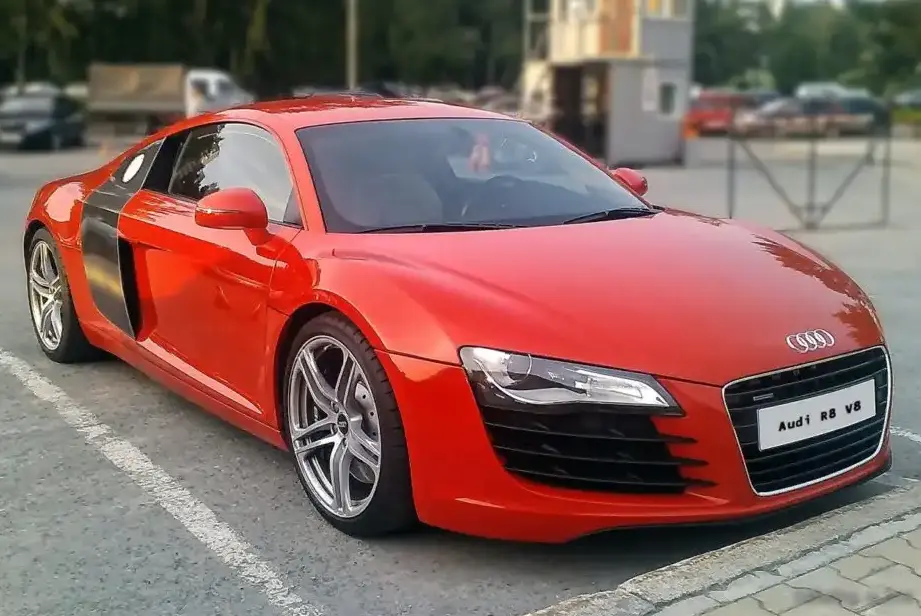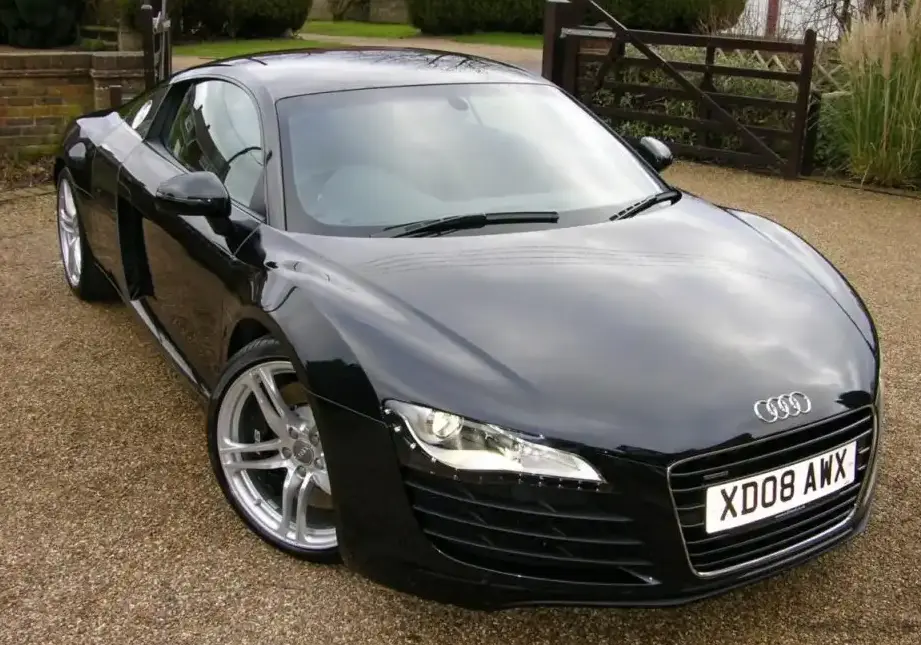
The Audi R8 Coupe (42) 4.2 FSI V8 quattro R tronic, produced between November 2006 and 2012, represents the initial iteration of Audi’s foray into the mid-engine sports car market. Positioned as the flagship performance model, it was the first Audi to feature full-time all-wheel drive in a sports car configuration. This variant, equipped with the naturally aspirated 4.2-liter V8 engine and the R tronic sequential manual gearbox, established the R8 as a serious competitor to established marques like Porsche and Ferrari. It was built on the Audi Space Frame, a lightweight aluminum chassis, and served as a technological showcase for the Volkswagen Group.
Technical Specifications
| Brand | Audi |
| Model | R8 |
| Generation | R8 Coupe (42) |
| Type (Engine) | 4.2 FSI V8 (430 Hp) quattro R tronic |
| Start of production | November, 2006 |
| End of production | 2012 |
| Powertrain Architecture | Internal Combustion engine |
| Body type | Coupe |
| Seats | 2 |
| Doors | 2 |
| Fuel consumption (economy) – urban | 20.1 l/100 km (11.7 US mpg, 14.1 UK mpg, 5 km/l) |
| Fuel consumption (economy) – extra urban | 9.4 l/100 km (25 US mpg, 30.1 UK mpg, 10.6 km/l) |
| Fuel consumption (economy) – combined | 13.3 l/100 km (17.7 US mpg, 21.2 UK mpg, 7.5 km/l) |
| CO2 emissions | 310 g/km |
| Fuel Type | Petrol (Gasoline) |
| Acceleration 0 – 100 km/h | 4.6 sec |
| Acceleration 0 – 62 mph | 4.6 sec |
| Acceleration 0 – 60 mph | 4.4 sec |
| Maximum speed | 302 km/h (187.65 mph) |
| Emission standard | Euro 5 |
| Weight-to-power ratio | 3.6 kg/Hp, 274.8 Hp/tonne |
| Weight-to-torque ratio | 3.6 kg/Nm, 274.8 Nm/tonne |
| Power | 430 Hp @ 7900 rpm |
| Power per litre | 103.3 Hp/l |
| Torque | 430 Nm @ 4500-6000 rpm (317.15 lb.-ft. @ 4500-6000 rpm) |
| Engine layout | Rear, Longitudinal |
| Engine Model/Code | CNDA |
| Engine displacement | 4163 cm3 (254.04 cu. in.) |
| Number of cylinders | 8 |
| Engine configuration | V-engine |
| Cylinder Bore | 84.5 mm (3.33 in.) |
| Piston Stroke | 92.8 mm (3.65 in.) |
| Compression ratio | 12.5:1 |
| Number of valves per cylinder | 4 |
| Fuel injection system | Direct injection |
| Engine aspiration | Naturally aspirated engine |
| Valvetrain | DOHC |
| Engine oil capacity | 10 l (10.57 US qt | 8.8 UK qt) |
| Kerb Weight | 1565 kg (3450.23 lbs.) |
| Max. weight | 1865 kg (4111.62 lbs.) |
| Max load | 300 kg (661.39 lbs.) |
| Trunk (boot) space – minimum | 100 l (3.53 cu. ft.) |
| Trunk (boot) space – maximum | 190 l (6.71 cu. ft.) |
| Fuel tank capacity | 75 l (19.81 US gal | 16.5 UK gal) |
| Length | 4431 mm (174.45 in.) |
| Width | 1904 mm (74.96 in.) |
| Width including mirrors | 2029 mm (79.88 in.) |
| Height | 1252 mm (49.29 in.) |
| Wheelbase | 2650 mm (104.33 in.) |
| Front track | 1638 mm (64.49 in.) |
| Rear (Back) track | 1595 mm (62.8 in.) |
| Front overhang | 999 mm (39.33 in.) |
| Rear overhang | 782 mm (30.79 in.) |
| Drag coefficient (Cd) | 0.34 |
| Minimum turning circle (turning diameter) | 11.8 m (38.71 ft.) |
| Drive wheel | All wheel drive (4×4) |
| Number of gears and type of gearbox | 6 gears, automatic transmission R tronic |
| Front suspension | Independent, type McPherson with coil spring and anti-roll bar |
| Rear suspension | Independent multi-link spring suspension with stabilizer |
| Front brakes | Ventilated discs |
| Rear brakes | Ventilated discs |
| Assisting systems | ABS (Anti-lock braking system) |
| Tires size | 235/40 R18; 285/35 R18 |
| Wheel rims size | 8.5J x 18; 10.5J x 18 |
Powertrain & Engine Architecture
At the heart of the R8 4.2 FSI quattro R tronic lies the CNDA engine, a 4.2-liter naturally aspirated V8. This engine utilizes Audi’s FSI (Fuel Stratified Injection) direct injection technology, delivering fuel directly into the combustion chamber for improved efficiency and power. The engine boasts a high 12.5:1 compression ratio and a dual overhead camshaft (DOHC) valvetrain with four valves per cylinder. The engine produces 430 horsepower at 7900 rpm and 430 Nm (317 lb-ft) of torque between 4500 and 6000 rpm. The R tronic transmission is a six-speed automated manual gearbox. It operates as a conventional manual transmission but utilizes actuators to shift gears, offering quicker shifts than a traditional automatic. Drivers could choose between fully automatic mode or manual control via steering wheel-mounted paddles.
Driving Characteristics
The 4.2 FSI V8 with the R tronic transmission delivers a compelling, if not slightly less visceral, driving experience compared to the six-speed manual version. The R tronic gearbox provides rapid shifts, particularly in sport mode, but can sometimes feel less smooth than a traditional torque-converter automatic. Acceleration from 0 to 60 mph takes approximately 4.4 seconds, and the car reaches a top speed of 187.65 mph. The all-wheel-drive system provides excellent traction, especially in adverse conditions, but can slightly diminish the feeling of rear-wheel drive agility. The power delivery is linear and predictable, making the car relatively easy to drive at speed. Compared to the later 5.2-liter V10 models, the 4.2-liter R8 offers a more accessible and manageable power output.
Equipment & Trim Levels
The R8 4.2 FSI quattro R tronic came standard with a generous array of features, including leather upholstery, power-adjustable seats, a premium audio system, automatic climate control, and bi-xenon headlights. Optional extras included carbon fiber interior trim, a navigation system, and upgraded wheels. The interior design was driver-focused, with a minimalist dashboard layout and high-quality materials. The R8’s interior was designed to evoke a sense of luxury and performance, setting it apart from more mainstream sports cars.
Chassis & Braking
The R8’s chassis is constructed from Audi’s Space Frame, an aluminum monocoque that provides exceptional rigidity and lightweight construction. The suspension features independent McPherson struts at the front and a multi-link setup at the rear, both with coil springs and anti-roll bars. Braking duties are handled by ventilated disc brakes on all four wheels, providing ample stopping power. The R8’s chassis and suspension were tuned to deliver a balance between sporty handling and comfortable ride quality.
Market Reception & Comparison
The Audi R8 4.2 FSI quattro R tronic was generally well-received by automotive critics. It was praised for its stunning design, impressive performance, and sophisticated technology. However, some critics found the R tronic transmission to be less engaging than a traditional manual gearbox. Compared to the Porsche 911, the R8 offered a more comfortable ride and a more spacious interior, but the 911 was often considered to be more focused on driving dynamics. Fuel economy was a notable drawback, with combined fuel consumption of 17.7 US mpg. Reliability was generally good, although some owners reported minor issues with the R tronic transmission.
Legacy
The Audi R8 4.2 FSI quattro R tronic played a pivotal role in establishing Audi as a serious contender in the high-performance sports car segment. The car’s innovative design, advanced technology, and impressive performance helped to elevate the Audi brand and attract a new generation of customers. Today, the first-generation R8 remains a desirable and collectible sports car. The 4.2-liter V8 engine, while not as sought-after as the V10, offers a compelling combination of performance and value in the used car market. Well-maintained examples continue to provide a thrilling driving experience and a testament to Audi’s engineering prowess.