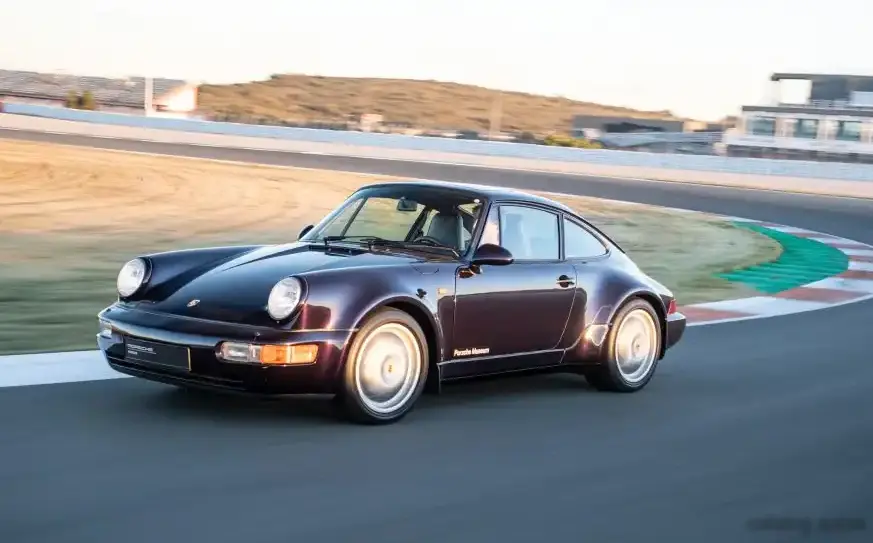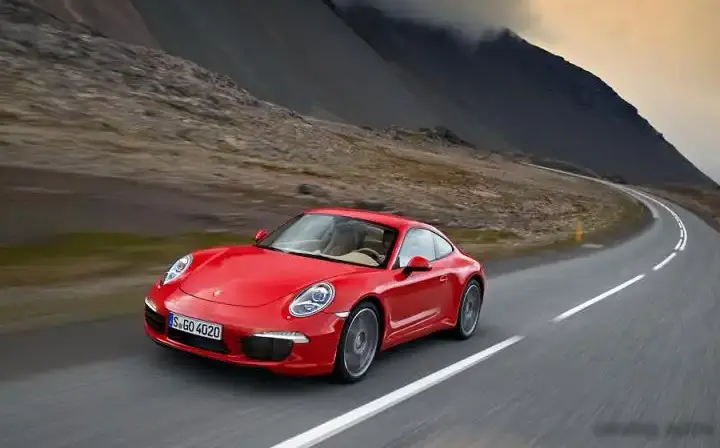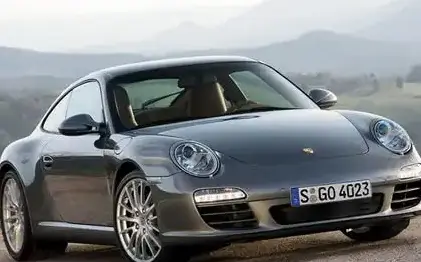
The Porsche 911 Carrera 4 3.6, produced between 2005 and 2008, represents a significant iteration of the iconic 911 lineage, falling within the 997 generation. This variant distinguished itself as a capable all-wheel-drive grand tourer, offering a blend of performance and usability. Positioned as a mid-range offering within the 997 lineup, it sat above the rear-wheel-drive Carrera and below the more potent Carrera S models. The Carrera 4 3.6 aimed to provide enhanced traction and stability, particularly in inclement weather, making it a popular choice for drivers in regions experiencing varied climates. It was a key model in solidifying the 997’s reputation as a technologically advanced and driver-focused sports car.
Technical Specifications
| Brand | Porsche |
| Model | 911 |
| Generation | 911 (997) |
| Type (Engine) | Carrera 4 3.6 (325 Hp) |
| Start of production | 2005 |
| End of production | 2008 |
| Powertrain Architecture | Internal Combustion engine |
| Body type | Coupe |
| Seats | 4 |
| Doors | 2 |
| Fuel consumption (urban) | 16.6 l/100 km (14.2 US mpg, 17 UK mpg, 6 km/l) |
| Fuel consumption (extra urban) | 8.4 l/100 km (28 US mpg, 33.6 UK mpg, 11.9 km/l) |
| Fuel consumption (combined) | 11.3 l/100 km (20.8 US mpg, 25 UK mpg, 8.8 km/l) |
| Fuel Type | Petrol (Gasoline) |
| Acceleration 0 – 100 km/h | 5.1 sec |
| Acceleration 0 – 62 mph | 5.1 sec |
| Acceleration 0 – 60 mph | 4.8 sec |
| Maximum speed | 280 km/h (173.98 mph) |
| Emission standard | Euro 4 |
| Weight-to-power ratio | 4.5 kg/Hp, 224.1 Hp/tonne |
| Weight-to-torque ratio | 3.9 kg/Nm, 255.2 Nm/tonne |
| Power | 325 Hp @ 6800 rpm |
| Power per litre | 90.4 Hp/l |
| Torque | 370 Nm @ 4250 rpm (272.9 lb.-ft. @ 4250 rpm) |
| Engine layout | Rear, Longitudinal |
| Engine Model/Code | M96.05 |
| Engine displacement | 3596 cm3 (219.44 cu. in.) |
| Number of cylinders | 6 |
| Engine configuration | Boxer |
| Cylinder Bore | 96 mm (3.78 in.) |
| Piston Stroke | 82.8 mm (3.26 in.) |
| Compression ratio | 11.3:1 |
| Number of valves per cylinder | 4 |
| Fuel injection system | Multi-port manifold injection |
| Engine aspiration | Naturally aspirated engine |
| Valvetrain | DOHC |
| Engine oil capacity | 8.3 l (8.77 US qt | 7.3 UK qt) |
| Coolant | 31 l (32.76 US qt | 27.28 UK qt) |
| Kerb Weight | 1450 kg (3196.7 lbs.) |
| Max. weight | 1865 kg (4111.62 lbs.) |
| Max load | 415 kg (914.92 lbs.) |
| Trunk (boot) space – maximum | 105 l (3.71 cu. ft.) |
| Fuel tank capacity | 67 l (17.7 US gal | 14.74 UK gal) |
| Length | 4427 mm (174.29 in.) |
| Width | 1852 mm (72.91 in.) |
| Height | 1310 mm (51.57 in.) |
| Wheelbase | 2350 mm (92.52 in.) |
| Front track | 1465 mm (57.68 in.) |
| Rear (Back) track | 1500 mm (59.06 in.) |
| Drag coefficient (Cd) | 0.29 |
| Minimum turning circle (turning diameter) | 10.9 m (35.76 ft.) |
| Drive wheel | All wheel drive (4×4) |
| Number of gears and type of gearbox | 6 gears, manual transmission |
| Front suspension | Independent type McPherson |
| Rear suspension | Independent multi-link suspension |
| Front brakes | Ventilated discs |
| Rear brakes | Ventilated discs |
| Assisting systems | ABS (Anti-lock braking system) |
| Steering type | Steering rack and pinion |
| Power steering | Hydraulic Steering |
| Tires size | 235/40 R18ZR; 265/40 R18ZR |
| Wheel rims size | 8J x 18; 11J x 18 |
Powertrain & Engine Architecture
At the heart of the 997 Carrera 4 3.6 lies the M96.05 engine, a 3.6-liter naturally aspirated flat-six. This engine, a hallmark of Porsche engineering, features a dry-sump lubrication system, crucial for maintaining oil supply during high-g maneuvers. The M96.05 utilizes multi-port fuel injection, delivering fuel directly into the intake ports, and a dual overhead camshaft (DOHC) valvetrain. This configuration allows for precise control of valve timing, optimizing both power and efficiency. The engine produces 325 horsepower at 6800 rpm and 370 Nm (272.9 lb-ft) of torque at 4250 rpm. The standard transmission for this model was a six-speed manual, although a five-speed Tiptronic S automatic transmission was also available. The all-wheel-drive system employs a viscous coupling to distribute power between the front and rear axles, providing enhanced traction without the complexity of a more advanced electronic system.
Driving Characteristics
The Carrera 4 3.6, even with the manual transmission, offered a refined and engaging driving experience. The all-wheel-drive system provided a noticeable increase in stability, particularly on slippery surfaces. Acceleration from 0 to 60 mph took approximately 4.8 seconds, and the car could reach a top speed of 280 km/h (174 mph). Compared to the rear-wheel-drive Carrera, the Carrera 4 felt more planted and predictable, but some purists noted a slight reduction in the raw, tail-happy feel that characterized the traditional 911 experience. The automatic transmission, while offering convenience, did slightly diminish the sense of driver involvement and resulted in marginally slower acceleration times. The gear ratios were tuned for a balance between performance and fuel economy, providing adequate power for both spirited driving and comfortable cruising.
Equipment & Trim Levels
The Carrera 4 3.6 came standard with a well-appointed interior featuring leather upholstery, automatic climate control, and a basic audio system. Optional extras were plentiful, allowing buyers to customize their vehicles to their preferences. Popular options included sport seats, a Bose audio system, navigation, and various interior trim packages. The dashboard layout was typical of the 997 generation, with a central tachometer flanked by gauges for speed, fuel level, and coolant temperature. The overall aesthetic was one of understated elegance, reflecting Porsche’s commitment to functional design.
Chassis & Braking
The 997 Carrera 4 3.6 utilized an independent suspension system at all four corners, with McPherson struts at the front and a multi-link setup at the rear. This configuration provided a comfortable ride while maintaining excellent handling characteristics. The braking system consisted of ventilated discs on all four wheels, providing ample stopping power. Anti-lock braking system (ABS) was standard, enhancing safety and control. The chassis was designed to be lightweight and rigid, contributing to the car’s overall agility.
Market Reception & Comparison
The 997 Carrera 4 3.6 was generally well-received by automotive critics. It was praised for its performance, handling, and all-weather capability. However, some reviewers noted that the all-wheel-drive system added weight, slightly diminishing the car’s overall agility compared to the rear-wheel-drive Carrera. Fuel economy was reasonable for a sports car of its caliber, averaging around 20.8 US mpg in combined driving. Compared to the more powerful Carrera S models, the Carrera 4 3.6 offered a more accessible entry point into the 997 lineup, appealing to buyers who prioritized usability and all-weather performance over outright speed.
Legacy
The M96.05 engine, while generally reliable, is known to be susceptible to intermediate shaft (IMS) bearing failure, a potential issue that has become well-documented within the Porsche community. Addressing this issue proactively with an updated IMS bearing is often recommended for owners of these vehicles. Despite this potential concern, the 997 Carrera 4 3.6 remains a highly sought-after sports car in the used market. Its combination of performance, practicality, and iconic Porsche styling ensures its continued appeal to enthusiasts. Well-maintained examples command strong prices, reflecting the enduring desirability of the 997 generation.