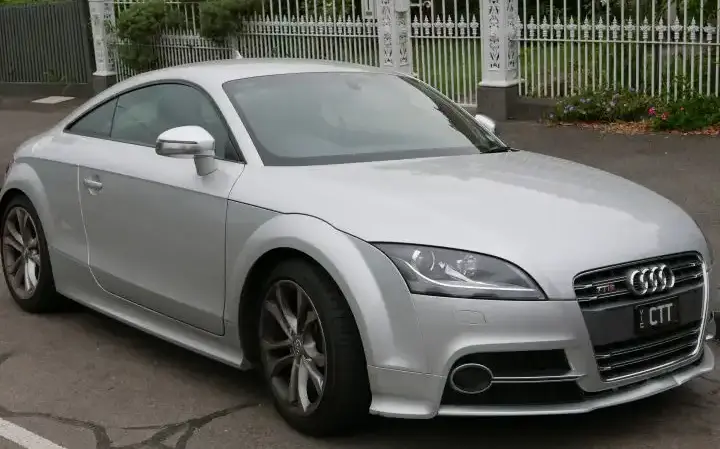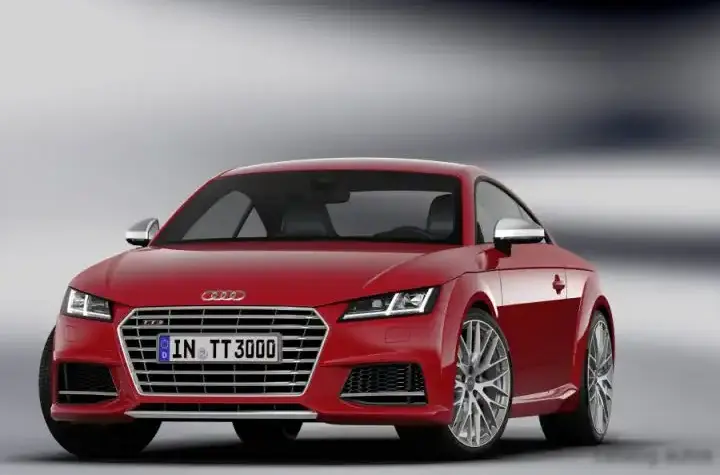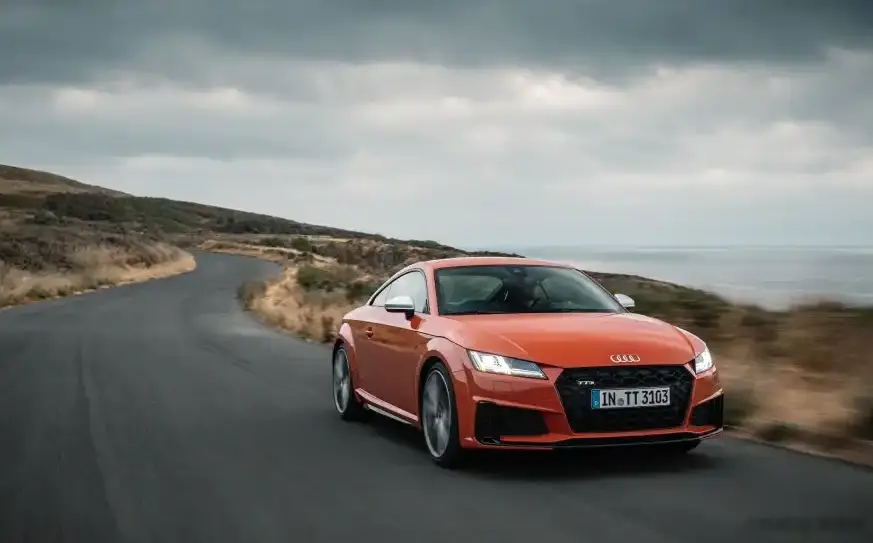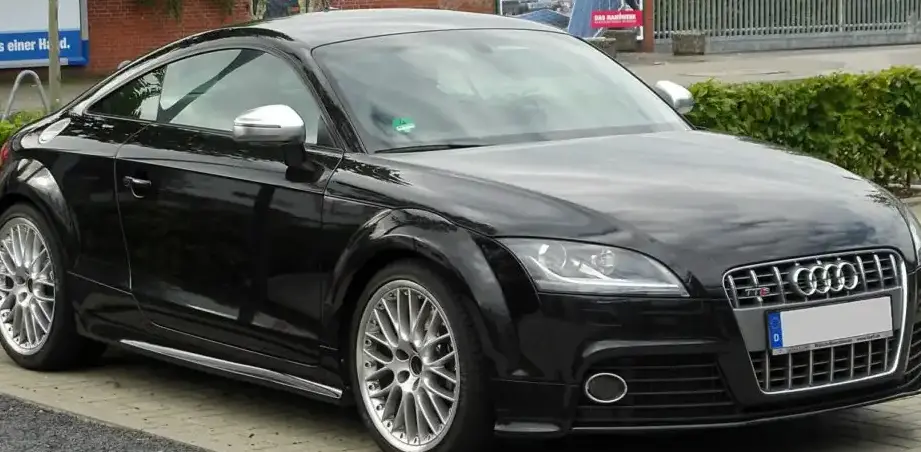
The Audi TTS Coupe (8J) 2.0 TFSI quattro S Tronic, produced from 2008 to 2010, represented a performance-oriented iteration of the second-generation Audi TT. Positioned between the standard TT and the range-topping RS models, the TTS Coupe aimed to deliver a more engaging driving experience with increased power and standard all-wheel drive. It was a key model within the 8J TT platform, which itself was based on the Volkswagen Group’s PQ35 chassis, shared with vehicles like the Golf Mk5 and Audi A3. This variant specifically targeted enthusiasts seeking a sporty coupe with everyday usability and the convenience of an automatic transmission.
Technical Specifications
| Brand | Audi |
| Model | TT |
| Generation | TTS Coupe (8J) |
| Type (Engine) | 2.0 TFSI (272 Hp) quattro S Tronic |
| Start of production | 2008 |
| End of production | 2010 |
| Powertrain Architecture | Internal Combustion engine |
| Body type | Coupe |
| Seats | 4 |
| Doors | 3 |
| Fuel consumption (economy) – urban | 10.6 l/100 km (22.2 US mpg, 26.6 UK mpg, 9.4 km/l) |
| Fuel consumption (economy) – extra urban | 6 l/100 km (39.2 US mpg, 47.1 UK mpg, 16.7 km/l) |
| Fuel consumption (economy) – combined | 7.7 l/100 km (30.5 US mpg, 36.7 UK mpg, 13 km/l) |
| CO2 emissions | 179 g/km |
| Fuel Type | Petrol (Gasoline) |
| Acceleration 0 – 100 km/h | 5.2 sec |
| Acceleration 0 – 62 mph | 5.2 sec |
| Acceleration 0 – 60 mph | 4.9 sec |
| Maximum speed | 250 km/h (155.34 mph) |
| Emission standard | Euro 5 |
| Weight-to-power ratio | 5.2 kg/Hp, 192.2 Hp/tonne |
| Weight-to-torque ratio | 4 kg/Nm, 247.3 Nm/tonne |
| Power | 272 Hp @ 6000 rpm |
| Power per litre | 137.1 Hp/l |
| Torque | 350 Nm @ 2500 rpm (258.15 lb.-ft. @ 2500 rpm) |
| Engine layout | Front, Transverse |
| Engine Model/Code | CDLB |
| Engine displacement | 1984 cm3 (121.07 cu. in.) |
| Number of cylinders | 4 |
| Engine configuration | Inline |
| Cylinder Bore | 82.5 mm (3.25 in.) |
| Piston Stroke | 92.8 mm (3.65 in.) |
| Compression ratio | 10.5:1 |
| Number of valves per cylinder | 4 |
| Fuel injection system | Direct injection |
| Engine aspiration | Turbocharger, Intercooler |
| Valvetrain | DOHC |
| Engine oil capacity | 4.5 l (4.76 US qt | 3.96 UK qt) |
| Coolant | 9 l (9.51 US qt | 7.92 UK qt) |
| Kerb Weight | 1415 kg (3119.54 lbs.) |
| Max. weight | 1815 kg (4001.39 lbs.) |
| Max load | 400 kg (881.85 lbs.) |
| Trunk (boot) space – minimum | 290 l (10.24 cu. ft.) |
| Trunk (boot) space – maximum | 700 l (24.72 cu. ft.) |
| Fuel tank capacity | 60 l (15.85 US gal | 13.2 UK gal) |
| Max. roof load | 75 kg (165.35 lbs.) |
| Length | 4198 mm (165.28 in.) |
| Width | 1842 mm (72.52 in.) |
| Width including mirrors | 1952 mm (76.85 in.) |
| Height | 1352 mm (53.23 in.) |
| Wheelbase | 2468 mm (97.17 in.) |
| Front track | 1572 mm (61.89 in.) |
| Rear (Back) track | 1558 mm (61.34 in.) |
| Front overhang | 911 mm (35.87 in.) |
| Rear overhang | 819 mm (32.24 in.) |
| Minimum turning circle | 10.96 m (35.96 ft.) |
| Drive wheel | All wheel drive (4×4) |
| Number of gears and type of gearbox | 6 gears, automatic transmission S tronic |
| Front suspension | Independent, type McPherson with coil spring and anti-roll bar |
| Rear suspension | Independent multi-link spring suspension with stabilizer |
| Front brakes | Ventilated discs |
| Rear brakes | Ventilated discs |
| Assisting systems | ABS (Anti-lock braking system) |
| Steering type | Steering rack and pinion |
| Tires size | 245/40 R18 |
| Wheel rims size | 9J x 18 |
Powertrain & Engine Architecture
The heart of the TTS Coupe was the 2.0-liter TFSI (Turbocharged Fuel Stratified Injection) engine, specifically the CDLB engine code. This engine was a significant upgrade over the standard TT’s 2.0 TFSI, benefiting from a larger turbocharger, revised engine mapping, and strengthened internal components. Direct injection was a key feature, allowing for precise fuel delivery and improved combustion efficiency. The engine produced 272 horsepower at 6000 rpm and 350 Nm (258 lb-ft) of torque from as low as 2500 rpm. The S Tronic six-speed dual-clutch transmission (DCT) was standard, offering rapid, seamless gear changes and contributing to the car’s quick acceleration. Unlike some European markets that offered manual transmissions, the US market TTS Coupe was exclusively available with the S Tronic.
Driving Characteristics
The 2.0 TFSI engine paired with the S Tronic transmission delivered a noticeably more responsive driving experience than the standard TT. The quick-shifting DCT allowed the engine to remain in its optimal power band, resulting in strong acceleration. The quattro all-wheel-drive system provided excellent traction, particularly in adverse weather conditions, and enhanced cornering stability. While not as raw or visceral as a manual transmission, the S Tronic offered a blend of performance and convenience. The gear ratios were tuned for acceleration, with shorter gearing in the lower gears. Compared to the higher-output RS models, the TTS offered a more manageable power delivery, making it more accessible for everyday driving. The automatic transmission, while efficient, did slightly diminish the direct connection felt with a manual gearbox.
Equipment & Trim Levels
The TTS Coupe came well-equipped as standard. Interior features included sport seats upholstered in a combination of leather and Alcantara, a flat-bottomed steering wheel, and aluminum trim accents. Standard exterior features included a unique front bumper with larger air intakes, a rear spoiler, and 18-inch alloy wheels. Optional extras included navigation, a premium sound system (Bose was a popular choice), and parking sensors. The TTS trim level was positioned as the performance-focused option, offering a more premium experience than the base TT but falling short of the more exclusive RS models.
Chassis & Braking
The TTS Coupe featured a sport-tuned suspension with stiffer springs and dampers compared to the standard TT. The front suspension utilized McPherson struts, while the rear employed a multi-link setup. Larger brakes with ventilated discs at all four corners provided ample stopping power. The quattro all-wheel-drive system distributed power between the front and rear axles as needed, optimizing traction and stability. The suspension setup aimed to balance sporty handling with a reasonable level of ride comfort.
Market Reception & Comparison
The Audi TTS Coupe (8J) was generally well-received by automotive critics. It was praised for its strong performance, engaging handling, and refined interior. The S Tronic transmission was lauded for its speed and smoothness, although some reviewers missed the involvement of a manual gearbox. Compared to the standard TT, the TTS offered a significant performance upgrade. Compared to the more expensive RS models, the TTS provided a compelling value proposition for buyers seeking a sporty coupe without the higher price tag. Fuel economy was respectable for a performance car, averaging around 30.5 US mpg in combined driving.
Legacy
The 2.0 TFSI engine and S Tronic transmission combination proved to be relatively reliable, although preventative maintenance is crucial. The turbocharger and direct injection system require regular servicing to ensure optimal performance and longevity. Today, the TTS Coupe (8J) remains a desirable used car, appreciated for its blend of performance, style, and practicality. The quattro all-wheel-drive system makes it a capable all-weather vehicle, and the S Tronic transmission continues to provide quick and efficient gear changes. Well-maintained examples command a premium in the used car market, reflecting the car’s enduring appeal.