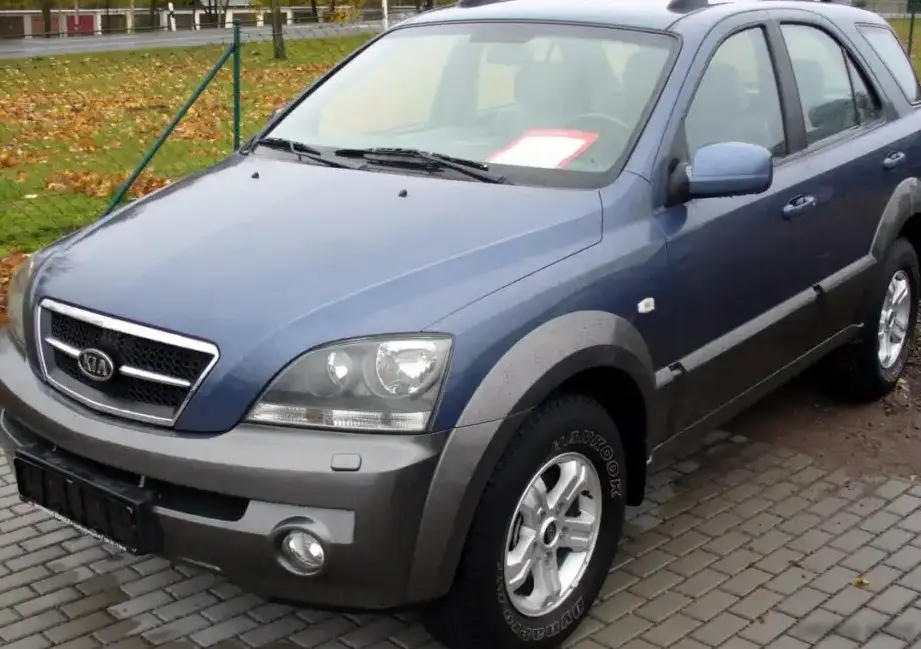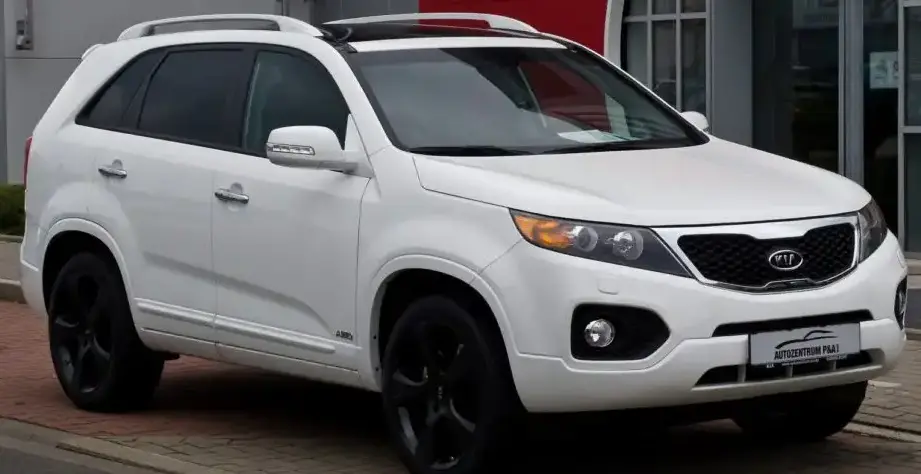
The Kia Sorento II 3.5 V6 CVVT (276 Hp) Sportmatic represents a significant offering in the second generation of Kia’s popular mid-size SUV. Produced from 2009 to 2012, this variant was positioned as a premium trim level within the Sorento II range, offering a substantial increase in performance compared to the four-cylinder options. It played a key role in Kia’s efforts to establish itself as a credible competitor in the North American and European SUV markets, offering a blend of space, features, and a powerful V6 engine. The Sorento II, built on the UM platform, aimed to provide a more refined and capable vehicle than its predecessor, and the 3.5L V6 Sportmatic was a cornerstone of that ambition.
Technical Specifications
| Brand | Kia |
| Model | Sorento |
| Generation | Sorento II |
| Type (Engine) | 3.5 V6 CVVT (276 Hp) Sportmatic |
| Start of production | 2009 |
| End of production | 2012 |
| Powertrain Architecture | Internal Combustion engine |
| Body type | SUV |
| Seats | 7 |
| Doors | 5 |
| Fuel consumption (urban) | 11.8 l/100 km (19.9 US mpg) |
| Fuel consumption (extra urban) | 9 l/100 km (26.1 US mpg) |
| Fuel Type | Petrol (Gasoline) |
| Weight-to-power ratio | 6.2 kg/Hp |
| Weight-to-torque ratio | 5.1 kg/Nm |
| Power | 276 Hp @ 6300 rpm |
| Power per litre | 79.5 Hp/l |
| Torque | 336 Nm @ 5000 rpm (247.82 lb.-ft. @ 5000 rpm) |
| Engine layout | Front, Transverse |
| Engine Model/Code | G6DC |
| Engine displacement | 3470 cm3 (211.75 cu. in.) |
| Number of cylinders | 6 |
| Engine configuration | V-engine |
| Cylinder Bore | 92 mm (3.62 in.) |
| Piston Stroke | 87 mm (3.43 in.) |
| Compression ratio | 10.6:1 |
| Number of valves per cylinder | 4 |
| Fuel injection system | Multi-port manifold injection |
| Engine aspiration | Naturally aspirated engine |
| Valvetrain | DOHC |
| Engine oil capacity | 5.7 l (6.02 US qt | 5.02 UK qt) |
| Kerb Weight | 1715 kg (3780.93 lbs.) |
| Trunk (boot) space – minimum | 258 l (9.11 cu. ft.) |
| Trunk (boot) space – maximum | 2053 l (72.5 cu. ft.) |
| Fuel tank capacity | 68 l (17.96 US gal | 14.96 UK gal) |
| Permitted trailer load with brakes (12%) | 1588 kg (3500.94 lbs.) |
| Length | 4671 mm (183.9 in.) |
| Width | 1885 mm (74.21 in.) |
| Height | 1709 mm (67.28 in.) |
| Wheelbase | 2700 mm (106.3 in.) |
| Front track | 1618 mm (63.7 in.) |
| Rear (Back) track | 1621 mm (63.82 in.) |
| Ride height (ground clearance) | 191 mm (7.52 in.) |
| Drag coefficient (Cd) | 0.38 |
| Minimum turning circle (turning diameter) | 10.9 m (35.76 ft.) |
| Approach angle | 28° |
| Departure angle | 23° |
| Drivetrain Architecture | The Internal combustion engine (ICE) drives the front wheels of the vehicle. |
| Drive wheel | Front wheel drive |
| Number of gears and type of gearbox | 6 gears, automatic transmission Sportmatic |
| Front suspension | Independent type McPherson, Transverse stabilizer |
| Rear suspension | Independent multi-link suspension, Transverse stabilizer |
| Front brakes | Ventilated discs, 299.72 mm |
| Rear brakes | Disc, 302.26 mm |
| Assisting systems | ABS (Anti-lock braking system) |
| Steering type | Steering rack and pinion |
| Power steering | Hydraulic Steering |
| Tires size | 235/60 R18 |
| Wheel rims size | 7J x 18 |
INTRODUCTION
The Kia Sorento II 3.5 V6 CVVT Sportmatic, launched in 2009, was a key variant in the second-generation Sorento lineup (XM). This generation marked a significant shift for Kia, moving away from body-on-frame construction to a more modern unibody platform. The 3.5L V6 engine, paired with a six-speed automatic transmission featuring a “Sportmatic” manual shift mode, was positioned as the top-tier powertrain option. It aimed to appeal to buyers seeking a comfortable, spacious, and well-equipped SUV with genuine performance capabilities. The Sorento II was designed to compete with established players like the Honda Pilot, Toyota Highlander, and Ford Explorer, offering a compelling value proposition with a longer warranty and a growing reputation for reliability.
Powertrain & Engine Architecture
At the heart of the Sorento II 3.5 V6 Sportmatic lies the G6DC engine, a 3.5-liter naturally aspirated V6. This engine utilizes a dual continuously variable valve timing (CVVT) system, optimizing valve timing for improved fuel efficiency and power delivery across the rev range. The engine employs multi-point fuel injection, delivering fuel directly to the intake ports. The 60-degree V-angle configuration contributes to a smoother engine operation and reduced vibrations. The six-speed automatic transmission, a crucial component of the Sportmatic package, provides smooth and responsive gear changes. The “Sportmatic” mode allows drivers to manually select gears, offering a degree of control for more spirited driving. This transmission was designed to handle the V6’s torque output effectively, providing adequate acceleration and cruising ability.
Driving Characteristics
The 3.5L V6 Sportmatic Sorento delivers a noticeably more engaging driving experience compared to the base four-cylinder models. With 276 horsepower and 247.82 lb-ft of torque, acceleration is brisk, and highway merging and overtaking are performed with confidence. While not a sports SUV, the V6 provides ample power for everyday driving and occasional towing. The six-speed automatic transmission is generally smooth, although some reviewers noted a slight hesitation during downshifts. The Sportmatic mode adds a layer of driver involvement, but it’s not as responsive as some dual-clutch transmissions found in competitors. The front-wheel-drive configuration contributes to decent fuel economy, but all-wheel drive was available as an option for improved traction in inclement weather. The suspension is tuned for comfort, providing a relatively smooth ride, but it can feel somewhat soft during aggressive cornering.
Equipment & Trim Levels
The 3.5 V6 Sportmatic trim typically included a generous array of standard features. These often included leather upholstery, heated front seats, a power driver’s seat, automatic climate control, a premium audio system, and alloy wheels. Optional extras could include a navigation system, a sunroof, rear-seat entertainment, and advanced safety features like parking sensors and a rearview camera. The interior design was generally considered modern and well-appointed for its time, with a focus on practicality and usability. The Sorento II offered a spacious cabin with comfortable seating for up to seven passengers, making it a suitable choice for families.
Chassis & Braking
The Sorento II utilizes a McPherson strut front suspension and a multi-link rear suspension, providing a balance of ride comfort and handling. Stabilizer bars are fitted to both axles to reduce body roll during cornering. The braking system consists of ventilated discs at the front and solid discs at the rear. Anti-lock brakes (ABS) are standard, enhancing braking performance and stability. The steering is rack-and-pinion with hydraulic power assistance, providing a reasonably direct and responsive feel. The 18-inch alloy wheels, typically fitted with 235/60 R18 tires, contribute to both the vehicle’s aesthetics and its handling characteristics.
Market Reception & Comparison
The Kia Sorento II 3.5 V6 Sportmatic was generally well-received by automotive critics. It was praised for its spacious interior, comfortable ride, and powerful engine. However, some reviewers noted that the fuel economy was not class-leading, and the handling was not as sharp as some competitors. Compared to the four-cylinder Sorento models, the V6 offered a significant performance upgrade, but it came at a higher price point. Compared to rivals like the Honda Pilot and Toyota Highlander, the Sorento offered a more affordable option with a longer warranty, but it lacked the established reputation for reliability of those brands. The 1.8L and 2.4L trims were aimed at budget-conscious buyers, while the V6 catered to those prioritizing performance and features.
Legacy
The Kia Sorento II 3.5 V6 Sportmatic has proven to be a relatively reliable vehicle in the used car market. The G6DC engine is generally considered durable, and the six-speed automatic transmission has a good track record. However, like any vehicle, regular maintenance is crucial to ensure long-term reliability. Common issues reported by owners include minor electrical glitches and occasional problems with the air conditioning system. Today, the Sorento II 3.5 V6 Sportmatic represents a good value proposition for buyers seeking a spacious, comfortable, and well-equipped SUV at an affordable price. Its blend of performance, features, and practicality has ensured its continued popularity in the used car market.