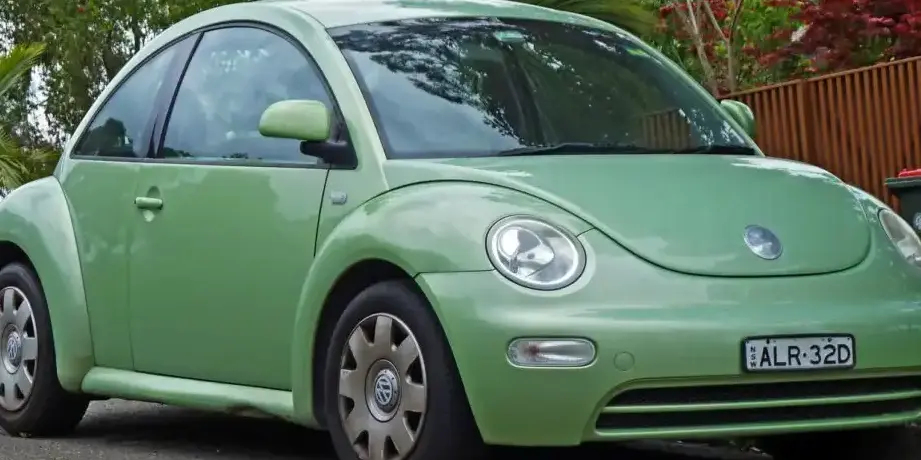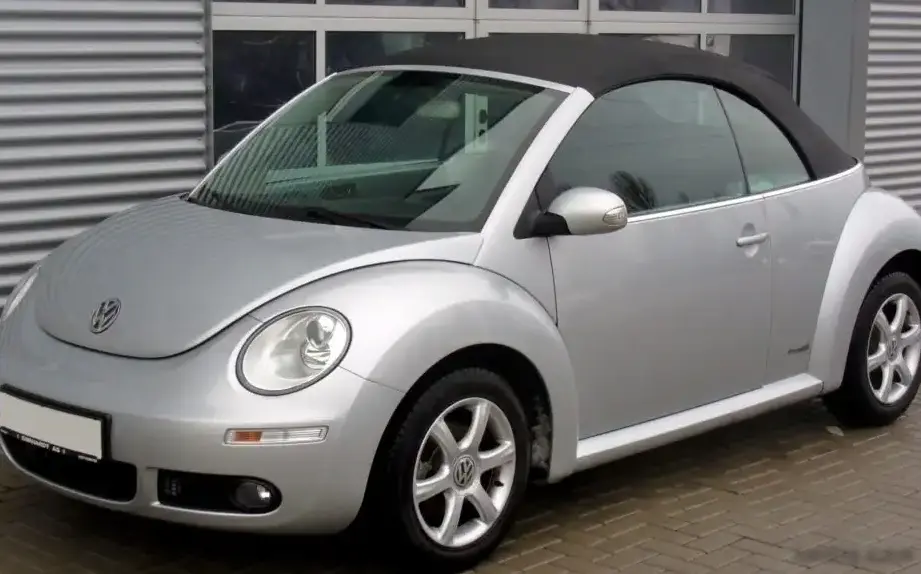
The Volkswagen New Beetle Convertible (facelift, produced from 2005 to 2010) with the 2.0-liter, 115 horsepower engine represented a mid-range offering in the New Beetle lineup. Positioned between the base 1.6-liter models and the more powerful 2.0-liter turbocharged variants, this configuration aimed to balance affordability with acceptable performance for the open-top driving experience. This facelift brought subtle styling revisions to the original New Beetle Convertible, enhancing its appeal in the North American and European markets. It continued the New Beetle’s retro-inspired design, capitalizing on the nostalgia for the original Type 1 “Bug” while offering modern convenience and safety features.
Technical Specifications
| Brand | Volkswagen |
| Model | Beetle |
| Generation | NEW Beetle Convertible (facelift 2005) |
| Type (Engine) | 2.0 (115 Hp) |
| Start of production | 2005 |
| End of production | 2010 |
| Powertrain Architecture | Internal Combustion engine |
| Body type | Cabriolet |
| Seats | 4 |
| Doors | 2 |
| Fuel consumption (urban) | 12 l/100 km (19.6 US mpg) |
| Fuel consumption (extra urban) | 6.9 l/100 km (34.1 US mpg) |
| Fuel consumption (combined) | 8.8 l/100 km (26.7 US mpg) |
| CO2 emissions | 212 g/km |
| Fuel Type | Petrol (Gasoline) |
| Acceleration 0 – 100 km/h | 11.7 sec |
| Acceleration 0 – 62 mph | 11.7 sec |
| Acceleration 0 – 60 mph | 11.1 sec |
| Maximum speed | 184 km/h (114.33 mph) |
| Emission standard | Euro 4 |
| Weight-to-power ratio | 11.6 kg/Hp |
| Weight-to-torque ratio | 7.7 kg/Nm |
| Power | 115 Hp @ 5400 rpm |
| Torque | 172 Nm @ 3200 rpm (126.86 lb.-ft. @ 3200 rpm) |
| Engine layout | Front, Transverse |
| Engine Model/Code | AZJ, BER, BEV, BHP |
| Engine displacement | 1984 cm3 (121.07 cu. in.) |
| Number of cylinders | 4 |
| Engine configuration | Inline |
| Cylinder Bore | 82.5 mm (3.25 in.) |
| Piston Stroke | 92.8 mm (3.65 in.) |
| Compression ratio | 10.3:1 |
| Number of valves per cylinder | 4 |
| Fuel injection system | Multi-port manifold injection |
| Engine aspiration | Naturally aspirated |
| Engine oil capacity | 4 l (4.23 US qt | 3.52 UK qt) |
| Coolant capacity | 5 l (5.28 US qt | 4.4 UK qt) |
| Kerb Weight | 1332 kg (2936.56 lbs.) |
| Max. weight | 1800 kg (3968.32 lbs.) |
| Max load | 468 kg (1031.76 lbs.) |
| Trunk (boot) space – minimum | 201 l (7.1 cu. ft.) |
| Fuel tank capacity | 55 l (14.53 US gal | 12.1 UK gal) |
| Permitted trailer load with brakes (12%) | 1000 kg (2204.62 lbs.) |
| Permitted trailer load without brakes | 600 kg (1322.77 lbs.) |
| Permitted towbar download | 75 kg (165.35 lbs.) |
| Length | 4129 mm (162.56 in.) |
| Width | 1721 mm (67.76 in.) |
| Height | 1502 mm (59.13 in.) |
| Wheelbase | 2516 mm (99.06 in.) |
| Front track | 1507 mm (59.33 in.) |
| Rear track | 1487 mm (58.54 in.) |
| Ride height (ground clearance) | 130 mm (5.12 in.) |
| Drag coefficient (Cd) | 0.38 |
| Drivetrain Architecture | Front wheel drive |
| Number of gears | 5 |
| Gearbox type | Manual transmission |
| Front suspension | Independent type McPherson |
| Rear suspension | Semi-independent, coil spring |
| Front brakes | Ventilated discs |
| Rear brakes | Disc |
| Assisting systems | ABS (Anti-lock braking system) |
| Tires size | 195/65 R15 |
| Wheel rims size | 15 |
Powertrain & Engine Architecture
The 2.0-liter inline-four engine, identified by engine codes such as AZJ, BER, BEV, and BHP, formed the heart of this New Beetle Convertible variant. This engine utilized a multi-port fuel injection system, a relatively conventional setup for the time, providing adequate fuel atomization for efficient combustion. The engine featured a single overhead camshaft (SOHC) valvetrain with four valves per cylinder, contributing to its respectable power output for its displacement. The 115 horsepower and 126.86 lb-ft of torque were delivered at 5400 rpm and 3200 rpm respectively. The engine’s naturally aspirated design meant it relied on atmospheric pressure for intake, resulting in a linear power delivery. This engine was paired with a five-speed manual transmission, offering drivers a degree of control over gear selection. The transmission’s gear ratios were tuned for a balance between fuel economy and everyday drivability, rather than outright performance.
Driving Characteristics
The 2.0-liter, 115 hp New Beetle Convertible offered a comfortable, rather than sporty, driving experience. Acceleration from 0-60 mph took around 11.1 seconds, and top speed was limited to 114.33 mph. While not particularly quick, the engine provided sufficient power for highway cruising and city driving. The five-speed manual transmission allowed for reasonable control, but the engine lacked the low-end torque of larger displacement or turbocharged engines. Compared to the more powerful 2.0-liter turbocharged versions, this variant felt noticeably slower, especially when fully loaded with passengers and luggage. However, it offered a more relaxed driving experience, prioritizing fuel efficiency and ease of use over outright performance. The convertible top added weight, slightly impacting handling compared to the hardtop New Beetle.
Equipment & Trim Levels
The 2.0-liter New Beetle Convertible typically came with a reasonable level of standard equipment. This included power windows, power locks, air conditioning, and a basic audio system. Interior upholstery was usually cloth, with options for leather upgrades. Trim levels varied by market, but generally included features like alloy wheels, a leather-wrapped steering wheel, and upgraded audio systems as optional extras. The convertible top was manually operated on base models, with an optional power-operated top available. Safety features included ABS brakes and front airbags, meeting the safety standards of the time.
Chassis & Braking
The New Beetle Convertible utilized a front-wheel-drive chassis with an independent McPherson strut suspension in the front and a semi-independent coil spring suspension in the rear. This setup provided a comfortable ride, but wasn’t particularly sporty. Braking duties were handled by ventilated discs in the front and solid discs in the rear. ABS (Anti-lock Braking System) was standard, enhancing braking performance and stability. The suspension was tuned for comfort, prioritizing ride quality over sharp handling. Stabilizer bars were included to reduce body roll during cornering, but the overall handling characteristics were geared towards everyday usability rather than aggressive driving.
Market Reception & Comparison
The 2.0-liter New Beetle Convertible was generally well-received as an affordable and stylish open-top car. Critics praised its retro design and comfortable ride, but noted its lack of outright performance compared to competitors. Fuel economy was considered average for its class. Compared to the 1.6-liter models, the 2.0-liter offered a noticeable improvement in performance, making it a more appealing option for drivers who frequently drove on highways or with passengers. However, the turbocharged 2.0-liter variants offered significantly more power and a sportier driving experience, albeit at a higher price point. Reliability was generally good, with the 2.0-liter engine proving to be durable and relatively maintenance-free.
Legacy
The 2.0-liter New Beetle Convertible remains a popular choice in the used car market, particularly among those seeking a stylish and affordable open-top vehicle. The engine is known for its reliability, and parts availability is generally good. While not a performance car, it offers a charming and enjoyable driving experience. The New Beetle Convertible, in all its variants, helped to revive the spirit of the original Beetle, appealing to a new generation of drivers who appreciated its unique design and nostalgic appeal. Today, well-maintained examples are often sought after by collectors and enthusiasts.