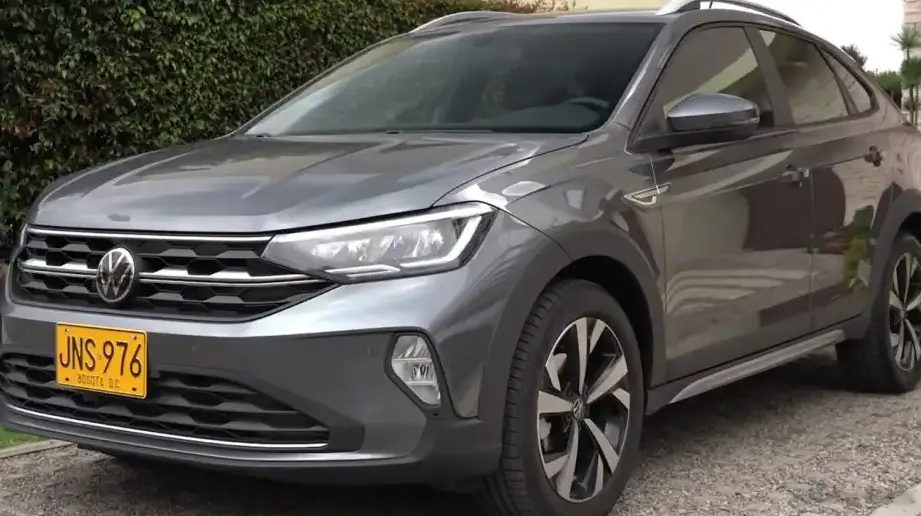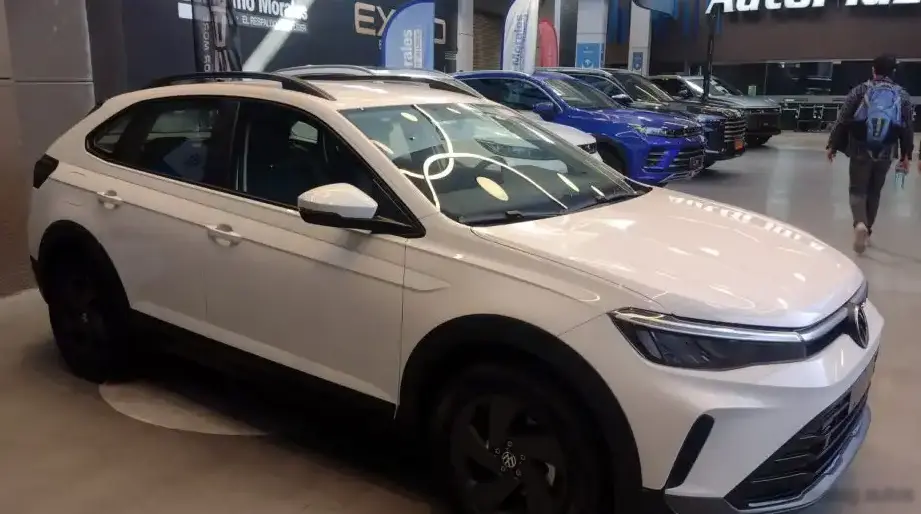
The Volkswagen Nivus, particularly the 170 TSI variant introduced with the 2024 facelift, represents Volkswagen’s entry into the compact coupe-SUV segment, primarily targeted at the South American market, with a strong presence in Brazil and Argentina. Launched in October 2024, this version offers a balance between fuel efficiency and practicality, aiming to appeal to younger buyers and urban drivers. The Nivus is built on the Volkswagen Group’s MQB-A0 platform, shared with models like the Polo and Virtus, and positioned as a more stylish and accessible alternative to larger SUVs. This specific 101 horsepower configuration serves as the base engine option for the refreshed Nivus lineup.
Technical Specifications
| Brand | Volkswagen |
| Model | Nivus |
| Generation | Nivus (facelift 2024) |
| Type (Engine) | 170 TSI (101 Hp) |
| Start of production | October, 2024 |
| Powertrain Architecture | Internal Combustion engine |
| Body type | Coupe, SUV |
| Seats | 5 |
| Doors | 5 |
| Fuel consumption (urban) | 8.2 l/100 km (28.7 US mpg) |
| Fuel consumption (extra urban) | 4.9 l/100 km (48 US mpg) |
| Fuel consumption (combined) | 6.1 l/100 km (38.6 US mpg) |
| CO2 emissions | 139 g/km |
| Fuel Type | Petrol (Gasoline) |
| Acceleration 0 – 100 km/h | 10.5 sec |
| Acceleration 0 – 62 mph | 10.5 sec |
| Acceleration 0 – 60 mph | 10 sec |
| Maximum speed | 185 km/h (114.95 mph) |
| Emission standard | Euro 6b |
| Weight-to-power ratio | 11.6 kg/Hp |
| Weight-to-torque ratio | 6.9 kg/Nm |
| Power | 101 Hp @ 5000 rpm |
| Torque | 170 Nm @ 2000-4000 rpm (125.39 lb.-ft.) |
| Engine layout | Front, Transverse |
| Engine Model/Code | DHSE |
| Engine displacement | 999 cm3 (60.96 cu. in.) |
| Number of cylinders | 3 |
| Engine configuration | Inline |
| Compression ratio | 10.5:1 |
| Number of valves per cylinder | 4 |
| Fuel injection system | Direct injection |
| Engine aspiration | Turbocharger, Intercooler |
| Valvetrain | DOHC |
| Engine oil capacity | 4 l (4.23 US qt | 3.52 UK qt) |
| Kerb Weight | 1175 kg (2590.43 lbs.) |
| Max. weight | 1610 kg (3549.44 lbs.) |
| Max load | 435 kg (959.01 lbs.) |
| Trunk (boot) space – minimum | 415 l (14.66 cu. ft.) |
| Fuel tank capacity | 52 l (13.74 US gal | 11.44 UK gal) |
| Max. roof load | 50 kg (110.23 lbs.) |
| Permitted trailer load with brakes (8%) | 400 kg (881.85 lbs.) |
| Permitted trailer load without brakes | 400 kg (881.85 lbs.) |
| Length | 4272 mm (168.19 in.) |
| Width | 1757 mm (69.17 in.) |
| Width including mirrors | 1976 mm (77.8 in.) |
| Height | 1493-1528 mm (58.78 – 60.16 in.) |
| Wheelbase | 2566 mm (101.02 in.) |
| Front track | 1524-1531 mm (60 – 60.28 in.) |
| Rear (Back) track | 1509-1516 mm (59.41 – 59.69 in.) |
| Ride height (ground clearance) | 168-172 mm (6.61 – 6.77 in.) |
| Minimum turning circle (turning diameter) | 10.9 m (35.76 ft.) |
| Drivetrain Architecture | Front wheel drive |
| Drive wheel | Front wheel drive |
| Number of gears and type of gearbox | 5 gears, manual transmission |
| Front suspension | Independent, type McPherson with coil spring and anti-roll bar |
| Rear suspension | Semi-independent, coil spring, Torsion |
| Front brakes | Ventilated discs |
| Rear brakes | Drum |
| Assisting systems | ABS (Anti-lock braking system) |
| Steering type | Steering rack and pinion |
| Power steering | Electric Steering |
| Tires size | 205/60 R16 |
| Wheel rims size | 6J x 16 |
Powertrain & Engine Architecture
The heart of the Nivus 170 TSI is the DHSE engine, a 1.0-liter, three-cylinder turbocharged gasoline engine. This engine is part of Volkswagen’s EA211 family, known for its compact size and efficiency. The DHSE utilizes direct fuel injection, delivering fuel directly into the combustion chamber for improved combustion efficiency and reduced emissions. It also features a single-scroll turbocharger with an intercooler, which helps to increase power output by forcing more air into the engine. The engine produces 101 horsepower at 5000 rpm and 170 Nm (125 lb-ft) of torque between 2000 and 4000 rpm. The engine is paired with a five-speed manual transmission, which is the standard configuration for this variant. The engine’s DOHC (Double Overhead Camshaft) valvetrain and four valves per cylinder contribute to its relatively high power output for its size. A Start & Stop system is included as standard, further enhancing fuel economy in urban driving conditions.
Driving Characteristics
The 1.8L/Automatic Nivus offers a comfortable, yet not particularly sporty, driving experience. The 101 horsepower engine provides adequate power for everyday driving situations, but acceleration is modest. The 0-60 mph time of around 10 seconds reflects this. The five-speed manual transmission is well-matched to the engine’s torque curve, allowing for reasonable acceleration in lower gears. However, overtaking maneuvers on the highway may require downshifting. Compared to higher-trim Nivus models with more powerful engines, the 170 TSI feels less responsive. The suspension is tuned for comfort, absorbing bumps and imperfections in the road well. The steering is light and easy to use, making it well-suited for city driving. The front-wheel-drive configuration provides predictable handling, but it’s not designed for aggressive cornering.
Equipment & Trim Levels
The Nivus 170 TSI, as the entry-level trim, typically comes equipped with a respectable set of standard features. These generally include air conditioning, power windows and locks, a basic infotainment system with a touchscreen display (usually around 6.5-8 inches), Bluetooth connectivity, and basic safety features like ABS, airbags, and stability control. Interior upholstery is typically cloth. Optional extras available for this trim often include alloy wheels, a more advanced infotainment system with smartphone integration (Apple CarPlay and Android Auto), a rearview camera, and parking sensors. Higher trim levels add features like leather upholstery, automatic climate control, and advanced driver-assistance systems.
Chassis & Braking
The Nivus utilizes a McPherson strut suspension setup at the front, providing a good balance of comfort and handling. The rear suspension employs a semi-independent torsion beam design, which is a cost-effective solution that offers adequate ride quality. The braking system consists of ventilated discs at the front and drum brakes at the rear. ABS (Anti-lock Braking System) is standard, enhancing braking performance and safety. The Nivus’s chassis is designed to provide a stable and predictable driving experience, prioritizing comfort over outright sportiness. The electric power steering provides light and easy steering input, making it convenient for maneuvering in urban environments.
Market Reception & Comparison
The Nivus 170 TSI has been well-received in the South American market as an affordable and stylish option in the compact SUV segment. Critics have praised its fuel efficiency and comfortable ride, but some have noted its modest performance. Compared to other trims in the Nivus lineup, the 170 TSI offers the most affordable entry point, making it attractive to budget-conscious buyers. Its fuel economy is competitive with other small SUVs in its class, and its reliability is generally considered good, based on Volkswagen’s reputation. However, the 170 TSI’s performance is noticeably less than that of the higher-powered engine options.
Legacy
The DHSE engine, while relatively new, is based on a proven engine family (EA211) and is expected to offer good long-term reliability. The MQB-A0 platform is also well-established and has been used in numerous Volkswagen Group vehicles. In the used car market, the Nivus 170 TSI is likely to be a popular choice for buyers seeking an affordable and fuel-efficient compact SUV. Its simple and relatively robust powertrain should translate to lower maintenance costs compared to more complex engine options. As with any used vehicle, regular maintenance and careful driving habits will be key to ensuring its longevity.