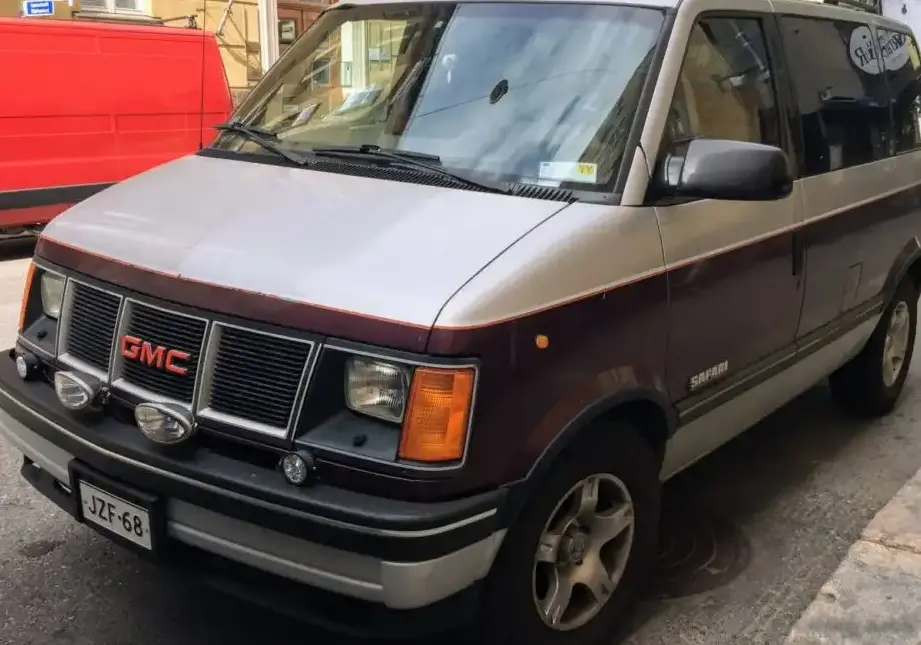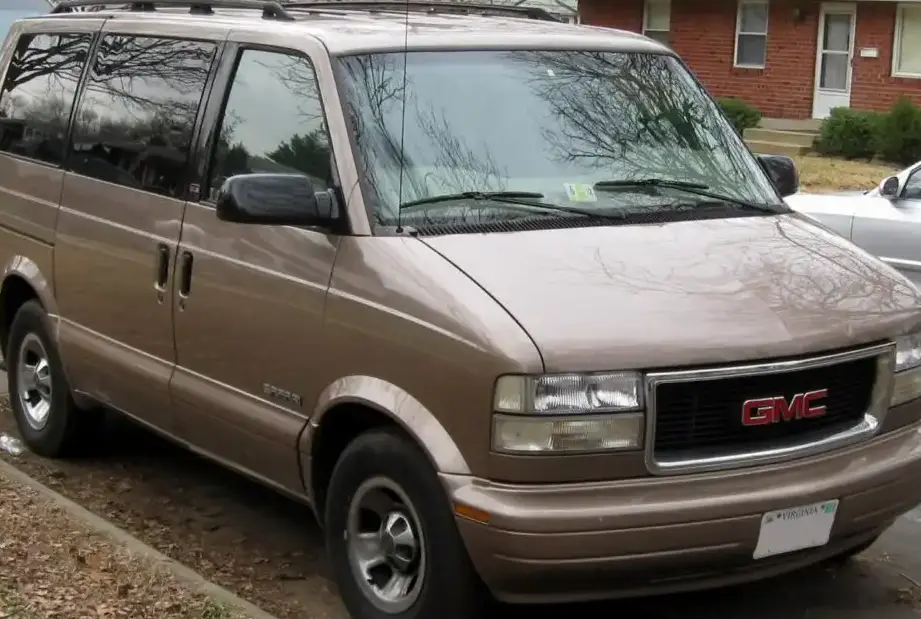
The GMC Safari II, specifically the 4.3i V6 4×4 Automatic variant, represents a significant iteration of GMC’s long-running minivan platform. Produced from 2001 to 2005, this version occupied a middle ground within the Safari II lineup, offering a balance between capability, space, and affordability. It was part of the second generation of the Safari (1996-2005), which shared a platform with the Chevrolet Astro and Oldsmobile Silhouette, though each brand offered distinct styling and trim levels. The Safari II aimed to provide a practical and robust transportation solution for families and those requiring substantial cargo capacity, particularly in regions where all-wheel drive was valued.
Technical Specifications
| Brand | GMC |
| Model | Safari |
| Generation | Safari II |
| Type | 4.3i V6 (190 Hp) 4×4 Automatic |
| Start of production | 2001 |
| End of production | 2005 |
| Powertrain Architecture | Internal Combustion engine |
| Body type | Minivan |
| Seats | 8 |
| Doors | 3 |
| Fuel Type | Petrol (Gasoline) |
| Weight-to-power ratio | 11 kg/Hp, 91.2 Hp/tonne |
| Weight-to-torque ratio | 6.1 kg/Nm, 162.7 Nm/tonne |
| Power | 190 Hp @ 4400 rpm |
| Power per litre | 44.2 Hp/l |
| Torque | 339 Nm @ 2800 rpm (250.03 lb.-ft. @ 2800 rpm) |
| Maximum engine speed | 5600 rpm |
| Engine layout | Front, Longitudinal |
| Engine Model/Code | L35 Vortec 4300 |
| Engine displacement | 4300 cm3 (262.4 cu. in.) |
| Number of cylinders | 6 |
| Engine configuration | V-engine |
| Cylinder Bore | 101.6 mm (4 in.) |
| Piston Stroke | 88.39 mm (3.48 in.) |
| Compression ratio | 9.2:1 |
| Fuel injection system | Multi-port manifold injection |
| Engine aspiration | Naturally aspirated engine |
| Engine oil capacity | 4.3 l (4.54 US qt | 3.78 UK qt) |
| Coolant | 12.8 l (13.53 US qt | 11.26 UK qt) |
| Kerb Weight | 2083 kg (4592.23 lbs.) |
| Max. weight | 2767 kg (6100.19 lbs.) |
| Max load | 684 kg (1507.96 lbs.) |
| Trunk (boot) space – minimum | 1169 l (41.28 cu. ft.) |
| Trunk (boot) space – maximum | 4825 l (170.39 cu. ft.) |
| Fuel tank capacity | 102 l (26.95 US gal | 22.44 UK gal) |
| Length | 4821 mm (189.8 in.) |
| Width | 1968 mm (77.48 in.) |
| Height | 1900 mm (74.8 in.) |
| Wheelbase | 2824 mm (111.18 in.) |
| Front track | 1653 mm (65.08 in.) |
| Rear (Back) track | 1653 mm (65.08 in.) |
| Ride height (ground clearance) | 172 mm (6.77 in.) |
| Minimum turning circle (turning diameter) | 13.4 m (43.96 ft.) |
| Drive wheel | All wheel drive (4×4) |
| Number of gears and type of gearbox | 4 gears, automatic transmission |
| Front suspension | Independent torsion bar, double wishbone |
| Rear suspension | Leaf spring |
| Front brakes | Disc |
| Rear brakes | Drum |
| Assisting systems | ABS (Anti-lock braking system) |
| Tires size | 215/75 R15 |
| Wheel rims size | 6.5J x 15 |
Powertrain & Engine Architecture
The heart of the Safari II 4.3i 4×4 Automatic is the L35 Vortec 4300 cubic inch (7.0L) V6 engine. This engine, a member of the Vortec family, is known for its robust construction and relatively simple design. It features a 90-degree V-angle, cast iron block, and aluminum cylinder heads. The L35 utilizes a multi-port fuel injection system, delivering fuel directly to each intake port for improved efficiency and power delivery. The valvetrain consists of two valves per cylinder, operated by a single camshaft. The 4L60-E four-speed automatic transmission was the standard pairing for this engine. This transmission is electronically controlled, offering smooth shifts and adaptability to driving conditions. The 4×4 system is typically an electronically controlled part-time system, allowing the driver to switch between two-wheel drive and four-wheel drive as needed.
Driving Characteristics
The 190 horsepower and 339 lb-ft of torque produced by the 4.3L V6, when coupled with the four-speed automatic, provided adequate, though not exhilarating, performance for the Safari II. Acceleration was modest, particularly when fully loaded with passengers and cargo. The automatic transmission’s gear ratios were tuned for practicality and fuel economy rather than outright speed. The 4×4 system provided enhanced traction in inclement weather and on unpaved surfaces, making it a valuable asset for drivers in regions prone to snow or off-road conditions. Compared to the available 4.3L manual transmission versions, the automatic offered a more relaxed driving experience, but at the expense of some responsiveness. It also lagged behind the performance of the larger V8 engines available in some Safari trims.
Equipment & Trim Levels
The 4.3i 4×4 Automatic trim typically included features such as air conditioning, power windows and locks, an AM/FM stereo with cassette player (often upgraded with a CD player), and cloth upholstery. Higher trim levels offered options like leather seating, upgraded sound systems, power sliding doors, and rear air conditioning. The interior layout was functional and spacious, prioritizing passenger comfort and cargo versatility. The third-row seat could be folded flat or removed entirely to maximize cargo space. The Safari II’s dashboard design was relatively simple and straightforward, with easy-to-read gauges and intuitive controls.
Chassis & Braking
The Safari II utilized a body-on-frame construction, providing a robust and durable platform. The front suspension featured an independent torsion bar setup with double wishbone control arms, while the rear suspension employed a traditional leaf spring design. This combination offered a comfortable ride, but handling was not particularly sporty. The braking system consisted of disc brakes on the front wheels and drum brakes on the rear. Anti-lock brakes (ABS) were standard, enhancing safety and control during emergency braking situations. The relatively heavy weight of the vehicle, combined with the leaf spring rear suspension, meant that braking distances were longer than those of lighter, more modern vehicles.
Market Reception & Comparison
The GMC Safari II 4.3i 4×4 Automatic was generally well-received as a practical and reliable minivan. Critics praised its spacious interior, robust powertrain, and available all-wheel drive. However, some reviewers noted its somewhat dated design and lack of advanced features compared to newer minivan models. Fuel economy was average for its class, and reliability was generally good, though maintenance costs could be higher due to the vehicle’s age and complexity. Compared to the higher-trim Safari models with V8 engines, the 4.3i offered a more affordable entry point, but with less power and performance. It also competed with other minivans from Dodge, Chrysler, and Ford, each offering its own strengths and weaknesses.
Legacy
Today, the GMC Safari II 4.3i 4×4 Automatic is a relatively uncommon sight on the road. While not considered a collector’s item, well-maintained examples are sought after by those seeking a durable and spacious minivan for practical purposes. The L35 Vortec engine is known for its longevity and relatively simple maintenance requirements, making it a reasonably reliable powertrain. However, age-related issues such as rust, worn suspension components, and potential transmission problems are common. The Safari II represents a final chapter in the era of body-on-frame minivans, offering a glimpse into a time when durability and practicality were prioritized over sleek styling and advanced technology.