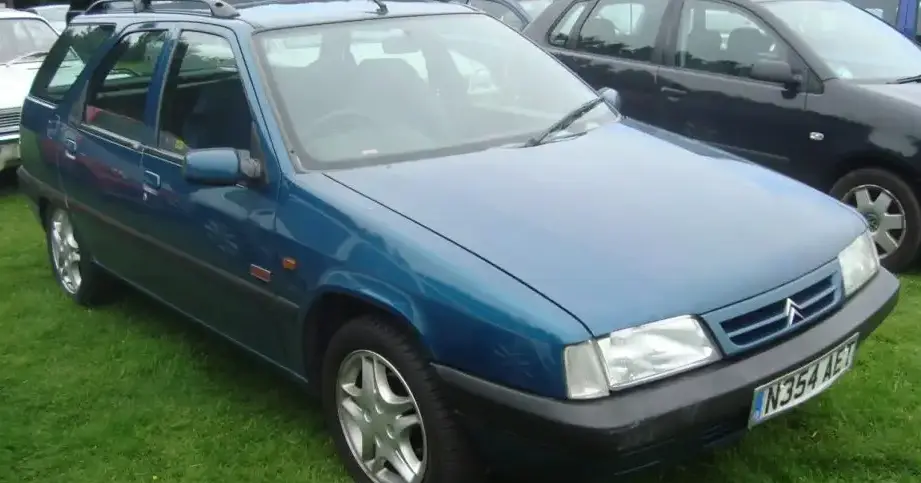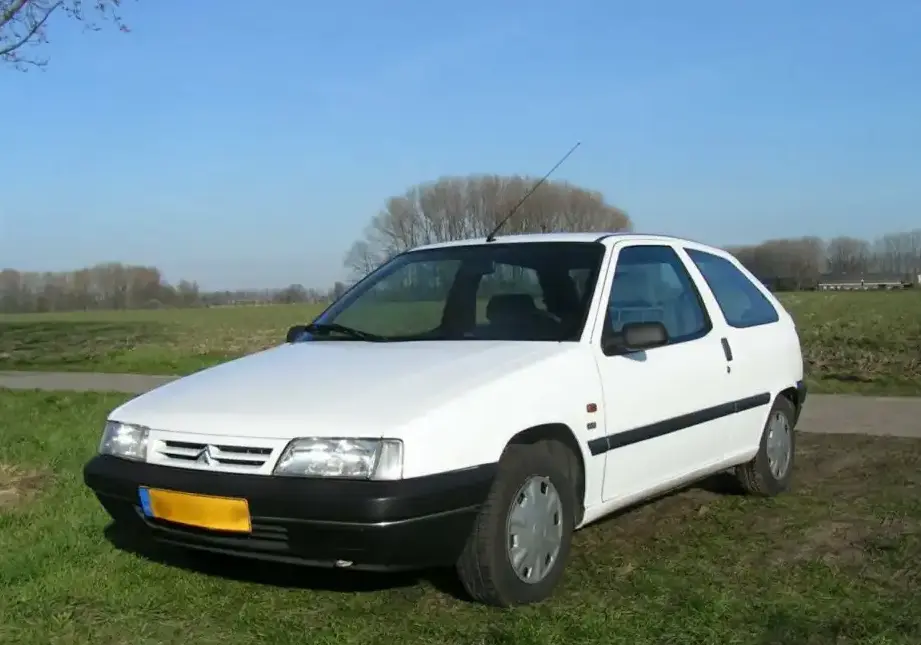
The Citroën ZX (N2, Phase II) 3-door 1.4 i, produced between 1994 and 1997, represented an entry-level offering within the broader ZX range. Positioned as a practical and affordable hatchback, it served as a key model for Citroën in the European market, appealing to buyers seeking economical transportation. The ZX itself was a significant vehicle for Citroën, replacing the aging BX and representing a move towards more conventional, yet stylish, design. This particular 1.4-liter variant, with its 75 horsepower output, was designed for fuel efficiency and ease of driving, rather than outright performance. It was a common sight on European roads during its production run, offering a blend of French comfort and practicality.
Technical Specifications
| Brand | Citroen |
| Model | ZX |
| Generation | ZX (N2, Phase II) 3-door |
| Type (Engine) | 1.4 i (75 Hp) |
| Start of production | 1994 |
| End of production | 1997 |
| Powertrain Architecture | Internal Combustion engine |
| Body type | Hatchback |
| Seats | 5 |
| Doors | 3 |
| Fuel consumption (urban) | 9.9 l/100 km (23.8 US mpg, 28.5 UK mpg, 10.1 km/l) |
| Fuel consumption (extra urban) | 6 l/100 km (39.2 US mpg, 47.1 UK mpg, 16.7 km/l) |
| Fuel consumption (combined) | 7.4 l/100 km (31.8 US mpg, 38.2 UK mpg, 13.5 km/l) |
| Fuel Type | Petrol (Gasoline) |
| Maximum speed | 174 km/h (108.12 mph) |
| Weight-to-power ratio | 12.7 kg/Hp, 79 Hp/tonne |
| Weight-to-torque ratio | 8.4 kg/Nm, 119.1 Nm/tonne |
| Power | 75 Hp @ 5500 rpm |
| Power per litre | 55.1 Hp/l |
| Torque | 113 Nm @ 3400 rpm (83.34 lb.-ft. @ 3400 rpm) |
| Engine layout | Front, Transverse |
| Engine Model/Code | KFX TU3JP |
| Engine displacement | 1360 cm3 (82.99 cu. in.) |
| Number of cylinders | 4 |
| Engine configuration | Inline |
| Cylinder Bore | 75 mm (2.95 in.) |
| Piston Stroke | 77 mm (3.03 in.) |
| Compression ratio | 10.2:1 |
| Number of valves per cylinder | 2 |
| Fuel injection system | Multi-port manifold injection |
| Engine aspiration | Naturally aspirated engine |
| Valvetrain | OHC |
| Engine oil capacity | 3.5 l (3.7 US qt | 3.08 UK qt) |
| Coolant | 6.5 l (6.87 US qt | 5.72 UK qt) |
| Kerb Weight | 949 kg (2092.19 lbs.) |
| Max. weight | 1490 kg (3284.89 lbs.) |
| Max load | 541 kg (1192.7 lbs.) |
| Trunk (boot) space – minimum | 324 l (11.44 cu. ft.) |
| Trunk (boot) space – maximum | 1146 l (40.47 cu. ft.) |
| Fuel tank capacity | 54 l (14.27 US gal | 11.88 UK gal) |
| Max. roof load | 75 kg (165.35 lbs.) |
| Permitted trailer load with brakes (12%) | 1000 kg (2204.62 lbs.) |
| Permitted trailer load without brakes | 470 kg (1036.17 lbs.) |
| Permitted towbar download | 70 kg (154.32 lbs.) |
| Length | 4071 mm (160.28 in.) |
| Width | 1701 mm (66.97 in.) |
| Height | 1400 mm (55.12 in.) |
| Wheelbase | 2540 mm (100 in.) |
| Front track | 1414 mm (55.67 in.) |
| Rear (Back) track | 1414 mm (55.67 in.) |
| Front overhang | 849 mm (33.43 in.) |
| Rear overhang | 682 mm (26.85 in.) |
| Minimum turning circle (turning diameter) | 11.1 m (36.42 ft.) |
| Drivetrain Architecture | The Internal combustion engine (ICE) drives the front wheels of the vehicle. |
| Drive wheel | Front wheel drive |
| Number of gears and type of gearbox | 5 gears, manual transmission |
| Front suspension | Independent type McPherson, Wishbone |
| Rear suspension | Hydro-pneumatic element, Trailing arm |
| Front brakes | Disc |
| Rear brakes | Drum |
| Steering type | Steering rack and pinion |
| Power steering | Hydraulic Steering |
| Tires size | 165/70 R13 |
| Wheel rims size | 13 |
Powertrain & Engine Architecture
The heart of the ZX 1.4 i was the KFX (TU3JP) engine, a 1.4-liter inline-four cylinder petrol engine. This engine was a mainstay of Citroën and Peugeot vehicles during the 1990s. It featured a single overhead camshaft (OHC) design and utilized multi-port fuel injection. The TU3 engine family was known for its robustness and relatively simple design, contributing to its longevity. The 75 horsepower output was achieved at 5500 rpm, while peak torque of 113 Nm (83.34 lb-ft) arrived at 3400 rpm. The engine’s compression ratio was 10.2:1. The 5-speed manual transmission was the standard offering, designed to maximize fuel efficiency and provide adequate acceleration for everyday driving. The transmission was a conventional setup, prioritizing reliability over sporty performance.
Driving Characteristics
The 1.4-liter engine, paired with the manual transmission, provided adequate, but not exhilarating, performance. Acceleration was modest, and the car was best suited for urban and suburban driving. The gear ratios were tuned for economy, meaning the engine needed to be revved to access its full potential. Compared to the more powerful ZX variants, such as the 1.9-liter or V6 models, the 1.4 i felt noticeably slower. However, it offered a smoother and more forgiving driving experience, particularly for less experienced drivers. The suspension, a combination of McPherson struts at the front and a hydro-pneumatic system at the rear, provided a comfortable ride, a hallmark of Citroën vehicles. The steering was light and easy to use, making it well-suited for navigating city streets.
Equipment & Trim Levels
The 3-door ZX 1.4 i typically came with a fairly basic level of equipment. Standard features included power steering, central locking, and a basic stereo system. Interior upholstery was typically cloth, with a simple dashboard layout. Optional extras included electric windows, a sunroof, and upgraded audio systems. The trim level was generally considered entry-level, aimed at buyers prioritizing affordability and practicality. The 3-door configuration itself indicated a focus on a younger or more budget-conscious buyer, as the 5-door model offered greater practicality.
Chassis & Braking
The ZX featured independent front suspension with McPherson struts and wishbones, providing a comfortable ride and decent handling. The rear suspension utilized Citroën’s signature hydro-pneumatic system, offering self-leveling and exceptional ride quality. Front brakes were discs, providing adequate stopping power, while rear brakes were drums, a cost-saving measure common in this segment. The car’s relatively light weight (949 kg / 2092.19 lbs) helped to offset the modest engine output. The steering was rack and pinion, providing precise control.
Market Reception & Comparison
The ZX 1.4 i was generally well-received as an affordable and practical hatchback. Critics praised its comfortable ride and fuel efficiency, but noted its lack of outright performance. Compared to rivals like the Ford Escort or Volkswagen Golf, the ZX offered a unique blend of French flair and comfort. The 1.4-liter engine was considered adequate for most drivers, but those seeking more power often opted for the 1.9-liter or V6 variants. Fuel economy was a strong point, with combined figures around 7.4 l/100 km (31.8 US mpg), making it an attractive option for budget-conscious buyers. Reliability was generally good, although the hydro-pneumatic suspension could require occasional maintenance.
Legacy
The Citroën ZX 1.4 i, while not the most powerful or exciting variant in the range, remains a fondly remembered car for many. The TU3 engine proved to be remarkably durable, and many examples are still on the road today. In the used car market, these models are typically very affordable, making them attractive to those seeking a classic French hatchback. The hydro-pneumatic suspension, while potentially requiring maintenance, is often cited as a key feature that sets the ZX apart from its competitors. The ZX, and particularly the 1.4 i variant, represents a significant chapter in Citroën’s history, showcasing the brand’s commitment to comfort, practicality, and innovative engineering.