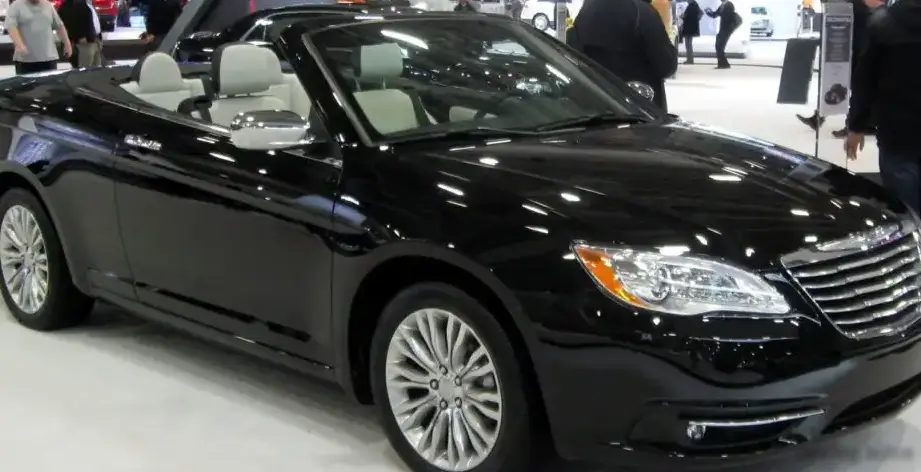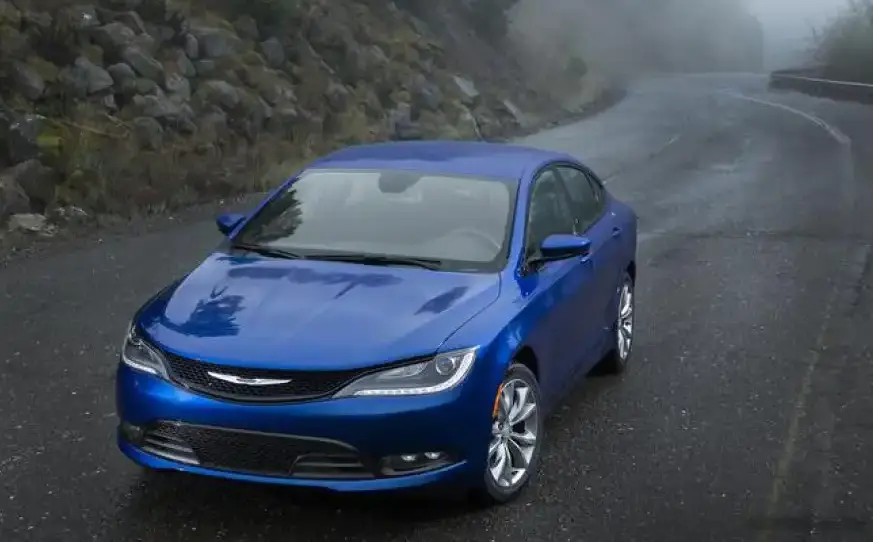
The Chrysler 200, launched in December 2010 for the 2011 model year, represented a significant shift for the Chrysler brand, moving towards a more modern and competitive mid-size sedan. The 2.4-liter (175 hp) variant paired with a six-speed automatic transmission occupied a crucial position in the 200 lineup, serving as the entry-level offering. Produced through 2014, this configuration aimed to balance affordability with acceptable performance and a reasonable level of equipment. It was part of the first generation of the 200 (designated 200 I), built on a revised version of the Chrysler JK platform.
Technical Specifications
| Brand | Chrysler |
| Model | 200 |
| Generation | 200 I |
| Type (Engine) | 2.4 (175 Hp) 6 Automatic |
| Start of production | December, 2010 |
| End of production | 2014 |
| Powertrain Architecture | Internal Combustion engine |
| Body type | Sedan |
| Seats | 5 |
| Doors | 4 |
| Fuel consumption (urban) | 11.8 l/100 km (19.9 US mpg) |
| Fuel consumption (extra urban) | 7.6 l/100 km (30.9 US mpg) |
| Fuel Type | Petrol (Gasoline) |
| Emission standard | Euro 4 |
| Power | 175 Hp @ 6000 rpm |
| Torque | 225 Nm @ 4400 rpm (165.95 lb.-ft. @ 4400 rpm) |
| Maximum engine speed | 6500 rpm |
| Engine layout | Front, Transverse |
| Engine Model/Code | EDG |
| Engine displacement | 2360 cm3 (144.02 cu. in.) |
| Number of cylinders | 4 |
| Engine configuration | Inline |
| Cylinder Bore | 88 mm (3.46 in.) |
| Piston Stroke | 97 mm (3.82 in.) |
| Compression ratio | 10.5:1 |
| Number of valves per cylinder | 4 |
| Fuel injection system | Multi-port manifold injection |
| Engine aspiration | Naturally aspirated engine |
| Valvetrain | DOHC-VVT |
| Engine oil capacity | 4.4 l (4.65 US qt | 3.87 UK qt) |
| Coolant | 7.3 l (7.71 US qt | 6.42 UK qt) |
| Trunk (boot) space (minimum) | 390 l (13.77 cu. ft.) |
| Fuel tank capacity | 64 l (16.91 US gal | 14.08 UK gal) |
| Permitted trailer load (without brakes) | 450 kg (992.08 lbs.) |
| Length | 4870 mm (191.73 in.) |
| Width | 1843 mm (72.56 in.) |
| Width including mirrors | 2121 mm (83.5 in.) |
| Height | 1482 mm (58.35 in.) |
| Wheelbase | 2765 mm (108.86 in.) |
| Front track | 1567 mm (61.69 in.) |
| Rear track | 1594 mm (62.76 in.) |
| Drag coefficient (Cd) | 0.34 |
| Minimum turning circle | 11.2 m (36.75 ft.) |
| Drivetrain Architecture | Front wheel drive |
| Number of gears and type of gearbox | 6 gears, automatic transmission |
| Front suspension | Independent, McPherson with coil spring and anti-roll bar |
| Rear suspension | Independent multi-link spring suspension with stabilizer |
| Front brakes | Ventilated discs, 294×26 mm |
| Rear brakes | Disc, 262×10 mm |
| Assisting systems | ABS (Anti-lock braking system) |
| Steering type | Steering rack and pinion |
| Tires size | 225/55 R17; 225/50 R18 |
| Wheel rims size | 6.5J x 17; 7J x 18 |
Powertrain & Engine Architecture
The heart of this 200 variant was the Chrysler EDG 2.4-liter inline-four cylinder engine. This engine, part of the World Engine family developed in collaboration with Mitsubishi and Hyundai, featured a dual overhead camshaft (DOHC) design with variable valve timing (VVT) on both intake and exhaust valves. The multi-port fuel injection system delivered fuel directly to the intake ports, optimizing combustion. The engine produced 175 horsepower at 6000 rpm and 225 Nm (165.95 lb-ft) of torque at 4400 rpm. Paired with this engine was a six-speed automatic transmission, chosen for its smooth operation and fuel efficiency. This transmission was a key component in making the 200 more appealing to a broader audience seeking convenience over outright performance.
Driving Characteristics
The 2.4-liter engine and six-speed automatic combination delivered adequate, but not exhilarating, performance. Acceleration was sufficient for everyday driving, but passing maneuvers required planning. The automatic transmission was tuned for comfort and fuel economy, with gear changes generally smooth and unobtrusive. Compared to the available 3.6-liter Pentastar V6, the 2.4-liter offered significantly less power, resulting in a noticeable difference in acceleration and overall responsiveness. However, the 2.4-liter’s lighter weight contributed to slightly better handling and fuel economy. The six-speed automatic’s gear ratios were optimized for cruising, providing a relaxed driving experience on the highway.
Equipment & Trim Levels
The 2.4-liter automatic 200 typically came standard with features like air conditioning, power windows and locks, a basic audio system with auxiliary input, and steel wheels with wheel covers. Higher trim levels, such as the Limited, added features like alloy wheels, upgraded audio systems, a sunroof, and leather upholstery. Optional extras included a navigation system, remote start, and premium sound systems. Interior upholstery was typically cloth, with higher trims offering leather options. The dashboard layout was functional and straightforward, prioritizing ease of use over stylistic flair.
Chassis & Braking
The Chrysler 200 featured an independent front suspension with McPherson struts and a multi-link independent rear suspension, providing a comfortable ride quality. Stabilizer bars were included at both ends to reduce body roll during cornering. Brakes consisted of ventilated discs at the front and solid discs at the rear. Anti-lock braking system (ABS) was standard. The suspension tuning was geared towards comfort, prioritizing a smooth ride over sporty handling. The chassis was designed to provide a stable and predictable driving experience, suitable for everyday commuting and family transportation.
Market Reception & Comparison
Critics generally viewed the 2.4-liter 200 as a competent, but unremarkable, mid-size sedan. The engine was considered adequate for most drivers, but lacked the power and refinement of some competitors. Fuel economy was competitive, but not class-leading. Compared to the V6-powered 200, the 2.4-liter offered a lower price point and better fuel efficiency, making it an attractive option for budget-conscious buyers. However, the V6 provided a significantly more engaging driving experience. Competitors like the Toyota Camry, Honda Accord, and Ford Fusion offered more compelling combinations of performance, fuel economy, and features.
Legacy
The 2.4-liter engine in the first-generation Chrysler 200 proved to be generally reliable, with few widespread mechanical issues reported. The six-speed automatic transmission also demonstrated good durability. On the used car market, these 200s are often found at very affordable prices, making them an attractive option for buyers seeking inexpensive transportation. However, potential buyers should be aware of the car’s relatively basic features and the availability of more modern and refined competitors. The 200, in its initial form, laid the groundwork for Chrysler’s later efforts to compete more effectively in the mid-size sedan segment, and the 2.4L engine served as a dependable, if not exciting, powerplant for a significant number of vehicles.