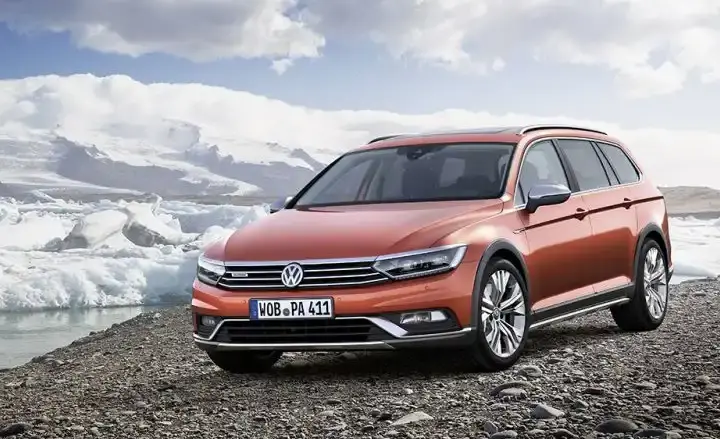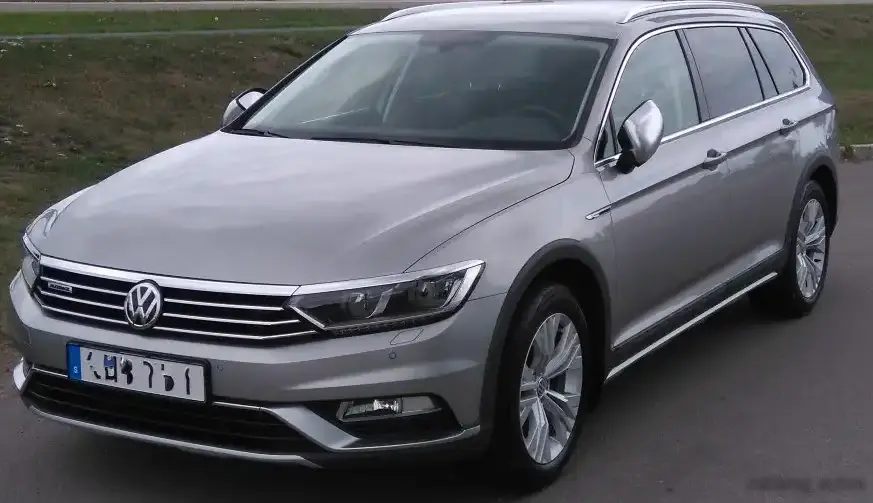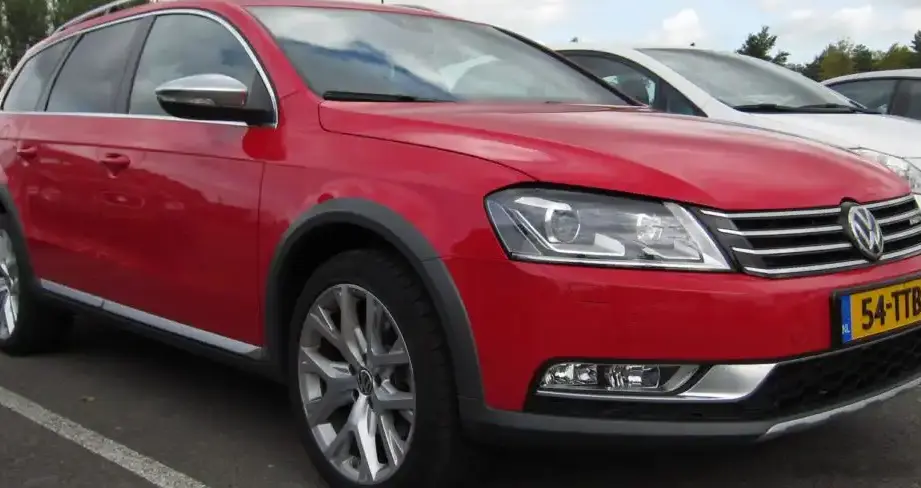
The Volkswagen Passat Alltrack (B7), produced from October 2010 to 2014, represented Volkswagen’s entry into the burgeoning crossover-estate market. Based on the B7 generation Passat, the Alltrack distinguished itself with increased ground clearance, standard all-wheel drive (4MOTION), and rugged styling cues. This variant, equipped with the 2.0 TDI engine producing 177 horsepower and a six-speed DSG (Direct-Shift Gearbox) automatic transmission, was positioned as a premium offering within the Passat lineup, appealing to buyers seeking a versatile vehicle capable of both on-road comfort and light off-road capability. It primarily served the European market, where the demand for such vehicles was strong.
Technical Specifications
| Brand | Volkswagen |
| Model | Passat |
| Generation | Passat Alltrack (B7) |
| Type (Engine) | 2.0 TDI (177 Hp) 4MOTION DSG |
| Start of production | October, 2010 |
| End of production | 2014 |
| Powertrain Architecture | Internal Combustion engine |
| Body type | Station wagon (estate), Crossover |
| Seats | 5 |
| Doors | 5 |
| Fuel consumption (urban) | 7 l/100 km (33.6 US mpg, 40.4 UK mpg, 14.3 km/l) |
| Fuel consumption (extra urban) | 5.3 l/100 km (44.4 US mpg, 53.3 UK mpg, 18.9 km/l) |
| Fuel consumption (combined) | 5.9 l/100 km (39.9 US mpg, 47.9 UK mpg, 16.9 km/l) |
| Fuel Type | Diesel |
| Acceleration 0 – 100 km/h | 8.7 sec |
| Acceleration 0 – 62 mph | 8.7 sec |
| Acceleration 0 – 60 mph | 8.3 sec |
| Maximum speed | 211 km/h (131.11 mph) |
| Weight-to-power ratio | 9.8 kg/Hp, 102.5 Hp/tonne |
| Weight-to-torque ratio | 4.5 kg/Nm, 220.2 Nm/tonne |
| Power | 177 Hp @ 4200 rpm |
| Power per litre | 89.9 Hp/l |
| Torque | 380 Nm @ 1750-2500 rpm (280.27 lb.-ft. @ 1750-2500 rpm) |
| Engine layout | Front, Transverse |
| Engine Model/Code | CFGC |
| Engine displacement | 1968 cm3 (120.09 cu. in.) |
| Number of cylinders | 4 |
| Engine configuration | Inline |
| Fuel injection system | Diesel Commonrail |
| Engine aspiration | Turbocharger, Intercooler |
| Engine oil capacity | 4.3 l (4.54 US qt | 3.78 UK qt) |
| Kerb Weight | 1726 kg (3805.18 lbs.) |
| Max. weight | 2300 kg (5070.63 lbs.) |
| Max load | 574 kg (1265.45 lbs.) |
| Trunk (boot) space – minimum | 588 l (20.77 cu. ft.) |
| Trunk (boot) space – maximum | 1716 l (60.6 cu. ft.) |
| Fuel tank capacity | 68 l (17.96 US gal | 14.96 UK gal) |
| Length | 4771 mm (187.83 in.) |
| Width | 1820 mm (71.65 in.) |
| Height | 1550 mm (61.02 in.) |
| Wheelbase | 2710 mm (106.69 in.) |
| Front track | 1549 mm (60.98 in.) |
| Rear (Back) track | 1531 mm (60.28 in.) |
| Minimum turning circle | 11.4 m (37.4 ft.) |
| Drive wheel | All wheel drive (4×4) |
| Number of gears | 6 gears, automatic transmission |
| Assisting systems | ABS (Anti-lock braking system) |
| Steering type | Steering rack and pinion |
Powertrain & Engine Architecture
The heart of the Alltrack 2.0 TDI was the CFGC engine, a four-cylinder, inline diesel engine displacing 1968cc. This engine utilized a common rail direct injection system, delivering fuel at extremely high pressures for optimized combustion. A turbocharger with an intercooler further enhanced performance, boosting power output to 177 horsepower at 4200 rpm and generating a substantial 380 Nm (280 lb-ft) of torque between 1750 and 2500 rpm. This broad torque curve was a key characteristic of the engine, providing strong pulling power across a wide range of engine speeds. The engine also featured four valves per cylinder and a sophisticated engine management system to balance performance and fuel efficiency. The six-speed DSG automatic transmission, a dual-clutch unit, provided quick and seamless gear changes, contributing to both performance and driving comfort.
Driving Characteristics
The combination of the 177 hp TDI engine and the DSG automatic transmission resulted in a capable and refined driving experience. Acceleration from 0 to 60 mph took approximately 8.3 seconds, and the car could reach a top speed of 131 mph. While not overtly sporty, the Alltrack offered ample power for everyday driving and overtaking maneuvers. The DSG transmission’s quick shifts and intelligent gear selection ensured that the engine remained in its optimal power band. Compared to the lower-powered 1.6 TDI variants, the 2.0 TDI Alltrack provided a noticeable performance boost. However, it didn’t match the outright acceleration of the more expensive petrol-powered models. The 4MOTION all-wheel-drive system provided excellent traction in various conditions, enhancing stability and confidence, particularly on slippery surfaces.
Equipment & Trim Levels
The Alltrack trim level was generally well-equipped, offering a higher level of standard features compared to the base Passat models. Standard equipment typically included alloy wheels, chrome exterior trim, fog lights, and a roof rack. Inside, the Alltrack featured comfortable seats upholstered in fabric or leather (optional), a multi-function steering wheel, and an infotainment system with a touchscreen display. Optional extras included navigation, parking sensors, a panoramic sunroof, and upgraded audio systems. The interior design was generally conservative and functional, prioritizing practicality and comfort over outright luxury.
Chassis & Braking
The Alltrack’s chassis was specifically tuned to provide a balance between comfort and handling. The suspension featured MacPherson struts at the front and a multi-link setup at the rear. The increased ground clearance, a defining feature of the Alltrack, allowed it to tackle rougher terrain with greater ease. The braking system consisted of ventilated disc brakes at the front and either disc or drum brakes at the rear, depending on the specific configuration. Anti-lock braking system (ABS) was standard, enhancing safety and control during emergency braking situations. Stabilizer bars were fitted to both the front and rear axles to reduce body roll during cornering.
Market Reception & Comparison
The Passat Alltrack (B7) 2.0 TDI 4MOTION DSG was generally well-received by automotive critics. It was praised for its versatility, comfortable ride, and strong performance. Fuel economy was also a strong point, with combined fuel consumption figures averaging around 39.9 US mpg. Compared to other trims in the Passat lineup, the Alltrack offered a unique combination of practicality, capability, and refinement. While the 1.6 TDI models were more affordable, they lacked the performance and all-wheel-drive capability of the 2.0 TDI Alltrack. The petrol-powered variants offered more outright power but were less fuel-efficient.
Legacy
The 2.0 TDI engine, in various iterations, proved to be a reliable and durable powerplant. However, like many modern diesel engines, it was susceptible to issues related to the diesel particulate filter (DPF) and the exhaust gas recirculation (EGR) system, particularly if the vehicle was primarily used for short trips. The DSG transmission, while generally reliable, could require maintenance or replacement over time. Today, the Passat Alltrack (B7) 2.0 TDI 4MOTION DSG remains a popular choice in the used car market, particularly among buyers seeking a versatile and practical estate car with all-wheel-drive capability. Its combination of performance, fuel efficiency, and comfort continues to make it a compelling option.