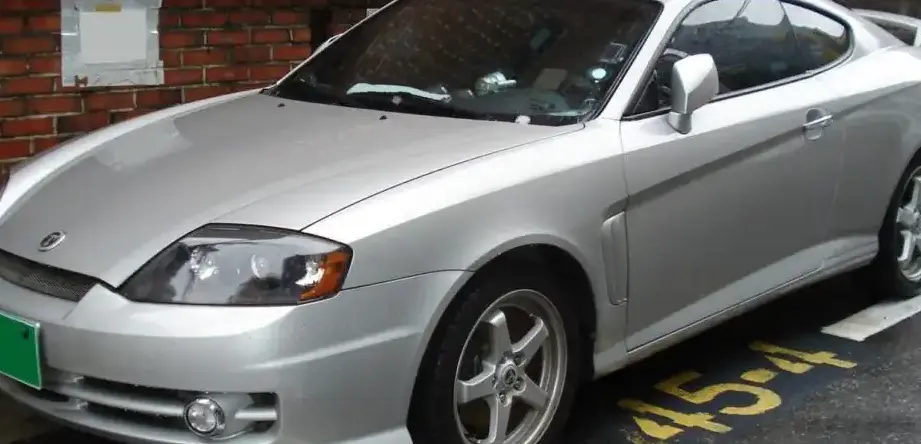
The Hyundai Tuscani, known as the Hyundai Coupe in some markets, represented a significant step for the South Korean automaker into the realm of sporty, affordable coupes. Produced from 1999 to 2001 for the first generation (Tuscani I), this model aimed to capture a younger demographic with its distinctive styling and relatively accessible performance. The 2.0i 16V variant, producing 139 horsepower, occupied a middle ground in the Tuscani lineup, offering a balance between performance and economy. It was positioned above the base 1.6L engine option and below the later, more powerful 2.7L V6 models. The Tuscani I was primarily marketed in Asia and Europe, and represented Hyundai’s ambition to compete with established European and Japanese coupe offerings.
Technical Specifications
| Brand | Hyundai |
| Model | Tuscani |
| Generation | Tuscani I |
| Type (Engine) | 2.0i 16V (139 Hp) |
| Start of production | 1999 |
| End of production | 2001 |
| Powertrain Architecture | Internal Combustion engine |
| Body type | Coupe |
| Seats | 4 |
| Doors | 3 |
| Fuel consumption (urban) | 11.4 l/100 km (20.6 US mpg) |
| Fuel consumption (extra urban) | 7.3 l/100 km (32.2 US mpg) |
| Fuel Type | Petrol (Gasoline) |
| Acceleration 0 – 100 km/h | 8.6 sec |
| Acceleration 0 – 62 mph | 8.6 sec |
| Acceleration 0 – 60 mph | 8.2 sec |
| Maximum speed | 201 km/h (124.9 mph) |
| Weight-to-power ratio | 9 kg/Hp |
| Weight-to-torque ratio | 6.9 kg/Nm |
| Power | 139 Hp @ 6000 rpm |
| Torque | 182 Nm @ 4900 rpm (134.24 lb.-ft. @ 4900 rpm) |
| Engine layout | Front, Transverse |
| Engine Model/Code | Beta / G4GF |
| Engine displacement | 1975 cm3 (120.52 cu. in.) |
| Number of cylinders | 4 |
| Engine configuration | Inline |
| Cylinder Bore | 82 mm (3.23 in.) |
| Piston Stroke | 93.5 mm (3.68 in.) |
| Compression ratio | 10:1 |
| Number of valves per cylinder | 4 |
| Fuel injection system | Multi-port manifold injection |
| Engine aspiration | Naturally aspirated engine |
| Valvetrain | DOHC |
| Engine oil capacity | 4 l (4.23 US qt | 3.52 UK qt) |
| Coolant capacity | 6 l (6.34 US qt | 5.28 UK qt) |
| Kerb Weight | 1250 kg (2755.78 lbs.) |
| Max. weight | 1600 kg (3527.4 lbs.) |
| Max load | 350 kg (771.62 lbs.) |
| Trunk (boot) space – maximum | 362 l (12.78 cu. ft.) |
| Fuel tank capacity | 55 l (14.53 US gal | 12.1 UK gal) |
| Length | 4345 mm (171.06 in.) |
| Width | 1730 mm (68.11 in.) |
| Height | 1310 mm (51.57 in.) |
| Wheelbase | 2475 mm (97.44 in.) |
| Front track | 1465 mm (57.68 in.) |
| Rear track | 1450 mm (57.09 in.) |
| Drivetrain Architecture | Front wheel drive |
| Drive wheel | Front wheel drive |
| Number of gears | 5 gears, manual transmission |
| Front suspension | Spring Strut |
| Rear suspension | Coil spring |
| Front brakes | Ventilated discs |
| Rear brakes | Disc |
| Assisting systems | ABS (Anti-lock braking system) |
| Steering type | Steering rack and pinion |
| Power steering | Hydraulic Steering |
| Tires size | 205/50 R15 |
Powertrain & Engine Architecture
The heart of the Tuscani I 2.0i 16V is the Hyundai Beta engine, specifically the G4GF code. This 1.975-liter inline-four cylinder engine utilizes a double overhead camshaft (DOHC) valvetrain with four valves per cylinder, contributing to its relatively high output for its displacement. Fuel delivery is managed by a multi-port fuel injection system, a common setup for engines of this era. The engine produces 139 horsepower at 6000 rpm and 182 Nm (134.24 lb-ft) of torque at 4900 rpm. The engine’s design prioritized a balance between performance and fuel efficiency, making it suitable for everyday driving. The 5-speed manual transmission was the standard offering for this variant, providing drivers with direct control over the engine’s power. The transmission’s gear ratios were tuned for a blend of acceleration and highway cruising, though it wasn’t particularly sporty compared to some European rivals.
Driving Characteristics
The Tuscani I 2.0i 16V offered a reasonably engaging driving experience, particularly for its price point. Acceleration from 0 to 60 mph took approximately 8.2 seconds, and it could reach a top speed of 124.9 mph. While not a sports car by any means, the 2.0-liter engine provided adequate power for spirited driving. The manual transmission allowed for precise gear changes, and the front-wheel-drive layout offered predictable handling. Compared to the base 1.6L model, the 2.0i offered a noticeable improvement in performance, making it more enjoyable on winding roads and during overtaking maneuvers. However, it lacked the outright punch of the later 2.7L V6 versions. The suspension, while comfortable for daily commuting, wasn’t particularly firm, resulting in some body roll during aggressive cornering.
Equipment & Trim Levels
The Tuscani I 2.0i 16V typically came equipped with a reasonable level of standard features. Interior appointments included cloth upholstery, a basic stereo system, and power windows. Air conditioning was often standard, though this could vary depending on the specific market. Optional extras included alloy wheels, a sunroof, and upgraded audio systems. The interior design was functional and relatively modern for its time, though it lacked the premium feel of some European competitors. The dashboard layout was straightforward and easy to use, with clearly labeled controls. Safety features were limited by the standards of today, typically including only ABS brakes and a driver’s airbag.
Chassis & Braking
The Tuscani I utilized a front-wheel-drive chassis with a MacPherson strut suspension in the front and a coil spring suspension in the rear. The braking system consisted of ventilated discs on the front wheels and solid discs on the rear. The suspension setup prioritized comfort over outright handling prowess, providing a relatively smooth ride on most road surfaces. The ABS system helped to maintain control during hard braking situations. The steering was hydraulically assisted, providing a reasonable level of feedback and ease of use. The chassis was relatively lightweight, contributing to the car’s decent acceleration and handling characteristics.
Market Reception & Comparison
The Tuscani I 2.0i 16V was generally well-received by critics as an affordable and stylish coupe. It was praised for its distinctive design and relatively strong performance for its price. However, it was also criticized for its somewhat basic interior and lack of refinement compared to established European rivals. In terms of fuel economy, the 2.0i offered a reasonable balance between performance and efficiency, achieving around 20.6 US mpg in urban driving and 32.2 US mpg on the highway. Compared to the 1.6L model, the 2.0i offered a significant improvement in performance, while the 2.7L V6 provided even more power but at a higher cost and with reduced fuel economy.
Legacy
The Hyundai Tuscani I 2.0i 16V, while not a groundbreaking vehicle, played an important role in establishing Hyundai as a credible competitor in the global automotive market. The Beta engine proved to be relatively reliable, and many examples are still on the road today. In the used car market, the Tuscani I 2.0i 16V is often sought after by enthusiasts looking for an affordable and stylish coupe. Maintenance costs are generally reasonable, and parts availability is still relatively good. While it may not offer the same level of performance or refinement as more modern coupes, the Tuscani I 2.0i 16V remains a charming and enjoyable vehicle for those seeking a classic 1990s/early 2000s driving experience.