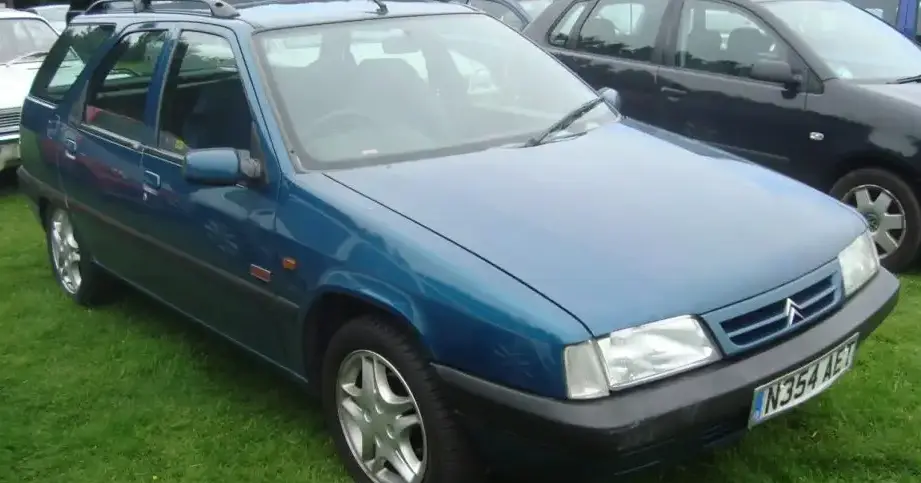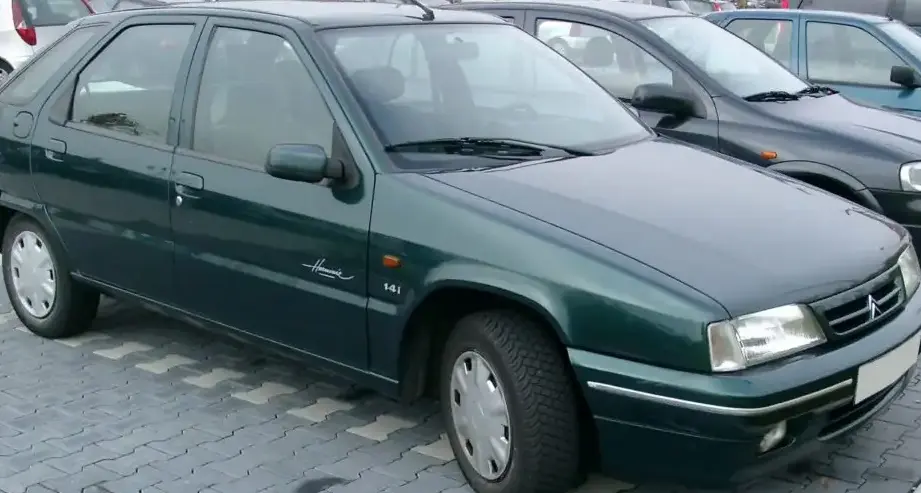
The Citroën ZX 1.1i, produced between 1994 and 1997, represented the entry point into the ZX range, a family of compact hatchbacks designed as a replacement for the aging BX. Part of the N2 generation (Phase II), this variant offered a budget-friendly option for buyers seeking practical transportation. It occupied the lower end of the ZX lineup, positioned below the more powerful 1.6i, 1.8i, and diesel models. The ZX, as a whole, aimed to blend comfort, practicality, and a touch of Citroën’s renowned hydropneumatic suspension technology into a competitive package within the European C-segment.
Technical Specifications
| Brand | Citroen |
| Model | ZX |
| Generation | ZX (N2, Phase II) 5-door |
| Type (Engine) | 1.1 i (60 Hp) |
| Start of production | 1994 |
| End of production | 1997 |
| Powertrain Architecture | Internal Combustion engine |
| Body type | Hatchback |
| Seats | 5 |
| Doors | 5 |
| Fuel consumption (urban) | 7.8 l/100 km (30.2 US mpg, 36.2 UK mpg, 12.8 km/l) |
| Fuel consumption (extra urban) | 5.1 l/100 km (46.1 US mpg, 55.4 UK mpg, 19.6 km/l) |
| Fuel consumption (combined) | 6.8 l/100 km (34.6 US mpg, 41.5 UK mpg, 14.7 km/l) |
| Fuel Type | Petrol (Gasoline) |
| Acceleration 0 – 100 km/h | 16.8 sec |
| Acceleration 0 – 62 mph | 16.8 sec |
| Acceleration 0 – 60 mph | 16 sec |
| Maximum speed | 161 km/h (100.04 mph) |
| Weight-to-power ratio | 15.7 kg/Hp, 63.8 Hp/tonne |
| Weight-to-torque ratio | 10.6 kg/Nm, 94.7 Nm/tonne |
| Power | 60 Hp @ 6200 rpm |
| Power per litre | 53.4 Hp/l |
| Torque | 89 Nm @ 3800 rpm (65.64 lb.-ft. @ 3800 rpm) |
| Engine layout | Front, Transverse |
| Engine Model/Code | HDZ TU1M+L3 |
| Engine displacement | 1124 cm3 (68.59 cu. in.) |
| Number of cylinders | 4 |
| Engine configuration | Inline |
| Cylinder Bore | 72 mm (2.83 in.) |
| Piston Stroke | 69 mm (2.72 in.) |
| Compression ratio | 9.7:1 |
| Number of valves per cylinder | 2 |
| Fuel injection system | Single-point injection |
| Engine aspiration | Naturally aspirated engine |
| Valvetrain | OHC |
| Engine oil capacity | 3.5 l (3.7 US qt | 3.08 UK qt) |
| Coolant | 6.5 l (6.87 US qt | 5.72 UK qt) |
| Kerb Weight | 940 kg (2072.35 lbs.) |
| Max. weight | 1465 kg (3229.77 lbs.) |
| Max load | 525 kg (1157.43 lbs.) |
| Fuel tank capacity | 54 l (14.27 US gal | 11.88 UK gal) |
| Max. roof load | 75 kg (165.35 lbs.) |
| Permitted trailer load with brakes (12%) | 900 kg (1984.16 lbs.) |
| Permitted trailer load without brakes | 465 kg (1025.15 lbs.) |
| Permitted towbar download | 70 kg (154.32 lbs.) |
| Length | 4071 mm (160.28 in.) |
| Width | 1688 mm (66.46 in.) |
| Height | 1397 mm (55 in.) |
| Wheelbase | 2540 mm (100 in.) |
| Front track | 1414 mm (55.67 in.) |
| Rear track | 1407 mm (55.39 in.) |
| Front overhang | 849 mm (33.43 in.) |
| Rear overhang | 682 mm (26.85 in.) |
| Minimum turning circle | 11.1 m (36.42 ft.) |
| Drivetrain Architecture | Front wheel drive |
| Number of gears and type of gearbox | 5 gears, manual transmission |
| Front suspension | Independent type McPherson, Wishbone |
| Rear suspension | Hydro-pneumatic element, Trailing arm |
| Front brakes | Disc |
| Rear brakes | Drum |
| Assisting systems | ABS (Anti-lock braking system) |
| Steering type | Steering rack and pinion |
| Power steering | Hydraulic Steering |
| Tires size | 165/70 R13 |
INTRODUCTION
The Citroën ZX 1.1i, launched in 1994 as part of the Phase II update, was a crucial model for Citroën in the mid-90s. Built on the shared Peugeot 306 and Renault 19 platform (known internally as the N2 platform), the ZX aimed to offer a more modern and comfortable alternative to its competitors. The 1.1-liter engine variant was specifically targeted at buyers prioritizing fuel economy and affordability. It served as the entry-level option, appealing to those who didn’t require the performance of the larger-engined models. Production continued until 1997, when the ZX was superseded by the Citroën Xsara.
Powertrain & Engine Architecture
The heart of the ZX 1.1i is the HDZ engine, a member of Citroën/Peugeot’s TU1M family of inline-four cylinder petrol engines. This 1124cc unit, featuring a single overhead camshaft (OHC) and two valves per cylinder, produced 60 horsepower at 6200 rpm and 89 Nm (65.64 lb-ft) of torque at 3800 rpm. The engine utilized a single-point fuel injection system, a relatively simple and cost-effective technology for the time. This system, while not as efficient or responsive as multi-point injection, contributed to the car’s affordability. The engine’s compression ratio was 9.7:1. The engine was transversely mounted, driving the front wheels. The standard transmission was a five-speed manual gearbox, although a four-speed automatic transmission was also available, albeit less common. The automatic gearbox, while offering convenience, further reduced performance and increased fuel consumption.
Driving Characteristics
The ZX 1.1i, even with the manual transmission, was not a performance-oriented vehicle. Acceleration from 0 to 60 mph took around 16 seconds, and its top speed was approximately 100 mph. The engine felt strained when pushed hard, particularly when fully loaded. The five-speed gearbox helped to keep the engine within its optimal rev range, but overtaking required careful planning. The automatic transmission version suffered from even slower acceleration and a noticeable lack of responsiveness. However, the ZX’s strength lay in its comfortable ride, thanks to its sophisticated suspension system. Even the base model benefited from Citroën’s expertise in hydropneumatic suspension, providing a smooth and controlled ride quality, absorbing bumps and imperfections in the road with ease. Steering was light and precise, making it easy to maneuver in urban environments.
Equipment & Trim Levels
The ZX 1.1i was typically equipped with basic, but functional, features. Standard equipment included power steering, central locking, and a basic stereo system. Interior upholstery was typically cloth, with a simple dashboard layout. Optional extras included electric windows, a sunroof, and upgraded audio systems. The trim level was generally quite spartan, reflecting its position as the entry-level model. Higher-spec ZX models, such as the 1.6i and 1.8i, offered more luxurious interiors, additional features, and improved performance.
Chassis & Braking
The ZX featured an independent McPherson strut front suspension and a trailing arm rear suspension, with the rear incorporating Citroën’s hydropneumatic technology. This system allowed for self-leveling and adjustable ride height, contributing to the car’s exceptional comfort. Brakes were disc brakes at the front and drum brakes at the rear. Anti-lock Braking System (ABS) was available as an option, enhancing safety. The ZX’s chassis was relatively lightweight, helping to offset the modest power output of the 1.1-liter engine. Stabilizer bars were fitted to both the front and rear axles to reduce body roll during cornering.
Market Reception & Comparison
The ZX 1.1i was generally well-received as a practical and affordable family car. Critics praised its comfortable ride and spacious interior, but noted its lack of performance. Compared to its siblings, the 1.6i and 1.8i offered significantly more power and a more engaging driving experience, but at a higher price point. The 1.9 TDI diesel model provided excellent fuel economy and strong torque, appealing to drivers covering long distances. The 1.1i’s fuel economy was competitive, achieving around 34.6 US mpg on the combined cycle, but it lagged behind the diesel in this regard. Reliability was generally good, although the hydropneumatic suspension system required periodic maintenance.
Legacy
The Citroën ZX 1.1i, while not the most exciting variant in the range, remains a fondly remembered car for its practicality, comfort, and affordability. The HDZ engine proved to be relatively durable, and many examples are still on the road today. However, the hydropneumatic suspension system requires specialized knowledge and can be expensive to repair. In the used car market, the ZX 1.1i represents a budget-friendly option for those seeking a classic French hatchback with a unique driving experience. Its simple mechanicals and readily available parts make it a relatively easy car to maintain for enthusiasts.