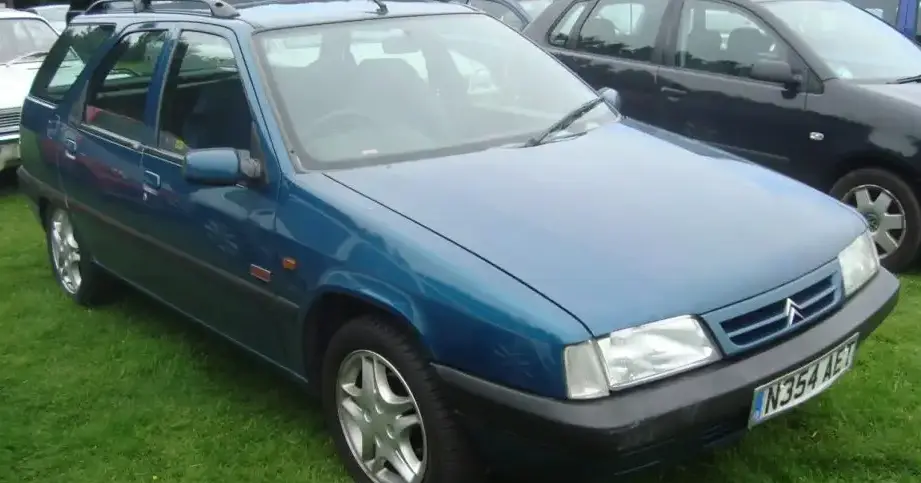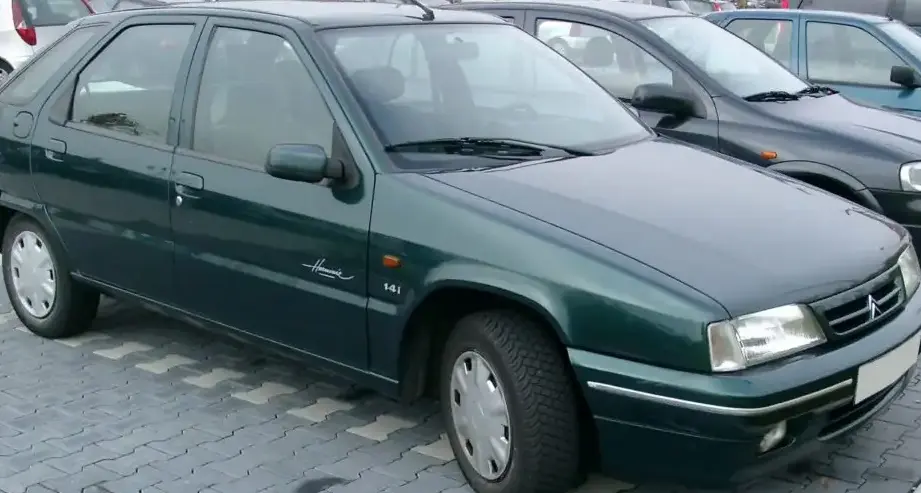
The Citroën ZX 1.4 i, produced between 1994 and 1997, represented the entry point into the ZX range during the Phase II refresh of the N2 generation. Positioned as an affordable and practical family hatchback, this variant offered a balance between fuel economy and usability. The ZX, as a whole, was Citroën’s replacement for the BX, aiming to provide a more modern and dynamically capable vehicle while retaining the brand’s commitment to comfort. The 1.4 i model, with its 75 horsepower engine and typically paired with a manual transmission (though an automatic was available), served as a volume seller, appealing to buyers prioritizing cost-effectiveness over outright performance. It played a crucial role in establishing the ZX as a competitive offering in the crowded European C-segment.
Technical Specifications
| Brand | Citroen |
| Model | ZX |
| Generation | ZX (N2, Phase II) 5-door |
| Type (Engine) | 1.4 i (75 Hp) |
| Start of production | 1994 |
| End of production | 1997 |
| Powertrain Architecture | Internal Combustion engine |
| Body type | Hatchback |
| Seats | 5 |
| Doors | 5 |
| Fuel Type | Petrol (Gasoline) |
| Maximum speed | 172 km/h (106.88 mph) |
| Weight-to-power ratio | 12.6 kg/Hp, 79.4 Hp/tonne |
| Weight-to-torque ratio | 8.4 kg/Nm, 119.6 Nm/tonne |
| Power | 75 Hp @ 5500 rpm |
| Power per litre | 55.1 Hp/l |
| Torque | 113 Nm @ 3400 rpm (83.34 lb.-ft. @ 3400 rpm) |
| Engine layout | Front, Transverse |
| Engine Model/Code | KFX TU3JP |
| Engine displacement | 1360 cm3 (82.99 cu. in.) |
| Number of cylinders | 4 |
| Engine configuration | Inline |
| Cylinder Bore | 75 mm (2.95 in.) |
| Piston Stroke | 77 mm (3.03 in.) |
| Compression ratio | 10.2:1 |
| Number of valves per cylinder | 2 |
| Fuel injection system | Multi-port manifold injection |
| Engine aspiration | Naturally aspirated engine |
| Valvetrain | OHC |
| Engine oil capacity | 3.5 l (3.7 US qt | 3.08 UK qt) |
| Coolant | 6.5 l (6.87 US qt | 5.72 UK qt) |
| Kerb Weight | 945 kg (2083.37 lbs) |
| Max. weight | 1490 kg (3284.89 lbs) |
| Max load | 545 kg (1201.52 lbs) |
| Trunk (boot) space – minimum | 343 l (12.11 cu. ft.) |
| Trunk (boot) space – maximum | 926 l (32.7 cu. ft.) |
| Fuel tank capacity | 54 l (14.27 US gal | 11.88 UK gal) |
| Max. roof load | 75 kg (165.35 lbs) |
| Permitted trailer load with brakes (12%) | 1000 kg (2204.62 lbs) |
| Permitted trailer load without brakes | 470 kg (1036.17 lbs) |
| Permitted towbar download | 70 kg (154.32 lbs) |
| Length | 4071 mm (160.28 in.) |
| Width | 1701 mm (66.97 in.) |
| Height | 1400 mm (55.12 in.) |
| Wheelbase | 2540 mm (100 in.) |
| Front track | 1414 mm (55.67 in.) |
| Rear (Back) track | 1414 mm (55.67 in.) |
| Front overhang | 849 mm (33.43 in.) |
| Rear overhang | 682 mm (26.85 in.) |
| Minimum turning circle (turning diameter) | 11.1 m (36.42 ft.) |
| Drivetrain Architecture | The Internal combustion engine (ICE) drives the front wheels of the vehicle. |
| Drive wheel | Front wheel drive |
| Number of gears and type of gearbox | 5 gears, manual transmission |
| Front suspension | Independent type McPherson, Wishbone |
| Rear suspension | Hydro-pneumatic element, Trailing arm |
| Front brakes | Disc |
| Rear brakes | Drum |
| Steering type | Steering rack and pinion |
| Power steering | Hydraulic Steering |
| Tires size | 165/70 R13 |
| Wheel rims size | 13 |
Powertrain & Engine Architecture
The heart of the ZX 1.4 i is the KFX (TU3JP) engine, a 1.4-liter inline-four cylinder petrol engine. This engine was a mainstay in many Peugeot and Citroën models of the era. It features a single overhead camshaft (OHC) operating two valves per cylinder. Fuel delivery is managed by a multi-port fuel injection system, providing a reasonable balance between efficiency and performance for its time. The TU3 engine family is known for its robustness and relatively simple design, contributing to its longevity. While not a powerhouse, the 75 horsepower output was adequate for everyday driving. The engine’s transverse mounting and front-wheel-drive configuration were typical for European hatchbacks of the 1990s. A five-speed manual transmission was the most common pairing, though a three-speed automatic transmission was also offered, albeit less frequently. The automatic gearbox, while providing convenience, noticeably impacted acceleration and fuel economy.
Driving Characteristics
The ZX 1.4 i, particularly with the manual transmission, offered a reasonably engaging driving experience for a car in its class. Acceleration was modest, taking around 12-13 seconds to reach 60 mph. The automatic version was noticeably slower. The gear ratios were tuned for fuel efficiency rather than outright performance, meaning the engine often needed to be revved to extract the most from it. Handling was generally good, thanks to the independent front suspension and the unique hydro-pneumatic rear suspension system, a Citroën hallmark. This rear suspension provided a comfortable ride, absorbing bumps effectively, but could sometimes feel a little soft and floaty in spirited driving. Compared to the more powerful ZX variants, such as the 2.0 16V, the 1.4 i lacked the punch for quick overtaking maneuvers or enjoyable back-road driving. However, its lighter weight and lower power output also meant it was more forgiving and easier to drive for less experienced drivers.
Equipment & Trim Levels
The ZX 1.4 i typically came with a fairly basic level of equipment, reflecting its position as the entry-level model. Standard features generally included central locking, power steering, and a basic stereo system. Interior upholstery was typically cloth, with a simple dashboard layout. Optional extras included electric windows, a sunroof, and upgraded audio systems. Higher trim levels, such as the “Avantage” or “Furio” variants, added more features, such as alloy wheels, upgraded interior trim, and air conditioning. The overall interior design was functional and practical, prioritizing usability over luxury.
Chassis & Braking
The ZX 1.4 i utilized a McPherson strut front suspension and a hydro-pneumatic rear suspension. The hydro-pneumatic system, unique to Citroën, offered self-leveling capabilities and a remarkably comfortable ride. The front brakes were disc brakes, providing adequate stopping power, while the rear brakes were drum brakes, a cost-saving measure for the base model. The steering was a rack-and-pinion system with hydraulic power assistance, offering a light and easy steering feel. The chassis was designed to provide a good balance between comfort and handling, although the relatively narrow tires (typically 165/70 R13) limited grip in demanding conditions.
Market Reception & Comparison
The Citroën ZX 1.4 i was generally well-received by critics as a practical and affordable family hatchback. It was praised for its comfortable ride, spacious interior, and fuel efficiency. However, it was also criticized for its lack of power and somewhat dated interior design. Compared to rivals such as the Ford Escort, Vauxhall Astra, and Renault 19, the ZX 1.4 i offered a unique driving experience thanks to its hydro-pneumatic suspension. Fuel economy was competitive, averaging around 35-40 mpg in mixed driving. Reliability was generally good, although the hydro-pneumatic suspension could require occasional maintenance. The 1.4 i was often seen as a more sensible alternative to the more expensive and performance-oriented ZX variants.
Legacy
The ZX 1.4 i, while not the most exciting version of the ZX, remains a popular choice among classic car enthusiasts and budget-conscious buyers. The TU3 engine is known for its durability, and many examples are still on the road today. The hydro-pneumatic suspension, while requiring some maintenance, provides a unique and comfortable ride that is rarely found in modern cars. Parts availability can be a challenge, but a dedicated community of ZX owners and specialists exists to provide support and assistance. The ZX 1.4 i represents a significant chapter in Citroën’s history, showcasing the brand’s commitment to innovation and comfort.