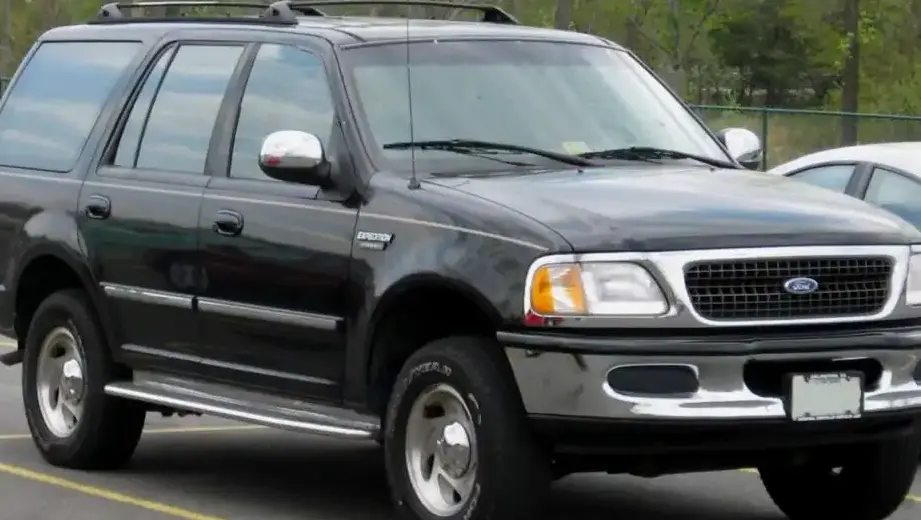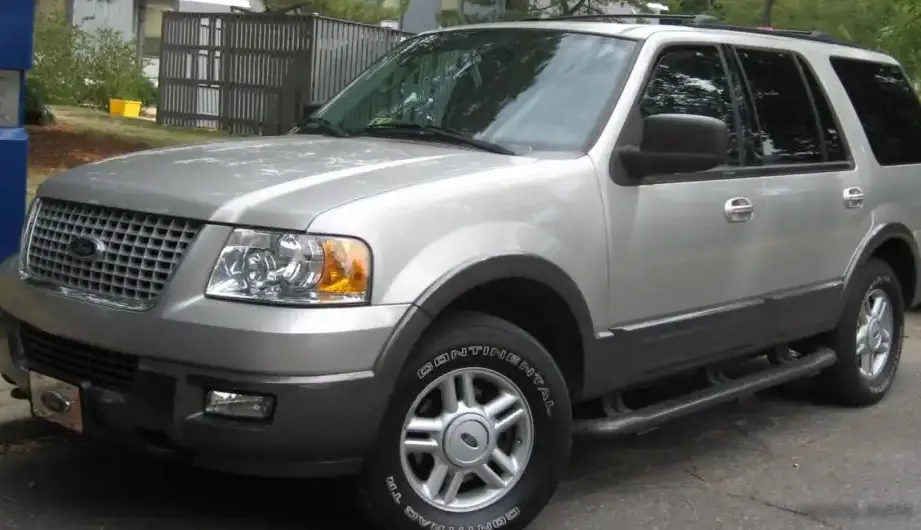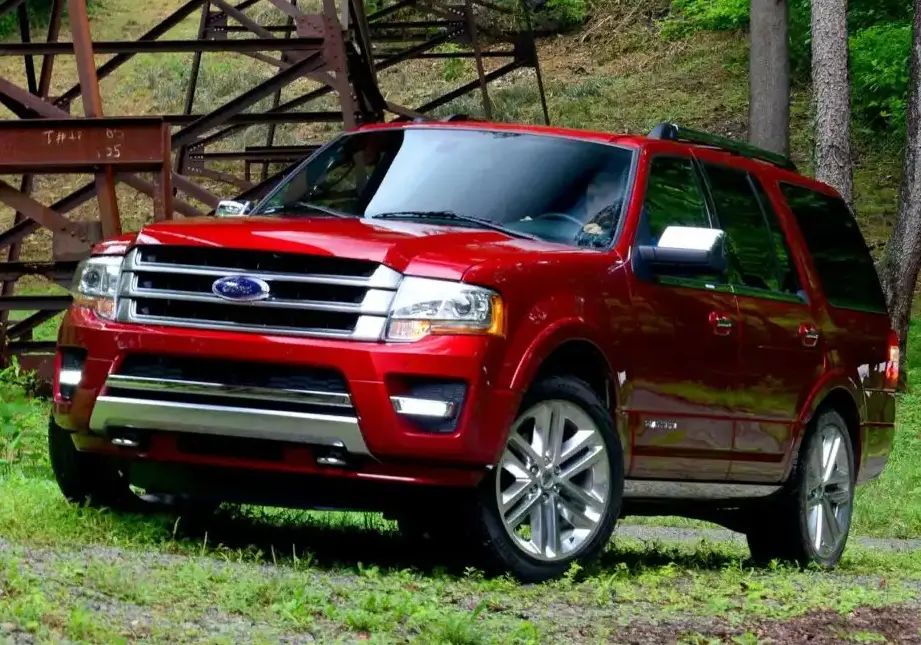
The Ford Expedition III, specifically the facelifted model produced from 2014 to 2017, represented a significant evolution of Ford’s full-size SUV. This generation, designated chassis code U3242, aimed to balance the demands of a large family vehicle with improved fuel efficiency and modern technology. Among the engine options available, the 3.5 EcoBoost V6 with the SelectShift automatic transmission – producing 365 horsepower – occupied a prominent position in the lineup, offering a compelling blend of power and capability. It was positioned as the premium engine choice, sitting above the naturally aspirated 3.5L V6 and appealing to buyers needing substantial towing capacity and confident acceleration.
Technical Specifications
| Brand | Ford |
| Model | Expedition |
| Generation | Expedition III (U3242, facelift 2014) |
| Type (Engine) | 3.5 EcoBoost V6 (365 Hp) SelectShift |
| Start of production | August, 2014 |
| End of production | July, 2017 |
| Powertrain Architecture | Internal Combustion engine |
| Body type | SUV |
| Seats | 7-8 |
| Doors | 5 |
| Fuel consumption (economy) – urban (EPA) | 14.7 l/100 km (16 US mpg, 19.2 UK mpg, 6.8 km/l) |
| Fuel consumption (economy) – extra urban (EPA) | 10.7 l/100 km (22 US mpg, 26.4 UK mpg, 9.3 km/l) |
| Fuel consumption (economy) – combined (EPA) | 13.1 l/100 km (18 US mpg, 21.6 UK mpg, 7.6 km/l) |
| Fuel Type | Petrol (Gasoline) |
| Weight-to-power ratio | 6.9 kg/Hp, 144.7 Hp/tonne |
| Weight-to-torque ratio | 4.4 kg/Nm, 225.6 Nm/tonne |
| Power | 365 Hp @ 5000 rpm |
| Power per litre | 104.4 Hp/l |
| Torque | 569 Nm @ 2500 rpm (419.67 lb.-ft. @ 2500 rpm) |
| Engine layout | Front, Longitudinal |
| Engine Model/Code | EcoBoost |
| Engine displacement | 3496 cm3 (213.34 cu. in.) |
| Number of cylinders | 6 |
| Engine configuration | V-engine |
| Cylinder Bore | 92.5 mm (3.64 in.) |
| Piston Stroke | 86.7 mm (3.41 in.) |
| Compression ratio | 10:1 |
| Number of valves per cylinder | 4 |
| Fuel injection system | Direct injection |
| Engine aspiration | Twin-Turbo, Intercooler |
| Valvetrain | DOHC, Ti-VCT |
| Engine oil capacity | 5.7 l (6.02 US qt | 5.02 UK qt) |
| Coolant | 17 l (17.96 US qt | 14.96 UK qt) |
| Kerb Weight | 2522 kg (5560.06 lbs.) |
| Max. weight | 3265 kg (7198.09 lbs.) |
| Max load | 743 kg (1638.03 lbs.) |
| Trunk (boot) space – minimum | 528 l (18.65 cu. ft.) |
| Trunk (boot) space – maximum | 3065 l (108.24 cu. ft.) |
| Fuel tank capacity | 106 l (28 US gal | 23.32 UK gal) |
| Permitted trailer load with brakes (12%) | 4173 kg (9199.89 lbs.) |
| Length | 5233 mm (206.02 in.) |
| Width | 2001 mm (78.78 in.) |
| Width with mirrors folded | 2024 mm (79.69 in.) |
| Width including mirrors | 2331 mm (91.77 in.) |
| Height | 1960 mm (77.17 in.) |
| Wheelbase | 3022 mm (118.98 in.) |
| Front track | 1702 mm (67.01 in.) |
| Rear (Back) track | 1707 mm (67.2 in.) |
| Front overhang | 986 mm (38.82 in.) |
| Rear overhang | 1226 mm (48.27 in.) |
| Ride height (ground clearance) | 211 mm (8.31 in.) |
| Minimum turning circle (turning diameter) | 12.8 m (41.99 ft.) |
| Approach angle | 22.4° |
| Departure angle | 21.8° |
| Ramp-over (brakeover) angle | 18° |
| Drivetrain Architecture | The Internal combustion engine (ICE) drives the rear wheels of the vehicle. |
| Drive wheel | Rear wheel drive |
| Number of gears and type of gearbox | 6 gears, automatic transmission SelectShift |
| Front suspension | Coil spring, Double wishbone, Transverse stabilizer |
| Rear suspension | Independent multi-link spring suspension with stabilizer |
| Front brakes | Ventilated discs, 350×34 mm |
| Rear brakes | Ventilated discs, 334.5×22 mm |
| Assisting systems | ABS (Anti-lock braking system) |
| Steering type | Steering rack and pinion |
| Power steering | Electric Steering |
| Tires size | 265/70 R17; 275/65 R18; 275/55 R20; 285/45 R22 |
| Wheel rims size | 7.5J x 17; 8J x 17; 8.5J x 18; 8.5J x 20; 9.5J x 22 |
INTRODUCTION
The 2014-2017 Ford Expedition III, particularly when equipped with the 3.5 EcoBoost V6 and SelectShift automatic transmission, represented a significant step forward for the full-size SUV segment. Built on the U3242 platform, this iteration of the Expedition aimed to deliver improved fuel economy and performance compared to its predecessors, while maintaining the spaciousness and capability expected of a large SUV. The EcoBoost engine, introduced as a more efficient alternative to traditional V8s, quickly became a popular choice for buyers seeking a balance between power and fuel savings. This variant was offered in various trim levels, including XLT, Limited, and Platinum, each adding increasing levels of luxury and features.
Powertrain & Engine Architecture
The heart of this Expedition variant is the 3.5-liter EcoBoost V6 engine. This engine, part of Ford’s EcoBoost family, utilizes a combination of direct fuel injection, twin turbochargers, and variable valve timing (Ti-VCT) to deliver a substantial 365 horsepower and 420 lb-ft of torque. The engine code is generally identified as part of the broader EcoBoost family, and specific calibrations varied slightly depending on the model year and trim level. The direct injection system precisely meters fuel into the cylinders, improving combustion efficiency and power output. The twin-turbochargers provide increased air intake, boosting power and torque across the rev range. The SelectShift 6-speed automatic transmission, a crucial component of this powertrain, offers smooth and responsive shifting. It features a manual shift mode, allowing drivers to exert more control over gear selection. The transmission was designed to handle the high torque output of the EcoBoost engine and contribute to improved fuel economy.
Driving Characteristics
The 3.5 EcoBoost V6-equipped Expedition delivers a noticeably different driving experience compared to models with the naturally aspirated V6. The twin-turbochargers provide strong acceleration, particularly in the mid-range, making highway merging and overtaking maneuvers effortless. While not as immediately responsive as some smaller turbocharged engines, the EcoBoost offers a broad and usable powerband. The SelectShift transmission contributes to a smooth and refined driving experience, with well-spaced gear ratios optimized for both fuel efficiency and performance. Compared to the base V6, the EcoBoost version feels significantly more powerful and capable, especially when towing or carrying a full load. However, the added power does come with a slight trade-off in fuel economy, although the EcoBoost still generally outperforms the older V8 options in real-world driving.
Equipment & Trim Levels
The 3.5 EcoBoost engine was typically available on higher trim levels of the Expedition, such as the Limited and Platinum. Standard equipment on these trims included leather upholstery, heated and ventilated front seats, a power-adjustable driver’s seat with memory function, a premium audio system, and a rearview camera. Optional extras included a power-folding third-row seat, a Blu-Ray rear entertainment system, and advanced safety features such as blind-spot monitoring and lane departure warning. The Platinum trim, being the most luxurious, added features like quilted leather, unique interior trim, and a more sophisticated exterior appearance.
Chassis & Braking
The Expedition III utilizes a body-on-frame construction, providing a robust and durable platform for a full-size SUV. The suspension consists of an independent front suspension with coil springs and a double wishbone design, and an independent multi-link rear suspension with coil springs. Both ends feature a stabilizer bar to reduce body roll. Braking duties are handled by ventilated discs on all four wheels, providing ample stopping power. The rear discs, while smaller than the front, contribute to balanced braking performance. The Expedition’s chassis is designed to handle substantial loads and provide a comfortable ride, even on rough terrain.
Market Reception & Comparison
The 3.5 EcoBoost Expedition received generally positive reviews from automotive critics. The engine was praised for its strong performance and improved fuel economy compared to traditional V8 engines. However, some critics noted that the EcoBoost engine could be somewhat noisy under hard acceleration. Compared to the base V6 Expedition, the EcoBoost version offered a significant upgrade in performance and capability, making it a popular choice for buyers who frequently tow or carry passengers and cargo. Against competitors like the Chevrolet Tahoe and GMC Yukon, the Expedition EcoBoost offered a compelling combination of power, fuel efficiency, and features.
Legacy
The 3.5 EcoBoost engine has proven to be a relatively reliable powertrain in the Expedition III. While some early EcoBoost engines experienced issues with timing chain guides, these problems were largely addressed in later model years. Today, well-maintained 2014-2017 Expedition models with the 3.5 EcoBoost engine remain a popular choice in the used car market. Their combination of spaciousness, capability, and relatively good fuel economy makes them a practical and versatile option for families and those needing a capable tow vehicle. The EcoBoost engine’s continued use in subsequent generations of the Expedition demonstrates its enduring appeal and effectiveness.