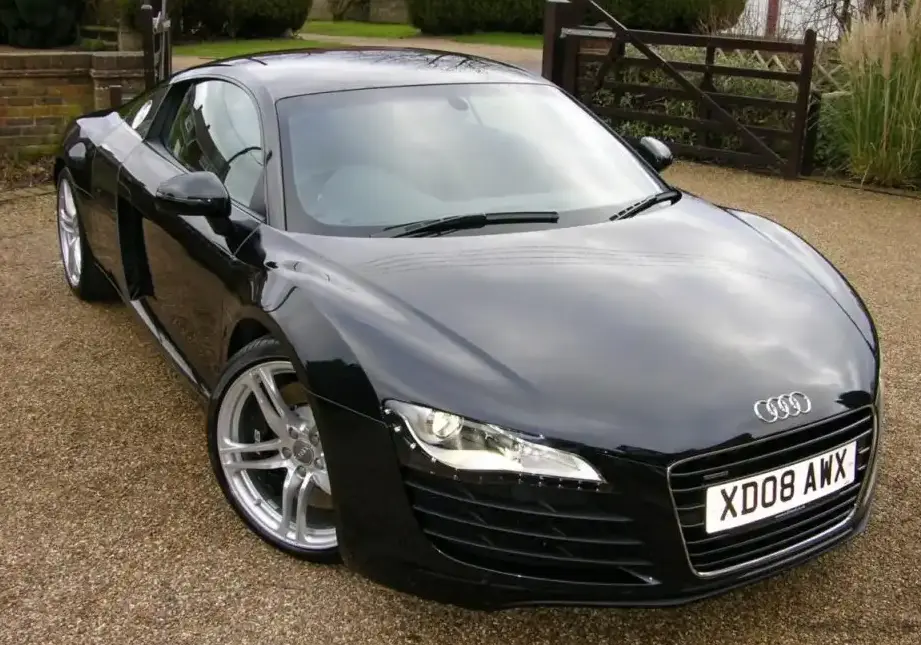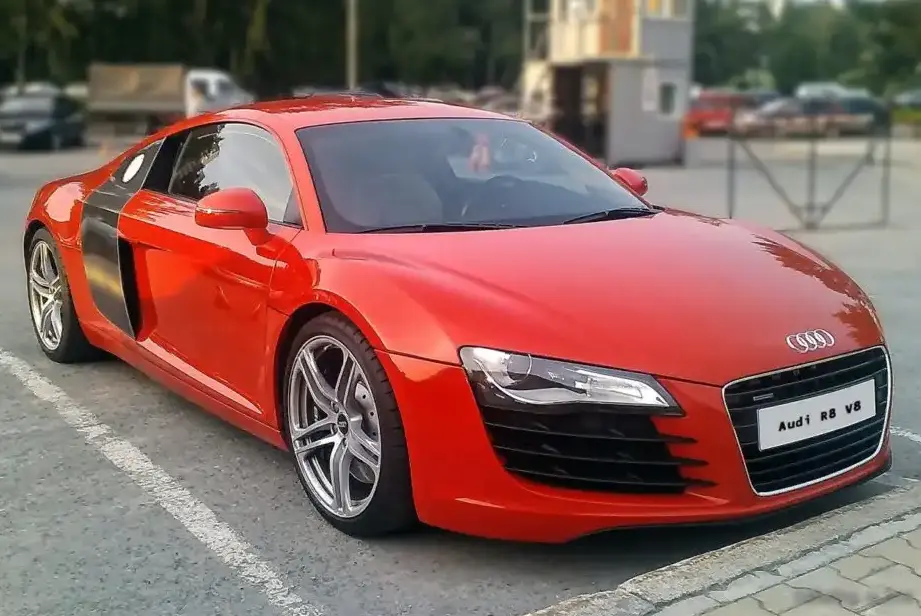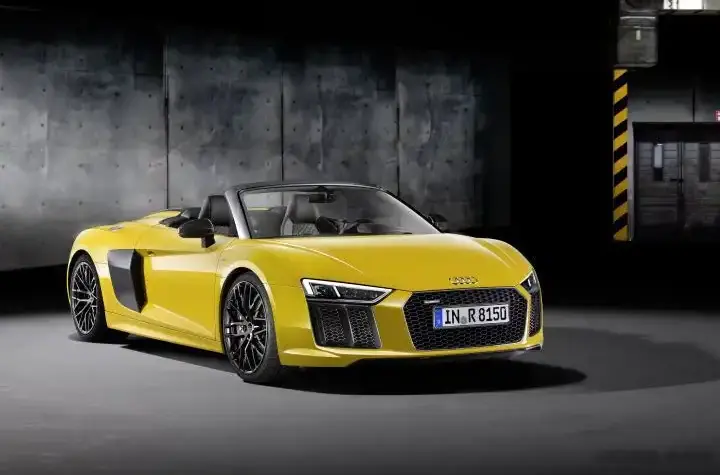
The Audi R8 II Spyder (4S) 5.2 FSI V10 quattro S tronic represents the open-top variant of Audi’s second-generation R8 supercar, produced from 2016 to 2018. Positioned as the flagship convertible within the R8 lineup, it combined the high-performance naturally aspirated V10 engine with Audi’s renowned quattro all-wheel-drive system and a seven-speed S tronic dual-clutch transmission. This model aimed to deliver an exhilarating driving experience with the added appeal of open-air motoring, competing with other high-end convertibles like the Porsche 911 Turbo Cabriolet and McLaren 570S Spider.
Technical Specifications
| Brand | Audi |
| Model | R8 |
| Generation | R8 II Spyder (4S) |
| Type (Engine) | 5.2 FSI V10 (540 Hp) quattro S tronic |
| Start of production | 2016 |
| End of production | 2018 |
| Powertrain Architecture | Internal Combustion engine |
| Body type | Cabriolet |
| Seats | 2 |
| Doors | 2 |
| Fuel consumption (economy) – urban | 17 l/100 km (13.8 US mpg, 16.6 UK mpg, 5.9 km/l) |
| Fuel consumption (economy) – extra urban | 8.7 l/100 km (27 US mpg, 32.5 UK mpg, 11.5 km/l) |
| Fuel consumption (economy) – combined | 11.7 l/100 km (20.1 US mpg, 24.1 UK mpg, 8.5 km/l) |
| CO2 emissions | 277 g/km |
| Fuel Type | Petrol (Gasoline) |
| Acceleration 0 – 100 km/h | 3.6 sec |
| Acceleration 0 – 62 mph | 3.6 sec |
| Acceleration 0 – 60 mph | 3.4 sec |
| Maximum speed | 318 km/h (197.6 mph) |
| Emission standard | Euro 6 |
| Weight-to-power ratio | 3.2 kg/Hp, 314 Hp/tonne |
| Weight-to-torque ratio | 3.2 kg/Nm, 314 Nm/tonne |
| Power | 540 Hp @ 7800 rpm |
| Power per litre | 103.8 Hp/l |
| Torque | 540 Nm @ 6500 rpm (398.28 lb.-ft. @ 6500 rpm) |
| Engine layout | Middle, Longitudinal |
| Engine Model/Code | CSPB |
| Engine displacement | 5204 cm3 (317.57 cu. in.) |
| Number of cylinders | 10 |
| Engine configuration | V-engine |
| Cylinder Bore | 84.5 mm (3.33 in.) |
| Piston Stroke | 92.8 mm (3.65 in.) |
| Compression ratio | 12.5:1 |
| Number of valves per cylinder | 4 |
| Fuel injection system | Direct injection and Multi-port manifold injection |
| Engine aspiration | Naturally aspirated engine |
| Valvetrain | DOHC |
| Engine oil capacity | 8.3 l (8.77 US qt | 7.3 UK qt) |
| Coolant | 24.7 l (26.1 US qt | 21.73 UK qt) |
| Kerb Weight | 1720 kg (3791.95 lbs.) |
| Max. weight | 2020 kg (4453.34 lbs.) |
| Max load | 300 kg (661.39 lbs.) |
| Trunk (boot) space – minimum | 112 l (3.96 cu. ft.) |
| Fuel tank capacity | 80 l (21.13 US gal | 17.6 UK gal) |
| Length | 4426 mm (174.25 in.) |
| Width | 1940 mm (76.38 in.) |
| Width including mirrors | 2037 mm (80.2 in.) |
| Height | 1244 mm (48.98 in.) |
| Wheelbase | 2650 mm (104.33 in.) |
| Front track | 1638 mm (64.49 in.) |
| Rear (Back) track | 1599 mm (62.95 in.) |
| Front overhang | 994 mm (39.13 in.) |
| Rear overhang | 782 mm (30.79 in.) |
| Drag coefficient (Cd) | 0.36 |
| Minimum turning circle (turning diameter) | 11.2 m (36.75 ft.) |
| Drivetrain Architecture | The Internal combustion engine (ICE) drives the rear wheels permanently, and the front wheels are driven through an electrically or mechanically operated clutch if necessary. |
| Drive wheel | All wheel drive (4×4) |
| Number of gears and type of gearbox | 7 gears, automatic transmission S tronic |
| Front suspension | Coil spring, Double wishbone, Transverse stabilizer |
| Rear suspension | Double wishbone, Transverse stabilizer, Coil spring |
| Front brakes | Ventilated discs, 365×34 mm |
| Rear brakes | Ventilated discs, 356×32 mm |
| Assisting systems | ABS (Anti-lock braking system) |
| Steering type | Steering rack and pinion |
| Power steering | Electric Steering |
| Tires size | Front wheel tires: 245/35 R19; 245/30 R20Rear wheel tires: 295/35 R19; 305/30 R20 |
| Wheel rims size | Front wheel rims: 8.5J x 19; 8.5J x 20Rear wheel rims: 11J x 19; 11J x 20 |
Powertrain & Engine Architecture
At the heart of the R8 II Spyder 5.2 FSI quattro S tronic lies the CSPB engine code, a naturally aspirated 5.2-liter V10 engine. This engine is a direct descendant of the V10 used in the Lamborghini Gallardo and Huracán, showcasing Audi’s close ties with its Italian sister brand. It features direct fuel injection (FSI) combined with multi-port manifold injection, optimizing combustion efficiency and power delivery. The engine utilizes a double overhead camshaft (DOHC) valvetrain with four valves per cylinder, enabling high airflow and contributing to its 7800 rpm redline. The S tronic seven-speed dual-clutch transmission provides incredibly fast and smooth gear changes, enhancing both acceleration and driving engagement. This transmission features a multi-plate wet clutch and allows for both fully automatic operation and manual gear selection via steering wheel-mounted paddles.
Driving Characteristics
The 540 hp and 398 lb-ft of torque delivered by the V10 engine, coupled with the quick-shifting S tronic transmission and quattro all-wheel drive, result in breathtaking performance. Acceleration from 0 to 60 mph takes just 3.4 seconds, and the car reaches a top speed of 197.6 mph. The quattro system intelligently distributes power between the front and rear axles, providing exceptional traction and stability, especially in challenging conditions. Compared to the standard R8 with a manual transmission, the S tronic version offers slightly quicker acceleration due to the faster gear changes. While not as raw or visceral as a manual, the S tronic provides a refined and accessible high-performance experience. The gear ratios are tuned for a balance between rapid acceleration and comfortable cruising.
Equipment & Trim Levels
The R8 II Spyder 5.2 FSI quattro S tronic came generously equipped as standard. Interior features included leather upholstery, heated and power-adjustable seats, a premium Bang & Olufsen sound system, and a navigation system with a high-resolution display. Optional extras included carbon fiber interior trim, diamond-stitched leather, and a variety of exterior customization options. The Spyder also featured a fully automatic soft top that could be raised or lowered in around 20 seconds, even while driving at speeds up to 30 mph. The dashboard layout was driver-focused, with clear instrumentation and intuitive controls.
Chassis & Braking
The R8 II Spyder utilized a lightweight aluminum space frame chassis, providing a rigid and strong foundation for the vehicle. The suspension system consisted of double wishbones at all four corners, with coil springs and transverse stabilizers to minimize body roll. Braking duties were handled by ventilated disc brakes with high-performance calipers. The front brakes measured 365×34 mm, while the rear brakes were 356×32 mm. An anti-lock braking system (ABS) was standard, ensuring optimal stopping power and control. The Spyder’s chassis was specifically reinforced to compensate for the lack of a fixed roof, maintaining the R8’s renowned handling characteristics.
Market Reception & Comparison
The Audi R8 II Spyder 5.2 FSI quattro S tronic was widely praised by automotive critics for its stunning performance, luxurious interior, and sophisticated technology. However, some reviewers noted that the naturally aspirated V10 engine, while exhilarating, was less fuel-efficient than turbocharged alternatives. Compared to the R8 V8 models, the V10 Spyder offered significantly more power and a more engaging driving experience, justifying its higher price tag. Against competitors like the Porsche 911 Turbo Cabriolet, the R8 Spyder offered a unique blend of performance, luxury, and all-wheel-drive capability.
Legacy
The Audi R8 II Spyder 5.2 FSI quattro S tronic remains a highly desirable supercar in the used car market. The naturally aspirated V10 engine is known for its reliability, provided it receives regular maintenance. The S tronic transmission is also generally robust, although servicing should be performed according to Audi’s recommended intervals. The R8 Spyder’s combination of performance, luxury, and open-air driving enjoyment ensures its continued appeal to enthusiasts seeking a truly special automotive experience. Its influence can be seen in subsequent Audi models, particularly in the development of their performance-oriented technologies and design language.