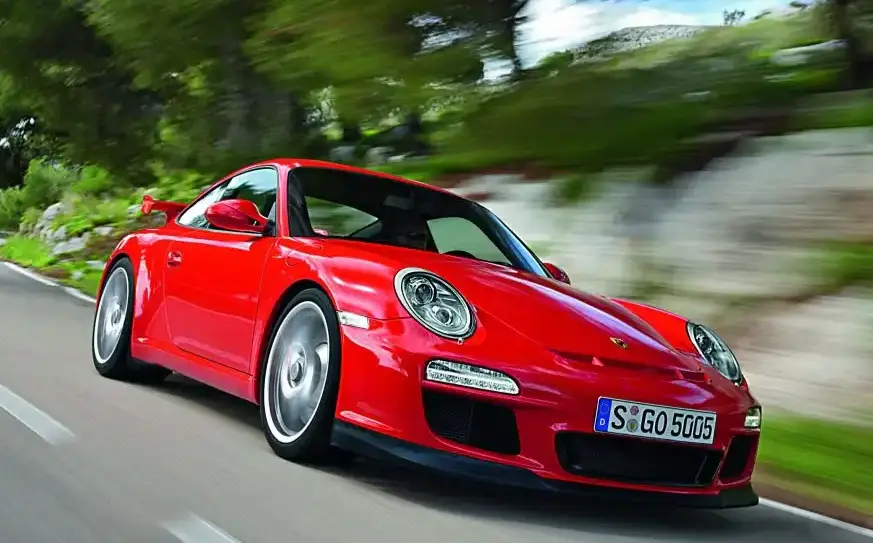
The Porsche 911 (997) GT3 3.8, produced from 2009 to 2011, represents a focused, high-performance iteration of Porsche’s iconic sports car. Falling within the second facelift of the 997 generation, this GT3 variant was designed as a track-oriented machine, bridging the gap between the more streetable Carrera models and the even more extreme RS variants. It built upon the success of the earlier 997 GT3, offering increased power and refined handling characteristics. The 3.8-liter engine and six-speed manual transmission combination were central to its appeal, targeting enthusiasts seeking a pure driving experience.
Technical Specifications
| Brand | Porsche |
| Model | 911 |
| Generation | 911 (997, facelift 2008) |
| Type (Engine) | GT3 3.8 (435 Hp) |
| Start of production | 2009 |
| End of production | 2011 |
| Powertrain Architecture | Internal Combustion engine |
| Body type | Coupe |
| Seats | 2-4 |
| Doors | 2 |
| Fuel consumption (economy) – urban | 19.2 l/100 km (12.3 US mpg, 14.7 UK mpg, 5.2 km/l) |
| Fuel consumption (economy) – extra urban | 9 l/100 km (26.1 US mpg, 31.4 UK mpg, 11.1 km/l) |
| Fuel consumption (economy) – combined | 12.6 l/100 km (18.7 US mpg, 22.4 UK mpg, 7.9 km/l) |
| CO2 emissions | 298 g/km |
| Fuel Type | Petrol (Gasoline) |
| Acceleration 0 – 100 km/h | 4.1 sec |
| Acceleration 0 – 62 mph | 4.1 sec |
| Acceleration 0 – 60 mph | 3.9 sec |
| Maximum speed | 312 km/h (193.87 mph) |
| Emission standard | Euro 5 |
| Weight-to-power ratio | 3.2 kg/Hp, 311.8 Hp/tonne |
| Weight-to-torque ratio | 3.2 kg/Nm, 308.2 Nm/tonne |
| Power | 435 Hp @ 7600 rpm |
| Power per litre | 114.6 Hp/l |
| Torque | 430 Nm @ 6250 rpm (317.15 lb.-ft. @ 6250 rpm) |
| Engine layout | Rear, Longitudinal |
| Engine Model/Code | M97.77 |
| Engine displacement | 3797 cm3 (231.71 cu. in.) |
| Number of cylinders | 6 |
| Engine configuration | Boxer |
| Compression ratio | 12:1 |
| Number of valves per cylinder | 4 |
| Fuel injection system | Direct injection |
| Engine aspiration | Naturally aspirated engine |
| Valvetrain | DOHC |
| Engine oil capacity | 9 l (9.51 US qt | 7.92 UK qt) |
| Coolant | 28 l (29.59 US qt | 24.64 UK qt) |
| Kerb Weight | 1395 kg (3075.45 lbs) |
| Max. weight | 1680 kg (3703.77 lbs) |
| Max load | 285 kg (628.32 lbs) |
| Trunk (boot) space – maximum | 105 l (3.71 cu. ft.) |
| Fuel tank capacity | 67 l (17.7 US gal | 14.74 UK gal) |
| Length | 4460 mm (175.59 in) |
| Width | 1808 mm (71.18 in) |
| Width including mirrors | 1952 mm (76.85 in) |
| Height | 1280 mm (50.39 in) |
| Wheelbase | 2355 mm (92.72 in) |
| Drag coefficient (Cd) | 0.32 |
| Minimum turning circle | 10.9 m (35.76 ft) |
| Drivetrain Architecture | Rear wheel drive |
| Number of gears and type of gearbox | 6 gears, manual transmission |
| Front suspension | Independent type McPherson |
| Rear suspension | Independent multi-link suspension |
| Front brakes | Ventilated discs, 380 mm |
| Rear brakes | Ventilated discs, 350 mm |
| Assisting systems | ABS (Anti-lock braking system) |
| Steering type | Steering rack and pinion |
| Power steering | Hydraulic Steering |
| Tires size | 235/35 ZR19; 305/30 ZR19 |
| Wheel rims size | 8.5J x 19; 12J x 19 |
Powertrain & Engine Architecture
The heart of the 997.2 GT3 3.8 is the M97.77 engine, a 3.8-liter naturally aspirated flat-six. This engine is a direct descendant of the engines used in Porsche’s motorsport programs, featuring a dry-sump lubrication system for reliable oil supply during aggressive cornering. The engine utilizes direct fuel injection (DFI) to maximize combustion efficiency and power output. The valvetrain employs dual overhead camshafts (DOHC) with four valves per cylinder, optimized for high-revving performance. Unlike turbocharged engines, the naturally aspirated design delivers a linear power curve and a distinctive exhaust note. The engine produces 435 horsepower at 7,600 rpm and 317 lb-ft of torque at 6,250 rpm. The sole transmission option was a six-speed manual gearbox, renowned for its precise shift feel and robust construction. This manual transmission was specifically tuned for the GT3, with shorter ratios to enhance acceleration and track performance.
Driving Characteristics
The 997.2 GT3 3.8 delivers a raw and engaging driving experience. The combination of the high-revving engine and the precise manual transmission encourages the driver to actively participate in the driving process. Acceleration is brisk, with a 0-60 mph time of around 3.9 seconds and a top speed of 193.87 mph. However, the GT3 isn’t about outright speed; it’s about the connection between driver and machine. The steering is incredibly direct and communicative, providing ample feedback from the road. The suspension is firm, but well-damped, offering excellent body control and minimizing roll in corners. Compared to the standard 997 Carrera, the GT3’s suspension is significantly stiffer and lower, and it lacks many of the comfort features found in the base model. The GT3’s focus on performance means it’s less forgiving than other 911 variants, demanding a skilled driver to extract its full potential.
Equipment & Trim Levels
The GT3 3.8 was relatively sparsely equipped compared to other 911 models, reflecting its focus on performance. Standard features included sport seats, a Club Sport package (which deleted the rear seats and added a roll cage), and a limited-slip differential. Optional extras included Porsche Ceramic Composite Brakes (PCCB), a sport exhaust system, and various interior trim options. The interior was functional and driver-focused, with minimal distractions. Alcantara upholstery was common, and the steering wheel was typically wrapped in Alcantara as well. Navigation and premium audio systems were available, but many owners opted to forgo these features to save weight.
Chassis & Braking
The GT3 3.8 featured a track-tuned chassis with several key upgrades over the standard 997. The suspension was lowered and stiffened, and the car was equipped with larger stabilizer bars. The braking system consisted of ventilated discs at all four corners, providing exceptional stopping power. The optional PCCB system offered even greater braking performance and reduced brake fade during extended track use. The car’s lightweight construction, achieved through the use of aluminum and other lightweight materials, contributed to its agile handling. The rear-wheel-drive layout and the limited-slip differential further enhanced traction and cornering ability.
Market Reception & Comparison
The 997.2 GT3 3.8 was widely praised by automotive journalists for its exceptional performance and engaging driving experience. Critics lauded the engine’s responsiveness, the transmission’s precision, and the chassis’s balance. Compared to the earlier 997 GT3, the 3.8 offered increased power and improved handling. It also represented a significant step up in performance compared to the standard Carrera models. However, the GT3’s firm ride and lack of creature comforts made it less practical for everyday use. Fuel economy was also relatively poor, reflecting the car’s high-performance nature.
Legacy
The 997.2 GT3 3.8 has become a highly sought-after collector’s car. Its combination of performance, rarity, and driving engagement has made it a favorite among Porsche enthusiasts. The M97.77 engine is known for its durability, but regular maintenance is essential to ensure its longevity. The car’s relatively simple design, compared to more modern Porsche models, makes it easier to maintain and repair. Today, well-maintained examples of the 997.2 GT3 3.8 command high prices on the used car market, reflecting its status as a modern classic.