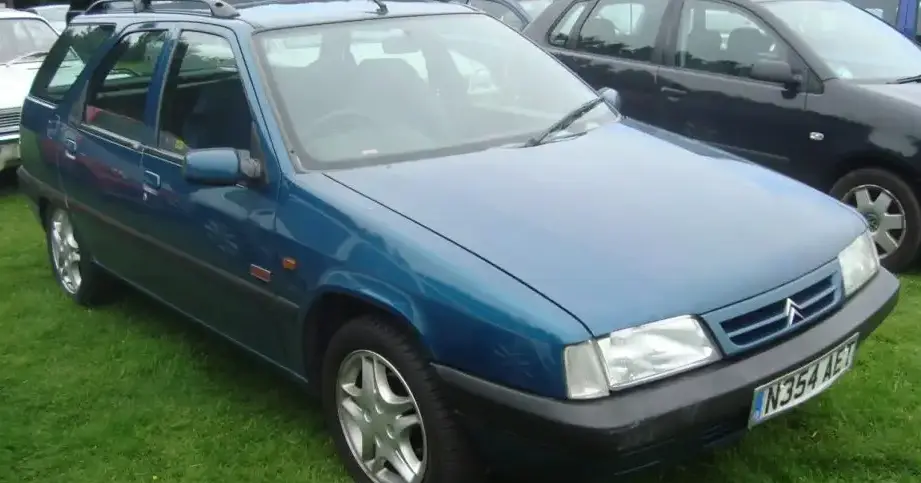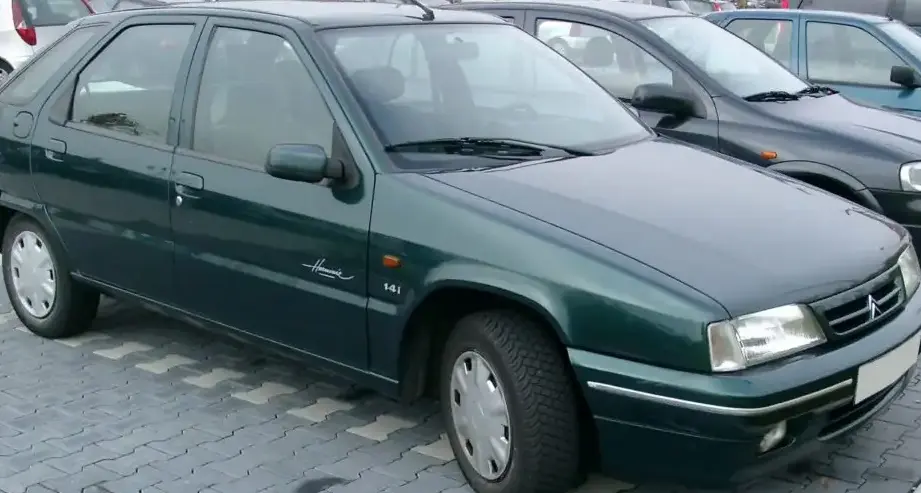
The Citroën ZX 1.9D (N2, Phase II) was a five-door hatchback produced between 1994 and 1997. Positioned as an entry-level offering within the ZX range, it provided economical transportation for families and commuters. The ZX, launched in 1992, was Citroën’s replacement for the BX, aiming to offer a more modern and aerodynamic design while retaining the company’s focus on comfort and innovative technology. The Phase II update, introduced in 1994, brought styling revisions and mechanical improvements. The 1.9D variant, powered by a naturally aspirated diesel engine, was a popular choice in European markets where diesel fuel was more affordable and fuel economy was a primary concern.
Technical Specifications
| Brand | Citroen |
| Model | ZX |
| Generation | ZX (N2, Phase II) 5-door |
| Type (Engine) | 1.9 D (68 Hp) |
| Start of production | 1994 |
| End of production | 1997 |
| Powertrain Architecture | Internal Combustion engine |
| Body type | Hatchback |
| Seats | 5 |
| Doors | 5 |
| Fuel consumption (urban) | 6.9 l/100 km (34.1 US mpg, 40.9 UK mpg, 14.5 km/l) |
| Fuel consumption (extra urban) | 4.5 l/100 km (52.3 US mpg, 62.8 UK mpg, 22.2 km/l) |
| Fuel consumption (combined) | 5.9 l/100 km (39.9 US mpg, 47.9 UK mpg, 16.9 km/l) |
| Fuel Type | Diesel |
| Acceleration 0 – 100 km/h | 18.5 sec |
| Acceleration 0 – 62 mph | 18.5 sec |
| Acceleration 0 – 60 mph | 17.6 sec |
| Maximum speed | 160 km/h (99.42 mph) |
| Weight-to-power ratio | 15.2 kg/Hp, 65.7 Hp/tonne |
| Weight-to-torque ratio | 8.4 kg/Nm, 118.8 Nm/tonne |
| Power | 68 Hp @ 4600 rpm |
| Power per litre | 35.7 Hp/l |
| Torque | 123 Nm @ 2000 rpm (90.72 lb.-ft. @ 2000 rpm) |
| Engine layout | Front, Transverse |
| Engine Model/Code | DJY XUD9 L3 |
| Engine displacement | 1905 cm3 (116.25 cu. in.) |
| Number of cylinders | 4 |
| Engine configuration | Inline |
| Cylinder Bore | 83 mm (3.27 in.) |
| Piston Stroke | 88 mm (3.46 in.) |
| Compression ratio | 23:1 |
| Number of valves per cylinder | 2 |
| Fuel injection system | Precombustion chamber injection |
| Engine aspiration | Naturally aspirated engine |
| Valvetrain | OHC |
| Engine oil capacity | 5 l (5.28 US qt | 4.4 UK qt) |
| Coolant | 8.5 l (8.98 US qt | 7.48 UK qt) |
| Kerb Weight | 1035 kg (2281.78 lbs.) |
| Max. weight | 1560 kg (3439.21 lbs.) |
| Max load | 525 kg (1157.43 lbs.) |
| Trunk (boot) space – minimum | 324 l (11.44 cu. ft.) |
| Trunk (boot) space – maximum | 926 l (32.7 cu. ft.) |
| Fuel tank capacity | 54 l (14.27 US gal | 11.88 UK gal) |
| Max. roof load | 75 kg (165.35 lbs.) |
| Permitted trailer load with brakes (12%) | 1000 kg (2204.62 lbs.) |
| Permitted trailer load without brakes | 515 kg (1135.38 lbs.) |
| Permitted towbar download | 70 kg (154.32 lbs.) |
| Length | 4071 mm (160.28 in.) |
| Width | 1688 mm (66.46 in.) |
| Height | 1399 mm (55.08 in.) |
| Wheelbase | 2540 mm (100 in.) |
| Front track | 1414 mm (55.67 in.) |
| Rear track | 1407 mm (55.39 in.) |
| Front overhang | 849 mm (33.43 in.) |
| Rear overhang | 682 mm (26.85 in.) |
| Minimum turning circle | 11.1 m (36.42 ft.) |
| Drivetrain Architecture | The Internal combustion engine (ICE) drives the front wheels of the vehicle. |
| Drive wheel | Front wheel drive |
| Number of gears and type of gearbox | 5 gears, manual transmission |
| Front suspension | Independent type McPherson, Wishbone |
| Rear suspension | Hydro-pneumatic element, Trailing arm |
| Front brakes | Disc |
| Rear brakes | Drum |
| Assisting systems | ABS (Anti-lock braking system) |
| Steering type | Steering rack and pinion |
| Power steering | Hydraulic Steering |
| Tires size | 165/70 R13 |
INTRODUCTION
The Citroën ZX 1.9D Phase II, produced from 1994 to 1997, represented a practical and economical choice within the ZX lineup. It was designed to appeal to buyers prioritizing fuel efficiency and low running costs. The ZX itself was a significant model for Citroën, embodying a shift towards more contemporary design and engineering. The Phase II revisions included subtle styling updates and improvements to the interior, enhancing the car’s overall refinement. The 1.9D variant, utilizing the XUD9 diesel engine, was particularly popular in European markets due to favorable diesel taxation and the engine’s reputation for durability.
Powertrain & Engine Architecture
The heart of the ZX 1.9D is the XUD9 L3 diesel engine, specifically the DJY variant. This 1905cc inline-four cylinder engine is a naturally aspirated, indirect injection diesel. It employs a precombustion chamber injection system, a common design for diesel engines of that era. This system uses a small pre-chamber to ignite the fuel-air mixture, which then ignites the main combustion chamber. The engine features an overhead camshaft (OHC) valvetrain with two valves per cylinder. The XUD9 engine is known for its robust construction and relatively simple design, contributing to its longevity. The engine produced 68 horsepower at 4600 rpm and 123 Nm (90.72 lb-ft) of torque at 2000 rpm. The engine was typically paired with a five-speed manual transmission, although an automatic transmission was also available, albeit less common. The automatic transmission was a four-speed unit, designed to provide smooth, if not particularly sporty, gear changes.
Driving Characteristics
The ZX 1.9D, with its 68 horsepower and relatively high weight of 1035 kg (2281.78 lbs), wasn’t designed for performance. Acceleration from 0 to 100 km/h (0-62 mph) took around 18.5 seconds, and top speed was limited to 160 km/h (99.42 mph). The focus was on providing adequate power for everyday driving, with an emphasis on fuel economy. The engine delivered its torque relatively low in the rev range, making it reasonably tractable in urban conditions. However, overtaking maneuvers required careful planning. Compared to the more powerful petrol variants of the ZX, such as the 2.0i 16V, the 1.9D felt significantly slower. The manual transmission offered more control and responsiveness, while the automatic version prioritized ease of use. The gear ratios were optimized for fuel efficiency rather than outright acceleration.
Equipment & Trim Levels
The ZX 1.9D typically came with a modest level of standard equipment. Basic models featured cloth upholstery, a simple dashboard layout, and manual windows and door locks. Power steering was usually standard, but air conditioning and central locking were often optional extras. Higher trim levels, such as the “Avantage” or “Exclusive,” offered additional features like electric windows, upgraded upholstery, and a more comprehensive instrument panel. Optional extras included a sunroof, alloy wheels, and a radio/cassette player. The interior design was functional and practical, prioritizing usability over luxury.
Chassis & Braking
The ZX featured an independent McPherson strut front suspension and a hydro-pneumatic trailing arm rear suspension. The hydro-pneumatic system, a Citroën hallmark, provided a comfortable and compliant ride, absorbing bumps and imperfections in the road surface effectively. Front brakes were discs, while rear brakes were drums. Anti-lock Braking System (ABS) was available as an option, enhancing braking performance and safety. The suspension setup was tuned to prioritize comfort and stability, rather than sporty handling. The steering was a rack and pinion system with hydraulic power assistance, providing relatively light and precise steering feel.
Market Reception & Comparison
The Citroën ZX 1.9D was generally well-received by critics as a practical and economical family car. Its fuel efficiency was a major selling point, particularly in Europe. However, its performance was often criticized as being underwhelming. Compared to other diesel-powered hatchbacks of the time, such as the Peugeot 306 HDi or the Renault 19 1.9D, the ZX 1.9D offered a similar level of fuel economy and practicality. The ZX’s hydro-pneumatic suspension provided a more comfortable ride than many of its competitors, but the system could be more complex and potentially more expensive to maintain. Reliability was generally good, although the precombustion chamber diesel injection system could require occasional maintenance.
Legacy
The Citroën ZX 1.9D has developed a reputation as a durable and reliable workhorse. The XUD9 engine is known for its longevity, and many examples are still on the road today. The car’s simple construction and relatively low running costs make it an attractive option for budget-conscious buyers. However, finding parts for the hydro-pneumatic suspension can sometimes be challenging. In the used car market, the ZX 1.9D is typically valued for its practicality and affordability. It represents a classic example of 1990s French automotive engineering, prioritizing comfort, fuel efficiency, and durability.