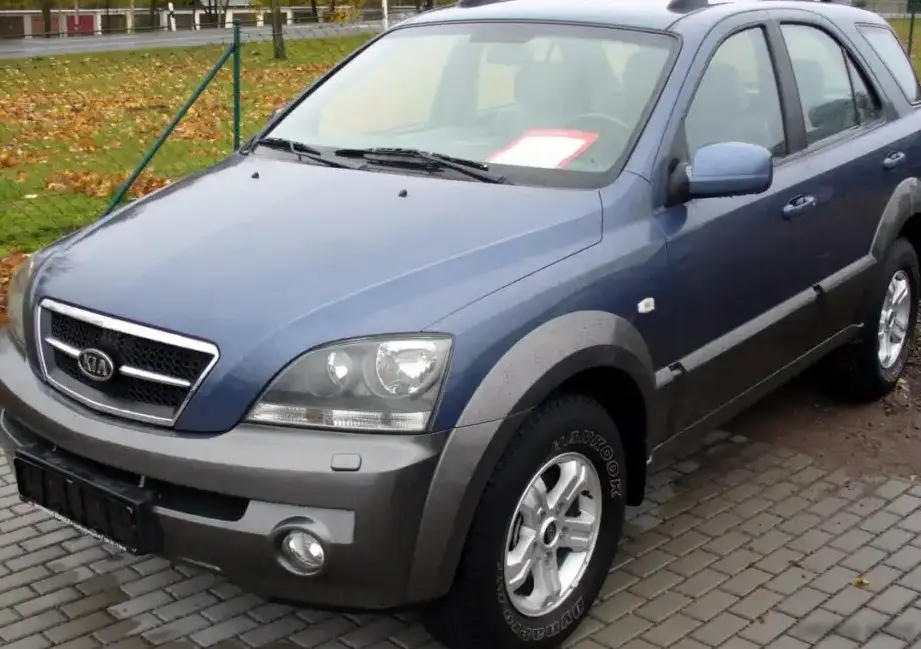
The Kia Sorento III facelift, produced from 2018 to 2020, represented a significant refresh of Kia’s popular mid-size SUV. Among the engine options available, the 2.2 CRDi variant, producing 200 horsepower and paired with an eight-speed automatic transmission and all-wheel drive (AWD), occupied a prominent position in the lineup. This configuration aimed to balance performance, fuel efficiency, and practicality for families seeking a versatile vehicle. It was positioned as a mid-to-upper trim level, offering more power and refinement than the base engine options while remaining more accessible than potential future high-performance trims.
Technical Specifications
| Brand | Kia |
| Model | Sorento |
| Generation | Sorento III (facelift 2018) |
| Type (Engine) | 2.2 CRDi (200 Hp) AWD Automatic |
| Start of production | 2018 |
| End of production | 2020 |
| Powertrain Architecture | Internal Combustion engine |
| Body type | SUV |
| Seats | 5 |
| Doors | 5 |
| Fuel consumption (urban) | 7.3 l/100 km (32.2 US mpg, 38.7 UK mpg, 13.7 km/l) |
| Fuel consumption (extra urban) | 6 l/100 km (39.2 US mpg, 47.1 UK mpg, 16.7 km/l) |
| Fuel consumption (combined) | 6.5 l/100 km (36.2 US mpg, 43.5 UK mpg, 15.4 km/l) |
| CO2 emissions | 170 g/km |
| Fuel Type | Diesel |
| Acceleration 0 – 100 km/h | 9.4 sec |
| Acceleration 0 – 62 mph | 9.4 sec |
| Acceleration 0 – 60 mph | 8.9 sec |
| Maximum speed | 205 km/h (127.38 mph) |
| Power | 200 Hp @ 3800 rpm |
| Torque | 450 Nm @ 1750-2750 rpm (331.9 lb.-ft. @ 1750-2750 rpm) |
| Engine layout | Front, Transverse |
| Engine Model/Code | D4HB |
| Engine displacement | 2199 cm3 (134.19 cu. in.) |
| Number of cylinders | 4 |
| Engine configuration | Inline |
| Cylinder Bore | 85.4 mm (3.36 in.) |
| Piston Stroke | 96 mm (3.78 in.) |
| Compression ratio | 16:1 |
| Number of valves per cylinder | 4 |
| Fuel injection system | Diesel Commonrail |
| Engine aspiration | Turbocharger, Intercooler |
| Engine oil capacity | 6.5 l (6.87 US qt | 5.72 UK qt) |
| Coolant capacity | 8.9 l (9.4 US qt | 7.83 UK qt) |
| Kerb Weight | 1917 kg (4226.26 lbs.) |
| Max. weight | 2510 kg (5533.6 lbs.) |
| Max load | 593 kg (1307.34 lbs.) |
| Trunk (boot) space – minimum | 660 l (23.31 cu. ft.) |
| Trunk (boot) space – maximum | 1732 l (61.17 cu. ft.) |
| Fuel tank capacity | 71 l (18.76 US gal | 15.62 UK gal) |
| Max. roof load | 100 kg (220.46 lbs.) |
| Permitted trailer load with brakes (12%) | 2000 kg (4409.25 lbs.) |
| Permitted trailer load without brakes | 750 kg (1653.47 lbs.) |
| Permitted towbar download | 100 kg (220.46 lbs.) |
| Length | 4800 mm (188.98 in.) |
| Width | 1890 mm (74.41 in.) |
| Width including mirrors | 2140 mm (84.25 in.) |
| Height | 1685-1690 mm (66.34 – 66.54 in.) |
| Wheelbase | 2780 mm (109.45 in.) |
| Front track | 1628-1633 mm (64.09 – 64.29 in.) |
| Rear (Back) track | 1639-1644 mm (64.53 – 64.72 in.) |
| Front overhang | 945 mm (37.2 in.) |
| Rear overhang | 1075 mm (42.32 in.) |
| Ride height (ground clearance) | 185 mm (7.28 in.) |
| Minimum turning circle | 11.34 m (37.2 ft.) |
| Front suspension | Independent, type McPherson with coil spring and anti-roll bar |
| Rear suspension | Independent multi-link suspension |
| Front brakes | Ventilated discs |
| Rear brakes | Disc |
| Number of gears and type of gearbox | 8 gears, automatic transmission |
INTRODUCTION
The Kia Sorento III, launched in 2014 and facelifted in 2018, was a crucial model for Kia, representing a significant step up in quality, design, and technology. The facelift brought revised styling, upgraded interior materials, and enhanced safety features. The 2.2 CRDi engine, coupled with an eight-speed automatic transmission and all-wheel drive, was a popular choice for buyers seeking a blend of performance and efficiency in a family-sized SUV. This variant was particularly well-suited for those needing all-weather capability and the convenience of an automatic gearbox.
Powertrain & Engine Architecture
The heart of this Sorento variant is the D4HB 2.2-liter four-cylinder diesel engine. This engine utilizes a common-rail direct injection system, delivering fuel at extremely high pressure for optimized combustion. A turbocharger with an intercooler further enhances power output and efficiency. The engine produces 200 horsepower at 3800 rpm and a substantial 450 Nm (331.9 lb-ft) of torque between 1750 and 2750 rpm. The eight-speed automatic transmission, sourced from Hyundai (which owns Kia), provides smooth and efficient gear changes. This transmission features a wide gear ratio spread, contributing to both fuel economy and responsive acceleration. The AWD system is typically an on-demand system, primarily driving the front wheels but engaging the rear axle when traction is needed.
Driving Characteristics
The 2.2 CRDi automatic Sorento offers a comfortable and refined driving experience. While not a sports SUV, the engine provides ample power for everyday driving and highway cruising. The eight-speed transmission helps keep the engine in its optimal power band, resulting in brisk acceleration. The 0-60 mph time of around 8.9 seconds is respectable for a vehicle of this size and weight. The AWD system provides enhanced stability and traction, particularly in adverse weather conditions. Compared to the base 2.0-liter diesel engine, the 2.2 CRDi offers significantly more power and torque, resulting in a more confident and relaxed driving experience. It also feels less strained when fully loaded or towing. Compared to a manual transmission version, the automatic offers convenience, but some drivers might find it slightly less engaging.
Equipment & Trim Levels
The 2.2 CRDi AWD typically came equipped with a generous level of standard features. These often included leather upholstery, heated front seats, a touchscreen infotainment system with navigation, a rearview camera, parking sensors, and automatic climate control. Higher trim levels added features such as a panoramic sunroof, premium audio system, and advanced driver-assistance systems like adaptive cruise control and lane departure warning. Interior materials were generally of good quality, offering a comfortable and well-appointed cabin. Optional extras could include metallic paint, upgraded wheels, and various accessory packages.
Chassis & Braking
The Sorento III utilizes a McPherson strut front suspension and a multi-link rear suspension, providing a good balance of ride comfort and handling. Stabilizer bars are fitted to both axles to reduce body roll. The braking system consists of ventilated discs at the front and solid discs at the rear. Anti-lock brakes (ABS) and electronic stability control (ESC) are standard features, enhancing safety. The steering is electrically assisted, providing a light and precise feel.
Market Reception & Comparison
The Kia Sorento III facelift, particularly the 2.2 CRDi AWD automatic, was well-received by critics and consumers alike. It was praised for its spacious interior, comfortable ride, and generous equipment levels. The diesel engine was noted for its refinement and fuel efficiency. Compared to competitors like the Hyundai Santa Fe, Nissan X-Trail, and Ford Kuga, the Sorento offered a compelling value proposition, often undercutting its rivals on price while offering similar or better features. Fuel economy was competitive for its class, averaging around 36.2 US mpg in combined driving. Reliability was generally good, although some owners reported minor issues with the infotainment system.
Legacy
The Kia Sorento III facelift, and specifically the 2.2 CRDi AWD automatic variant, has proven to be a reliable and durable vehicle. On the used car market, these models continue to hold their value reasonably well, reflecting their popularity and reputation for dependability. The D4HB engine, while a diesel, has demonstrated good longevity when properly maintained. Regular servicing, including oil changes and filter replacements, is crucial for ensuring long-term reliability. The Sorento III laid the groundwork for the continued success of the Sorento model, establishing Kia as a major player in the mid-size SUV segment.